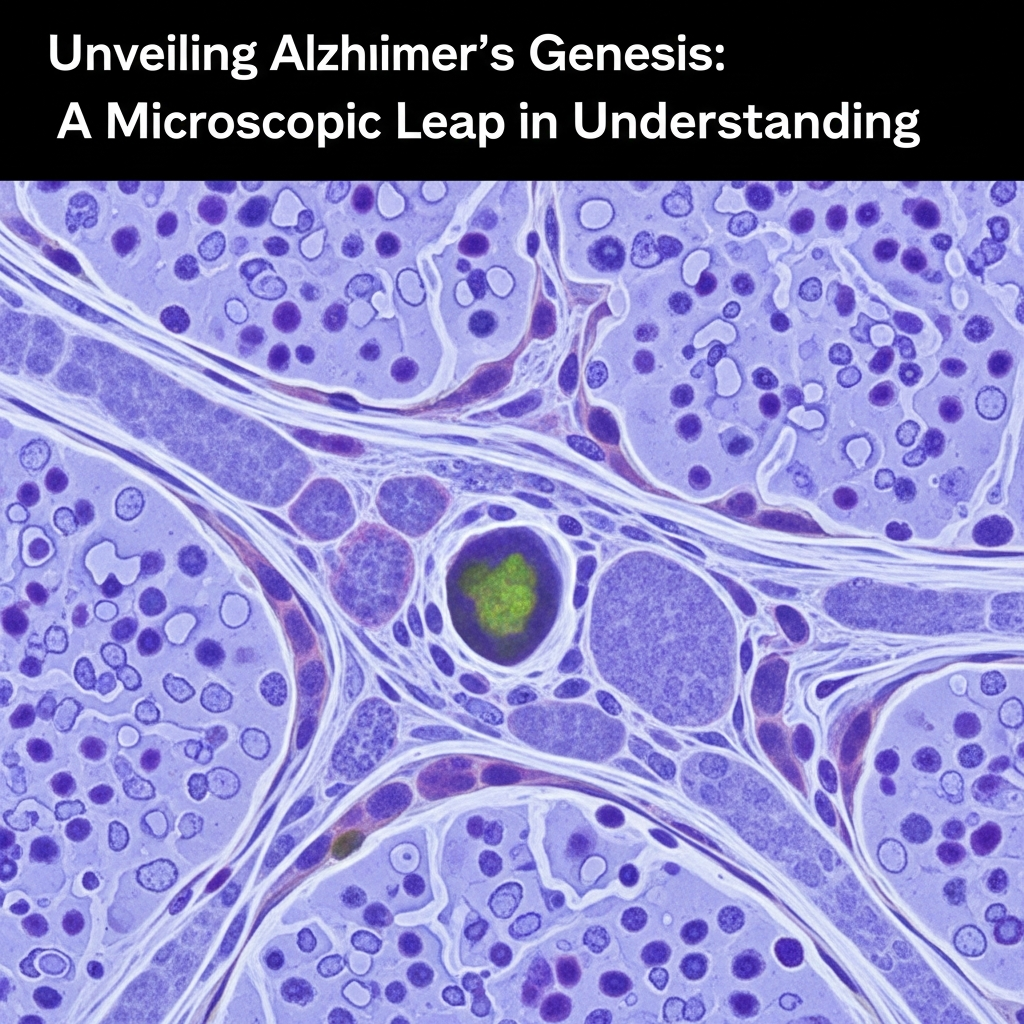
Alzheimer’s disease, a devastating form of dementia, affects millions globally, yet its precise origins have long remained a profound mystery. For decades, scientists have grappled with the “chicken or egg” dilemma of which cellular changes first trigger this progressive neurological condition. Now, groundbreaking research is proposing unifying theories that could fundamentally reshape our understanding and treatment approaches for Alzheimer’s.
These innovative models suggest that the disease doesn’t just emerge from a simple accumulation of problematic proteins. Instead, they point to complex, competitive cellular interactions or early, chronic cellular stress responses as the primary catalysts. Unlocking these initial mechanisms is critical for developing truly effective therapies to combat this pervasive illness.
Unpacking the Amyloid-Beta and Tau Conundrum
The hallmarks of Alzheimer’s disease are well-known: sticky clumps of amyloid-beta plaques outside neurons and twisted tau tangles inside them. While both are consistently found in the brains of Alzheimer’s patients, their exact roles and sequence of appearance have been intensely debated. Some research suggests amyloid-beta plaques can form decades before symptoms, while others point to tau tangles as a better predictor of cognitive decline.
Normally, tau proteins are essential. They act like internal scaffolding, stabilizing microtubules that are crucial for transporting nutrients and other vital components within brain cells. In Alzheimer’s, however, tau detaches from these microtubules, misfolds, and forms toxic tangles, disrupting neuronal function and leading to cell death. The big question has been: what causes tau to go rogue?
A Competitive Edge: Amyloid-Beta Displacing Tau
A new “unifying theory,” spearheaded by a team of chemists led by Ryan Julian at the University of California, Riverside, offers a compelling answer. Their research proposes that Alzheimer’s emerges from a direct, competitive interaction between amyloid-beta and tau proteins within brain cells.
Julian and his colleagues conducted detailed protein binding studies. They observed that amyloid-beta peptides shared a structural resemblance with the part of tau proteins that binds to microtubules. When mixed together in solution, these two proteins battled for the same crucial binding sites on microtubules. Fluorescent labeling revealed that amyloid-beta peptides could effectively “steal” these sites, displacing tau from its natural position. This wasn’t just random binding; amyloid-beta showed a strong preference for microtubules, even when other proteins were present.
This displacement is key. If amyloid-beta pushes tau off its stabilizing role, tau is then free to misfold and clump into harmful tangles. Crucially, Julian’s team hypothesizes that it’s this initial displacement of tau, leading to destabilized microtubules and faulty cellular transport, that represents the primary source of toxicity for brain cells. The subsequent accumulation of plaques and tangles, while problematic, might be more of a downstream consequence rather than the initial trigger. This radical shift in perspective could redefine how we target Alzheimer’s disease.
The Stress Granule Hypothesis: Another Unifying Model
While the amyloid-beta/tau competition theory provides a compelling narrative, other research teams are exploring different “unifying models” for Alzheimer’s disease. Scientists at Arizona State University’s Biodesign Institute, led by Paul Coleman, propose that the persistent formation of chronic stress granules plays a pivotal role.
Stress granules are temporary clusters of proteins and RNA that form in cells under duress. Their purpose is to pause non-essential processes, allowing the cell to conserve energy and repair itself. Once the stress subsides, these granules normally dissolve. However, the ASU team’s theory suggests that in Alzheimer’s disease, these stress granules become pathological. They fail to dissipate, becoming chronic and trapping vital molecules.
Disrupting Cellular Communication at its Core
This chronic presence of stress granules profoundly disrupts the nucleocytoplasmic transport system. This system is the cellular highway for essential molecules moving between the nucleus (where genetic information is stored) and the cytoplasm (where proteins are made). Imagine a city’s power grid failing or its main highways becoming permanently clogged—critical resources cannot reach their destinations, leading to widespread cellular chaos.
This disruption impacts over a thousand genes, profoundly altering gene expression. Such widespread changes affect crucial cellular functions like synapse health, metabolism, and protein processing, ultimately leading to cell death. The ASU model posits that this cascade, starting with pathological stress granule formation and subsequent nucleocytoplasmic transport breakdown, occurs very early in the disease process, long before clinical symptoms or even the appearance of significant amyloid plaques and tau tangles. Various factors, including gene mutations, inflammation, and environmental toxins, could initiate the initial cellular stress leading to these chronic granules.
Why These Theories Matter for Future Treatments
The traditional focus of Alzheimer’s research has largely been on clearing amyloid-beta plaques or tau tangles. However, many clinical trials based on these approaches have yielded disappointing results, failing to significantly repair cognitive function. This suggests that simply removing protein aggregates might be too late or not addressing the fundamental cause of the disease.
These new unifying theories offer fresh hope and vital direction for developing effective treatments:
Targeting Displacement, Not Just Accumulation: If amyloid-beta’s displacement of tau is the initial trigger, then future therapies might focus on preventing this interaction or protecting tau’s binding sites on microtubules.
Stabilizing Microtubules: The idea that microtubule dysfunction is a key source of toxicity could lead to treatments aimed at stabilizing these crucial cellular structures. Interestingly, some animal studies have shown that lithium may have a protective effect on microtubules, hinting at a potential therapeutic avenue.
Modulating Stress Granules: If chronic stress granules are an early driver, then developing interventions to prevent their pathological persistence or to enhance their normal dissolution could be a transformative strategy. Addressing the initial cellular stress (e.g., reducing inflammation, mitigating environmental toxins) could also be critical for prevention.
Early Intervention: Both theories emphasize very early, root causes of the disease. This underscores the importance of diagnosing Alzheimer’s much earlier, perhaps even before symptoms appear, to intervene effectively.
The global cost of dementia care is staggering, estimated to rise significantly in the coming years. Finding a cure or effective treatment for Alzheimer’s disease is not just a scientific challenge, but a profound societal imperative.
The Road Ahead in Alzheimer’s Research
These unifying theories provide a much clearer picture of what might be going wrong inside neurons. They help contextualize many prior observations in the literature and resolve contradictions between conventional hypotheses. While these initial studies, often using purified proteins in solution, represent crucial first steps, further research is needed to validate these mechanisms within the complex environment of living brain cells.
Continued rigorous scientific inquiry is essential to fully understand the intricate dance of proteins and cellular processes involved in Alzheimer’s disease. By exploring these new perspectives, neuroscientists are moving closer to unraveling the disease’s core mysteries and, hopefully, developing the transformative treatments that patients and families so desperately need.
Frequently Asked Questions
What is the core idea of the new unifying theory regarding amyloid-beta and tau in Alzheimer’s?
The new unifying theory, proposed by Ryan Julian and his team, suggests that Alzheimer’s disease primarily emerges from amyloid-beta peptides directly displacing tau proteins from their normal binding sites on microtubules within brain cells. This displacement prevents tau from stabilizing microtubules, leading to its misfolding into tangles and subsequent microtubule dysfunction. The researchers hypothesize that this initial displacement, rather than just the accumulation of plaques and tangles, is the primary source of cellular toxicity.
How do chronic stress granules contribute to Alzheimer’s according to a different unifying model?
Another unifying model, proposed by Paul Coleman and colleagues at Arizona State University, focuses on the role of chronic stress granules. Normally, these granules temporarily form in cells under stress and then dissolve. However, in Alzheimer’s, this theory suggests stress granules become pathological and persistent. They trap vital molecules, disrupting the nucleocytoplasmic transport system between the cell nucleus and cytoplasm, thereby altering gene expression and leading to widespread cellular dysfunction at a very early stage of the disease.
How might these new Alzheimer’s theories impact future treatment development?
These unifying theories could significantly redirect future Alzheimer’s treatments. Instead of solely focusing on clearing amyloid-beta plaques or tau tangles, new therapies might target preventing amyloid-beta from displacing tau, stabilizing microtubules directly, or modulating the formation and dissolution of pathological stress granules. This shift emphasizes addressing the disease’s very early, root causes of cellular dysfunction, potentially leading to more effective interventions and early prevention strategies.