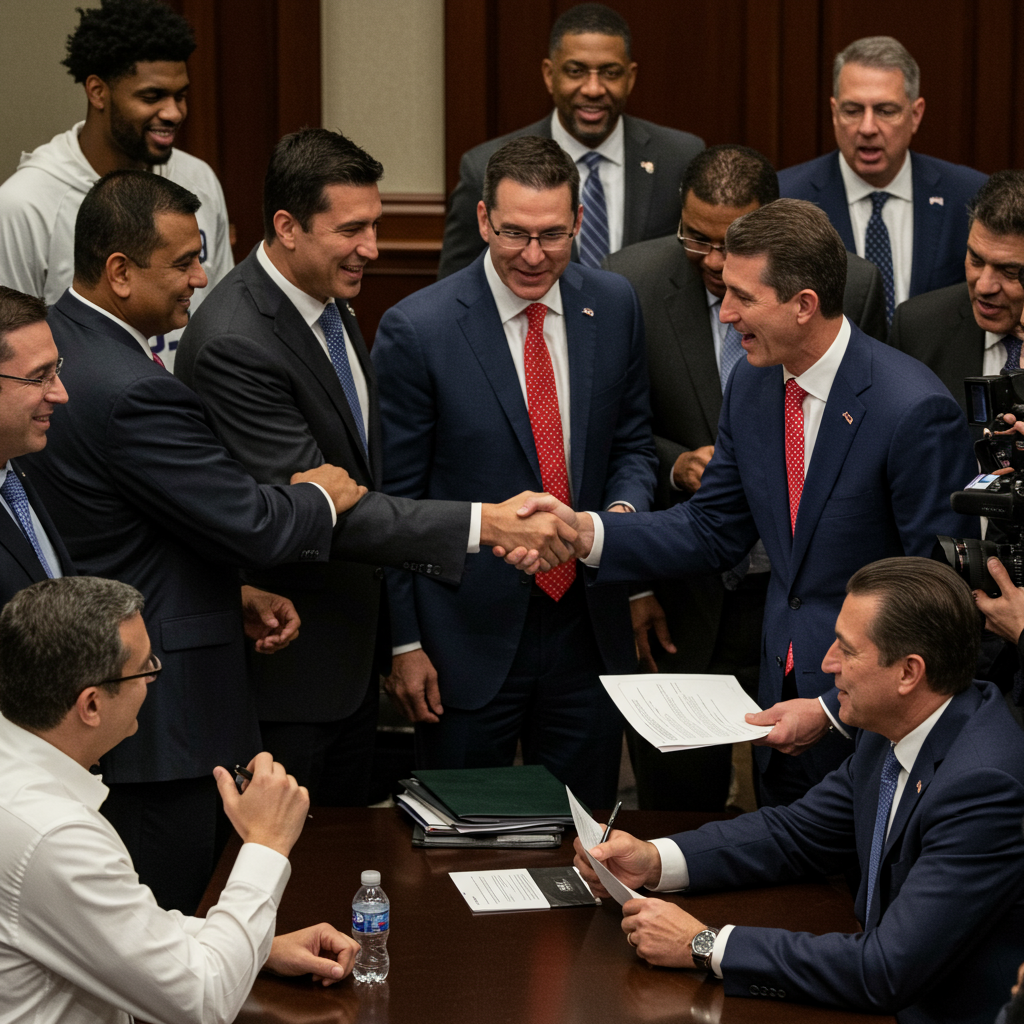
The baseball world buzzes with excitement as the Pittsburgh Pirates recall their highly touted 19-year-old shortstop prospect, Konnor Griffin. This anticipated promotion signals a new chapter for the franchise, with fans eager to witness one of the sport’s most promising young talents grace the major league stage. Griffin, known for his advanced defensive skills and immense offensive upside, is often labeled a “can’t-miss” superstar in the making. His arrival in Pittsburgh has sparked immediate speculation, not just about his on-field performance, but also about a potential long-term contract extension.
However, despite the undeniable hype surrounding Griffin’s debut, a critical question arises for the Pirates’ front office: Is rushing into a mega-extension the right strategic move? While locking up a future star early offers tantalizing benefits, a deep dive into the financial prudence and historical precedents suggests a more cautious approach. For a team like the Pirates, every major investment demands meticulous consideration, especially when dealing with unproven, albeit talented, young players.
Konnor Griffin: The Promise and the Prudent Pause
Konnor Griffin represents a beacon of hope for the Pirates. At just 19, he’s already considered an upgrade defensively at shortstop, a position where even experienced major leaguers struggle. His athleticism and raw talent suggest a player capable of impacting games on both sides of the ball for years to come. The decision to fast-track him to the major league roster, reportedly after just a few days of observation in Triple-A, underscores the organization’s belief in his immediate readiness and long-term potential. Yet, this rapid ascent also highlights the stark reality of his limited professional experience.
Griffin arrives in the majors with less than 125 at-bats above Single-A. While his recent performance in Indianapolis showed promise, this is an incredibly small sample size. Evaluating a player’s true capabilities and consistency requires prolonged exposure against top-tier competition. The Pirates now have the opportunity to give Griffin that “nice long look” as an everyday major league shortstop. This critical evaluation period should precede any discussions about a monumental financial commitment.
Understanding Early Extensions in MLB
The concept of signing young, pre-arbitration players to long-term extensions has become a popular strategy across Major League Baseball. These deals typically buy out a player’s arbitration-eligible years and often extend into their early free-agent seasons. For teams, the allure lies in potentially securing a superstar at a below-market rate if the player performs to expectations. For players, it offers financial security and guaranteed money early in their careers.
Reports indicate that the Pirates and Griffin’s representatives have been in discussions since spring training. The Pirates’ proposals are reportedly in the range of the eight-year, $111 million deal that Corbin Carroll signed with the Arizona Diamondbacks in 2023. Griffin’s side, however, is reportedly aiming for a larger sum, closer to the eight-year, $130 million deal Roman Anthony forged with the Boston Red Sox. These figures represent significant investments for any franchise, particularly for the Pittsburgh Pirates, a team notoriously careful with its financial resources.
Why Financial Prudence Dictates Patience for Pittsburgh
The central argument against an immediate Konnor Griffin extension revolves around the substantial financial risk for a team operating on a tighter budget. Committing potentially $130 million to a player who has yet to play a single major league game is an enormous gamble. If Griffin lives up to his superstar potential, an approximate annual salary of $15 million would undoubtedly be a bargain. However, if he falters, that same $15 million per year could consume a significant portion – perhaps one-fifth or even more – of the team’s annual payroll, tied up in a non-producing asset.
Unlike larger market teams that can absorb such mistakes, the Pirates’ margin for error is razor-thin. Every dollar spent must deliver value. Locking up a massive contract purely for public relations, or because “fans will love it,” is not a sustainable long-term strategy for building a consistently competitive team. The Pirates maintain contractual control over Griffin through the 2031 season, granting them at least six more years. There is no immediate urgency for a new deal, allowing ample time for proper evaluation. While some argue that waiting a year might mean paying more, it is surely wiser to pay a few extra dollars for a known performer than to risk a costly error of judgment.
The Player’s Incentive: Guaranteed Money Today
From Konnor Griffin’s perspective, an early extension makes considerable sense. Despite the potential for earning significantly more if he becomes a perennial All-Star, the guaranteed money upfront is a powerful motivator. A reported $130 million today, irrespective of future performance, injury, or career trajectory, offers unparalleled security. Contract analytic experts might suggest he could leave around $25 million “on the table” over eight years if he becomes a superstar, but this pales in comparison to the certainty of a nine-figure deal right now. For a young athlete, this guaranteed financial stability is often irresistible.
Lessons from Pirates’ Past Extensions: A Mixed Bag
The Pirates have a history of engaging in these types of early extensions, with decidedly mixed results. Examining these past deals provides valuable context for the Konnor Griffin situation.
Jose Tabata (2011): Signed a six-year, $14.75 million deal. The team clearly did not get their money’s worth, as Tabata underperformed expectations.
Gregory Polanco (2016): Agreed to a five-year, $35 million contract. Polanco was another highly hyped prospect but largely underwhelmed during his time in Pittsburgh.
Andrew McCutchen (2012): Signed for six years and $51.5 million. This proved to be an excellent investment, as McCutchen greatly exceeded his contract value, becoming an MVP and franchise cornerstone.
Starling Marte (2014): His early extension was generally a good investment, providing solid performance for the team.
Ke’Bryan Hayes (2022): Signed an eight-year, $70 million extension. While he provides elite defense, his offensive production has often lagged, making the deal look less favorable so far.
Bryan Reynolds (2023): Agreed to an eight-year, $100 million extension. Coming off a down year, some speculate this contract might also prove challenging if his performance does not rebound.
Crucially, nearly all these players had amassed significant major league experience and demonstrated a foundational level of competence before signing their extensions. Konnor Griffin’s situation is unique due to his extreme youth and complete lack of MLB experience. This absence of a proven track record amplifies the inherent gamble for the Pirates.
The Smart Strategy: Observe, Evaluate, Then Decide
The current moment provides an invaluable opportunity for the Pittsburgh Pirates to observe Konnor Griffin firsthand in the pressure cooker of major league baseball. There is no tactical advantage in rushing a long-term contract at this juncture. Even if waiting costs an additional $5-10 million over an eight-year period, that amount is a small price to pay for the certainty of knowing the player you are committing to.
Prudent, pragmatic, and smart management is essential for a team aiming for annual competitiveness. The focus should remain on Griffin’s development, allowing him to establish himself as a major league player. Only then, armed with concrete performance data and a clearer understanding of his trajectory, can the Pirates make an informed decision about his long-term future with the club. This deliberate approach ensures that financial resources are allocated wisely, maximizing the team’s chances of sustained success.
Frequently Asked Questions
Why are the Pirates considering an early extension for Konnor Griffin despite his limited MLB experience?
The Pirates are likely considering an early extension due to Konnor Griffin’s exceptional prospect status and “can’t-miss” potential. Securing a highly touted young player before they reach arbitration or free agency can potentially save the team significant money if the player becomes a superstar. It also offers the player financial security earlier in their career, which can be an attractive incentive for both sides.
What are the financial implications of an early extension for the Pirates, considering past deals?
An early extension for Konnor Griffin could range from $111 million (similar to Corbin Carroll) to $130 million (like Roman Anthony). For a smaller market team like the Pirates, this represents a substantial financial commitment. Past extensions have yielded mixed results, with some players like Andrew McCutchen exceeding value, while others like Jose Tabata and Gregory Polanco underperformed their deals. A large contract for an unproven player carries significant risk for the Pirates’ limited payroll flexibility.
Should the Pirates sign Konnor Griffin to an extension before he proves himself in MLB?
Based on the analysis, the Pirates should exercise patience and avoid rushing an extension for Konnor Griffin. While his potential is immense, he has virtually no major league experience. Committing a nine-figure sum to an unproven player creates significant financial risk. The Pirates control Griffin until at least 2031, providing ample time to evaluate his performance, consistency, and health in the majors before making a long-term, high-value commitment.