The intersection of personal belief and public representation is a delicate tightrope for professional athletes, and New England Patriots coach Mike Vrabel recently navigated this complex terrain. Speaking from the annual NFL owners’ meetings in Phoenix, Arizona, Vrabel addressed running back TreVeyon Henderson’s recent social media activity, emphasizing the challenging balance between individual expression and the collective values of the Patriots organization. This incident highlights a growing issue for sports franchises in the digital age: how to uphold team unity and an inclusive image while respecting players’ deeply held personal convictions.
Vrabel’s Stance: Navigating the “Fine Line”
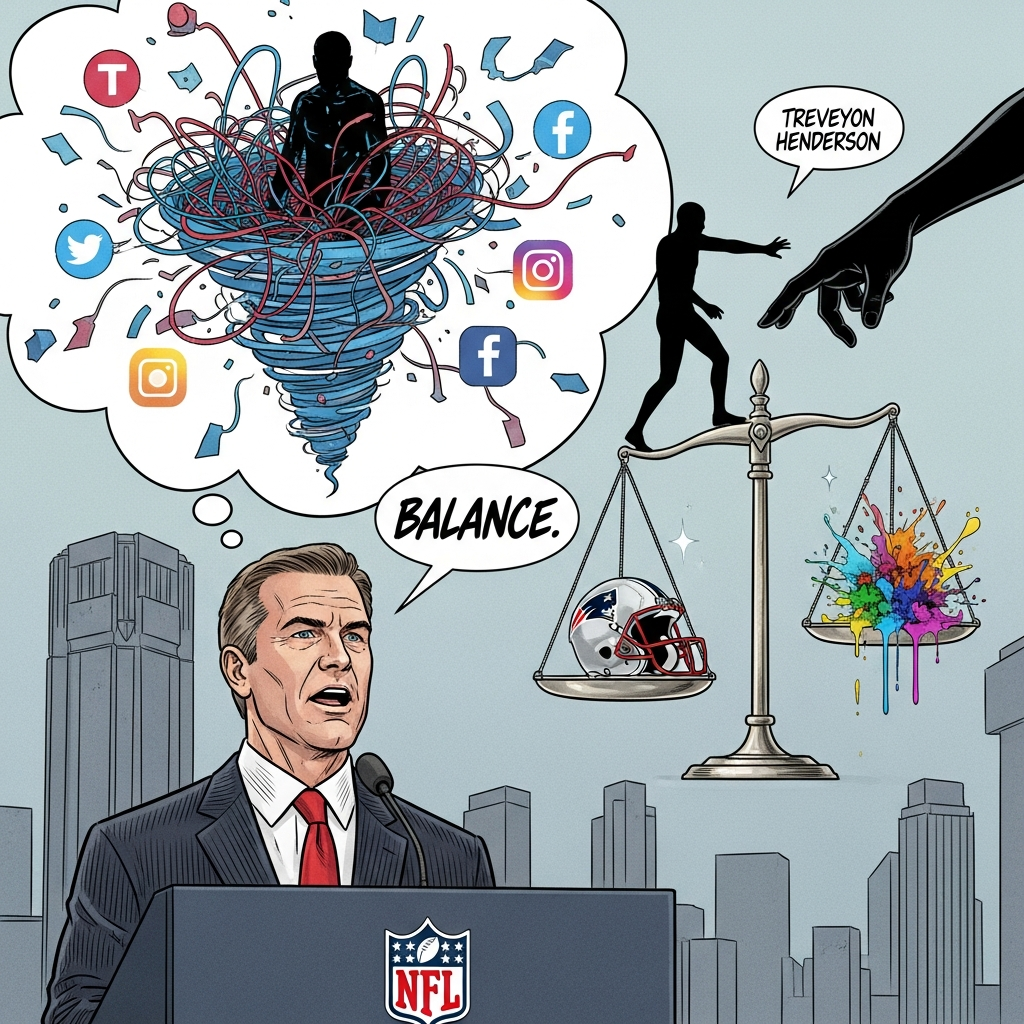
Coach Vrabel’s comments underscored a nuanced approach to player conduct. He articulated a clear “fine line” that exists when players engage in public discourse, particularly on sensitive or controversial topics. His remarks, delivered at the Arizona Biltmore, signaled the Patriots’ philosophy: to foster an environment where individual beliefs are respected, yet understood within the broader context of representing an NFL team. This isn’t just about adherence to rules, but about a deeper understanding of influence and responsibility.
The Genesis of the Controversy: Ivey & Henderson
The discussion surrounding Mike Vrabel TreVeyon Henderson social media activity was triggered by Henderson’s public support for former NBA guard Jaden Ivey. Ivey had been waived by the Chicago Bulls following anti-LGBTQ comments, where he publicly criticized the NBA’s Pride Month initiative as a “celebration of unrighteousness.” Following his release, Ivey further elaborated on his religious views.
In response, Henderson, known for his outspoken Christian faith, took to X (formerly Twitter). He did not directly comment on Ivey’s specific situation but shared a powerful Bible verse, Matthew 5:10: “Blessed are those who are persecuted for righteousness’ sake, For theirs is the kingdom of heaven.” This post was widely interpreted as an endorsement of Ivey’s stance or a commentary on his perceived “persecution.” Henderson also reposted a message from Jets cornerback Azareye’h Thomas, stating, “The world will try to make sin look normal and righteousness look strange,” further linking his views to the broader controversy.
Vrabel’s Core Message: Support, Education, Inclusivity
Despite the controversial nature of Henderson’s posts, Vrabel expressed profound support and affection for his running back. “I love TreVeyon,” Vrabel stated, “I love the person. He cares deeply about our team. He cares deeply about his faith. He cares deeply about his family, his wife, and the people in our building.” This personal endorsement set the tone for a discussion centered on mentorship rather than condemnation.
Vrabel affirmed his desire for players to “be able to express what they believe in their heart and in their mind.” However, he immediately tempered this by stressing the necessity for players to be “educated” and for the Patriots organization to remain “inclusive.” The core message is clear: while individual freedom of expression is valued, it must be balanced with an understanding of how those expressions impact the team’s commitment to inclusivity and its public image.
The Broader Context: Player Expression in the Digital Age
The incident with TreVeyon Henderson’s social media is not isolated. It mirrors a growing trend across professional sports, where athletes leverage their platforms to voice personal, political, or religious beliefs. This phenomenon presents a continuous challenge for teams, who must balance supporting their players’ rights with safeguarding their brand and fostering a harmonious locker room. The digital age has amplified individual voices, making every public statement a potential headline, and placing new pressures on team management.
Henderson’s Faith: A Personal Dimension
Henderson’s actions are deeply rooted in his strong Christian faith. Since joining the Patriots, he has been openly religious, actively participating in team Bible studies with chaplain James Mitchell and frequently referencing his faith. He has even noted the significant religious presence within the Patriots’ facility, despite New England’s reputation as a less religious region, viewing it as evidence of God’s work. For Henderson, his social media activity likely stems from a profound personal conviction, seeing it as an extension of his walk with faith. Understanding this personal dimension is crucial for the team in addressing such situations empathetically.
Team Values vs. Individual Beliefs: An NFL Challenge
The challenge for the New England Patriots, and indeed for any NFL franchise, lies in reconciling deeply personal beliefs with the overarching values of a diverse organization. Teams strive for unity and a broad appeal, often promoting inclusivity and acceptance. When player statements, even if faith-based, appear to contradict these values, it creates tension. Vrabel’s emphasis on “inclusivity” underscores the Patriots’ commitment to a welcoming environment for all, regardless of background or orientation. This means educating players on how their actions can be perceived, and the potential impact on teammates, fans, and the wider community.
The Patriots’ Proactive Approach to Player Conduct
Coach Vrabel’s response signifies a proactive and educational approach rather than a punitive one. He confirmed that discussions around such matters are constant within the team, comparing it to ongoing conversations about player phone use. The goal, he explained, is always to “educate them” and not to “tell them how to feel.” This philosophy aims to empower players with understanding, enabling them to make responsible choices that reflect well on themselves and the organization.
Open Dialogue and Ongoing Education
Vrabel’s leadership style focuses on maintaining open lines of communication. He stressed that while he would never dictate how players should feel, it is paramount for them to understand that their public actions carry weight beyond their individual selves, representing the Patriots organization. This ongoing educational effort is continuous, much like guiding his own children through life’s complexities. The objective is to cultivate an environment where players can express themselves authentically, yet with an acute awareness of their platform and its reach.
Vrabel’s Mentorship Philosophy
The coach’s comments reveal a strong mentorship aspect to his role. He views these situations as teaching opportunities, helping young athletes navigate the scrutiny and responsibilities that come with professional sports. This holistic approach by the New England Patriots aims to strike a balance between individual freedom and collective responsibility, ensuring that players recognize their role as ambassadors for the team while still feeling comfortable to be themselves. This philosophy is vital for fostering both individual growth and team cohesion in a rapidly evolving social landscape.
Implications for the Patriots and Beyond
The discussion around Mike Vrabel TreVeyon Henderson social media activity is more than just a fleeting headline; it’s a blueprint for how modern sports organizations are learning to manage athlete expression. The Patriots’ stance, prioritizing education, open dialogue, and inclusivity while supporting individual beliefs, offers a model for navigating such complexities. For players, it’s a reminder that their digital footprint carries significant weight. For the team, it reinforces the continuous need to articulate and uphold organizational values in a way that resonates with all stakeholders. As athletes increasingly use social media as a platform, teams will continue to refine these “fine lines,” seeking equilibrium between personal freedom and professional responsibility.
Frequently Asked Questions
What controversial social media activity did TreVeyon Henderson engage in?
TreVeyon Henderson, a New England Patriots running back, posted a Bible verse (Matthew 5:10: “Blessed are those who are persecuted for righteousness’ sake, For theirs is the kingdom of heaven”) on X (formerly Twitter). This was in apparent support of former NBA guard Jaden Ivey, who was waived by the Chicago Bulls for making anti-LGBTQ comments regarding the NBA’s Pride Month. Henderson also reposted a message about “the world trying to make sin look normal and righteousness look strange,” which was widely interpreted as an endorsement of Ivey’s controversial stance or a commentary on his perceived “persecution.”
How is Coach Vrabel guiding the Patriots on sensitive social media issues?
Patriots coach Mike Vrabel is adopting an educational and inclusive approach. He publicly expressed his support for Henderson as a person and his right to express personal beliefs but stressed the importance of players being “educated” and the team remaining “inclusive.” Vrabel emphasized a “fine line” between individual expression and representing the organization, explaining that open dialogue and ongoing education are constant practices within the team. His goal is to help players understand that their public actions represent more than just themselves, likening it to guiding his own children.
What are the wider implications for NFL players balancing personal faith and team inclusivity?
The situation highlights the complex challenge for NFL players and teams in reconciling personal faith and freedom of expression with organizational values of inclusivity and team representation. While players have a right to their beliefs, their public platforms mean their statements carry significant weight and can impact team unity, fan perception, and the league’s broader image. Teams, like the Patriots under Vrabel, aim to navigate this by fostering environments where beliefs are respected, but also where players are educated on the impact of their words and actions, ensuring that inclusive values are upheld for all members of the organization and its fanbase.