Humanity stands on the brink of a monumental achievement: a return to deep space. The Artemis II mission is poised to send four trailblazing astronauts around the moon, marking the first human lunar journey in over half a century. This incredible crew represents a new chapter for space exploration, shattering old barriers and ushering in an era of unprecedented diversity. Their daring 10-day expedition is more than a test flight; it’s a critical stepping stone towards establishing a permanent human presence on the moon and eventually, Mars.
A New Era of Deep-Space Exploration Begins
NASA’s Artemis II mission isn’t just about revisiting the moon. It aims to expand the boundaries of human spaceflight. This mission will carry its crew farther into space than any human has ever traveled. Set to launch as soon as April, this historic journey will circumnavigate the moon, preparing the way for future lunar landings. It’s a foundational step in the broader Artemis program, which envisions humans living and working on the lunar surface. This ambitious goal directly supports the long-term objective of sending astronauts on month-long missions to Mars.
The Historic Crew: Blazing Trails Beyond Earth
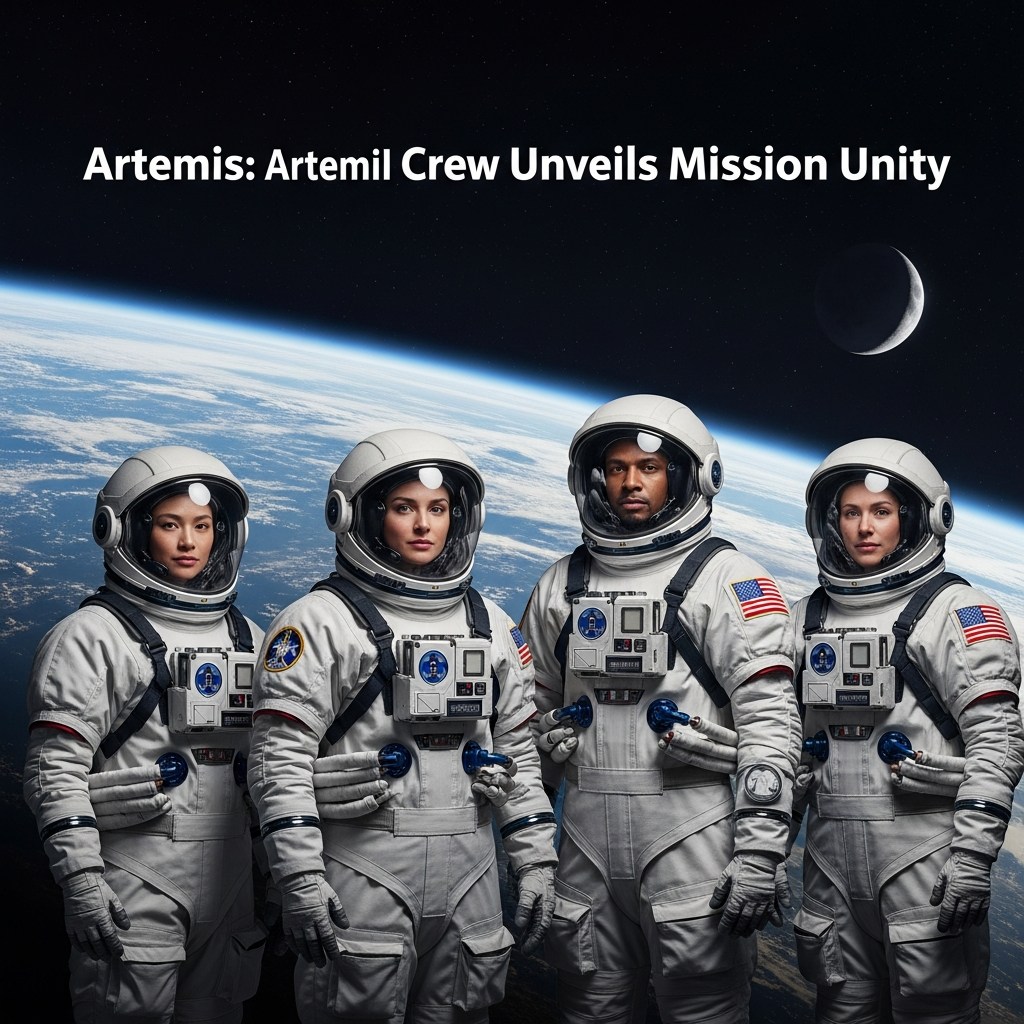
The four individuals selected for the Artemis II mission embody historic firsts. They challenge the traditional image of Apollo-era astronauts, who were exclusively White American men, mostly with military backgrounds. This new crew reflects a modern, inclusive vision for space exploration.
The First Woman: Christina Koch will become the first woman to venture around the moon.
The First Person of Color: Victor Glover is set to be the first Black person to travel into deep space.
- The First Canadian: Jeremy Hansen will be the first non-NASA astronaut to join a lunar mission, representing the Canadian Space Agency.
- www.npr.org
- www.historynewsnetwork.org
- www.nbcnews.com
- media.amtrak.com
- www.doi.gov
These groundbreaking achievements signify a profound shift. While their backgrounds echo the elite credentials of past space explorers, their diverse identities will inspire generations.
Navigating the Dangers of a Deep-Space Mission
The Artemis II journey is inherently perilous. It involves significant risks, demanding extraordinary courage and meticulous preparation from the crew. This 600,000-mile (965,600-kilometer) trip will push the limits of human endurance and technological capability.
Unprecedented Risks and Radiation Exposure
One major concern is the exposure to dangerous levels of radiation. Traveling beyond Earth’s protective magnetic field puts astronauts at higher risk. Furthermore, the sheer distance and physics of the flight mean the crew expects to lose contact with mission control at various critical points. Unexpected communications blackouts are a real possibility, requiring the astronauts to operate independently.
The crew will also be the first humans to fly aboard the Orion spacecraft and the Space Launch System (SLS) rocket. NASA has invested two decades and over $40 billion in developing this hardware. Despite this, known issues remain, including the notorious tendency of the fuel to leak, a topic of related concern.
Astronauts’ Candid Reflections on Risk
The Artemis II crew members have openly discussed these inherent dangers. Their candor provides a powerful insight into the realities of space exploration. Jeremy Hansen, for instance, shared a sobering thought with the Canadian Broadcasting Corp. about training for emergencies: “What are the bare basics to give us a fighting chance to still be breathing and to hit somewhere on the planet and ideally hit the Pacific Ocean? Obviously, I’ve had that conversation with my wife and my children.” This human element underscores the profound personal sacrifices involved in such a mission. Yet, despite the risks, the crew remains optimistic about the mission’s impact on humanity and international partnerships.
Meet the Artemis II Astronauts
Each member of the Artemis II crew brings a unique set of skills, experiences, and perspectives to this historic mission.
Reid Wiseman: Mission Commander
Reid Wiseman, 50, a decorated naval aviator and test pilot, will command Artemis II. Hailing from Baltimore, he previously spent 165 days on the International Space Station (ISS) in 2014. Wiseman’s recent role as chief of the astronaut office allowed him to assign himself to this mission.
When asked about the moon return, Wiseman is direct: “Because we want to see humans on Mars.” He also emphasizes the importance of preparing for the unexpected, having had frank conversations with his two daughters about his will and trust documents before the mission. He advocates for everyone to have such talks with their families.
Victor Glover: Mission Pilot
Victor Glover, 49, from Pomona, California, will pilot the Orion spacecraft. A reserved but deeply experienced naval test pilot, he was the pilot for the SpaceX Crew-1 mission to the ISS in 2020. Glover holds several master’s degrees, including in flight test engineering and systems engineering.
He embraces automation in modern spacecraft but values human interaction. Glover humorously calls himself “a little bit of a Luddite” when discussing manual controls. He notes that human needs in space, like having a window, remain constant. Glover and his wife, Dionna Odom Glover, have four daughters. He appreciates that an Earth-bound astronaut will support their families during the mission.
Christina Koch: Mission Specialist
Christina Koch, from Jacksonville, North Carolina, serves as a mission specialist. In 2019, she set a record for the most consecutive days in space for a woman, spending 328 days on the ISS. That same year, she participated in the first all-female spacewalk. Koch holds a master’s degree in electrical engineering. Her past work includes Earth observation satellites and remote labs in Antarctica.
Koch deeply admires the camaraderie of Apollo astronauts. She recalled Apollo 13 astronaut Fred Haise joking about her potentially breaking their deep-space travel record. Koch noted this exchange made her feel part of that esteemed group. She also joked about the communication challenges, telling her husband he can’t call her about lost items at home.
Jeremy Hansen: Mission Specialist
Jeremy Hansen, from London, Ontario, will make his first spaceflight on Artemis II. This is a remarkable feat, as most first-time astronauts undertake missions to low-Earth orbit. Hansen will travel approximately 1,000 times farther. He grew up on a farm, dreaming of flight, and became a Royal Canadian Air Force fighter pilot.
Although new to spaceflight, Hansen is an experienced cavenaut and aquanaut. He trained in European Space Agency’s CAVES program, exploring caves for six days. He also spent a week in an underwater habitat with NASA’s NEEMO 19 excursion. Hansen describes these trainings as “very dangerous,” highlighting his comfort with extreme environments. Known as the crew’s comedian, Hansen, at 6 feet, 2 inches, is uncommonly tall for an astronaut. Wiseman jokingly noted the 16.5-foot-wide Orion spacecraft will feel small when Hansen starts exercising. Hansen acknowledges the “calculated risks” involved, stating the crew will “accomplish some extraordinary things” despite potential setbacks.
The Grand Vision: Moon to Mars
The Artemis program is more than a series of missions; it’s a long-term strategy. Artemis II is a vital test flight, paving the way for Artemis III, which aims to land near the moon’s unexplored south pole. The overarching goal is to understand how humans can permanently live and work on the lunar surface. This knowledge is crucial for future human expeditions to Mars.
As Victor Glover emphasized, “We need to celebrate this moment in human history. It is the next step in the journey that will get humanity to Mars.” This mission is a testament to human ingenuity and our enduring desire to explore the cosmos.
Frequently Asked Questions
What is the purpose of NASA’s Artemis II mission?
The Artemis II mission is a critical test flight designed to send four astronauts on a loop around the moon. It will be the first human lunar journey in over 50 years. Its primary purpose is to validate the Orion spacecraft, the Space Launch System rocket, and critical mission procedures before humans attempt to land on the moon again. This mission serves as a vital pathfinder for the subsequent Artemis III landing and the broader goal of establishing a sustainable human presence on the moon, ultimately paving the way for human exploration of Mars.
Who are the astronauts on the historic Artemis II crew?
The Artemis II crew consists of four highly experienced and diverse astronauts: Reid Wiseman (Commander), Victor Glover (Pilot), Christina Koch (Mission Specialist), and Jeremy Hansen (Mission Specialist). This crew is making history with several “firsts”: Victor Glover will be the first Black person in deep space, Christina Koch the first woman to travel around the moon, and Jeremy Hansen the first Canadian and non-NASA astronaut on a lunar mission. Their selection represents a significant step towards greater diversity in space exploration.
What significant challenges and risks will the Artemis II crew face?
The Artemis II mission presents numerous challenges and risks. The crew will be exposed to dangerous levels of radiation beyond Earth’s protective atmosphere. They anticipate periods of communication blackout with mission control due to the vast distances involved. Furthermore, they will be the first humans to fly aboard the Orion spacecraft and Space Launch System rocket, which are new hardware systems with known issues. Astronauts have openly discussed these calculated risks, underscoring the high-stakes nature of this deep-space journey.
The Artemis II mission represents a pivotal moment in space exploration. It blends cutting-edge technology with the enduring spirit of human adventure. The courageous astronauts embarking on this journey are not just pilots and engineers; they are pathfinders, expanding the human frontier and inspiring a new generation. Their mission will shape the future of deep-space travel, moving us closer to the dream of living and working on other celestial bodies.