In a shocking incident that sent ripples of concern through Michigan and beyond, an attacker who rammed his truck into Temple Israel in West Bloomfield Township ultimately died by a self-inflicted gunshot wound. The Federal Bureau of Investigation (FBI) confirmed the assailant’s death on Friday, March 13, 2026, just a day after the harrowing event. This targeted act of violence against the Jewish community has highlighted both the swift, overwhelming response of law enforcement and the ongoing challenges faced by religious institutions in an era of heightened security threats.
Unpacking the Attack: A Detailed Account of the Incident
The FBI’s investigation quickly pieced together a timeline of the assault on Temple Israel, a prominent synagogue on Walnut Lake Road. The perpetrator, identified as Ayman Ghazali, a 41-year-old resident of Dearborn Heights, initiated his assault on Thursday, March 12. According to Special Agent In Charge Jennifer Runyan of the FBI Detroit Field Office, Ghazali’s actions were deliberate and chillingly premeditated.
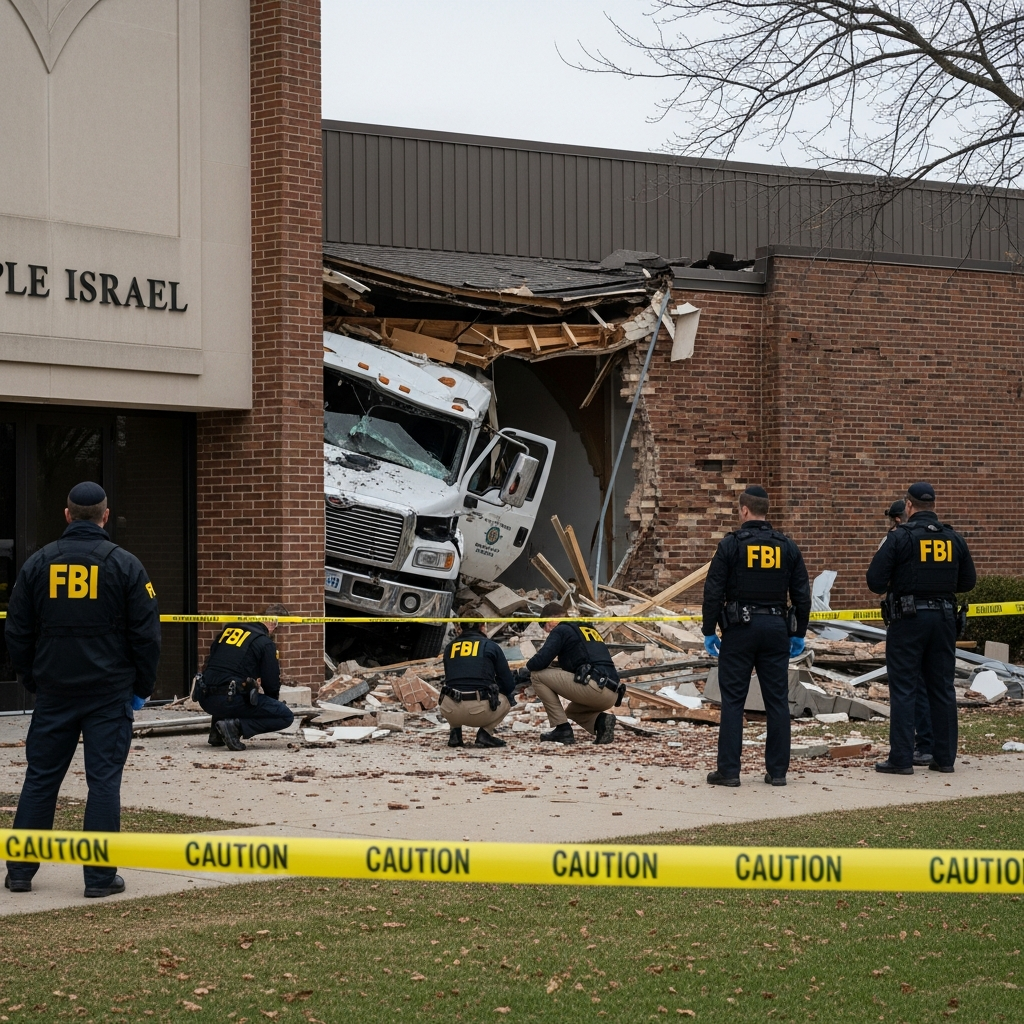
Ghazali sat in his gray Ford F-150 pickup truck in the synagogue’s parking lot for over two hours, from approximately 10:00 a.m. to 12:15 p.m. This prolonged wait preceded his violent ramming of the vehicle through Door 5, located in the southeast entrance of the building. The truck then became critically jammed in a hallway, preventing the attacker from exiting his vehicle.
The Confrontation and Fatal Outcome
Once inside, Ghazali fired gunshots through his windshield, prompting an immediate and courageous response from the synagogue’s security team. A gunfight ensued, with Ghazali exchanging fire with at least two security officers. One officer engaged him through the truck’s rear window, while a second fired through the front. Unable to extract himself from the wedged vehicle, Ghazali then tragically shot himself in the head. This self-inflicted gunshot wound proved fatal.
The incident caused a significant fire within the synagogue. Investigators determined that the truck’s engine caught fire, exacerbated by “several jugs” of gasoline found in the vehicle’s trunk, which were consumed by the blaze. Further exacerbating the potential for destruction, Runyan also reported that Ghazali had commercial-grade fireworks in his trunk. Remarkably, despite the violent nature of the attack and the ensuing fire, none of the approximately 140 staff members or children present at the facility’s child care center were physically harmed, as the center was located in a different part of the building. One security guard sustained minor injuries after being hit by the truck, and dozens were later treated for smoke inhalation.
Massive Emergency Response and Community Reaction
The scale of the emergency response to the Temple Israel attack underscored its severity. Oakland County Sheriff Mike Bouchard reported that more than 600 law enforcement officers from 42 different agencies swiftly converged on the scene. Their coordinated efforts were crucial in containing the situation and ensuring the safety of those inside. Tragically, 63 first responders required hospital treatment, primarily for smoke inhalation, highlighting the hazardous conditions they faced.
Steven Ingber, CEO of the Jewish Federation of Detroit, lauded the heroic efforts of law enforcement. “When you’re looking for a friend, when you’re looking for who’s with us, there were 605 people who were willing to give their life to save us,” Ingber stated, expressing profound gratitude for their bravery and rapid deployment. This sentiment of appreciation for the quick and comprehensive response resonated deeply within the West Bloomfield community and the broader Detroit Jewish community.
Unraveling the Motive: An Ongoing FBI Investigation
Despite the rapid accumulation of facts regarding the incident’s timeline, the FBI remained cautious about speculating on Ghazali’s motive. Special Agent In Charge Jennifer Runyan emphasized that the investigation was still in its early stages, only 30 hours old at the time of her initial news conference. “Because we are only 30 hours into this investigation, it would be irresponsible for me to speculate on a motive at this time,” Runyan said, reiterating that facts and evidence would lead the inquiry.
However, several media reports and external sources brought a significant potential context to light. Ghazali, a naturalized U.S. citizen from Lebanon who immigrated in 2011 and became a citizen in 2016, reportedly had several family members killed in an apparent Israeli airstrike in Lebanon just days before the synagogue attack. These family members included his brother Ibrahim, Ibrahim’s two young children, and another brother Qassem, who were reportedly killed on March 5. Ghazali had attended a memorial service for his slain relatives in Dearborn, a city with a large Arab American community.
When questioned about possible links between Ghazali’s family members and the terrorist group Hezbollah, Runyan stated she was “aware of” that possibility, confirming it was part of the ongoing investigation. The FBI, while refraining from definitive statements on motive, did categorize the event as a “targeted act of violence against the Jewish community,” suggesting a deeper ideological or retaliatory dimension.
Attacker’s Profile and Preparations
Further details about Ayman Ghazali revealed that he had no previous criminal history and no registered weapons. He was a father of two teenagers, divorced his wife in 2024, and had recently been employed as a waiter. Adding to the evidence of premeditation, NBC News reported that Ghazali had purchased over $2,000 worth of fireworks from a metro Detroit store just days before the attack, after the death of his relatives. A store employee corroborated this, confirming they had provided information about the purchase to federal officials via a subpoena. The FBI also stated there was no indication the attack on Temple Israel was connected to a separate shooting incident at Old Dominion University in Virginia that same day.
A Broader Context: Rising Antisemitism and Community Resilience
The West Bloomfield synagogue attack occurred amidst a disturbing global surge in antisemitic violence, intensifying concerns within Jewish communities worldwide. Michigan Governor Gretchen Whitmer unequivocally condemned the incident as “antisemitism” and “hate,” urging a reduction in divisive rhetoric. The attack echoes a troubling pattern, including incidents like targeted gunfire at synagogues in Canada, a synagogue fire in Mississippi, and a mass shooting targeting Jews in Australia. This rise in hatred underscores the critical need for enhanced security measures at houses of worship.
Rabbi Steven Abraham of Beth El Synagogue in Omaha, Nebraska, provided a poignant perspective on the attack’s emotional toll. He described a dual sense of relief that casualties were minimal, alongside a “heightened sense of fear and being scared” within the Jewish community. Rabbi Abraham articulated the inherent conflict faced by synagogues: traditionally open and welcoming spaces now forced to implement extensive security, including guards, metal detectors, and bollards. He famously stated, “We are synagogues. We’re houses of worship. We are not Fort Knox,” highlighting the tension between spiritual openness and the necessity for robust protection against terrorism.
Fortifying Faith and Community
The incident at Temple Israel serves as a stark reminder of the global interconnectedness of events and their local impact. Rabbi Abraham emphasized the importance of not succumbing to fear or hiding one’s Jewish identity, as doing so would grant terrorists a “win.” Many synagogues, including Temple Israel, had significantly enhanced security measures well before this attack, particularly following the 2018 Tree of Life Synagogue attack in Pittsburgh and the October 7 Hamas terrorist attack on Israel. These proactive steps, including active shooter prevention training, likely played a crucial role in preventing greater casualties during the West Bloomfield attack.
The Jewish community often sees itself as the “canary in the coal mine” for understanding the plight of minority groups. The ongoing geopolitical tensions further amplify concerns about potential domestic attacks. Despite the trauma, community leaders stress the importance of resilience, solidarity, and continuing to uphold their values in the face of hatred. While the investigation into Ghazali’s full motive continues, the immediate aftermath has underscored the unwavering commitment of communities to support one another and strengthen their resolve against targeted violence.
Frequently Asked Questions
What exactly happened at Temple Israel in West Bloomfield on March 12, 2026?
On Thursday, March 12, 2026, Ayman Ghazali, 41, drove his Ford F-150 truck into the southeast entrance of Temple Israel in West Bloomfield Township, Michigan. After his truck became lodged, he engaged in a gunfight with the synagogue’s security officers. During this confrontation, Ghazali died from a self-inflicted gunshot wound to the head. The attack also involved a fire within the synagogue, fueled by gasoline and commercial-grade fireworks found in Ghazali’s truck. Over 600 law enforcement officers responded, and 63 first responders were treated for smoke inhalation.
How has the West Bloomfield Jewish community responded to this targeted act of violence?
The West Bloomfield Jewish community, along with the broader Detroit Jewish community, responded with a mix of shock, gratitude for law enforcement, and resolve. Community leaders, including Steven Ingber of the Jewish Federation of Detroit, praised the swift and extensive emergency response. While acknowledging a heightened sense of fear, leaders emphasized the importance of resilience, solidarity, and refusing to let such attacks diminish their faith or identity. Synagogues have continued to strengthen security measures, promoting vigilance while striving to maintain their welcoming spirit.
What potential factors are being investigated as a motive for the Temple Israel attack?
While the FBI has not officially confirmed a motive, Special Agent In Charge Jennifer Runyan stated they are investigating it as a “targeted act of violence against the Jewish community.” Media reports highlighted a significant potential factor: the attacker, Ayman Ghazali, reportedly had several family members killed in an Israeli airstrike in Lebanon just days before the synagogue attack. The FBI is also “aware of” potential ties between Ghazali’s family and the terrorist group Hezbollah, which is part of their ongoing inquiry. Ghazali had no prior criminal history and purchased $2,000 worth of fireworks before the incident.
The West Bloomfield synagogue attack stands as a stark reminder of the vulnerabilities faced by religious communities and the ongoing struggle against hate. As the FBI continues its comprehensive investigation into Ayman Ghazali’s motive, the resolve of the Jewish community and the dedication of law enforcement remain unwavering. This tragic event underscores the critical need for continued vigilance, robust security, and unwavering community support in countering antisemitism and all forms of targeted violence.