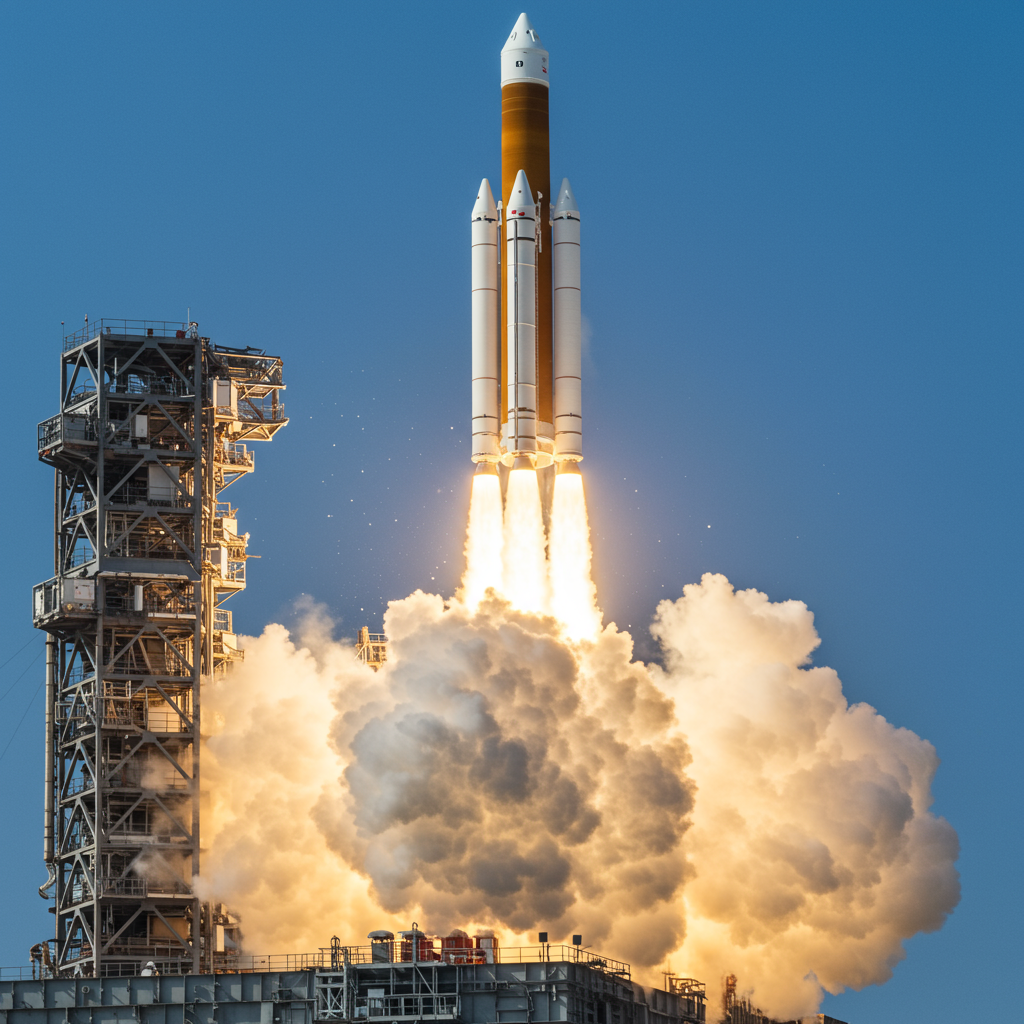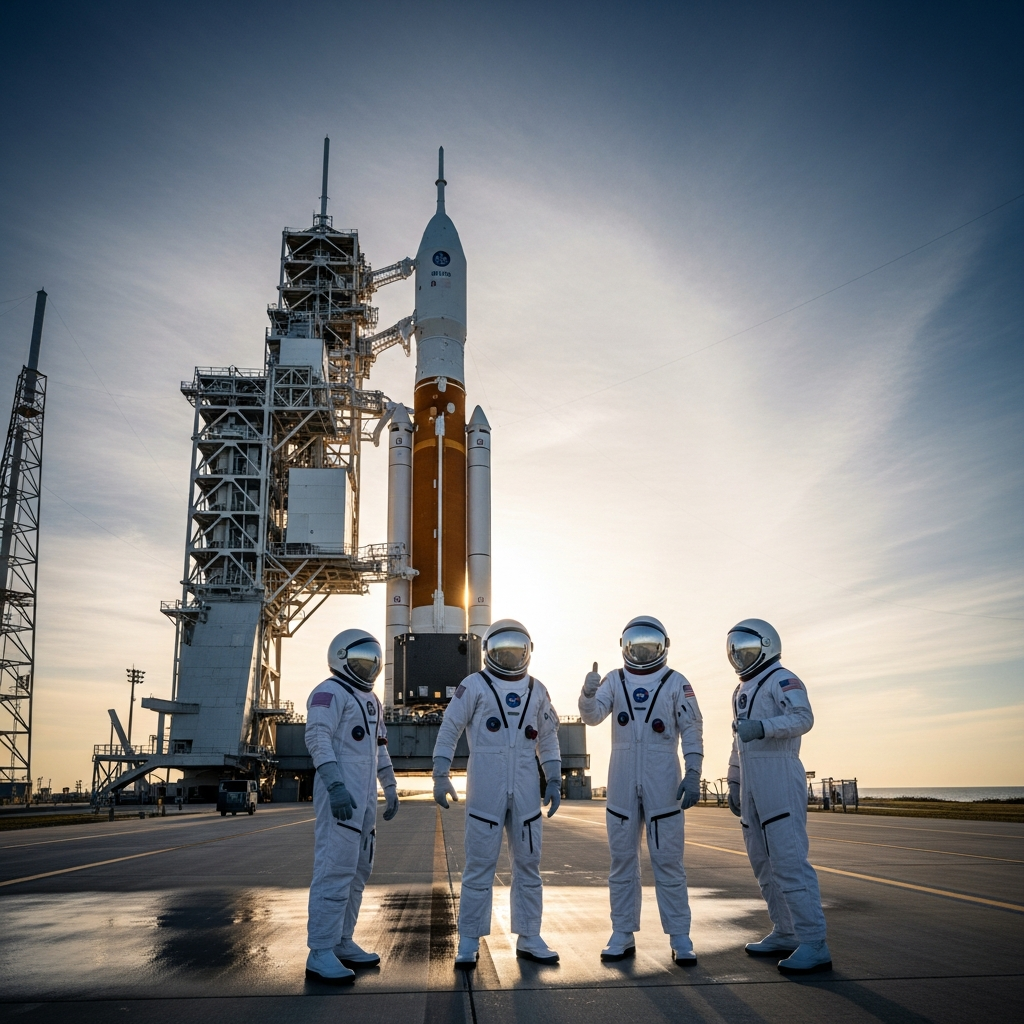
The countdown to humanity’s next giant leap towards the Moon has a new, critical target: April 1 for the Artemis II mission. NASA is poised to send four astronauts on a landmark journey around our lunar neighbor, marking the first time humans will venture into deep space beyond low-Earth orbit in over 50 years. This ambitious crewed lunar orbital mission, aboard the powerful Space Launch System (SLS) rocket and Orion spacecraft, represents a pivotal moment in human spaceflight, reigniting our drive for lunar exploration and setting the stage for future Moon landings.
This isn’t just another launch; it’s a testament to engineering resilience, meticulous planning, and an unwavering commitment to exploration. After facing a series of technical hurdles and delays, mission managers have confirmed they are “go for launch,” signaling confidence in the vehicle and its systems. The world now watches as NASA prepares to make history once again, pushing the boundaries of what’s possible in space.
Artemis II: A Historic Return to the Moon’s Vicinity
The Artemis II mission is designed as a crucial test flight, sending a four-person crew on a 10-day journey around the Moon and back. This mission will fly farther from Earth than any humans have before, looping around the far side of the Moon – a segment never visible from our planet. It’s the first time astronauts will travel aboard NASA’s colossal Space Launch System (SLS) rocket and the Orion spacecraft, validating its capabilities for deep space human missions.
This endeavor rekindles the spirit of the Apollo program, with Artemis II serving as the first crewed lunar flight since Apollo 17 in 1972. The mission’s success is vital for the broader Artemis program, which aims to establish a long-term human presence on the lunar surface and eventually pave the way for missions to Mars.
The Crew: Pushing the Boundaries of Exploration
The historic Artemis II mission will carry a diverse and experienced crew of four astronauts:
Reid Wiseman (NASA): Mission Commander
Victor Glover (NASA): Pilot
Christina Koch (NASA): Mission Specialist
Jeremy Hansen (Canadian Space Agency): Mission Specialist
These trailblazers will be the first humans to experience the raw power of the SLS rocket and the advanced capabilities of the Orion capsule. Their journey will not only test the spacecraft’s life support systems and navigation in deep space but also gather invaluable data for future, even more complex, lunar missions. Currently, the crew is undergoing rigorous training at NASA’s Johnson Space Center in Houston and is scheduled to enter quarantine on March 18, before traveling to Kennedy Space Center in Florida on March 27, in preparation for their momentous flight.
Overcoming Challenges: The Path to Launch Readiness
The journey to the April 1 target launch date for Artemis II mission has been marked by careful troubleshooting and strategic adjustments. Initially, an earlier March launch was planned, but technical issues necessitated a delay, demonstrating NASA’s commitment to launching only “when we are ready,” prioritizing safety and mission success above all else.
The Helium Leak and VAB Rollback
A significant hurdle emerged in February following a successful fueling test of the SLS rocket. Engineers discovered an issue with the rocket’s helium system, which is critical for regulating pressures within the vehicle’s fuel tanks. Specifically, a dislodged seal in a quick disconnect mechanism was found to be obstructing the helium flow to the rocket’s upper stage.
Because repairs to the upper stage umbilical lines are only accessible inside the Vehicle Assembly Building (VAB) at Kennedy Space Center, mission managers made the crucial decision to roll the massive 322-foot-tall (98-meter) SLS rocket and Orion spacecraft back from the launch pad to the VAB on February 25. Technicians within the VAB successfully replaced the faulty seal and reassembled the system, validating the repairs with a reduced helium flow test.
Beyond the Leak: Comprehensive Pre-Flight Work
While in the VAB, ground teams also undertook several “refresh” tasks to ensure all systems are optimal. This included activating a new set of flight termination system batteries, replacing flight batteries on the SLS core stage, upper stage, and solid rocket boosters, recharging the batteries on the Orion spacecraft’s launch abort system, and replacing a seal on the core stage liquid oxygen feed line. These meticulous checks underscore the rigorous pre-flight preparations necessary for a crewed deep space mission.
With repairs completed, the SLS rocket and Orion spacecraft are slated to be rolled back out to Launch Complex 39B at Kennedy Space Center on March 19, positioning them for final launch preparations.
No Wet Dress Rehearsal: A Calculated Decision
In a significant decision, NASA officials confirmed that they will not conduct another “wet dress rehearsal” once the rocket returns to the launchpad. This test, which involves fully fueling the rocket with over 700,000 gallons of cryogenic propellant and running through a simulated countdown, has been deemed unnecessary for Artemis II.
Lori Glaze, acting associate administrator for the Exploration Systems Development Mission Directorate, explained that “there’s not a lot more to be gained from that.” The previous wet dress rehearsal on February 19, despite revealing the helium issue, provided valuable data. The agency is confident that the next time the vehicle is tanked, it will be for the actual launch attempt, maximizing the available launch window in April. This calculated approach reflects NASA’s deep understanding of its hardware and procedures, allowing them to proceed with confidence.
Launch Window and Broader Artemis Program Outlook
The primary launch opportunity for the Artemis II mission is set for April 1, at 6:24 p.m. ET. However, the launch window extends for six days, offering additional opportunities on April 3, 4, 5, and 6, and a potential backup window on April 30 if needed. This flexibility is crucial for managing the complex variables of a rocket launch, including weather conditions and final system checkouts.
The successful launch of Artemis II is a critical stepping stone for the entire Artemis program. While originally targeting a lunar landing with Artemis III in 2028, NASA has recently revised its schedule. Artemis III is now set for mid-2027 and will focus on technology demonstrations in low-Earth orbit, including rendezvous and docking tests with commercially built lunar landers. The actual lunar landing mission with astronauts has been pushed to Artemis IV, now projected for 2028. These programmatic changes aim to enhance safety, mitigate delays, and ensure the long-term success of returning astronauts to the Moon and establishing a sustainable human presence there.
Despite the inherent risks—historical data for new rockets suggests a varying success rate—NASA leaders, including John Honeycutt, chair of the Artemis II Mission Management Team, express strong confidence in the agency’s meticulous risk assessment and mitigation strategies. “We’re in a much better position than that,” Honeycutt stated, emphasizing the comprehensive approach to safety and preparedness that guides every decision.
The Promise of a New Lunar Era
The Artemis II mission is more than just a flight around the Moon; it’s a profound statement about humanity’s enduring drive to explore. It builds on decades of scientific and engineering advancements, bringing together international partners like the Canadian Space Agency, and setting the stage for a new era of lunar exploration. The insights gained from this mission will be invaluable as NASA plans for sustained operations on the Moon, including the construction of a lunar Gateway space station and the deployment of advanced surface habitats.
As the launch date approaches, the anticipation grows. The Artemis II mission will not only demonstrate the capabilities of NASA’s next-generation human spaceflight systems but will also inspire a new generation of explorers, scientists, and engineers worldwide. It’s a journey back to the Moon that promises to redefine our place in the cosmos.
Frequently Asked Questions
What is the primary goal of the Artemis II mission?
The primary goal of the Artemis II mission is to serve as a critical test flight for NASA’s Space Launch System (SLS) rocket and Orion spacecraft with astronauts aboard. It aims to send a four-person crew on a 10-day journey around the Moon, validating the spacecraft’s life support, navigation, and communication systems in deep space. This mission will be the first time humans have journeyed to the lunar vicinity since Apollo 17 in 1972, gathering essential data and experience for future human lunar landings and establishing a long-term presence on the Moon.
What challenges has NASA faced leading up to Artemis II, and how were they addressed?
NASA encountered several challenges, most notably a delay from an earlier March target date due to a helium leak discovered after a fueling test in February. This leak was caused by a dislodged seal in a quick disconnect mechanism in the rocket’s upper stage. To address this, the SLS rocket and Orion spacecraft were rolled back to the Vehicle Assembly Building (VAB) for repairs. Technicians successfully replaced the faulty seal and performed other crucial refresh tasks, ensuring the vehicle’s readiness before it rolls back to the launch pad on March 19.
When are the next major milestones after Artemis II in NASA’s lunar exploration plans?
Following the Artemis II mission, NASA has outlined subsequent phases for its lunar program. Artemis III, now targeted for mid-2027, will focus on technology demonstrations in low-Earth orbit, including rendezvous and docking tests with commercial lunar landers. The mission to land astronauts on the lunar surface has been scheduled for Artemis IV, which is set to launch in 2028. These revised timelines are designed to enhance safety and mitigate potential delays, ensuring a robust and sustainable return of humanity to the Moon.
A New Era of Lunar Exploration Awaits
The Artemis II mission stands on the brink of making history, ready to carry humanity’s aspirations back to the Moon. This endeavor, born from meticulous planning, dedicated problem-solving, and a deep-seated desire to explore, will provide invaluable experience for future missions deeper into our solar system. As the world collectively holds its breath, the success of Artemis II will undoubtedly inspire generations to come, reminding us of the incredible potential of human ingenuity and cooperation. Keep an eye on NASA’s official channels for real-time updates as we approach this monumental launch.