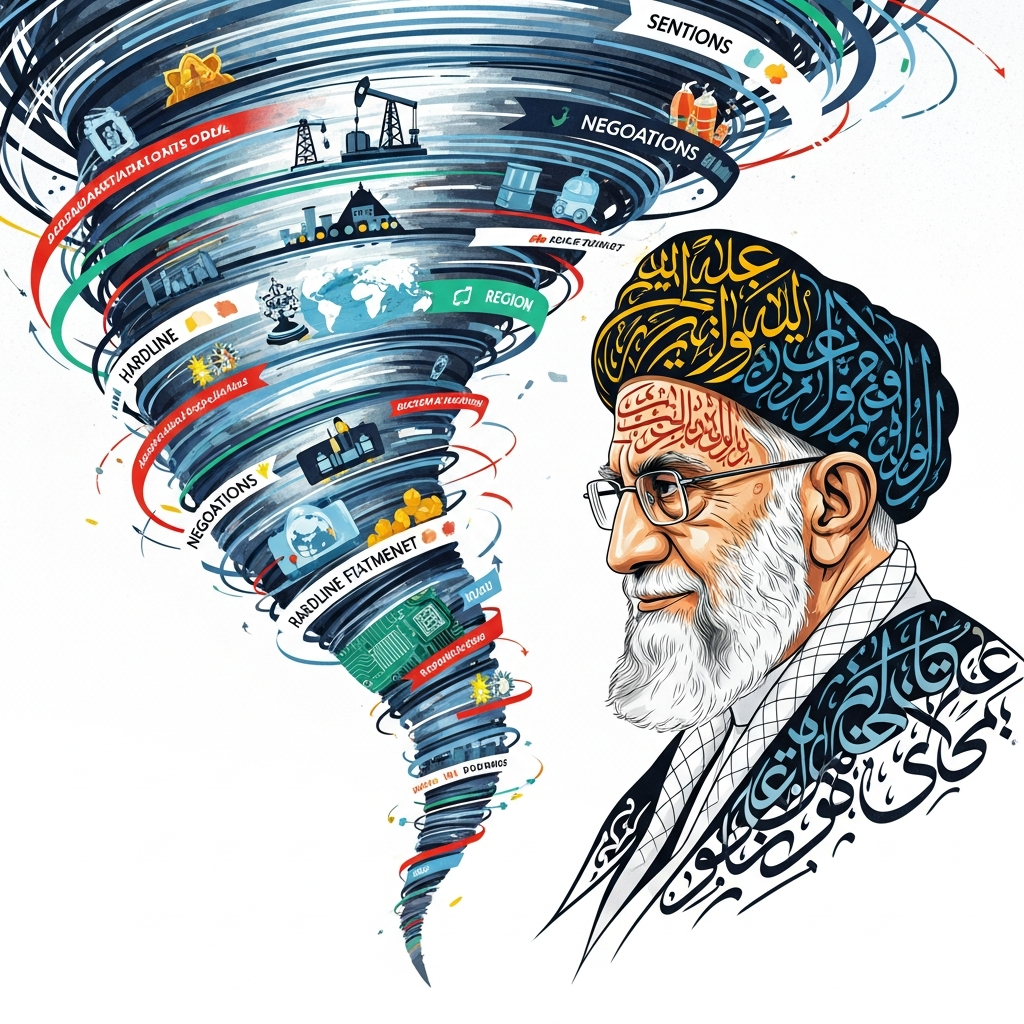
The Middle East finds itself plunged into unprecedented turmoil following a decisive, coordinated military operation by the United States and Israel against Iran. This dramatic escalation, codenamed “Epic Fury” by the US and “Lion’s Roar” by Israel, has fundamentally reshaped regional dynamics, most notably with the confirmed killing of Iran’s Supreme Leader Ayatollah Ali Khamenei. Initial strikes reportedly eliminated approximately 40 senior Iranian regime members, including top military and security figures, sending shockwaves across the globe and igniting a fierce wave of Iranian retaliation. The ramifications of these events—from surging global oil prices to a volatile political future for Iran—demand urgent attention. This comprehensive analysis delves into the unfolding crisis, its profound impacts, and the uncertain path ahead.
Escalation Unleashed: The Death of a Leader
The decision to target Iran’s leadership came after months of intense CIA intelligence gathering on Khamenei’s movements, shared with Israeli counterparts to accelerate the operation. President Trump framed the strike as being “ahead of schedule,” potentially concluding in “four weeks or less” to achieve all objectives. This bold move marks a significant shift in foreign policy, with the U.S. asserting that diplomatic solutions had failed to curb Iran’s nuclear ambitions or support for proxy forces.
A Coordinated Strike: US and Israel Act
The joint operation was meticulously planned for months, deploying advanced military assets. U.S. Central Command confirmed the use of B-2 stealth bombers, armed with 2,000 lb. bombs, to strike “hardened ballistic missile facilities.” Tomahawk Land Attack Missiles (TLAMs) and one-way attack drones were also deployed to suppress Iranian air defenses. Israeli Prime Minister Benjamin Netanyahu affirmed that strikes on Iran would “increase even more in the coming days.”
Targets included Revolutionary Guard command facilities, air defense capabilities, missile and drone launch sites, and military airfields. Satellite imagery reportedly showed Khamenei’s compound in Tehran reduced to rubble. Israeli officials also claimed the deaths of the commander of the Iranian Revolutionary Guard Corps, Iran’s defense minister, and a close adviser to Khamenei, among others. Tragically, three U.S. service members were killed in Kuwait, marking the first American casualties of this conflict. Israel also reported eight lives lost in an Iranian missile strike near Jerusalem.
Why Now? The Road to Conflict
President Trump justified the preemptive strikes by asserting that Iran intended to use conventional missiles against the U.S. and its regional allies. U.S. officials pointed to Iran’s steadfast refusal to discuss its ballistic missile programs and proxy forces during negotiations, alongside its insistence on enriching its own fuel. Despite previous claims of having “obliterated” Iran’s nuclear program, intelligence indicated Iran was rebuilding infrastructure and developing advanced centrifuges for weapons production. At the time of the strikes, Iran reportedly possessed 450 kg of 60% enriched uranium, technically just one week away from 90% weapons-grade material. This critical development fueled the resolve for decisive action.
Iran’s Ferocious Response: Targets and Impact
Iran’s retaliation has been swift and substantial, escalating the regional conflict to alarming new levels. Iranian Foreign Minister Araghchi condemned the initial attacks as “unprovoked, illegal and absolutely illegitimate,” asserting Iran’s military capacity remained unchanged. The Revolutionary Guard vowed “the most ferocious offensive operation” against Israel and U.S. bases.
Economic Warfare: Oil Lifelines Under Threat
In a direct assault on economic infrastructure, Iranian drones targeted Saudi Aramco’s Ras Tanura oil refinery. This attack, which temporarily shut down units at the massive facility, signals a perilous new phase where critical energy assets are frontline targets. Reports also indicate Iran is threatening and has attacked ships in the Strait of Hormuz, a choke point for over 20% of the world’s exported oil. This has already caused global oil prices to surge, reaching around $80 per barrel, with analysts predicting a rise to $100 if the conflict persists. Tanker owners and major oil companies have begun to halt shipments through the vital waterway, sparking fears of major supply disruptions.
Regional Ripple Effects: Proxies and Casualties
Beyond direct strikes, Iran’s network of regional proxies has been activated. The Lebanese militant group Hezbollah launched missiles into Israel, asserting it as retaliation for Khamenei’s killing. Iranian attacks also caused a fire at the U.S. Embassy compound in Kuwait and involved further missile launches toward Israel. The UAE reported intercepting a staggering 167 Iranian missiles and 541 drones, tragically resulting in three civilian fatalities from Pakistan, Nepal, and Bangladesh. An Omani port and an oil tanker off its coast were also hit by drones, causing injuries and fires. Jordan’s army intercepted 13 ballistic missiles and 49 drones targeting its territory.
The human cost of this conflict is mounting rapidly. The Iranian Red Crescent reported 555 deaths across 131 Iranian cities from U.S. and Israeli strikes. In Lebanon, Israeli strikes killed at least 31 people and wounded 149. An Iranian missile attack on Tel Aviv killed a Filipino caregiver. Violent anti-U.S./Israel protests in Pakistan led to at least 22 deaths and over 120 injuries. While Iranian authorities claimed over 100 casualties, including students, from a strike on a girls’ school, Israel denied awareness of such an incident, stressing the precision of its operations.
A Nation Adrift? The Succession Crisis and Internal Dynamics
The death of Supreme Leader Ayatollah Ali Khamenei, who held ultimate authority on all major policies for decades, creates an unprecedented leadership vacuum. This event casts significant doubt on the future of the Islamic Republic, which has faced its weakest position since the 1979 revolution.
Leadership Vacuum and Interim Measures
President Trump claimed many potential successors were eliminated in the strikes. However, Iranian Foreign Minister Araghchi stated that state institutions would persist. He suggested a new leader could be chosen rapidly. An interim leadership council, comprising President Masoud Pezeshkian, the parliament speaker, and the judiciary head, is reportedly now in operation. This council aims to manage the country until a permanent successor is chosen, a process that is expected to be fraught with internal power struggles.
Public Reaction and Calls for Change
Internally, the news of Khamenei’s death triggered mixed reactions. While Iranian state TV declared 40 days of mourning, reports indicated celebrations in Tehran upon the news, with residents seen clapping and cheering. Iranian dissidents abroad, particularly in Los Angeles, also celebrated. Reza Pahlavi, Iran’s exiled crown prince, praised Khamenei’s demise. He called on the Iranian military to support a transition to a free future and advocated for a democratic, secular Iran. He explicitly denied the country’s need for nuclear weapons. Analysts view this moment as a potential opportunity for the regime’s collapse, suggesting a path towards fundamental change.
Global Repercussions: Diplomacy, Economics, and Security
The escalating conflict has triggered a strong international response, highlighting concerns about regional stability and global economic impacts. The world watches anxiously as diplomatic efforts struggle to find a foothold amidst the ongoing violence.
International Condemnation and Calls for Restraint
The U.S. and its Middle Eastern allies, including Bahrain, Jordan, Kuwait, Qatar, Saudi Arabia, and the UAE, swiftly condemned Iran’s attacks as a “dangerous escalation.” The U.K. granted the U.S. access to its military bases for defensive measures against Iranian missiles. Leaders from France, Germany, and the U.K. jointly condemned Iran’s “reckless attacks.” They agreed to explore options to dismantle Iran’s missile and drone capabilities at their source. China, however, “strongly condemned” Khamenei’s killing as a violation of sovereignty, warning of a “dangerous abyss” in the Middle East.
The UN Security Council held an emergency meeting, where Iran’s ambassador denounced the strikes as a “war crime.” Israel’s ambassador defended them as a response to an “existential threat.” The International Atomic Energy Agency (IAEA) called for “restraint” and urged a return to diplomacy, stressing that there was “no indication” of attacks on Iran’s nuclear facilities, though contacts with Iranian nuclear officials were limited. Despite Trump’s willingness for dialogue, Iran’s security chief, Ali Larijani, declared, “We will not negotiate with the United States,” signaling a hardened stance.
Economic Fallout: A Shaken Global Market
The economic impact extends far beyond the Middle East. Global oil prices surged due to fears of supply disruptions from the Strait of Hormuz. OPEC Plus announced an increase in oil production to stabilize prices. Wholesale gas prices also rose over 25% on Dutch and British markets. Asian governments and refiners are now examining oil reserves and alternative transportation routes. This unprecedented volatility signals a period of economic uncertainty driven by geopolitical instability.
The Path Forward: Uncertainties and Warnings
The conflict’s duration and ultimate outcome remain highly uncertain. Experts predict it could last “weeks, not days,” focusing on an “extended air and naval campaign” without ground troops.
US Strategy and Congressional Debate
President Trump’s administration justified the actions as essential to national security, but the lack of formal congressional authorization drew criticism. Democrats condemned the strikes, accusing Trump of initiating war without proper approval. They renewed calls for a War Powers Resolution to limit presidential unilateral force. However, Republican control in Congress makes such a bill unlikely. The U.S. maintains a substantial military presence in the Middle East, including 13 bases, 30,000-40,000 troops, and two aircraft carriers. This significant deployment underscores the strategic commitment to the region.
Long-Term Outlook for the Middle East
The psychological impact of precision strikes on Iranian leadership could lead to internal fragmentation within the regime. While some analysts argue for full regime change as the only viable path, comparing Iran’s ideology to Hamas, the immediate future remains complex. The Department of Homeland Security has warned of “almost certain” retaliation from Iran and its proxies, particularly through cyberattacks on U.S. critical infrastructure. With diplomatic solutions appearing distant and tensions at an all-time high, the Middle East faces an extremely dangerous period, marked by unprecedented military action and an uncertain geopolitical future.
Frequently Asked Questions
What were the immediate consequences of Supreme Leader Khamenei’s death?
The immediate consequences of Ayatollah Ali Khamenei’s death included a dramatic escalation of the military conflict between the US, Israel, and Iran. Politically, it created a significant leadership vacuum in Iran, prompting the rapid formation of an interim leadership council comprising President Pezeshkian, the parliament speaker, and the judiciary head. Socially, while Iranian state media declared mourning, reports indicated celebrations in Tehran and among exiled dissidents, fueling hopes for a democratic, secular future for Iran. Militarily, Iran’s Revolutionary Guard vowed “the most ferocious offensive operation” in retaliation.
Which key strategic locations have been targeted in the escalating Middle East conflict?
The escalating Middle East conflict has seen targeting of several critical strategic locations. These include Khamenei’s compound in Tehran, which was reportedly reduced to rubble, and numerous Iranian military sites like Revolutionary Guard command facilities, air defense systems, and missile/drone launch sites. Economically vital targets include Saudi Aramco’s Ras Tanura oil refinery and commercial shipping in the Strait of Hormuz. Regional U.S. military bases in Kuwait, Bahrain, Qatar, and the UAE have also faced missile and drone attacks. Additionally, Israeli cities like Jerusalem and Tel Aviv have been hit by Iranian missile strikes.
How is the current Middle East crisis impacting global oil prices and supply chains?
The current Middle East crisis is significantly impacting global oil prices and supply chains, primarily due to direct threats and attacks on energy infrastructure and shipping routes. Iranian drone attacks on Saudi Aramco’s Ras Tanura oil refinery and threats to ships in the Strait of Hormuz have caused global oil prices to surge, reaching around $80 per barrel with predictions of further increases. The Strait of Hormuz, a crucial global oil trade chokepoint, has seen tanker owners and major oil companies halt shipments, creating fears of severe supply disruptions. This has also led to wholesale gas price increases in European markets, prompting Asian governments to examine oil reserves and alternative transport options.
Conclusion
The Middle East stands at a critical juncture, redefined by the unprecedented US-Israeli military strikes and Iran’s ferocious retaliation. The killing of Supreme Leader Ali Khamenei has not only sparked a deadly regional conflict but also ignited an internal power struggle within Iran, while sending global oil markets into turmoil. With diplomatic avenues currently fraught and military operations continuing, the world faces a period of extreme volatility. Understanding the intricate dynamics, the heavy human cost, and the strategic implications is paramount as this dangerous situation unfolds. The long-term stability of the region, and indeed global security, hinges on the decisions made in the coming weeks and months.