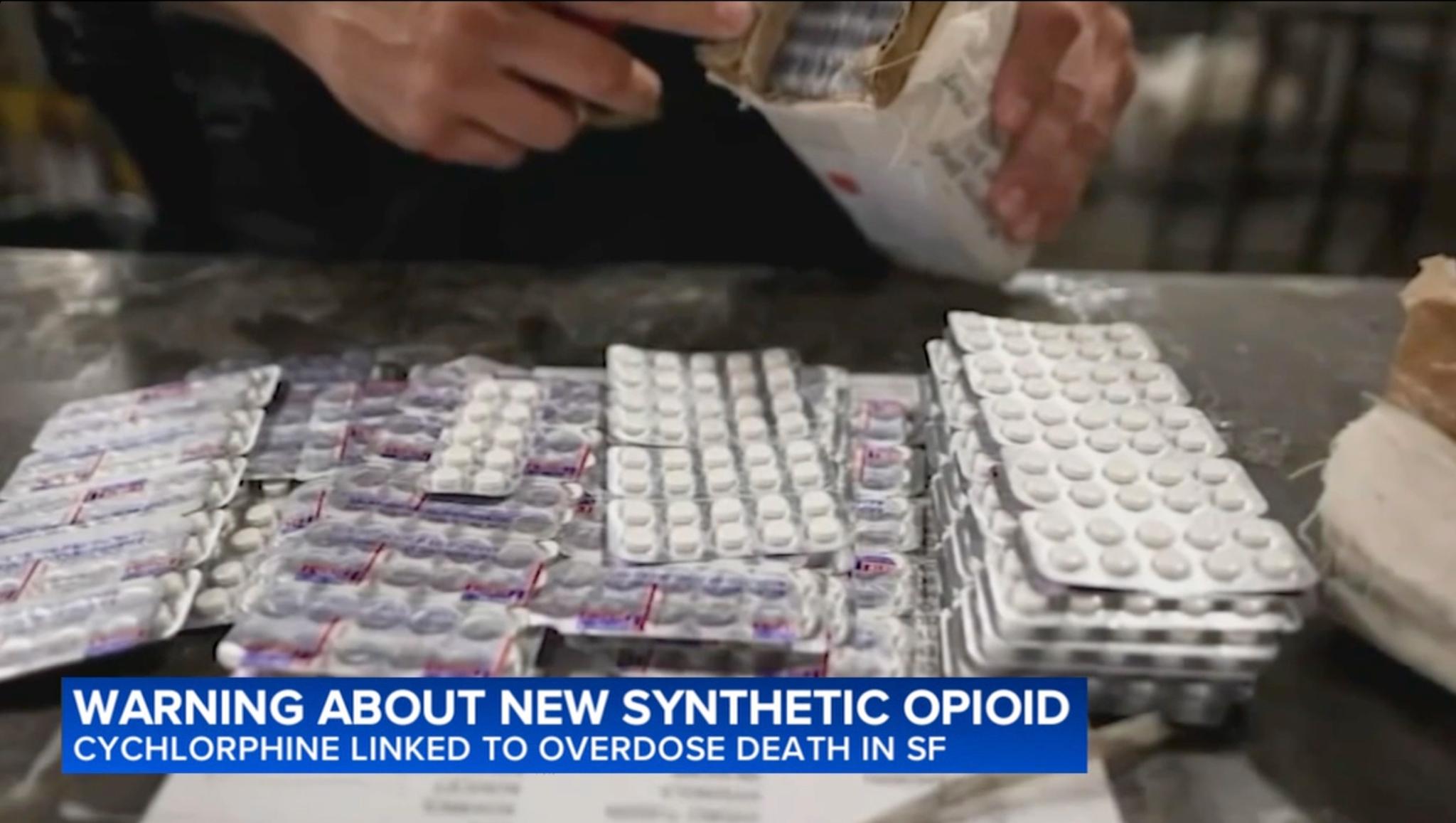
The emergence of the cyclorphine super drug has triggered urgent public health warnings across California as authorities link the potent synthetic opioid to fatal overdoses in both Los Angeles and San Francisco.
Key Takeaways
- Extreme Potency: Health officials report the drug is significantly more powerful than fentanyl, with some claims suggesting it is up to 100 times stronger.
- Detection Failure: Current fentanyl test strips are unable to detect the presence of cyclorphine, making it impossible for users to know they are consuming it.
- Diverse Forms: The substance is being distributed as counterfeit pills, powders, liquids, rocks, crystals, and as an adulterant in cocaine.
- Overdose Reversal Concerns: There are growing suspicions that cyclorphine may be resistant to standard doses of naloxone (Narcan), potentially requiring multiple administrations to reverse an overdose.
- Rapid Transit: The DEA notes the drug moves quickly through major interstate corridors, such as I-80, I-99, and I-5.
- Avoid counterfeit pills: Because cyclorphine is frequently found in pills made to look like legitimate prescription medication, the safest course of action is to avoid any pill not obtained directly from a licensed pharmacy.
- Never use drugs alone: If an overdose occurs, having someone present to call for help and administer life-saving medication is vital.
- Do not mix substances: Combining different drugs increases the risk of unpredictable and fatal reactions.
- Carry Naloxone: Ensure that you and those around you have access to Narcan.
- Expanded Testing Capabilities: Whether new laboratory technologies can be developed to detect cyclorphine in field settings remains a priority for public health departments.
- Increased Narcan Distribution: Watch for whether community organizations like Code Tenderloin and municipal health departments continue to scale up their emergency supply distributions.
- DEA Enforcement Trends: Monitor for updates from the DEA regarding new seizure data or changes in how they monitor the I-80, I-99, and I-5 corridors.
- New Fatalities: The confirmation of further deaths in other states will indicate the true geographic breadth of the current outbreak.
- nypost.com
- nypost.com
What Happened
Public health officials in California are racing to contain the impact of a highly potent synthetic opioid known as cyclorphine. In Los Angeles, the Department of Public Health issued an urgent warning on October 17, 2026, following a fatality in February that was tied to the substance. This marks the first confirmed victim in LA County.
This follows a similar crisis in Northern California. In April 2026, San Francisco health officials identified a fatal overdose linked to the drug, marking its first detected presence in that city. While the Los Angeles Department of Public Health reported the drug is 10 times more powerful than fentanyl, officials in San Francisco and reports from ABC 7 have cited claims that the substance may be as much as 100 times stronger than fentanyl.
Though it has been present in the United States drug supply since 2024—having been first identified by a Drug Enforcement Administration (DEA) laboratory in Florida—its rapid spread across 19 states has reached a critical tipping point. In response to its extreme danger and potential for abuse, the DEA officially classified cyclorphine as a Schedule I drug in August 2026, making it illegal to possess or sell.
Why It Matters
The arrival of the cyclorphine super drug represents a significant escalation in the complexity of the opioid crisis. Unlike fentanyl, which has become a known and somewhat predictable threat, cyclorphine presents unique challenges in both detection and medical intervention.
First, the drug is effectively “invisible” to the most common tool used by harm-reduction advocates: the fentanyl test strip. Dr. Philip Coffin, Director of the Center on Substance Use and Health at the San Francisco Department of Public Health (SFDPH), stated that the drug is not detected by available testing technology. This means users who believe they are consuming safer substances or testing for fentanyl may still be unknowingly ingesting a lethal dose of cyclorphine.
Second, the drug’s physical versatility makes it difficult for law enforcement to intercept. It does not exist solely in pill form; it can be found as a powder, in liquid form, as crystals, or even as rocks. Furthermore, it is being mixed into other illicit drugs, such as cocaine, or sold directly as a powder. This versatility allows it to permeate various segments of the illicit market rapidly.
Finally, there is a growing medical concern regarding the efficacy of naloxone (commonly known by the brand name Narcan). While naloxone is a life-saving medication that can reverse an opioid overdose by restoring breathing, experts suspect that cyclorphine may be resistant to standard protocols. This could mean that a single dose may not be enough to counteract the drug’s effects, necessitating multiple doses during an emergency.
Deep-Dive: The Cyclorphine Profile
To understand the threat, it is necessary to compare the characteristics of cyclorphine with the drugs that preceded it in the illicit market. The following table outlines the primary differences as reported by health and law enforcement officials.
| Feature | Fentanyl | Cyclorphine |
|---|---|---|
| Relative Potency | Baseline | 10x to 100x stronger |
| Test Strip Detection | Generally detectable | Not detected |
| DEA Classification | Schedule II | Schedule I (as of Aug 2026) |
| Common Forms | Pills, powder, patches | Pills, powder, liquid, rocks, crystals |
| Naloxone Response | Typically responds to standard doses | Suspected resistance/requires multiple doses |
The Logistics of Distribution
Law enforcement officials are particularly concerned with the speed at which this drug moves across the country. Bob Beris, Special Agent in Charge of the DEA San Francisco Field Division, noted that the drug utilizes major interstate corridors to reach new markets with startling efficiency.
According to Beris, a pill identified in a city like Chicago can reach San Francisco in as little as 30 hours by traveling along the I-80, I-99, and I-5 interstates. This rapid transit capability allows the drug to stay ahead of localized law enforcement efforts and quickly saturate new urban centers.
Stakeholder Reactions and Responses
The emergence of cyclorphine has forced a shift in how both government agencies and community organizations approach harm reduction.
San Francisco Department of Public Health (SFDPH)
Daniel Tsai, Director of the SFDPH, expressed alarm regarding the drug’s potency and its link to recent fatalities. The department’s primary recommendation to the public is the total avoidance of counterfeit pills, which are a primary vector for the drug.
Community Health Organizations
Front-line responders are already feeling the pressure. Code Tenderloin, a community health organization, has significantly increased its operations to meet the heightened risk. Douglas Liu, Executive Director of Code Tenderloin, confirmed that the organization has doubled its nightly distribution of Narcan to combat the risk of high-potency overdoses.
“We have to inform the community and educate them,” Liu stated, emphasizing that the organization is focusing on promotional, preventative, and rehabilitative care to manage the crisis.

What It Means for You
The unpredictable nature of the current drug supply means that safety protocols must be strictly followed. The implications vary depending on your role in the community:
For Residents and Potential Users
If you are in an area where these warnings have been issued, health officials urge extreme caution. The most critical advice includes:
For First Responders and Medical Professionals
If you are a first responder, prepare for the possibility that a standard dose of naloxone may be insufficient. Given the suspected resistance of cyclorphine to traditional reversal protocols, medical teams should be ready to administer multiple doses to restore breathing in overdose victims.
Counterpoints and Open Questions
While the danger of cyclorphine is widely accepted by health officials, several questions remain unanswered.
One area of uncertainty is the exact potency of the drug. The discrepancy between the LA Department of Public Health reporting a 10-fold increase in potency and other reports suggesting a 100-fold increase highlights the difficulty in measuring synthetic opioids in uncontrolled environments.
Additionally, while the DEA has classified the drug as Schedule I, the effectiveness of law enforcement in intercepting such a fast-moving substance remains an open question. As Bob Beris of the DEA pointed out, just because certain variations—such as the drug being sold exclusively as a liquid—have not been widely seen yet, it does not mean they do not exist in the supply chain.
What Happens Next
As the cyclorphine super drug continues to move through major transit corridors, several key developments will be worth watching:
Frequently Asked Questions
What is cyclorphine?
Cyclorphine is a highly potent synthetic opioid that has recently surfaced in the illicit drug supply. It is categorized by the DEA as a Schedule I drug and is significantly more powerful than fentanyl. It can appear in various forms, including counterfeit pills, powders, liquids, and crystals.
Can fentanyl test strips detect cyclorphine?
No. According to Dr. Philip Coffin of the SFDPH, cyclorphine is currently undetectable by the standard fentanyl test strips available to the public and harm-reduction organizations. This makes it particularly dangerous, as users may believe a substance is safe when it actually contains the super drug.
Is Narcan (naloxone) still effective against cyclorphine?
While naloxone is still the standard treatment for opioid overdoses, there is significant concern that cyclorphine may be resistant to standard doses. Health officials suggest that in the event of a cyclorphine-related overdose, multiple doses of Narcan may be required to successfully restore breathing.
How is cyclorphine being distributed?
Authorities report that the drug is being distributed in several ways: as counterfeit prescription pills, as a powder, as a liquid, as rocks or crystals, and as an adulterant mixed into other drugs like cocaine. It moves rapidly through major interstate corridors like the I-80 and I-5.

As health authorities in Los Angeles and San Francisco continue to issue warnings, the focus remains on harm reduction and the urgent need for community education to prevent further loss of life from this emerging and extremely potent synthetic opioid.
References
Featured image: ABC 7 — via California Post