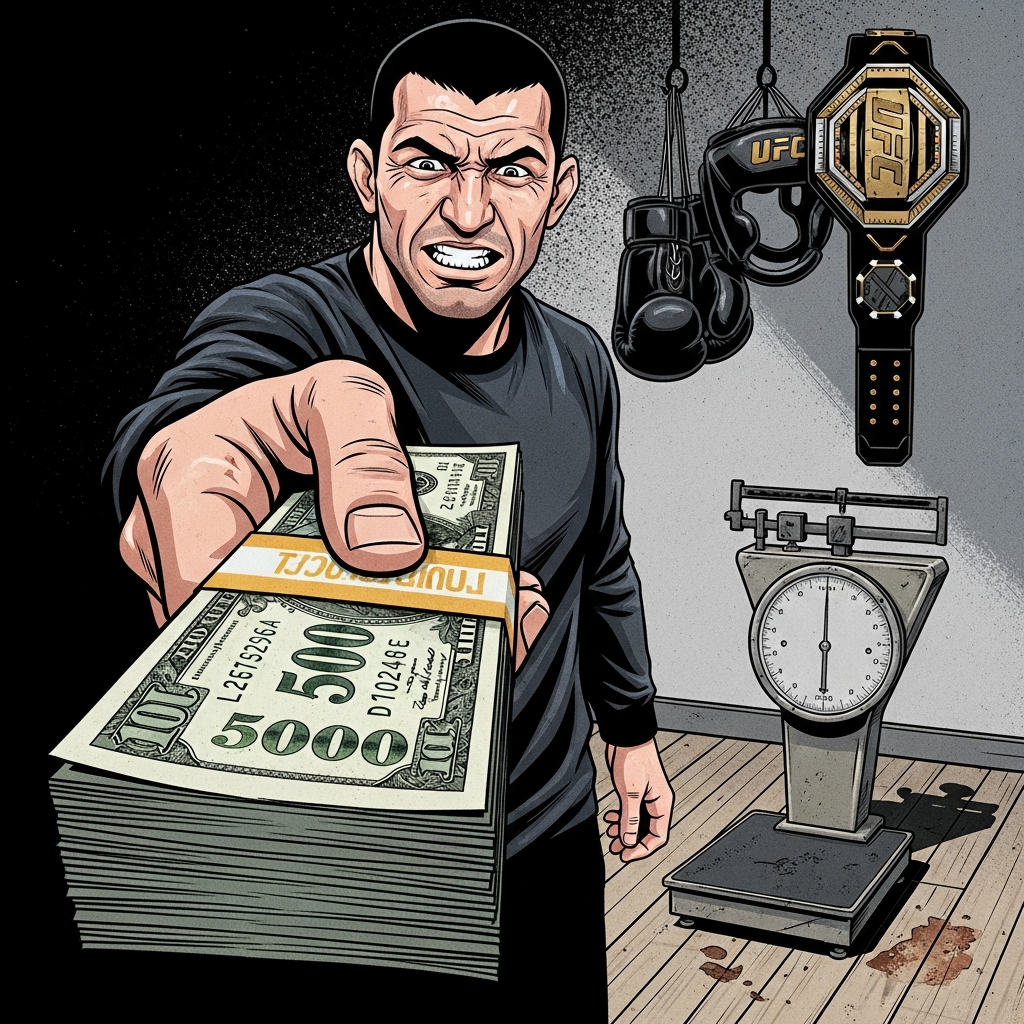
The world of combat sports rarely goes a week without generating headlines, but a recent revelation involving top UFC lightweight contender Arman Tsarukyan has sent shockwaves, sparking debates about fighter ethics and the relentless pressure of weight management. Sources indicate Tsarukyan attempted to bribe an opponent with $5,000 to avoid a weight cut for an upcoming wrestling match at RAF06. This audacious offer, reported on February 28, 2026, reveals a unique glimpse into the lengths athletes might go outside their primary disciplines.
Tsarukyan’s Controversial Offer Unveiled
Arman Tsarukyan, widely recognized for his high-level grappling and striking in the UFC, reportedly offered his opponent a five-thousand-dollar incentive to bypass the rigorous weight cutting process for a wrestling bout. This incident, occurring as a “side quest” during a period when Tsarukyan was described as being in “UFC limbo,” adds another layer to his already intriguing career narrative. The wrestling match itself was against a former wrestling champion, highlighting Tsarukyan’s continued pursuit of challenges beyond the Octagon.
Andrew Richardson, a professional fighter training at Team Alpha Male and a respected voice in MMA analysis, commented on the situation. While acknowledging Tsarukyan’s “rich kid antics,” Richardson expressed a degree of understanding, rationalizing that wrestling is “not his true sport!” This perspective, coming from an athlete intimately familiar with the demands of combat sports, sheds light on the unique pressures faced by fighters when venturing into different disciplines. For many, weight cutting is arguably the most brutal aspect of competition.
The Weight Cut Conundrum: A Fighter’s Perspective
Weight cutting is a pervasive, often dangerous, practice in combat sports, designed to create fair competition but frequently pushing athletes to extreme physiological limits. Fighters dehydrate their bodies and restrict food intake, sometimes losing upwards of 20 pounds in a matter of days. This process is grueling, impacting performance, health, and mental well-being. Tsarukyan’s alleged bribe, while ethically questionable, underscores the immense desire to circumvent this ordeal, particularly for a non-UFC sanctioned “side quest.” It raises questions about the long-term impact of severe weight cuts on fighters’ careers and health, and whether such extreme measures are truly necessary.
For a high-profile UFC fighter like Tsarukyan, maintaining a competitive edge is paramount. Engaging in a wrestling match during “UFC limbo” could be seen as a way to stay active, sharpen skills, or simply satisfy a competitive urge. However, adding a brutal weight cut to an already demanding training regimen for a non-MMA event might have been deemed an unnecessary risk or burden. The $5,000 offer, while significant, might have been perceived as a small price to pay to avoid the debilitating effects of a harsh cut, allowing him to focus purely on the grappling aspect of the contest.
Broader MMA Landscape: Insights from the Midnight Mania Column
The news of Tsarukyan’s bribe attempt emerged from Andrew Richardson’s “Midnight Mania!” column, a digest of the latest happenings and observations in the MMA world. Dated February 28, 2026, the column provided several other intriguing updates.
Ilia Topuria’s Bold Prediction for Arman Tsarukyan
Significantly, the column also highlighted Ilia Topuria’s prediction regarding Arman Tsarukyan. Topuria confidently stated that Tsarukyan would be an “easy” knockout, asserting that “he will panic” if unable to secure an early takedown. Richardson largely agreed with this assessment, drawing parallels to Anthony Hernandez’s performance a week prior. This analysis suggests a potential vulnerability in Tsarukyan’s standing game or his mental fortitude when pressured and unable to dictate the grappling exchanges. The juxtaposition of Topuria’s prediction and Tsarukyan’s wrestling “side quest” further fuels the ongoing narrative around the lightweight contender’s evolving skill set and temperament under fire.
Other Notable MMA Developments from February 2026
Beyond Tsarukyan’s controversial offer and Topuria’s striking prediction, the “Midnight Mania!” column touched upon other significant developments:
UFC Winnipeg Fight Cancellation: An “all-action” fight for UFC Winnipeg was abruptly canceled due to a fighter’s retirement. This drew critical commentary from Richardson about the UFC’s recurring tendency to announce unsigned fights, which often “backfires.”
Shara Bullet vs. Jorge Masvidal Booking: A scheduled matchup between Shara Bullet and Jorge Masvidal for March 11 in Brazil was described as bewildering to fans, with questions raised about the rationale behind such a pairing.
Joshua Van vs. Tatsuro Taira: The upcoming bout between Joshua Van and Tatsuro Taira was noted as a historically young title fight, though not the youngest ever.
Islam Makhachev’s Next Opponent Speculation: Rumors suggested UFC matchmaker Hunter Campbell might be losing interest in a potential title fight between Islam Makhachev and Kamaru Usman.
- Colby Covington’s Enduring Catchphrase: The column humorously questioned how much juice Colby Covington’s “CEO of EPO” insult would have left by 2035, highlighting its persistent use.
- sports.yahoo.com
- www.mmamania.com
- www.mmamania.com
- www.mmamania.com
- www.mmamania.com
These diverse updates underscore the dynamic and often unpredictable nature of the combat sports world, where controversies, unexpected fight announcements, and expert predictions constantly shape the narrative.
The Ethical Quandary of Fighter Conduct
Tsarukyan’s alleged bribery attempt ignites a crucial discussion on fighter ethics. In a sport built on fair play, competition, and integrity, such an offer, if confirmed, could be seen as undermining the spirit of competition. While weight cutting is universally loathed, bypassing it through a monetary incentive raises questions about sportsmanship. It could also set a problematic precedent, blurring the lines between legitimate competition and financial manipulation. The reputation of an athlete, especially one in the UFC’s spotlight, is built not just on victories but also on conduct. While Richardson’s empathy for Tsarukyan’s plight is understandable, the broader implications for fighter integrity cannot be ignored.
The incident highlights the ongoing tension between an athlete’s personal comfort and the professional standards expected in competitive sports. As fighters increasingly engage in diverse combat sports activities—from professional boxing to grappling tournaments—the rules and ethical boundaries become even more complex. Ensuring transparency and fairness across all forms of competition is vital for maintaining the sport’s credibility and public trust.
Frequently Asked Questions
What exactly was Arman Tsarukyan accused of doing, and why?
Arman Tsarukyan, a prominent UFC lightweight, was reportedly accused of attempting to bribe an opponent with $5,000 to skip a weight cut for a wrestling match at RAF06. This occurred during a period referred to as his “UFC limbo,” where he was undertaking a “side quest” against a former wrestling champion. The motivation for the bribe was likely to avoid the arduous and draining process of weight cutting for a non-MMA event, allowing him to focus on the technical grappling aspects of the match without the added physical stress.
How does this incident fit into Arman Tsarukyan’s current UFC career or other related events?
This bribery attempt occurred while Tsarukyan was in “UFC limbo,” engaging in a wrestling “side quest.” It provides insight into his willingness to compete outside the UFC and his approach to managing the demands of combat sports. Coincidentally, around the same time, fellow fighter Ilia Topuria publicly predicted an “easy” knockout victory over Tsarukyan, suggesting Tsarukyan might “panic” without an early takedown. These events collectively paint a picture of Tsarukyan as a fighter actively navigating various competitive challenges and facing scrutiny from his peers.
What are the broader implications of a fighter attempting to bribe an opponent over a weight cut in combat sports?
A fighter attempting to bribe an opponent over a weight cut raises significant ethical concerns within combat sports. Such an act can undermine the integrity and fairness of competition, potentially setting a problematic precedent for how athletes manage challenging aspects of their sport. While weight cutting is notoriously difficult, bypassing it through monetary means can tarnish a fighter’s reputation and lead to questions about sportsmanship, professional conduct, and the equitable treatment of competitors, impacting the credibility of the sport as a whole.
Conclusion
Arman Tsarukyan’s alleged $5,000 bribe offer to bypass a weight cut for a wrestling match serves as a potent reminder of the unique pressures and ethical dilemmas within the high-stakes world of combat sports. While the intention might have been to avoid a grueling process for a “side quest,” the incident opens broader conversations about fighter conduct, the challenges of weight management, and the integrity of athletic competition. As Tsarukyan continues his career, under the watchful eye of rivals like Ilia Topuria, his actions outside the Octagon will undoubtedly contribute to his evolving narrative and public perception.