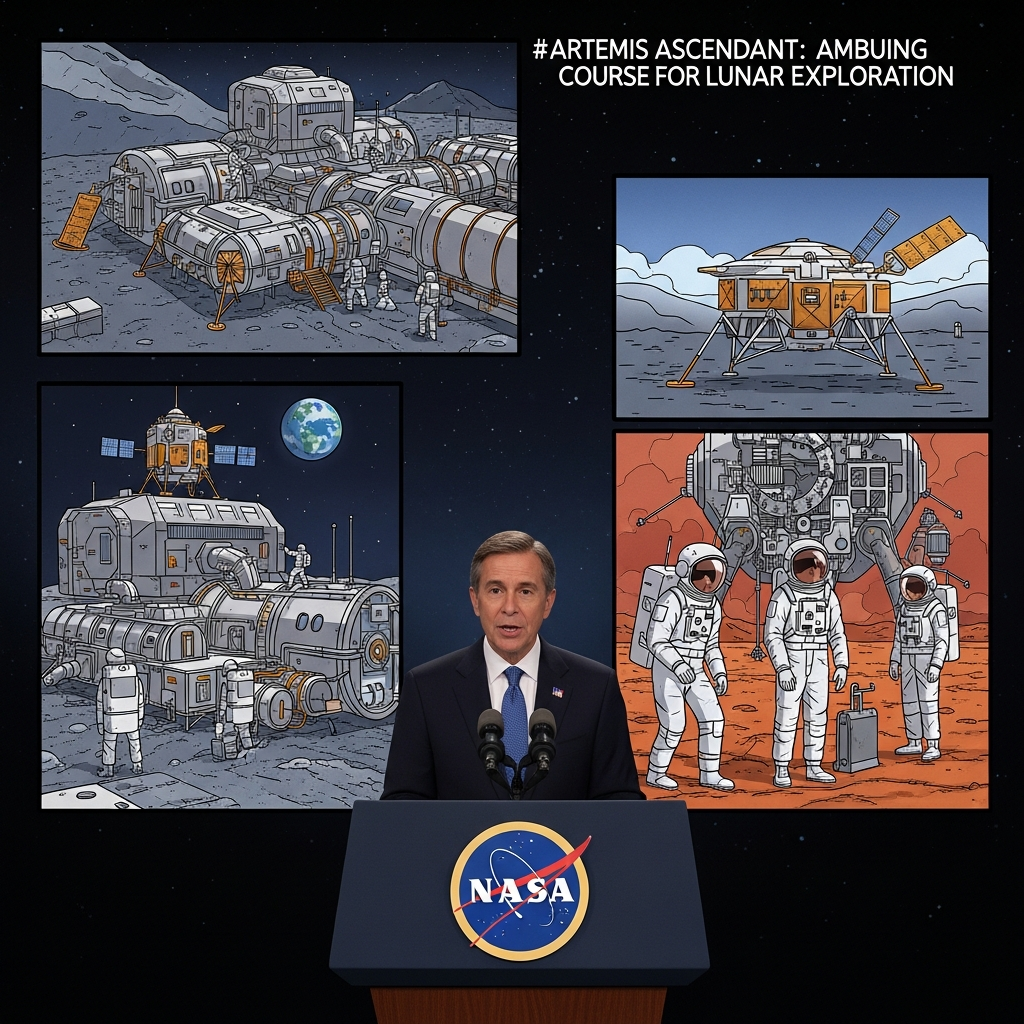
NASA has unveiled a sweeping “course correction” for its ambitious Artemis moon program, aiming to accelerate human lunar exploration and establish a lasting presence on the lunar surface. Announced on February 27, 2026, this strategic pivot directly addresses safety concerns, persistent delays, and the critical need to build momentum for the nation’s return to the Moon. The refreshed roadmap promises to enhance astronaut safety, streamline operations, and inject new energy into the multi-decade endeavor. This significant overhaul, backed by Congress and key stakeholders, is designed to ensure NASA’s lunar ambitions are realized with greater efficiency and a more robust foundation.
Artemis Missions Reshuffled: A New Path to the Moon
The most immediate and impactful change centers on the resequencing of upcoming Artemis missions. The eagerly anticipated Artemis III, originally slated for a human lunar landing in 2028, will now embark on a different, crucial journey. Instead of a direct lunar descent, Artemis III is targeted for launch by mid-2027. Its revised mission: to conduct vital technology demonstrations in low-Earth orbit (LEO).
This pivotal LEO flight will involve astronauts performing critical rendezvous and docking tests with one or both commercially built lunar landers. These landers, currently under development by SpaceX (Starship Human Landing System) and Blue Origin (Blue Moon), are essential components for future lunar surface access. This new Artemis III will also offer a valuable opportunity for astronauts to test next-generation spacesuits in microgravity, providing indispensable data before lunar surface operations. NASA Administrator Jared Isaacman highlighted this strategic move, drawing parallels to the historic Apollo 9 mission. Apollo 9 meticulously tested the Command Module and Lunar Module in Earth orbit, laying crucial groundwork for Apollo 11’s successful lunar landing. Following this preparatory flight, the Artemis IV mission is now set to deliver humans to the lunar surface in 2028, marking humanity’s return to the Moon after decades.
Why the Strategic Shift? Prioritizing Safety and Experience
This comprehensive program adjustment stems from a candid acknowledgment of past challenges and a proactive approach to risk reduction. The previous plan, which involved jumping directly from an uncrewed flight (Artemis I) to a crewed circumlunar mission (Artemis II), and then immediately to a lunar landing (Artemis III), presented an “unrealistically big gap.” Such large leaps, coupled with infrequent launches, were deemed too risky by NASA and its independent Aerospace Safety Advisory Panel. The panel’s sharply-worded report cited a high number of “firsts” required for the original Artemis III, advocating for a more balanced risk posture through evolutionary steps.
Isaacman emphasized that the long intervals between missions — historically once every three years or more for the Space Launch System (SLS) rocket and Orion spacecraft — led to “skills atrophy” and a “loss of muscle memory” among engineering and operational teams. Recurring technical issues, such as hydrogen and helium leaks observed in both Artemis I (2022) and the upcoming Artemis II, underscored the difficulty of pinpointing root causes and implementing effective solutions with such extended turnaround times. By inserting an intermediary test flight, NASA aims to build critical flight experience, test integrated systems closer to Earth, and mitigate risks before attempting a complex lunar landing.
Accelerating the Pace: A New Era of Frequent Launches
A cornerstone of the Artemis overhaul is a commitment to significantly increase the launch cadence of the Space Launch System (SLS) rocket. Rather than the previous multi-year gaps, NASA now aims to launch the SLS approximately every 10 months. This ambitious goal represents a dramatic shift from the initial “work of art” approach, where each rocket was treated as a unique build.
To achieve this accelerated schedule, NASA is standardizing the manufacturing process for the SLS rocket. Importantly, the agency is halting the development of the more powerful Exploration Upper Stage (EUS). Instead, all Artemis missions will utilize the initial SLS Block 1 configuration. NASA Associate Administrator Amit Kshatriya explained that earlier plans for different rocket configurations for later missions were “needlessly complicated.” He stressed that “There is too much learning left on the table and too much development and production risk in front of us.” This standardized approach, focusing on consistency and continuous testing, is expected to simplify operations, reduce development risk, and allow for a much smoother, faster operational tempo. Key contractors, including Boeing, SpaceX, Blue Origin, United Launch Alliance, and Lockheed Martin, have reportedly agreed to these accelerated plans, demonstrating widespread support for the new direction.
Commercial Partners Enthusiastically Onboard
NASA’s commercial partners, vital to the success of the Artemis program, have voiced strong support for the revised strategy. SpaceX, led by Elon Musk, affirmed its alignment with NASA’s goal of establishing a permanent human presence on the Moon “as expeditiously and safely as possible.” The company stated that “Frequent human exploration flights help establish a sustainable presence for humans in space,” echoing NASA’s newfound emphasis on cadence.
Similarly, Jeff Bezos’ Blue Origin, another key player developing a lunar lander, expressed enthusiastic endorsement of the changes. The company succinctly posted, “Let’s go! We’re all in!” on social media, signaling a collective commitment to the accelerated lunar timeline. This unified front between NASA and its private sector partners is crucial for fostering innovation and expediting the development of lunar landing capabilities.
Artemis II Navigates Ongoing Technical Challenges
While the future of Artemis is being reshaped, the immediate focus remains on the upcoming Artemis II mission. This mission, which will carry four astronauts on a 10-day orbital journey around the Moon, has faced its own share of technical hurdles. In February, a critical fueling test revealed leaking hydrogen at the base of the SLS rocket, forcing NASA to cancel all available launch opportunities for the month.
Although a subsequent fueling test proceeded smoothly, engineers later discovered a blockage in the flow of helium to a part of the booster’s upper stage, further delaying launch attempts through March. The Artemis II rocket was subsequently rolled back from Launch Pad 39B at the Kennedy Space Center in Florida to its Vehicle Assembly Building for necessary repairs. Officials remain optimistic, targeting an early April launch window, contingent on the successful completion of these fixes.
Broader Implications: Building an Orbital Economy and Facing Global Competition
This “course correction” for the Artemis moon program extends beyond mission resequencing and launch cadences; it’s a strategic move to foster a sustainable future in space. Administrator Isaacman emphasized the necessity of cultivating an “orbital economy.” For long-term viability, space activities—both in low-Earth orbit and on the lunar surface—must generate more value than they consume, thereby reducing perpetual reliance on taxpayer funding and igniting a self-sustaining space economy. This vision underscores a fundamental shift from pure exploration to the development of a lunar ecosystem that supports both scientific research and commercial ventures.
Furthermore, NASA’s ambitious new timeline is set against the backdrop of an intensifying “new space race.” International competition, particularly from China, is a significant driving factor. Beijing has openly declared its aim to land its own astronauts on the Moon by 2030. Both the United States and China are specifically targeting the lunar south pole, recognizing its potential for establishing long-term human presence due to the possible presence of water ice. By accelerating its pace, standardizing operations, and fostering commercial partnerships, NASA is reaffirming its leadership in this evolving global pursuit of lunar dominance.
Frequently Asked Questions
What specific changes were announced for the Artemis III mission?
The Artemis III mission will no longer attempt a lunar landing in 2028. Instead, it is now scheduled for mid-2027 as a critical test flight in low-Earth orbit (LEO). During this LEO mission, astronauts will conduct essential rehearsals for docking with commercially built lunar landers from SpaceX and Blue Origin. They will also test new spacesuits in microgravity, providing crucial data before the Artemis IV mission attempts a human lunar landing in 2028.
Why is NASA increasing the launch cadence for the Space Launch System (SLS) rocket?
NASA is increasing the SLS launch cadence from roughly once every three years to approximately every 10 months to enhance safety, reduce risks, and prevent “skills atrophy.” Administrator Jared Isaacman noted that long intervals between missions hinder teams from effectively identifying and resolving technical issues, as seen with recurring hydrogen and helium problems. A faster pace ensures teams maintain their expertise, allowing for more consistent testing and operational improvements, ultimately accelerating the path to a sustainable lunar presence and reducing long-term costs.
What is the significance of standardizing the SLS Block 1 configuration for future Artemis missions?
Standardizing the SLS Block 1 configuration for all upcoming Artemis missions means NASA will no longer develop the more powerful Exploration Upper Stage (EUS) as previously planned. This decision aims to simplify manufacturing, reduce development risk, and allow for a significantly higher launch rate. By keeping the rocket’s design consistent, NASA minimizes major changes between flights, streamlining operations, reducing unnecessary risks associated with reconfiguring the launch stack, and accelerating the overall production and launch process.
Conclusion
NASA’s bold overhaul of the Artemis moon program marks a pragmatic yet ambitious step forward in human space exploration. By strategically resequencing missions, prioritizing safety through incremental testing, and committing to an accelerated launch cadence, the agency is addressing past challenges head-on. This “course correction” is not a delay but a reinforcement of the program’s foundation, ensuring a more sustainable and successful return to the Moon. With strong support from commercial partners and a clear vision for a future “orbital economy,” NASA is setting the stage for a new era of lunar presence, pushing humanity’s boundaries further into the cosmos while navigating the complex realities of modern spaceflight. The world now watches as Artemis II prepares for launch, signaling the tangible beginning of this exciting, revitalized journey.