Cristiano ronaldo leaves portugal national team camp in Copenhagen following a breakdown in relations with head coach Jorge jesus.
Key Takeaways
Sudden Departure: Cristiano Ronaldo reportedly left the Portugal national team training camp in Copenhagen on Wednesday, September 30, 2026, via private jet to Madrid.
Managerial Conflict: The departure follows escalating tension between Ronaldo and head coach Jorge Jesus, centered on the coach’s refusal to grant the striker more playing time.
The Catalyst: Tensions peaked after Ronaldo was left on the bench for the full 90 minutes during Portugal’s recent 2-1 victory over Norway in the UEFA Nations League.
End of an Era: The incident has led to widespread speculation regarding Cristiano Ronaldo’s international retirement, potentially ending an 18-year continuous playing streak.
Federation Intervention: Portuguese Football Federation President Pedro Proença held an emergency summit in Copenhagen to mediate the crisis before the player’s exit.
The Copenhagen Crisis: What Happened
On Wednesday, September 30, 2026, the Portuguese national football team was plunged into internal turmoil when reports emerged that Cristiano Ronaldo leaves Portugal training camp in Copenhagen, Denmark. The departure, which occurred shortly after a high-stakes press conference, marks a significant escalation in the friction between the team’s captain and head coach Jorge Jesus.
According to reports from MARCA and Goal.com, Ronaldo departed the Parken training site in a black van belonging to the Portuguese Football Federation. From there, the 41-year-old forward reportedly traveled to a private airfield to catch a flight back to Madrid, Spain. This sudden movement follows days of absence from scheduled training sessions on both Monday, September 29, and Tuesday, September 30.
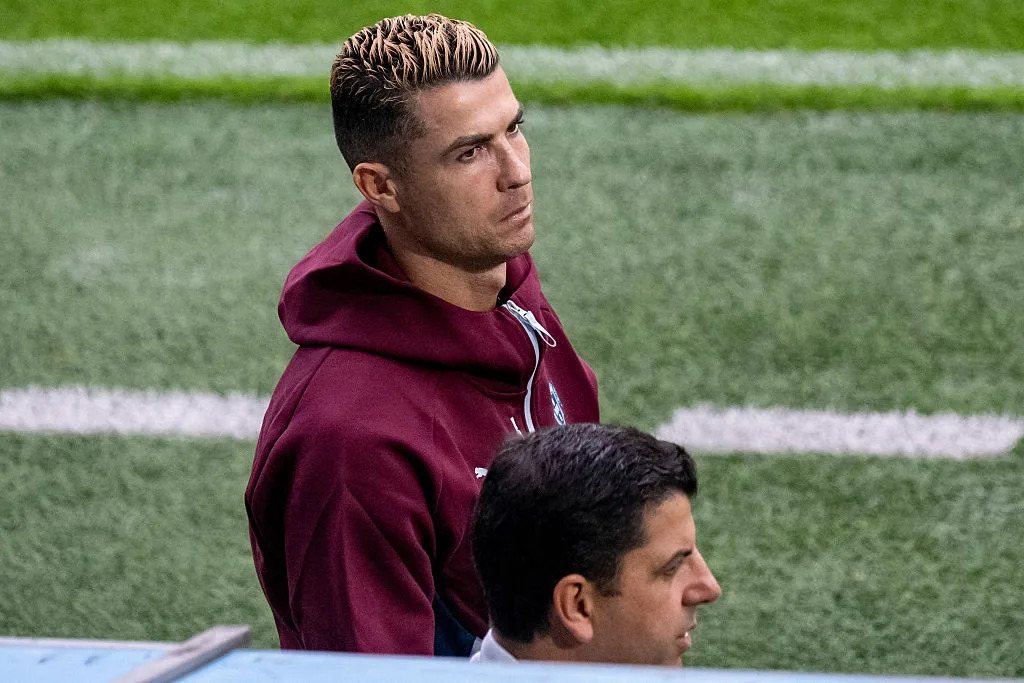
While head coach Jorge Jesus initially attempted to downplay the situation during a Wednesday morning press conference, his public stance shifted dramatically. Jesus told reporters that Ronaldo had not refused to train and suggested his absence was part of a standard recovery protocol. However, the coach was later caught on camera admitting the reality of the situation, stating, “Cristiano is upset with me.”
Why the Rift Matters for Portugal
The departure of a figure as central to the national identity as Cristiano Ronaldo carries weight far beyond a single training session. For the Portugal national team, the immediate impact is tactical and psychological. As the team competes in the UEFA Nations League, losing the leadership and scoring presence of their most-capped player creates an immediate vacuum.
Statistically, the impact is profound. Ronaldo has earned 234 international caps for his country. His absence during the upcoming fixture against Denmark leaves the squad without its most experienced veteran. Furthermore, the rift threatens the cohesion of a locker room that has transitioned through several generations of talent. The tension between a legendary icon and a head coach who asserts absolute authority could potentially divide the squad into factions.
Beyond the pitch, this incident tests the stability of the Portuguese Football Federation. The involvement of President Pedro Proença, who traveled to Copenhagen for an “emergency summit” on Wednesday morning, indicates that the governing body views this as a crisis of management rather than a simple player dispute. The Federation must now decide whether to support the coach’s hardline stance or move to reconcile with the nation’s greatest sporting hero.
The Catalyst: The Norway Match and the End of a Streak
To understand why the situation reached a breaking point in Copenhagen, one must look back to the recent UEFA Nations League match in Oslo, Norway. During that fixture, Portugal secured a 2-1 victory, with goals provided by Joao Félix and Gonçalo Ramos. However, the victory was overshadowed by the decision to keep Cristiano Ronaldo on the bench for the entire 90 minutes.
This decision was significant not just for the match itself, but for the historical record. By remaining an unused substitute, Ronaldo’s 18-year consecutive playing streak with the Portuguese national team officially came to an end. Reports from Bolavip US suggest that Ronaldo was “visibly furious” following the match, choosing to head directly to the dressing room rather than engaging with the traveling supporters.

Following the Oslo match, the tension followed the squad to Denmark. While Jesus claimed on Tuesday night that the matter had been resolved during a private meeting, the subsequent events in Copenhagen suggest otherwise. The transition from a tactical decision on the pitch to a physical departure from the camp suggests that the professional relationship between the player and the manager has suffered a fundamental breakdown.
Jorge Jesus and the Doctrine of Absolute Authority
A central theme in this conflict is the coaching philosophy of Jorge Jesus. The manager has adopted a stance of uncompromising authority, a move that has both supporters and critics within the football community. During his Wednesday press conference, Jesus made his position on player hierarchy explicitly clear.
“I can promise whatever I want. I am the coach,” Jesus stated, addressing the rumors of player influence. “I told the player that he was not going to play. I will put you on the bench. If I need you for 30 minutes, you will play; if not, you are not going to play. No player will make me change my mind. Not him, not anyone in football. Not him, not anyone, not any president. Never! Zero!”
This hardline approach is a departure from the management of previous Portuguese coaches, who often balanced tactical discipline with the delicate handling of superstar egos. Jesus’s refusal to yield to Ronaldo’s stature—or even the influence of the Federation President—establishes a new, rigid hierarchy. While this may prevent a “star player culture” from undermining tactical needs, it carries the massive risk of alienating the very players who drive the team’s success.
Stakeholder Perspectives: A Divided Camp
The fallout from the Copenhagen incident has created distinct perspectives among the primary stakeholders involved in Portuguese football.
The Coaching Staff
For Jorge Jesus, the priority is the implementation of his tactical vision. By treating Ronaldo as any other player subject to selection, Jesus is attempting to reinforce a meritocratic environment. From his perspective, the integrity of the team’s tactical structure must outweigh the individual status of any single athlete.
The Players
While no teammates have issued official statements, the presence of young stars like Joao Félix and Gonçalo Ramos in the starting lineup during Ronaldo’s absence suggests a shift in the squad’s hierarchy. The challenge for the remaining players will be maintaining focus and unity while the captain is absent and the manager is embroiled in a public dispute with a national icon.
The Portuguese Football Federation
President Pedro Proença finds himself in a difficult mediation role. The Federation’s goal is to ensure the national team remains competitive in the Nations League while preserving the legacy of its most successful player. The fact that the Federation provided the vehicle for Ronaldo’s departure suggests an attempt to facilitate his exit in a controlled, professional manner, rather than a chaotic escape.
What It Means for You
Depending on your relationship with the sport, this development has different practical implications:
For Portugal National Team Fans: Expect a significant shift in how the team is structured. The “Ronaldo era” may be entering its final, most turbulent chapter. You may see more reliance on younger talents like Félix and Ramos, and the team’s attacking patterns will likely change without Ronaldo’s specific gravity on the pitch.
For Football Analysts and Tacticians: This serves as a case study in the limits of managerial authority. The tension between managing a high-performance athlete with decades of experience and a coach’s tactical autonomy is a recurring theme in modern football, and this incident provides a high-profile example of how that tension can explode.
For Sports Historians: We are witnessing a potential turning point in the history of Portuguese football. The end of Ronaldo’s 18-year streak is a milestone that marks the transition from one of the greatest individual eras in sports history to an uncertain future.
Counterpoints and Open Questions
While the narrative of a “clash of egos” is compelling, there are alternative ways to view this crisis. Some observers argue that Jesus’s approach is a necessary evolution for the team. By asserting that no player is above the system, he may be preparing the squad for a post-Ronaldo world, ensuring that the team’s success is not dependent on a single individual.
However, this raises several critical questions that remain unanswered:
- Was the benching tactical or personal? While Jesus maintains it was a reading of the game, the timing and the subsequent fallout suggest a deeper underlying issue.
- Is Ronaldo’s departure a permanent exit? While the reports suggest he has left the camp, it has not been confirmed if he has officially retired from international football. Ronaldo’s own cryptic comment, “In due time, I will tell the truth,” leaves the door open for future clarification.
- Can the team recover before the Denmark match? The immediate concern is whether the psychological impact of the captain’s departure will hinder the team’s performance in their upcoming Nations League fixture.
What Happens Next
As the dust settles in Copenhagen, several key developments will dictate the future of both the player and the team:
The Denmark Match: The Portugal squad will take the field without their captain. The performance of the team in this match will be a litmus test for Jorge Jesus’s new hierarchy.
Ronaldo’s Official Statement: All eyes will be on the 41-year-old striker for a formal explanation. Whether he chooses to address the media or remain silent will signal his intentions regarding his international career.
Federation Policy: The Portuguese Football Federation will likely conduct an internal review of the incident to determine if the current management structure is sustainable for the upcoming major tournaments.
Managerial Stability: If the team’s performance suffers, the pressure on Jorge Jesus to reconcile with Ronaldo or step down will intensify.
Frequently Asked Questions
Why did Cristiano Ronaldo leave the Portugal training camp?
According to multiple reports, including those from MARCA and SIC Notícias, Ronaldo’s departure was triggered by growing tensions with head coach Jorge Jesus. The friction reportedly stemmed from Ronaldo being left on the bench for the full 90 minutes during a recent match against Norway. Following an unsuccessful attempt at mediation by Federation President Pedro Proença, Ronaldo reportedly left the camp in a federation vehicle to return to Madrid.
Is Cristiano Ronaldo retiring from the Portugal national team?
As of September 30, 2026, Cristiano Ronaldo has not officially announced his retirement from international football. However, the circumstances surrounding his sudden departure from the training camp in Copenhagen have led to widespread speculation. The end of his 18-year continuous playing streak during the Norway match and his cryptic remark, “In due time, I will tell the truth,” suggest that his international future is currently uncertain.
Who is the current head coach of the Portugal national team?
Jorge Jesus is the current head coach of the Portugal national team. He previously managed Al Nassr, where he also worked with Cristiano Ronaldo. Jesus has gained attention for his hardline management style, publicly asserting that no player, including Ronaldo or even the President of the Football Federation, is above his tactical decisions or coaching authority.
What was the result of the Portugal vs. Norway match?
Portugal won the UEFA Nations League match against Norway with a score of 2-1. The goals for Portugal were scored by Joao Félix and Gonçalo Ramos. Despite the victory, the match was controversial because Cristiano Ronaldo was not utilized as a substitute, remaining on the bench for the entire duration of the game.
Closing
The sudden departure of Cristiano Ronaldo from the Portuguese camp in Copenhagen marks a volatile moment in international football. Whether this incident represents the final farewell of a legend or a temporary rift in a complex relationship, the authority of Jorge Jesus and the future of the Portugal national team remain in a state of profound uncertainty.”,
“imagegenerationprompt”: “A professional news photograph of a private jet parked on a wet tarmac at night, under bright airport floodlights, with a black transport van parked nearby, creating a sense of urgency and departure
References
Featured image: Photo by DYLBER CAUSHI on Pexels