Implementing a comprehensive planetary defense strategy is no longer a theoretical exercise relegated to science fiction; it has become an essential pillar of modern astronomical responsibility. As we look at the cosmic environment surrounding Earth, we realize that we live in a dynamic, debris-filled neighborhood. Every June 30, we mark International Asteroid Day, not to foster anxiety, but to acknowledge that while asteroid impacts are rare, the consequences of a major event could be civilization-altering. In my view, the shift from merely observing the night sky to actively manipulating the orbital paths of celestial bodies represents one of the greatest technological leaps in human history. To ensure our long-term survival, we must transform from passive observers into active custodians of our orbital space.
Quick Summary
Planetary defense has evolved from passive monitoring to active, proven deflection capability.
The primary challenge remains our lack of visibility into the ‘small’ asteroid population (below 140 meters).
NASA’s DART mission successfully validated the kinetic impactor technique for redirecting asteroids.
Future initiatives like the NEO Surveyor and the Vera C. rubin observatory aim to catalog millions of new objects.
- Public policy and bipartisan support are now aligning to fund long-term observation infrastructure.
- www.thespacereview.com
- www.techtimes.com
- www.space.com
- www.planet.com
- taskandpurpose.com
- en.bandainamcoent.eu
The Direct Path to Safety
If you want to understand how we protect Earth, you must recognize that planetary defense starts with the cold, hard math of orbital mechanics. The answer is not a cinematic explosion, but a series of early, subtle nudges. We have proven with the DART mission that by hitting a target years in advance, we only need to change its velocity by a fraction of a meter per second to cause it to miss Earth entirely. The direct, actionable goal for humanity is clear: we must achieve 90% discovery rates for all near-Earth objects over 140 meters. We are currently far behind this goal, and the strategy for 2026 and beyond is to aggressively scale up our detection hardware to close this gap.
Understanding the Core Problem
At its simplest, the fundamental issue is a lack of data. When we discuss asteroid threats, astronomers generally categorize objects into three groups: the ‘known threats,’ which we track with high precision; the ‘potentially hazardous’ group, which we monitor closely; and the vast, unknown population of smaller objects. While a massive planet-killer asteroid would likely be spotted decades in advance, the smaller, city-destroying rocks—those in the 40 to 140-meter range—often remain hidden until they are very close.
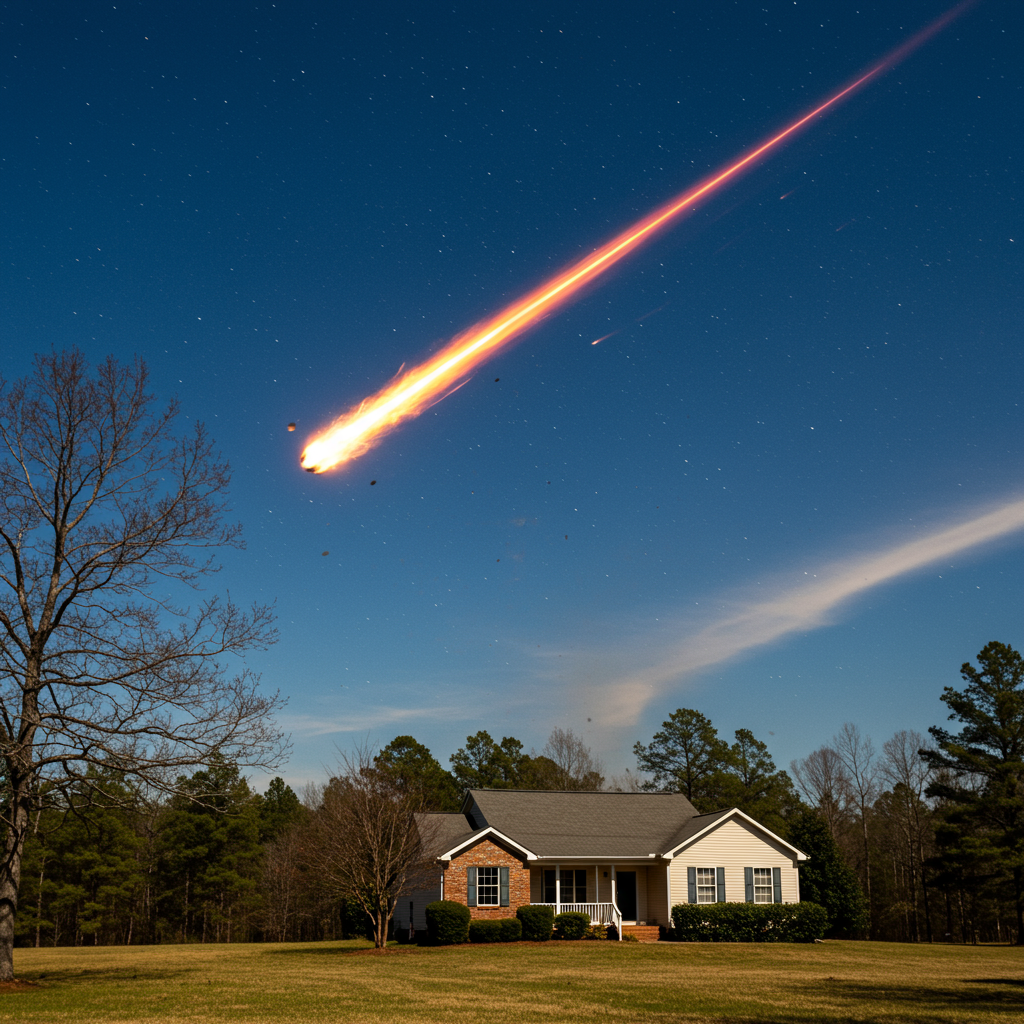
I recall reading early reports on the 2013 Chelyabinsk event, which served as a massive wake-up call for the global scientific community. That object was relatively small, yet it caused significant damage and injuries. We currently estimate there are half a million objects in that specific size class, and we have cataloged less than 1% of them. Closing this discovery gap is the most urgent objective in any credible planetary defense strategy.
Advancing Detection Technology
Detection is the bedrock upon which all other defenses are built. If we cannot see them, we cannot plan for them. We are currently moving toward a revolution in data collection. The Vera C. Rubin Observatory in Chile is set to act as a massive, high-powered scanning light for the solar system. By creating an automated, high-cadence map of the sky, it will fundamentally change our understanding of near-Earth space.
Furthermore, space-based platforms like the upcoming NEO Surveyor are vital because they can detect objects that are obscured by the sun’s glare when viewed from Earth. By using infrared sensors, these telescopes pick up the thermal signature of the asteroids themselves, rather than relying solely on reflected sunlight. This allows us to see rocks that are otherwise ‘dark’ against the blackness of space. As I have followed the budget debates for these missions, it is clear that while the $1.2 billion price tag for NEO Surveyor seems steep, it is a rounding error compared to the potential economic devastation of a major impact.
Proven Mitigation: The DART Success
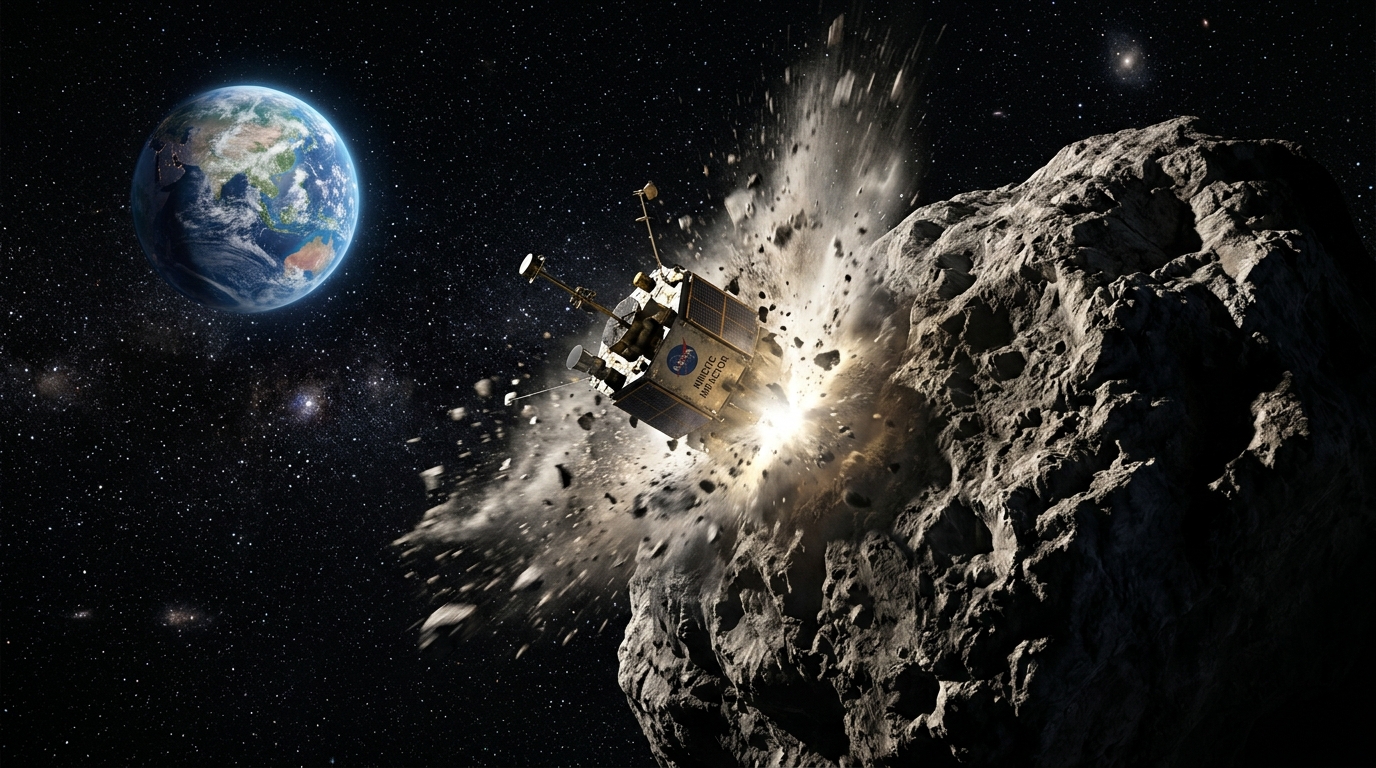
For years, we discussed theoretical ways to move asteroids, including gravity tractors and nuclear stand-off detonations. However, in 2022, we finally moved from theory to practice with the Double Asteroid Redirection Test (DART). I vividly remember the day the news broke that the mission was successful. By striking the moonlet Dimorphos, NASA proved that we could alter the orbital path of a celestial body by 32 minutes—a result that exceeded all scientific projections. This success provides a proven, repeatable methodology for future interventions. We now have a blueprint for what to do if we identify a high-risk impactor early enough.
Who Should Engage with Planetary Defense (And Who Should Not)
This field is inherently collaborative and requires a diverse set of participants. If you are a student, researcher, or amateur astronomer, you are already part of the chain. Professionals use data from distributed networks to confirm orbits and refine calculations. You should engage here if you have a passion for data analysis, orbital physics, or international policy.
Conversely, if you are looking for immediate, high-stakes military-style action, this might not be the career path for you. Planetary defense is a marathon, not a sprint. It involves years of sitting at computer terminals, writing code, and waiting for telescope data. There is no adrenaline-fueled interception in the near future; there is only the slow, methodical work of keeping the planet safe.
Cost, Value, and Investment
When people ask me about the value of this work, I point to the insurance analogy. Is it expensive to keep a permanent watch on the skies? Yes. But consider the cost of an impact that could take out a major metropolitan area—the cleanup, the human cost, and the infrastructure loss would reach into the trillions. Planetary defense spending is expected to peak at $400 million in 2026, which is a modest sum for a global security initiative. The scientific byproduct is also immense; by learning about these asteroids, we are also cataloging the raw materials—water, minerals, and metals—that will define the future of the deep-space mining economy.
Common Mistakes to Avoid
There are two primary mistakes I see during public discussions on this topic.
First, people often confuse ‘Discovery’ with ‘Imminent Threat.’ Just because a headline reports the discovery of a ‘potentially hazardous’ asteroid, it does not mean we are under threat. It simply means the object’s orbit brings it within a specific proximity to Earth. It does not mean it is on a collision course. Always check the official NASA CNEOS tables rather than relying on clickbait headlines.
Second, people underestimate the value of amateur astronomers. There is a persistent myth that this is exclusively for NASA or national agencies. In reality, the professional astronomical community relies heavily on distributed networks and public data to confirm orbits. If you are an amateur with a telescope, your observations of a ‘known’ object are a critical part of the global verification chain. Do not think your data is useless; it fills the gaps in professional surveys.
Strategic Challenges
Despite our technological wins, the field remains resource-constrained. NASA’s strategy, as outlined in recent policy documents, is attempting to move toward an ‘architect from the right’ model—where we define the ultimate goal and work backward to ensure we have the necessary funding. Currently, the Planetary Defense Coordination Office is housed within the broader planetary science division. Many experts argue that this creates unnecessary competition for funds with missions to Mars or the outer solar system. I personally believe that if we want a robust defense, we need to treat planetary defense as a sovereign national security priority, similar to how we treat aerospace defense or cybersecurity, rather than a side project of scientific discovery.
The Role of Commercial Integration
In February 2026, we saw a massive shift toward integrating private, commercial space intelligence into broader defense frameworks. Companies like Planet are now forming advisory boards that bridge the gap between commercial satellite data and government security needs. This is critical for planetary defense. If we can leverage the commercial sector’s rapidly growing fleet of imaging satellites to track objects in cislunar space, we can drastically expand our situational awareness without waiting for the next slow-moving government project to reach fruition. The future of the field is hybrid: public mandates backed by private speed.
Frequently Asked Questions
How many asteroids are currently being tracked?
As of recent reports, we are aware of over 1.5 million objects in the solar system, but the number of ‘potentially hazardous’ ones is a smaller, monitored subset. Experts expect the total catalog to grow to roughly 10 million objects as the Vera C. Rubin Observatory reaches full capacity, providing us with an unprecedented dataset to evaluate future risks.
What would happen if we found a dangerous asteroid today?
Our response would depend entirely on the lead time. If we have years of warning, we can use a kinetic impactor to slightly alter its velocity. Because asteroid orbits are long, even a tiny nudge today results in a large deviation in position years later, allowing the rock to miss Earth entirely. If we had only weeks, our options would be limited, which is why early detection is the only strategy that consistently works.
Is there a risk that we will accidentally nudge an asteroid toward Earth?
This is an inherent concern. This is precisely why we spend years performing rigorous modeling and simulation. Before any mission is sent to interact with an asteroid, we understand its orbital mechanics, density, and structure with extreme precision. Our trajectory simulations are designed to ensure we do not inadvertently create a new threat. We play out millions of scenarios before a single engine burn is initiated.
Are there private companies involved in this field?
Yes, the commercial sector is becoming increasingly involved. While government agencies lead the planetary defense aspect, private companies are actively developing imaging and resource-extraction technologies that share common ground with asteroid detection. This move toward commercial-first models allows governments to leverage private sector innovation for speed and scale.
Conclusion
Planetary defense is a long-term commitment that transcends borders. As we look ahead to the 2029 Apophis flyby, we are presented with a unique opportunity. This massive asteroid will pass within 20,000 miles of Earth—closer than many of our satellites. It serves as a stark reminder of our vulnerability and our potential for discovery. We must continue to support funding for observatories and mission development, not out of fear, but out of a responsibility to ensure the safety of our planet. The best way to engage is to stay informed through official channels, support scientific literacy in our schools, and advocate for continued, sustained funding for the detection systems that keep watch over us while we sleep. The era of blind observation is ending; we are finally beginning to take the wheel of our own cosmic destiny.