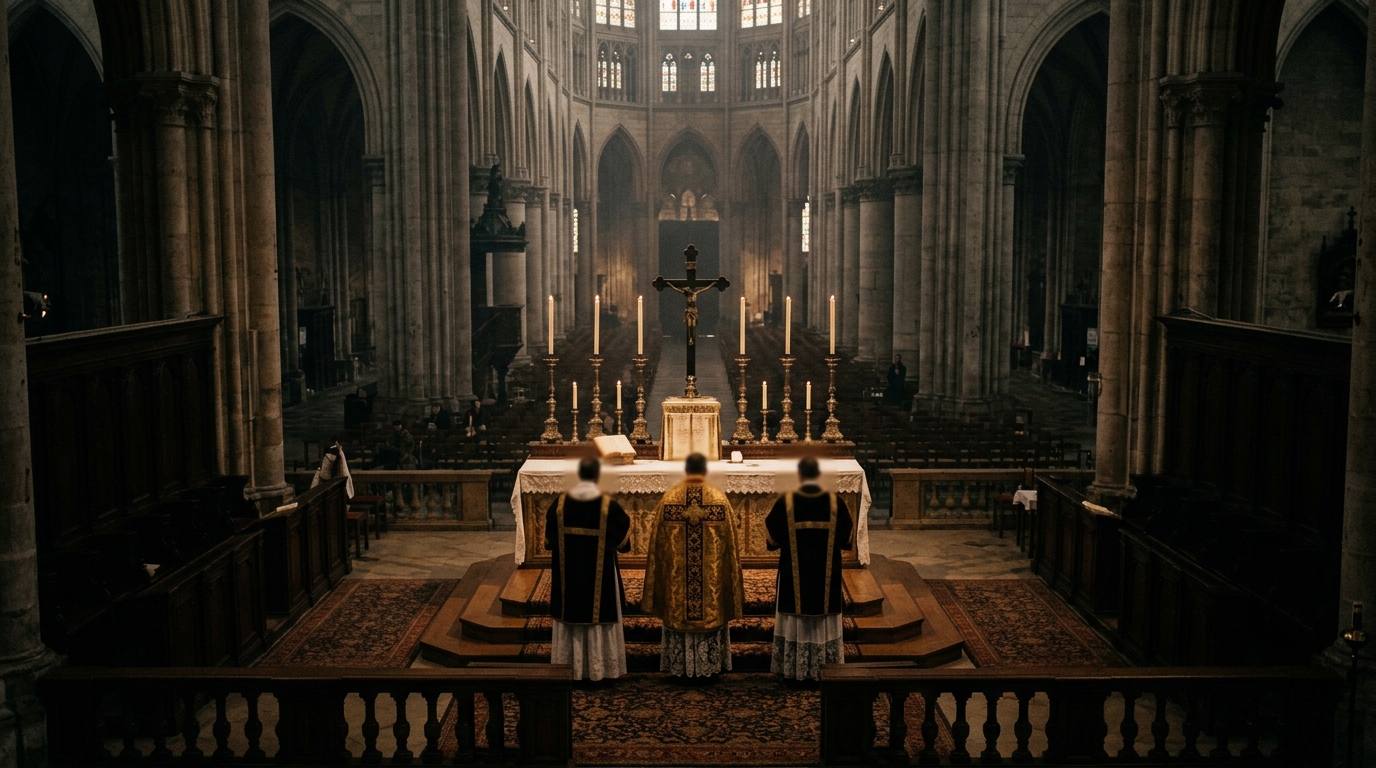
The Society of St Pius X stands at a definitive, high-stakes juncture in 2026, marking a period of intense theological and canonical friction that threatens the structural cohesion of the global Roman Catholic Church. As I have followed the internal communications and public declarations from both Econe and the Vatican, it is evident that this is not simply a dispute over liturgical preferences, but a profound collision regarding the very nature of Catholic identity and authority following the Second Vatican Council. When a movement as large and organized as the Society prepares for unilateral episcopal consecrations—the very act that triggered a major breach in 1988—the entire landscape of traditionalist Catholicism shifts under our feet.
Quick Summary
The Society of St Pius X (SSPX) plans to consecrate four new bishops on July 1, 2026, without a formal Vatican mandate.
The Holy See has categorized this planned action as a ‘sin of extreme gravity’ and a formal act of schism.
Unauthorized episcopal consecrations trigger automatic (latae sententiae) excommunication under Catholic canon law.
The core of the dispute involves the SSPX’s rejection of key Second Vatican Council reforms, specifically ecumenism and modern liturgical changes.
With over 750 priests and a massive global infrastructure, the SSPX functions as a parallel, self-sustaining ecclesiastical body.
The Immediate Path to 2026
If you are searching for a direct answer regarding the gravity of this situation, it is this: the July 1, 2026, consecrations represent a point of no return. In my years of observing ecclesiastical movements, I have rarely seen a divide where both parties have so clearly drawn their lines in the sand. The Vatican views the preservation of apostolic succession through the Pope as the non-negotiable anchor of the Church. Conversely, the leadership at Econe argues that the survival of the ‘traditional’ priesthood is a matter of necessity that supersedes current administrative rules. If you are a layperson trying to understand the fallout, know that this event effectively creates a canonical wall between the Society and the Roman Curia that will likely take generations to dismantle.
The Anatomy of the 2026 Crisis
To grasp why this is happening now, we must look at the aging leadership of the Society. Currently, the SSPX relies on only two remaining bishops, both nearing their 70th birthdays. The administrative argument is practical: without new bishops, the ability to ordain priests and confirm the laity will effectively wither away. However, the Vatican rejects this ‘survival’ framework, maintaining that the authority to appoint bishops belongs solely to the Successor of Peter. When I spoke to a contact familiar with the DDF’s perspective, the frustration was palpable; they view the SSPX’s refusal to undergo standard canonical vetting as a deliberate choice to prioritize an ideological agenda over institutional unity.
The Shadow of the Second Vatican Council
At the heart of the conflict lies the Second Vatican Council (1962–1965). The Society of St Pius X has long maintained that this period introduced ‘modernist errors’ that contaminated the faith. They argue that the introduction of the vernacular mass and the shift toward ecumenism were not just pastoral changes, but fundamental betrayals of doctrine. When you read the writings of Father Davide Pagliarani, the tone is one of existential urgency. He frames the Council as a ‘beacon’ for the current hierarchy, which the SSPX must oppose to preserve the ‘true’ heritage of the Church. This perspective is not merely a critique; it is a total, alternative vision of what Catholicism should look like in the 21st century.
The Financial and Structural Resilience of the Society
One detail often overlooked by casual observers is the sheer scale of the Society’s footprint. The 2023 completion of the $42 million Immaculata Church in St. Marys, Kansas, is a testament to their organizational, financial, and institutional power. They are not a fringe group operating out of basements; they are a sophisticated, global entity with 50 nations under their care and a steady stream of seminarians. This level of institutional independence is exactly why the Vatican’s threats of excommunication carry less weight among the laity than they might have decades ago. When a community has its own schools, its own cathedrals, and a dedicated, growing priesthood, the threat of being ‘outside’ the official hierarchy becomes a secondary concern compared to the preservation of their daily liturgical life.
The Canonical Reality: What Happens After?
Under Canon 1382 of the Code of Canon Law, the consecration of a bishop without a pontifical mandate results in an automatic excommunication for both the consecrator and the one being consecrated. This is not a formal trial process; it is a legal reality that takes effect the moment the ceremony occurs. When I first studied the 1988 crisis, I remember people asking if the sacraments performed by these bishops would be ‘valid.’ The answer, historically, is yes—they are considered valid but ‘illicit.’ This creates a complex reality for the faithful: they are receiving sacraments that are technically outside the authorized hierarchy, a situation that the Church historically treats as an ‘extraordinary state of necessity.’ This distinction is vital, yet it provides little comfort to those who desire to remain in full communion with the Pope.
Who Should Align with the Society (And Who Should Not)
Deciding where your loyalties lie in this conflict requires a deep dive into what you value most within your faith. The following rules should help you navigate your own position.
You Might Find Resonance With the SSPX If:
You prioritize liturgical continuity above all else. If the Traditional Latin Mass is the only way you feel comfortable encountering the divine, and you see modern liturgical shifts as a loss of reverence, you will find the Society’s rigor appealing.
You reject the post-Conciliar reforms. If you hold the firm belief that the Second Vatican Council fundamentally broke with historical Church teaching, you will find a home in the Society’s resistance.
You prefer a decentralized or rigid disciplinary environment. For those who feel the current, more ‘synodal’ Church is too flexible or open-ended, the SSPX offers a predictable, unchanging structure that feels secure.
You Should Approach With Extreme Caution If:
You value the unity of the global Church above specific traditions. If your spiritual life is anchored in obedience to the current Successor of Peter, regardless of personal preferences, the path of the Society is fundamentally incompatible with your conscience.
You are concerned about the status of the sacraments. If you require the legal certainty of ‘licit’ status for your sacraments (like confession or marriage) to feel at peace, you will find the current status of the SSPX deeply anxiety-inducing.
- You believe the Church must adapt to modern society. If you are convinced that the Church has a mission to engage with the modern world through the language and structures established post-1960, the Society’s bunker-like approach will feel regressive to you.
- fsspx.news
- www.cjonline.com
- www.atlantaparent.com
- www.uccronline.it
- www.catholicworldreport.com
The Cost of Independence: A Financial and Spiritual Breakdown
It is worth noting that while the Society operates with significant independent funding, the long-term ‘cost’ of their position is difficult to quantify. There is the financial burden of self-sufficiency—building and maintaining massive structures like the Immaculata in Kansas requires continuous, deep-pocketed support from the laity. Beyond finances, there is the spiritual cost of isolation. Being outside the formal structures of the local diocese means that the Society does not benefit from the broader resource sharing of the Catholic Church. They are betting that their faithful will prioritize the ‘purity’ of their specific liturgical path over the logistical and sacramental convenience of being a regular part of a local parish.
Common Mistakes to Avoid
When discussing or evaluating this schism, many people fall into two common traps that obfuscate the truth of the situation.
Mistake 1: Reducing the Conflict to Language
One of the most frequent misconceptions I encounter is that this is simply a dispute over the Latin Mass versus the vernacular. This is an oversimplification that ignores the fundamental ideological chasm. While the liturgy is the visible manifestation of the conflict, the real battle is over authority and the interpretation of the Second Vatican Council. If the Society were simply granted the right to say the Latin Mass, the fundamental disagreement regarding the authority of the Pope and the validity of Conciliar teachings would remain entirely unresolved. Do not mistake the symptom for the cause.
Mistake 2: Ignoring the Weight of Canon Law
There is a common, often dangerous, assumption among some traditionalists that the Pope’s warnings are merely political posturing—’saber-rattling’ before a eventual compromise. In my observation, this is a dangerous gamble. Under the current Vatican administration, the legal consequences for unauthorized consecrations are treated as absolute. Viewing these penalties as symbolic allows the faithful to drift into a state of ‘irregularity’ without fully considering the long-term spiritual and canonical implications. Canon law is the skeleton of the Church; pretending it doesn’t exist or isn’t binding leads to a distorted, purely emotional view of the crisis.
Frequently Asked Questions
1. Does the excommunication apply to every layperson who attends an SSPX mass?
No. The automatic excommunication (latae sententiae) described by the Vatican specifically applies to the bishops who perform the unauthorized consecration and those who receive it. Attending a mass at a Society chapel is not, in and of itself, an excommunicable act for a layperson. However, the Vatican cautions that by participating in a group that operates outside of formal, licit channels, you are choosing a environment that is not in full communion with the Roman hierarchy. This creates a state of confusion regarding the ‘licitness’ of the sacramental life within those chapels.
2. Can the Society of St Pius X ever return to full communion with Rome?
In theory, yes. The history of the Church is long, and reconciliations have happened in the past. However, the current impasse is deep. The Vatican requires an acceptance of the Second Vatican Council’s teachings, while the Society has repeatedly stated they will not sign any doctrinal preamble that forces them to accept these ‘deviations.’ Until one side moves significantly on their foundational understanding of the Council, the possibility of a formal return to full, regularized status remains remote.
3. Why are the 2026 consecrations happening in Switzerland?
Econe, Switzerland, is the spiritual home of the Society and the location of their primary international seminary. It is the site where Archbishop Marcel Lefebvre founded the movement in 1970. By returning to this location for the 2026 event, the leadership is making a symbolic statement that they are committed to the original vision of their founder, emphasizing continuity with the 1988 event while signaling to their base that they will not bow to modern pressure.
4. How can a regular Catholic tell if their parish is ‘safe’?
In standard Catholic terms, a parish is considered ‘safe’ or fully within the Church if it is under the authority of a local bishop who is in turn in communion with the Pope. This ensures that the sacraments are not only valid but licit—meaning they are fully recognized under the laws and structures of the Church. The tension only arises when one steps outside of this hierarchy. If your parish is in communion with your local diocese, it is by definition ‘safe’ within the established structure of the universal Church.
The Final Verdict
As July 1, 2026, approaches, we are watching a profound historical cycle close. The Society of St Pius X has chosen a path of self-preservation that demands a high degree of isolation from the rest of the Roman Catholic Church. Whether you view their decision as a heroic defense of tradition or a tragic, schismatic fracture, the reality remains that the bridge between Econe and the Vatican has effectively collapsed. For the faithful caught in the middle, the decision is not just about where to attend Sunday Mass, but about where they place their ultimate trust: in the historic, unyielding traditions of the past, or in the ongoing, authoritative structure of the modern Church. The 2026 consecrations will not just produce new bishops; they will seal a division that will likely define the Catholic landscape for the remainder of this decade and beyond. I suspect the next few years will see a hardening of lines, with fewer attempts at diplomatic reconciliation and more focus on the distinct, parallel identities of these two competing visions of the faith.