In a significant legal development reflecting heightened political tensions, Anthony James Kazmierczak, a Minneapolis resident, has pleaded guilty to federal charges stemming from his January syringe attack on U.S. Representative Ilhan Omar. The 55-year-old admitted his culpability in a frightening incident that saw him spray apple cider vinegar at the congresswoman during a public town hall. This plea marks a pivotal moment in a case that underscores the growing concerns over political violence and the safety of elected officials.
Guilty Plea Confirmed in Federal Court
On May 7, 2026, Anthony James Kazmierczak formally entered a guilty plea before U.S. District Court Judge Joan Ericksen. He pleaded guilty to one count of assaulting a United States officer, reversing his initial “not guilty” stance. This admission of guilt confirms his direct involvement in the January 27, 2026, assault on Representative Omar. Kazmierczak was immediately remanded back into custody following the hearing, awaiting his sentencing date, which has not yet been scheduled.
The conviction carries serious legal consequences. While the maximum potential sentence is a substantial 96 months (eight years) in prison, his defense lawyer, John Fossum, suggests a more probable outcome of four to 14 months behind bars. Notably, the three months Kazmierczak has already spent in custody will count towards his final sentence. This legal resolution brings a measure of closure to the immediate federal proceedings, though state charges also remain on the horizon.
The Anatomy of an Attack: January’s Frightening Incident
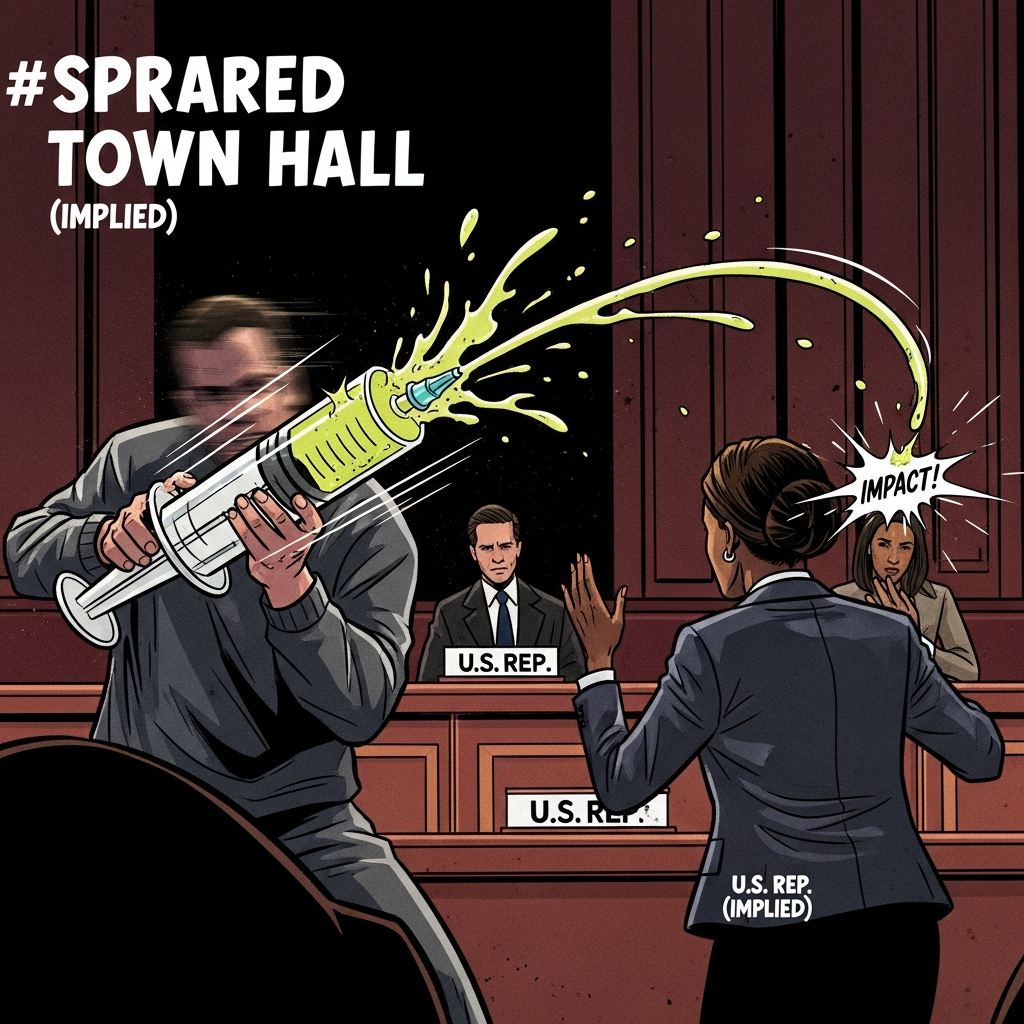
The assault unfolded at a town hall meeting hosted by Rep. Ilhan Omar at the Urban League Twin Cities headquarters in north Minneapolis. As Omar concluded her remarks, Kazmierczak reportedly rose from the audience, shouted at the congresswoman, and charged the stage. Eyewitnesses and federal documents detail him wielding a syringe containing a mixture of apple cider vinegar and water. He then sprayed the substance at Rep. Omar.
Security personnel swiftly intervened, tackling Kazmierczak before he could physically reach Omar. Despite the alarming nature of the attack, Rep. Omar was not injured. The liquid reportedly stained her clothes and may have reached her face. Following the incident, Omar maintained her composure, choosing to continue the event. Later, she asserted on social media, “I’m ok. I’m a survivor so this small agitator isn’t going to intimidate me from doing my work. I don’t let bullies win. Grateful to my incredible constituents who rallied behind me. Minnesota strong.” Her resilience highlighted the courage often required of public figures in an increasingly volatile political landscape.
Who is Anthony Kazmierczak? Unpacking the Perpetrator’s Profile
Anthony James Kazmierczak is identified as a 55-year-old Minneapolis resident with a history of legal troubles, including a prior conviction for auto theft. Beyond his criminal record, Kazmierczak is known as a vocal supporter of former President Donald Trump. His actions and statements during the attack, and prior threats, paint a picture of deep-seated animosity towards Rep. Omar.
As he was being subdued after the assault, Kazmierczak reportedly screamed at Omar, accusing her of “splitting Minnesotans apart.” Federal affidavits supporting his arrest revealed a disturbing pattern of prior threats. Years before the incident, he had allegedly told a close associate, “Somebody should kill that b—-.” Furthermore, his social media activity included sharing political cartoons critical of Omar and expressing strong criticism of Democrats. This background information underscores the premeditated nature of the attack and its roots in partisan polarization.
Legal Ramifications and Broader Implications
Kazmierczak’s guilty plea comes with significant legal repercussions extending beyond potential prison time. The plea agreement, signed by Kazmierczak, his lawyer John Fossum, and Assistant U.S. Attorney Benjamin Bejar, explicitly states that he understands the “additional collateral consequences” of his conviction. These include:
Loss of the right to carry firearms: A standard restriction for convicted felons.
Loss of the right to vote: A significant civic disenfranchisement.
- Loss of the right to hold public office: Preventing any future political aspirations.
- www.nbcnews.com
- www.aol.com
- www.fox9.com
- kstp.com
- komonews.com
These consequences highlight the serious nature of assaulting a federal official and the lasting impact such a conviction has on an individual’s rights and future. The case also serves as a stark reminder of the security challenges faced by public servants. Attacks on elected officials, whether physical or through intimidation, erode the foundation of democratic discourse and can discourage civic participation. Ensuring robust security measures and swift legal action against perpetrators is crucial for maintaining a healthy political environment.
A Tense Backdrop: Political Climate in Minneapolis
The January attack on Rep. Omar did not occur in a vacuum; it unfolded amidst a period of intense political tension and public unrest in Minneapolis. At the time, Rep. Omar was a vocal critic of the Trump administration’s immigration policies. She was actively calling for the resignation of then-Homeland Security Secretary Kristi Noem. This demand followed the highly controversial slayings of two Minneapolis residents, Renée Good and Alex Pretti, by federal agents on January 7 and January 24, respectively. Both Good and Pretti had been protesting ICE actions against immigrants in Minnesota.
While the Trump administration never admitted fault in these fatal shootings, Secretary Noem was indeed fired on March 5, after Omar’s public advocacy for her removal. This politically charged atmosphere undoubtedly contributed to the environment in which Kazmierczak’s anger festered and ultimately manifested in the assault. The incident underscores how national political debates can ignite local tensions, sometimes leading to violent confrontations.
The Road Ahead: Sentencing and State Charges
With Kazmierczak’s federal guilty plea finalized, the legal process will now move towards sentencing. While a date remains unset, the potential prison term ranges from four to 14 months, with credit for time already served. When asked about his client’s remorse, defense lawyer John Fossum declined to comment, stating it was “beyond the range where I would be able to comment on the case.” This leaves the question of Kazmierczak’s personal feelings regarding his actions unanswered publicly.
Beyond the federal case, Kazmierczak also faces state charges filed by Hennepin County prosecutors. These include felony terroristic threats and fifth-degree assault, all stemming from the same town hall confrontation. The structure of the legal system dictates that the federal case takes precedence. Once federal proceedings conclude, Hennepin County is expected to pursue its charges. This indicates a prolonged legal journey for Kazmierczak, ensuring comprehensive accountability for his actions. The dual legal tracks underscore the gravity of attacking a public official, implicating both federal and state laws.
Frequently Asked Questions
What were the specifics of Anthony Kazmierczak’s attack on Rep. Ilhan Omar?
On January 27, 2026, Anthony James Kazmierczak charged a stage at a Minneapolis town hall where Rep. Ilhan Omar was speaking. He used a syringe to spray a mixture of apple cider vinegar and water at her. Kazmierczak was tackled by security before he could physically reach Omar, who fortunately sustained no injuries. Despite the unsettling nature of the assault, Omar chose to continue with the event, later stating her resolve against intimidation.
What legal consequences does Anthony Kazmierczak face after his guilty plea?
Anthony Kazmierczak pleaded guilty to one federal count of assaulting a United States officer. He faces a maximum prison sentence of 96 months (eight years), though his defense lawyer estimates a more likely term of four to 14 months. The three months he has already spent in custody will be credited. Additionally, his conviction results in the loss of his right to carry firearms, vote, and hold public office. State charges for terroristic threats and assault are also pending.
Why was the attack on Rep. Omar linked to broader political tensions in Minnesota?
The attack occurred during a politically charged period where Rep. Omar was calling for the resignation of then-Homeland Security Secretary Kristi Noem. This demand followed the controversial deaths of two Minneapolis residents by federal agents during protests against ICE actions. Kazmierczak, a vocal Trump supporter, reportedly shouted that Omar was “splitting Minnesotans apart” during the incident, and had a history of threatening her, reflecting the intense partisan divisions of the time.
Conclusion
The guilty plea of Anthony James Kazmierczak marks a critical development in the assault on Rep. Ilhan Omar, underscoring the legal system’s commitment to addressing politically motivated violence. The incident at the Minneapolis town hall, fueled by deep-seated animosity and a tense political climate, serves as a sobering reminder of the threats faced by public officials. As Kazmierczak awaits sentencing and further state charges, the case highlights the comprehensive legal consequences for such actions. Ultimately, Omar’s resilience and the decisive legal response reinforce the importance of protecting democratic processes and those who serve the public from intimidation and assault. This case will undoubtedly contribute to ongoing discussions about congressional security and the tone of political discourse in America.