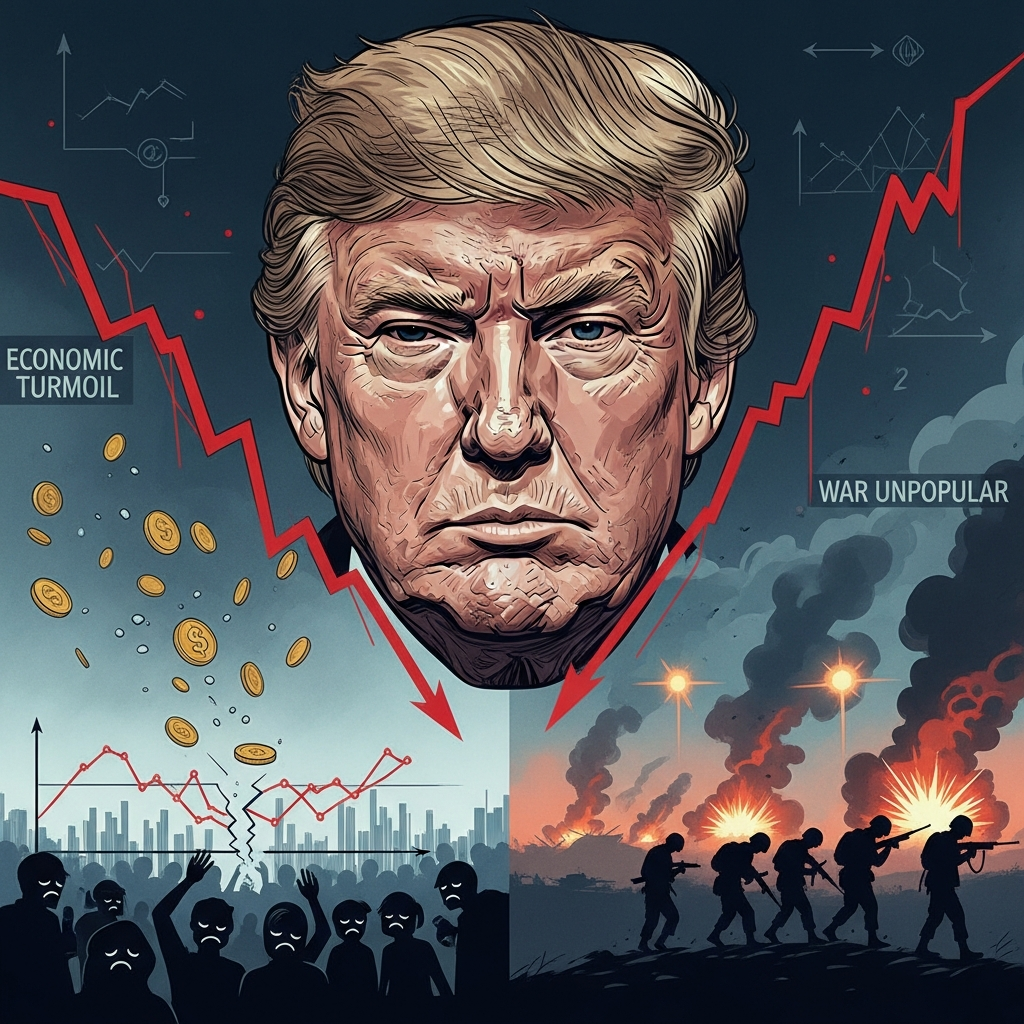
A pivotal new Washington Post-ABC News-Ipsos poll reveals President Donald Trump’s disapproval rating has surged to an unprecedented 62%, marking his worst performance across two terms in office. This critical public sentiment, emerging just six months before the hotly contested November 2026 US midterm elections, paints a challenging picture for the Republican party. The survey highlights widespread discontent over economic stability and the ongoing, deeply unpopular war with Iran, issues that are significantly reshaping the American political landscape.
Record Disapproval Signals Deep Public Frustration
For the first time in his two terms, President Trump’s disapproval rating has climbed to a striking 62%. This record high, up from previous figures, underscores a growing wave of public frustration. Meanwhile, his overall approval rating now stands at 37%, showing a slight decline from 39% recorded in February. Multiple polls, including those by Reuters/Ipsos and the NBC News Decision Desk, corroborate this trend, with some registering even lower approval figures, reflecting a broad consensus on public sentiment.
Two-thirds of Americans now feel the country is moving in the wrong direction. This pessimistic outlook on national affairs is the most negative sentiment recorded in recent Decision Desk polling since Trump’s second term began. The data points to a significant erosion of confidence, impacting perceptions of leadership and policy direction.
Economic Turmoil and the Iran War Fuel Discontent
At the core of Trump’s soaring disapproval are pressing economic issues and the controversial war against Iran. Launched in February, the conflict has plunged the global economy into an oil crisis, sending gas prices soaring to a four-year high. This direct link between foreign policy and pocketbook concerns has severely impacted American households.
Americans rate the president’s handling of the economy particularly poorly. A staggering 76% disapprove of his approach to the cost of living, with only 23% expressing approval. Similarly, 72% of respondents are dissatisfied with his management of inflation, a key concern cited by 45% as the biggest economic issue. Even his overall economic handling faces majority discontent, with 65% disapproval. Gas prices, in particular, worry nearly two-thirds of the populace, with blue-collar workers feeling the brunt. The recent shutdown of Spirit Airlines, partly due to rising fuel costs, offers a tangible example of these pressures.
The deeply unpopular war against Iran is another significant driver of negative sentiment. Public opposition is widespread, with 66% of Americans disapproving of Trump’s management of the conflict, compared to only 32-33% approval. This strong disapproval persists even after a temporary ceasefire announced in April. Democrats and Independents show overwhelmingly high disapproval, while even a notable percentage of Republicans express discontent with the war’s handling. A substantial majority of Americans, 61%, believe the U.S. should take no further action in Iran.
Shifting Support Among Key Voter Groups
While President Trump maintains strong support among the Republican party faithful, this recent poll reveals crucial shifts within his base and among independent voters. His approval among Republicans remains steady at 85%. However, the intensity of this support has softened, with the share of Republicans who “strongly approve” dropping from 53% to 45%. This eight-point decline signals a potential vulnerability within his core constituency.
Among Republican-leaning independents, Trump’s ratings have hit a new low, settling at 56%. This group, often a swing factor, shows diminishing enthusiasm. Even more dramatically, his approval rating among independents overall has slipped to a mere 25%, indicating a significant loss of ground outside traditional party lines. Democratic approval, predictably, remains extremely low at 5%. These figures collectively suggest a narrowing base of enthusiastic support, which could have ripple effects in the upcoming election cycle.
Midterm Elections 2026: A Looming Challenge for Republicans
The weak approval ratings and shifting voter sentiments present a significant threat to the Republican party’s hold on power. With a wafer-thin House majority and their Senate majority also on the line, these numbers suggest a difficult path ahead for the GOP in the 2026 midterm elections.
The poll found that among registered voters, Democrats now hold a five-point advantage in voter preference for House elections. This marks an increase from their two-point edge in both February and October, suggesting a growing momentum for the Democratic party. This advantage expands to a robust nine points among those voters who are “absolutely certain to vote,” highlighting the importance of voter turnout.
Democrats also demonstrate significantly higher enthusiasm for the upcoming midterms. A remarkable 73% of Democrats believe these elections are “much more important” than past ones, compared to 52% of Republicans. Voter certainty is high among Democrats (79% absolutely certain to vote). Among Republicans, 77% of self-identified MAGA supporters are certain to vote, but this drops to 59% among non-MAGA Republicans, indicating a potential divide in turnout enthusiasm within the party.
Broader Public Concerns and Presidential Actions
Beyond overall performance, the poll also delved into public opposition to several specific presidential actions. These include President Trump’s controversial move to end birthright citizenship, cuts to federal funding for medical research, increases to defense spending, and his administration’s efforts to terminate temporary legal status for migrants from war-torn countries. Each of these policies faces considerable public pushback, contributing to the broader negative perception.
Despite overall low ratings, Trump does see some comparative strength on border issues. His approval rating on border security and immigration stands at 44%, against 56% disapproval. This is an increase from earlier in the year, even after controversial deployments of federal agents. He also finds strong support for his push to overhaul voting laws, with three-quarters of Americans supporting requiring government-issued photo ID to vote, many wanting proof of citizenship.
However, public perception extends to character and fitness for office. Approximately seven in 10 Americans state they do not believe Trump is honest and trustworthy. Furthermore, about six in 10 express doubts about his mental sharpness to serve as president. These perceptions of character could profoundly influence voter decisions in the crucial months leading up to the midterms.
Frequently Asked Questions
Why has President Trump’s disapproval rating reached a record high?
President Trump’s disapproval rating has soared to a record 62% primarily due to widespread public dissatisfaction with his handling of economic issues and the ongoing war with Iran. Key economic concerns include the rising cost of living, with 76% disapproving, and inflation, which sees 72% disapproval. The war with Iran, launched in February, is also a major factor, with 66% of Americans disapproving of his management of the conflict. This combination of foreign policy and domestic economic pressures has significantly eroded public confidence.
How are different voter groups reacting to President Trump’s performance?
While President Trump retains strong overall approval among the Republican party faithful (85%), there’s a notable softening in “strong approval,” which dropped from 53% to 45%. Among Republican-leaning independents, his approval rating has hit a new low of 56%. Independents overall show even less support, with his approval rating slipping to 25%. Democrats, predictably, show extremely low approval (5%). These shifts indicate a potential fracturing of support outside his most committed base.
What do these poll results mean for the 2026 US midterm elections?
These poll results signal significant challenges for the Republican party in the upcoming 2026 US midterm elections. The weak approval ratings put their wafer-thin House majority and Senate majority in jeopardy. The Washington Post-ABC News-Ipsos poll indicates that Democrats now hold a five-point advantage over Republicans in voter preference for House elections, expanding to nine points among voters certain to cast a ballot. Additionally, Democrats show higher enthusiasm, with 73% deeming these midterms “much more important” than past ones, compared to 52% of Republicans.
As the 2026 midterm elections draw closer, President Trump’s record-high disapproval rating presents a complex challenge for the Republican party. The confluence of economic frustrations, driven by the cost of living and soaring gas prices, and the deeply unpopular war with Iran appears to be reshaping the political landscape. The observed shifts in voter sentiment, particularly among independents and even within the Republican base, suggest a volatile political environment. With Democrats showing increased enthusiasm and a growing lead in key electoral indicators, the upcoming midterms are poised to be a critical test of public opinion and presidential power. The coming months will reveal if the administration can mitigate these concerns or if the current trends will dictate a significant shift in congressional control.