
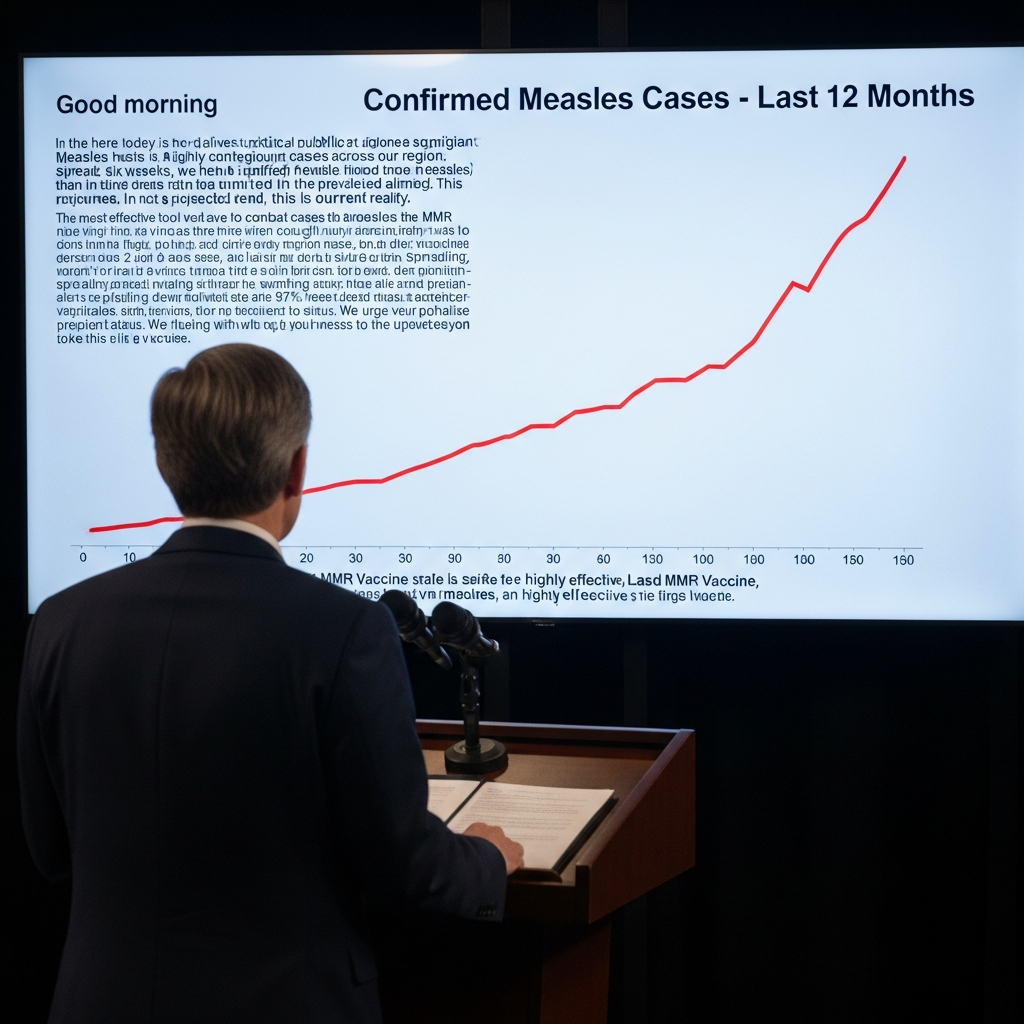
The Washington D.C. metropolitan area is experiencing a critical public health alert as confirmed measles cases surface in the District and Virginia. These local incidents are occurring amidst a concerning nationwide surge in the highly contagious disease, prompting health officials to issue urgent warnings and emphasize preventative measures. This current wave highlights the fragility of community immunity and the vital role of vaccination in protecting vulnerable populations.
Local Cases Spark Immediate Concern in DC and Virginia
Recent reports confirm two new measles cases directly impacting the DC region. The District’s Department of Health announced a confirmed case within the city, while the Virginia Department of Health (VDH) identified another case that passed through Dulles International Airport on April 23 and April 24. This individual, an out-of-state resident, had recently traveled internationally. These incidents follow earlier confirmations of three measles cases in February involving individuals who also traveled through the DC area, signaling a persistent local threat.
Officials are urging anyone who visited specific public locations during the listed dates and times to monitor closely for symptoms over a 21-day period and verify their vaccination status. Measles can remain airborne for up to two hours after an infected person leaves a space, making exposure possible even without direct contact.
Identified Potential Exposure Sites in DC and Virginia
Health authorities in both D.C. and Virginia have meticulously tracked and publicly disclosed potential exposure locations. If you were at any of these sites during the specified times, contact your healthcare provider or D.C. Health immediately for guidance.
Dulles International Airport: Concourse B, the Aerotrain, and the Baggage Claim Area on Thursday, April 23, and Friday, April 24.
M60 Metrobus: Northbound toward Takoma Langley Crossroads Transit Center and southbound toward Fort Totten station from April 24 to April 27.
Metrorail Green Line: From Fort Totten to L’Enfant Plaza and the Blue Line toward Downtown Largo on Saturday, April 25, from 9 a.m. to noon.
Metrorail Green Line: From Fort Totten to L’Enfant Plaza transferring to the Orange Line toward New Carrolton on Sunday, April 26, from 7:50 a.m. to 10:50 a.m.
Metrorail Orange Line: From Minnesota Avenue transferring from L’Enfant Plaza to the Green Line toward Greenbelt on Saturday, April 25, and Sunday, April 26, in the evening.
Metrorail Red Line: From Fort Totten toward Shady Grove on Monday, April 27, from 5 p.m. to 7:15 p.m.
Understanding Measles: An “Unbelievably Contagious” Threat
Measles is one of the most infectious diseases known, often described by health officials as “unbelievably contagious.” If an unvaccinated person is exposed, there’s a staggering 9 out of 10 chance they will become infected. The virus spreads easily through the air via coughs and sneezes.
Early symptoms typically include:
High fever
Cough
Runny nose
Red, watery eyes
These symptoms are usually followed by a characteristic rash that breaks out several days later. While often perceived as a childhood illness, measles can lead to severe complications, including pneumonia, encephalitis (brain swelling), deafness, and even death. Before the vaccine, the U.S. saw tens of thousands of hospitalizations and hundreds of deaths annually. Hospitalization rates for current cases remain concerning, with up to 40% of all cases in 2024 requiring inpatient care. Children under five years old face the highest hospitalization risk, at over 50%.
Why the Resurgence? Unpacking National Trends
The local measles cases in DC and Virginia are part of a much larger, alarming national resurgence. The Centers for Disease Control and Prevention (CDC) reports a significant uptick in confirmed measles cases across the United States. As of April 30, 2026, the U.S. had already reported 1,814 confirmed measles cases, including cases among international visitors, with other reports placing the national total nearing 1,000 cases earlier in the year. This trajectory puts 2026 on track to surpass the 2,288 cases reported across 45 jurisdictions in 2025, which was already the highest total in decades.
Experts point to two primary factors driving this worrying trend:
- Declining Vaccination Rates: Despite measles being declared eliminated in the U.S. in 2000 due to high vaccination coverage, national Measles, Mumps, and Rubella (MMR) vaccine rates among U.S. kindergartners have fallen below the critical 95% threshold required for community (herd) immunity. Coverage dropped from 95.2% in 2019-2020 to 92.5% in 2024-2025, leaving hundreds of thousands of children vulnerable. These declining rates create “pockets of unvaccinated people” where outbreaks can rapidly escalate. Over 90% of current measles patients are either unvaccinated or have an unknown vaccination status.
- Increased Global Measles Activity: A rise in measles outbreaks worldwide increases the likelihood of unvaccinated individuals contracting the virus abroad and bringing it back to the U.S., where it can then spread within under-vaccinated communities. Most U.S. outbreaks originate from imported cases, primarily by unvaccinated U.S. residents returning from international travel.
- Verify your vaccination status. If you’re unsure, speak to your doctor about getting vaccinated.
- www.cdc.gov
- wtop.com
- www.cidrap.umn.edu
- www.cbsnews.com
- publichealth.gmu.edu
While most U.S. citizens are immune thanks to vaccination, epidemiologist Dr. Amira Roess from George Mason University highlights that “small groups of individuals who oppose vaccination” are primarily responsible for fueling the current outbreaks. Northern Virginia, a bustling hub for travel and tourism with two major airports, is particularly susceptible to exposures.
Protecting Yourself and Your Community
Vaccination remains the most effective defense against measles. The MMR vaccine is highly effective, with two doses providing 97% protection and one dose offering 93% protection. Two doses are recommended for children between 12 months and 4 years old. Breakthrough infections in vaccinated individuals are rare, accounting for only about 10% of cases.
If you suspect you’ve been exposed or are experiencing symptoms:
Contact your healthcare provider or D.C. Health immediately. Do not visit a healthcare facility without calling ahead first, as this helps prevent further spread.
Monitor for symptoms for 21 days.
Practicing good hygiene, such as frequent handwashing, can also help reduce the spread of many infectious diseases, though vaccination is paramount for measles.
The Critical Stakes: Avoiding Complications and Mutations
The ongoing measles resurgence carries serious risks beyond individual illness. Uncontrolled spread poses a grave threat to vulnerable populations, including infants too young for full vaccination and immunocompromised individuals who cannot receive the vaccine or mount a strong immune response. These groups face a high risk of severe illness or even death if infected.
Moreover, infectious disease experts like Dr. Amira Roess warn about the long-term danger of viral mutation. Measles has historically been a stable virus, allowing the same effective vaccine to be used for decades. However, sustained, widespread transmission increases the chances of the virus evolving. This could potentially lead to a more infectious strain or, critically, mutations that could render the existing vaccine less effective. Dr. Roess emphasizes that such an event would lead to “serious trouble,” making timely intervention to halt the spread absolutely paramount.
Frequently Asked Questions
What are the main reasons for the current measles resurgence in the U.S.?
The current measles resurgence is primarily driven by declining Measles, Mumps, and Rubella (MMR) vaccine coverage, which has fallen below the 95% threshold needed for community immunity among U.S. kindergartners. This creates vulnerable pockets of unvaccinated individuals. Additionally, increased global measles activity means more unvaccinated travelers are contracting the virus abroad and bringing it back to the U.S., initiating local outbreaks.
Where were the recent measles exposure sites identified in the DC/Virginia area?
Recent potential measles exposure sites in the DC/Virginia area include Dulles International Airport (Concourse B, Aerotrain, Baggage Claim) on April 23 and 24, various M60 Metrobus routes from April 24-27, and several Metrorail lines (Green, Blue, Orange, Red) from April 25-27. Specific times and locations for the Metrorail exposures are detailed in the article, urging anyone who was present during those periods to monitor for symptoms.
What should I do if I suspect I’ve been exposed to measles or develop symptoms?
If you believe you’ve been exposed to measles or start to develop symptoms like fever, cough, runny nose, red eyes, followed by a rash, it’s crucial to contact your healthcare provider or D.C. Health at 844-493-2652 immediately for guidance. Do not go directly to an urgent care clinic or emergency room without calling ahead, as this helps prevent further transmission to others in healthcare settings. Monitor for symptoms for 21 days, and ensure your vaccination status is up-to-date.


One thought on “Urgent Measles Alert: DC & Virginia Cases Fuel US Resurgence”