The NFL Draft represents a pinnacle of talent evaluation, where the hopes of college stars meet the strategic needs of professional franchises. As the 2026 NFL Draft approaches, fans and analysts alike turn to comprehensive consensus big boards to make sense of the vast landscape of prospects. But not all rankings are created equal. This deep dive uncovers a fascinating distinction among draft analysts: the “Forecasters” versus the “Evaluators.” Understanding these two approaches isn’t just academic; it offers a vital lens through which to interpret player rankings, identify emerging talents like Dillon Thieneman or Jacob Rodriguez, and predict potential draft day surprises.
Decoding the 2026 NFL Draft Consensus Big Board
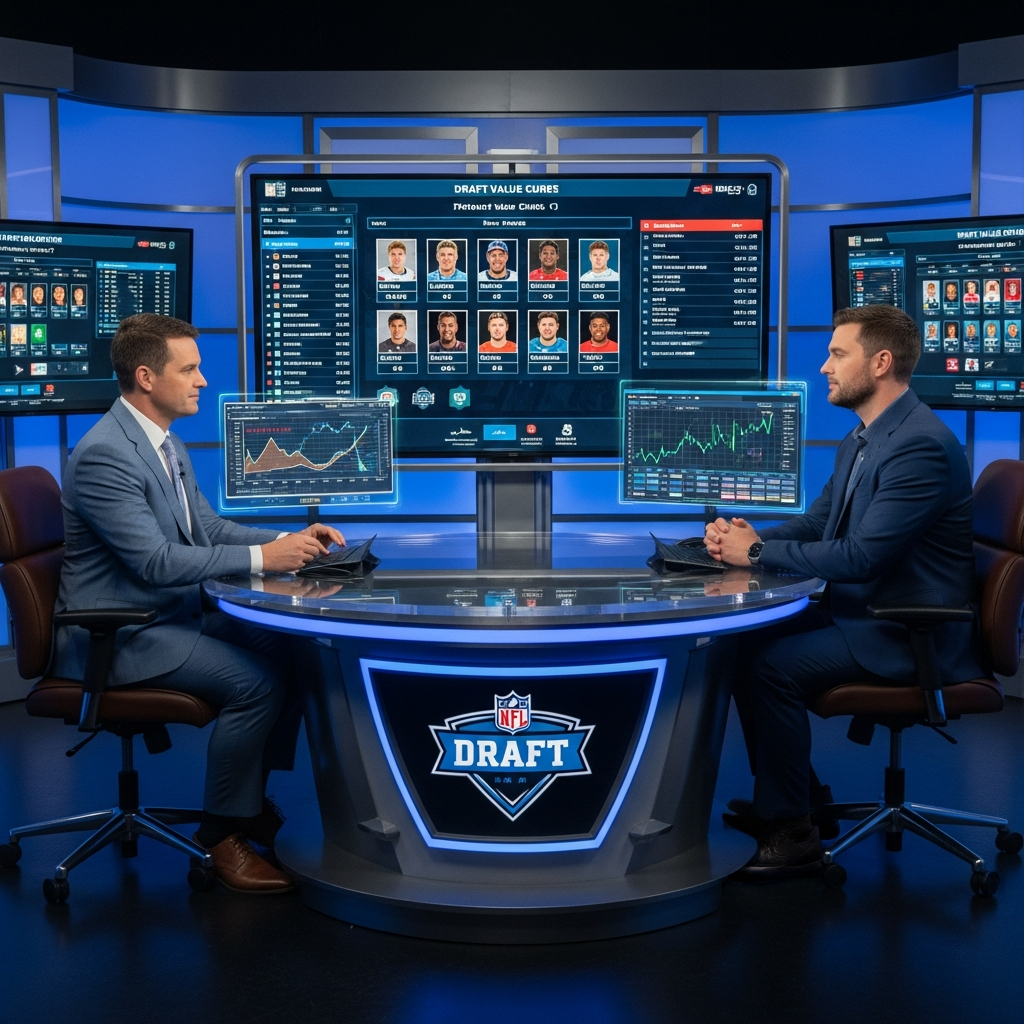
A consensus big board pools insights from numerous experts, offering a collective snapshot of player value. For the 2026 NFL Draft, projects like Arif Hasan’s gather data from over 120 analysts, going beyond simple rankings. This “wisdom of the crowd” approach aims to provide a more robust and less biased view than any single individual’s assessment. Such collective intelligence helps forecast how the draft might unfold, identifying top prospects like Ohio State’s Arvell Reese or Indiana’s Fernando Mendoza with greater accuracy.
However, the power of a consensus board lies not just in aggregation, but in its methodology. Hasan’s acclaimed board, for example, uses a “points-based averaging approach” that assesses “implied player values,” rather than just averaging numerical ranks. This crucial distinction acknowledges that the gap in value between the #1 and #3 ranked player is far greater than between the #145 and #147. Additionally, these advanced methods intelligently handle players who might be highly ranked by some experts but completely unlisted by others, preventing skewed results. For the 2026 cycle, top prospects like Clemson’s Blake Miller and UCF’s Malachi Lawrence are already showing significant movement on these dynamic boards.
The Two Pillars of Draft Analysis: Forecasters & Evaluators
Years of aggregating player rankings have revealed two distinct types of NFL draft analysts, each with unique methods and data access. While these categories sometimes blur, their core differences offer valuable insights into how prospects are perceived and valued.
Who Are the Evaluators?
Think of “Evaluators” as the independent minds of draft analysis. These analysts primarily build their rankings using publicly available information. Their toolkit includes:
Broadcast Footage & All-22 Film: Extensive review of college game film to assess on-field performance, technique, and athleticism.
Public Media Reports: Gathering information on player character, injury flags, and off-field conduct reported in mainstream and independent media.
NFL Combine & Pro Day Data: Utilizing official measurements, athletic testing results, and public reports from these crucial pre-draft events.
Evaluators are meticulous in their use of public data. Their strength lies in synthesizing widely accessible information into comprehensive analyses, often highlighting nuanced aspects missed by broader narratives. They rely on their sharp eyes and analytical skills to interpret what the public can see. They often excel at identifying undervalued players who show up well on film, but perhaps lack the “inside scoop” buzz.
Who Are the Forecasters?
“Forecasters” operate with a different kind of advantage: access. These analysts, often affiliated with legacy media institutions or organizations with substantial resources, go beyond public information. Their data streams include intelligence typically reserved for NFL teams themselves:
Inside Sources: Developing networks with front office personnel, player agents, professional scouts, and college coaches nationwide.
Exclusive Medical Information: Gaining insight into private injury reports, rehabilitation progress, and long-term health concerns, as seen with rumored knee concerns for Caleb Downs or Jermod McCoy’s potential 2026 season-impacting injury.
Deep Character Data: Accessing sensitive information about player psychology, leadership skills, locker room presence, and personal risk factors. This can include insights into psychological exams or cognitive assessments like the S2 test.
Advanced Physical Metrics: Obtaining data on conditioning, flexibility, VO2 max scores, and other physical checks teams perform.
Forecasters leverage this exclusive, often proprietary, information to shape their rankings. This privileged insight allows them to factor in details that public observers simply cannot know, giving them a potentially significant edge in predicting draft day slides or rises.
The Double-Edged Sword of Exclusive Information
While Forecasters benefit from unparalleled access, this also comes with inherent risks. Information from teams or agents can sometimes be strategically leaked or exaggerated, designed to influence draft stock—a classic “smokescreen.” Forecasters must possess exceptional judgment to discern genuine, impactful intelligence from misleading noise. They aren’t always right, as history shows; for instance, Forecasters were notably higher on Shedeur Sanders than Evaluators in a previous cycle, showcasing that even privileged information requires careful interpretation.
Navigating Disagreements and Draft Day Swings
Historically, Forecaster boards tend to exhibit a tighter spread in player rankings with lower variance year over year. When a player unexpectedly slides on draft day, Forecaster boards often had that player ranked lower than Evaluator boards, suggesting their early access to concerns. However, the most surprising finding from extensive data analysis is that despite these clear differences in data access, the “disagreement between the two boards is not particularly meaningful” in predicting overall draft success. While Forecasters might have better pre-draft intelligence on specific issues, fundamental disagreements on player talent or fit don’t always correlate strongly with eventual draft outcomes in a straightforward manner.
The fluid nature of pre-draft rankings means significant movement among prospects right up until draft day. The Athletic’s 2026 Consensus Big Board, for instance, reported notable ascents for Oregon safety Dillon Thieneman (now a top-20 prospect) and Texas Tech linebacker Jacob Rodriguez (a projected Day 2 lock). These movements underscore the dynamic evaluation process and the continuous influx of new information.
Rising Stars & Key Prospects on the 2026 Board
The 2026 NFL Draft class is already brimming with talent, and consensus boards are helping identify its early leaders. Here are some names making waves:
Arvell Reese (LB/Edge, Ohio State): Yahoo Sports’ consensus top prospect, lauded as a “true defensive weapon” for his exceptional versatility, athleticism, and infectious energy, drawing comparisons to a pre-injury Jaylon Smith. He’s an ultimate do-it-all defender.
Fernando Mendoza (QB, Indiana): Ranked #2, Mendoza’s stock soared under new coaching. Scouts highlight his good size, loose arm, precise footwork, and consistent accuracy across all levels, reminiscent of Matt Ryan.
Caleb Downs (S, Ohio State): A perennial elite talent since his Alabama freshman year, Downs (#3) brings immediate NFL-level skills and intellect, despite the historical tendency for safeties to slide slightly on draft day.
Sonny Styles (LB, Ohio State): After an “absurd” Combine performance, Styles (#4) is more than just an athlete; his rare blend of range and power could redefine the modern off-ball linebacker position.
Rueben Bain Jr. (Edge, Miami): At #5, Bain is an “all-star” due to his powerful frame and high-end athleticism. Despite arm length concerns, his focus on power and leverage positions him as a potential first edge rusher off the board.
Blake Miller (OT, Clemson), Malachi Lawrence (Edge, UCF), Keylan Rutledge (IOL, Georgia Tech): These players have all seen significant rises, climbing more than five spots on recent consensus boards, signaling growing confidence in their talent.
Dillon Thieneman (S, Oregon): A standout riser, Thieneman has surged from outside the top 50 to a top-20 prospect, potentially landing in the first round.
Jacob Rodriguez (LB, Texas Tech): Moving into the top 40, Rodriguez is a “Day 2 lock.” Despite his age (24 before rookie season) and position, his talent is undeniable.
Other notable prospects frequently appearing in early rankings include Notre Dame RB Jeremiyah Love, Georgia OT Monroe Freeling, Texas Tech Edge David Bailey, LSU CB Mansoor Delane, and Ohio State WR Carnell Tate, among others, each bringing a unique blend of athleticism, technique, and potential to the draft class.
Leveraging Consensus for Your Own Draft Prep
Understanding the Forecaster/Evaluator dynamic and the power of consensus boards offers valuable takeaways for anyone following the 2026 NFL Draft:
Identify Polarizing Prospects: Players with wide discrepancies between Forecaster and Evaluator rankings could be high-risk/high-reward selections. These are often the players to watch for draft day volatility.
Filter Information Critically: When a “whisper” about a player’s injury or character emerges from a major outlet, consider its source. Is it a Forecaster leveraging exclusive intel, or an Evaluator interpreting public signals? Both can be valuable, but their implications differ.
Embrace the “Wisdom of the Crowd”: For overall draft prediction, a well-constructed consensus big board, especially one employing sophisticated averaging methods, often provides a more reliable forecast than any single expert. As seen with the Packers’ successful mock draft strategies, leveraging a broad consensus helps identify realistic player pools.
- Focus on Measurable Progress: Combine performances, like those from Sonny Styles or Monroe Freeling, significantly impact player stock across all analyst types, providing crucial updates as the draft nears.
- www.wideleft.football
- packerswire.usatoday.com
- www.nytimes.com
- www.wideleft.football
- sports.yahoo.com
Ultimately, the 2026 NFL Draft is a complex puzzle. By appreciating the different lenses through which analysts view prospects – from the publicly available film to the deeply sourced insider reports – you gain a richer, more nuanced understanding of the players and the predictions surrounding them.
Frequently Asked Questions
What fundamentally distinguishes Forecasters from Evaluators in NFL Draft analysis?
The core distinction lies in their data access. Evaluators, often independent analysts, primarily rely on publicly available information like college game film, media reports, and official Combine/Pro Day results. Forecasters, typically associated with larger media or institutions, access exclusive, often team-level data, including private injury reports, psychological assessments, and deep character insights obtained through a network of insider sources.
How do consensus big boards account for a player being unranked by some analysts?
Advanced consensus big boards, such as Arif Hasan’s, don’t simply average ranks. Instead, they use a “points-based averaging approach” that assesses “implied player values” and applies “varying penalties for absences.” This methodology prevents players who are highly ranked by a few but completely ignored by many from being misleadingly elevated, providing a more accurate reflection of a player’s true universal consensus value.
Why might a consensus big board be a more reliable predictor than a single analyst’s ranking?
A consensus big board leverages the “wisdom of the crowd” principle, aggregating insights from dozens to over a hundred individual analysts. This broad collective intelligence tends to smooth out individual biases, unique preferences, or limited information access that a single analyst might have. While no single board is perfect, a well-constructed consensus board offers a more robust, comprehensive, and statistically sound prediction of player value and draft position compared to any solitary expert’s assessment.
The dynamic interplay between Forecasters and Evaluators, alongside the meticulous work behind comprehensive consensus boards, enriches our understanding of the NFL Draft. As the 2026 NFL Draft draws closer, keeping these distinctions in mind will offer a more informed perspective on the prospects and the ever-evolving landscape of player evaluation.