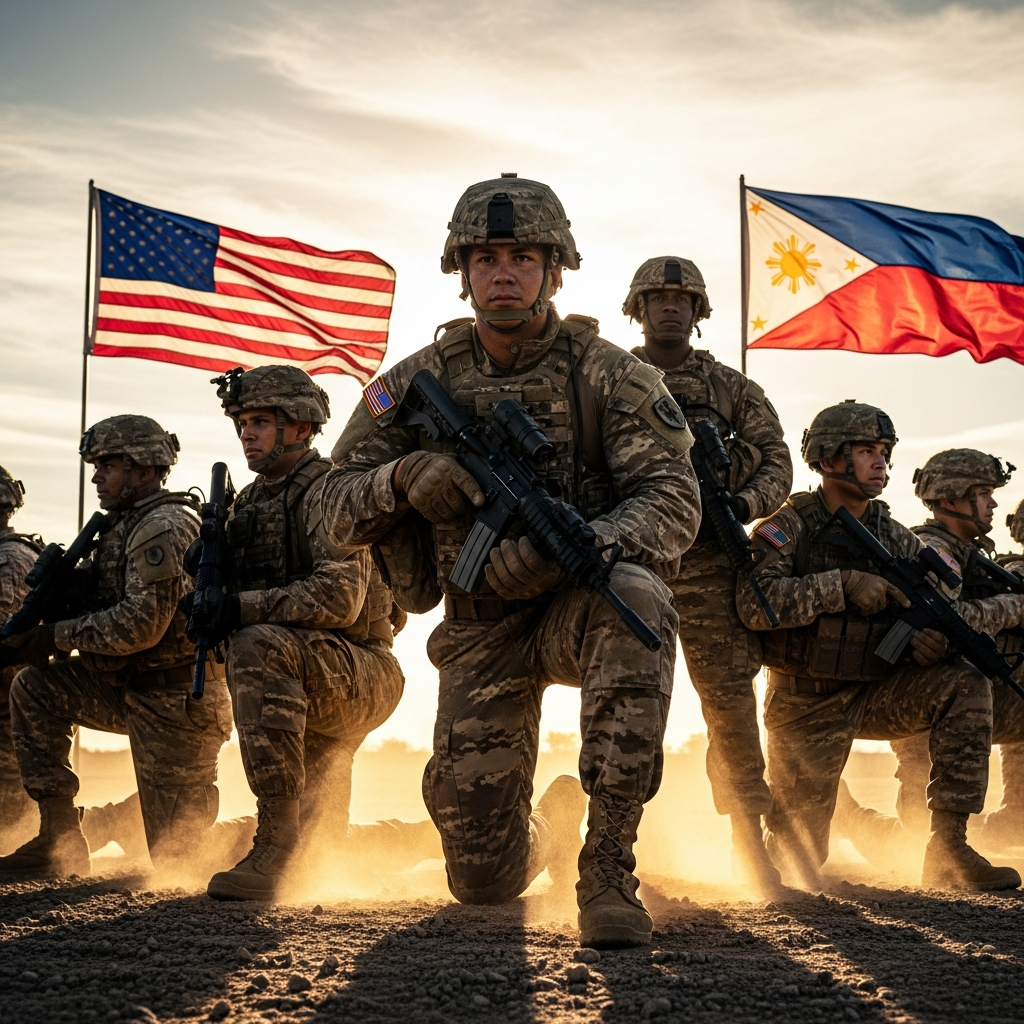
The United States and the Philippines have launched “Balikatan” – a Tagalog term meaning “shoulder-to-shoulder” – one of their largest and most significant joint combat exercises to date. Kicking off on Monday, April 20, 2026, these nearly three-week-long drills represent a powerful demonstration of allied military resolve, primarily aimed at reinforcing deterrence in the dynamic Indo-Pacific region. Despite escalating global challenges, Washington remains firmly focused on its commitments in Asia, a stance underscored by the unprecedented scale and expanded participation of nations like Japan and Canada. The exercises are not just about military might; they symbolize a shared commitment to upholding international law and fostering a free and open Indo-Pacific, even as China voices strong objections, perceiving the drills as a challenge to its rising global influence.
Balikatan 2026: A Show of Allied Strength
The annual Balikatan exercises have evolved into a critical display of interoperability and readiness for allied forces. The 2026 iteration is particularly notable for its expanded scope and intensity. Over 17,000 military personnel are actively participating, with nearly 10,000 coming from the United States alone. This substantial deployment by the U.S. military signals Washington’s unwavering focus on its Indo-Pacific strategy and its enduring, “ironclad commitment” to the Philippines, its oldest treaty ally in Asia. Lt. Gen. Christian Wortman, Commanding General of the U.S. Marine Expeditionary Force, emphasized this commitment during the opening ceremonies held at Camp Aguinaldo military headquarters in Quezon City.
Key Participants and Unprecedented Scale
This year marks a significant expansion in the roster of participants. Japan and Canada have joined as full-time participants, a notable development following their respective visiting forces agreements with Manila. Japan, in particular, has deployed its largest-ever contingent for Balikatan, sending 1,400 members. This increased participation highlights a growing network of alliances designed to enhance regional security and stability. The multinational combat drills, as stated by Armed Forces of the Philippines Chief of Staff Gen. Romeo Brawner, are crucial for building deterrence and resilience against aggression. He stressed the importance of a shared commitment to upholding international law and respecting sovereignty to ensure nations can thrive without coercion.
Strategic Locations and Mock Battle Scenarios
The Balikatan exercises are meticulously designed to test and improve the combined forces’ capabilities across a range of operational environments. The drills feature a variety of mock battle scenarios and live-fire maneuvers. Crucially, these operations are being conducted in key Philippine provinces facing the disputed South China Sea and the Taiwan Strait. These locations are strategically significant, given the increasing geopolitical tensions in both areas. For example, Japanese forces are scheduled to fire missiles from a coastal area in the northwestern Philippine province of Ilocos Norte, aiming to sink a mock enemy ship approximately 40 kilometers (25 miles) away in the peripheries of the South China Sea. Following this, U.S. forces will utilize a marine drone laden with explosives to further bombard the same target, demonstrating advanced joint combat capabilities.
China’s Strong Objections and Regional Tensions
The commencement of the Balikatan exercises has drawn sharp condemnation from Beijing. China views these joint U.S.-Philippine military drills as an overt attempt to contain its global rise and challenge its territorial claims. Chinese Ministry of Foreign Affairs spokesperson Guo Jiakun issued a stern warning, cautioning against the introduction of “foreign forces with a record of impunity” into the region. He suggested that such actions could ignite confrontation, stating that “unilateralism and military bullying have already brought profound disasters to the world.” Guo underscored Beijing’s belief that the Asia-Pacific region needs peace and stability, not the “introduction of external forces to create division and confrontation.”
Beijing’s View on “External Forces”
China’s objections stem from its deep-seated concerns over what it perceives as external interference in regional affairs. The terminology used by Guo Jiakun – “foreign forces with a record of impunity” and “military bullying” – clearly points to the United States and its allies. Beijing consistently argues that such multinational exercises contribute to regional instability rather than enhancing security. This perspective clashes directly with the allies’ stated goals of maintaining a “free and open Indo-Pacific.” The rhetorical battle highlights the stark divergence in strategic visions for the future of Asia.
Escalating South China Sea Disputes
The backdrop to these intensified military drills is the highly contentious South China Sea. This vital global trade route is claimed almost entirely by Beijing, a claim that clashes with those of the Philippines, Vietnam, Malaysia, Brunei, and Taiwan. In recent years, territorial confrontations between Chinese and Filipino forces have escalated significantly, marking a period of heightened friction. The U.S. has repeatedly affirmed its treaty obligation to defend the Philippines, its oldest Asian treaty ally, if Filipino forces face armed attack in these disputed waters. This long-standing commitment serves as a powerful deterrent and a key element of regional security architecture.
Deepening Alliances: Commitment to a Free Indo-Pacific
The Balikatan 2026 exercises are a tangible manifestation of a deepening network of alliances in the Indo-Pacific. The sheer scale and complexity of the drills reflect a concerted effort by the U.S. and its partners to enhance collective defense capabilities and promote a rules-based international order. Philippine military Chief Gen. Romeo Brawner, while refraining from explicitly naming China, has been a vocal critic of Beijing’s increasingly assertive actions in the South China Sea. His emphasis on upholding international law and contributing to a “free and open Indo-Pacific where nations can thrive without coercion” directly addresses the challenges posed by unilateral actions in the region.
US “Ironclad Commitment” to the Philippines
Lieutenant General Christian Wortman’s remarks at the opening ceremony resonated with the United States’ consistent message regarding its strategic priorities. He articulated that regardless of other global challenges, the U.S. remains unwavering in its focus on the Indo-Pacific and its “ironclad commitment” to the Philippines. This goes beyond mere words, translating into substantial resource deployment and strategic cooperation. The US-Philippines alliance is a cornerstone of regional security, with a history spanning decades, and these drills reinforce its relevance in contemporary geopolitical dynamics. Last year, then-U.S. Defense Secretary Pete Hegseth also assured Philippine officials that the U.S. would work with allies to ramp up deterrence against threats, including China’s aggression in the South China Sea, emphasizing the necessity for allies to “stand shoulder to shoulder to deter conflict” and ensure freedom of navigation.
Japan and Canada’s Expanded Roles
The expanded participation of Japan and Canada in Balikatan 2026 signifies a broader trend towards multilateral security cooperation in the Indo-Pacific. Japan, traditionally more cautious in its military posture, is demonstrating a growing commitment to regional stability, with its 1,400-member contingent being its largest to date for these exercises. Canada’s involvement further diversifies the allied front. These nations contribute not only military personnel and equipment but also enhance the collective intelligence, surveillance, and reconnaissance capabilities of the participating forces. Their presence underscores a shared international interest in maintaining peace and stability in a region vital to global commerce and security.
Beyond Deterrence: Disaster Preparedness and International Law
While the primary focus of Balikatan 2026 is undoubtedly deterrence and defense readiness, the Philippine military also emphasizes a crucial secondary objective: preparing allied forces to respond effectively to natural disasters. The Philippines is highly susceptible to natural calamities, and joint military exercises often incorporate humanitarian assistance and disaster relief (HADR) components. This dual-purpose approach allows forces to hone their logistical, coordination, and rapid response skills, benefiting both military readiness and civilian protection. The exercises, therefore, serve as a comprehensive training ground, addressing both conventional security threats and non-traditional challenges, all while reaffirming the principle of upholding international law in a complex geopolitical landscape.
Frequently Asked Questions
What is Balikatan and what are its key objectives for the US and Philippines?
Balikatan, meaning “shoulder-to-shoulder” in Tagalog, is an annual joint combat exercise between the United States and the Philippines. Kicking off on April 20, 2026, its primary objectives are to deter aggression in Asia, demonstrate allied military strength, and enhance the interoperability and readiness of participating forces. For the Philippines, it’s also crucial for preparing for natural disaster response. Both nations aim to uphold international law, respect sovereignty, and foster a “free and open Indo-Pacific where nations can thrive without coercion,” particularly in the context of escalating tensions in the South China Sea.
Where are the Balikatan 2026 military drills being conducted and why are these locations significant?
The Balikatan 2026 drills are being conducted at various locations, including Camp Aguinaldo military headquarters in Quezon City, Philippines, and notably in Philippine provinces facing the disputed South China Sea and the Taiwan Strait. These locations are highly significant due to their strategic importance in the Indo-Pacific region. The proximity to contested maritime territories underscores the drills’ focus on maritime security, freedom of navigation, and deterring potential aggression in areas critical to global trade and geopolitical stability.
How have China’s objections impacted regional stability, and what are the potential long-term implications of these expanded US-Philippines military drills?
China has vociferously objected to the Balikatan drills, viewing them as an attempt at containment and a source of regional confrontation, warning against the introduction of “external forces.” These objections heighten an already tense regional environment, particularly concerning the South China Sea disputes. The long-term implications of these expanded US-Philippines military drills could include a strengthened network of alliances in the Indo-Pacific, potentially leading to increased deterrence against unilateral actions. However, they also risk further entrenching geopolitical rivalries, necessitating careful diplomacy alongside military readiness to prevent escalation and maintain regional stability.
Conclusion: The Future of Indo-Pacific Security
The Balikatan 2026 exercises stand as a robust testament to the evolving security landscape of the Indo-Pacific. With expanded participation from Japan and Canada, and an unwavering commitment from the United States, these drills project a united front dedicated to maintaining regional peace and stability. While China’s strong objections underscore the deep geopolitical fault lines, the allied forces maintain that their actions are defensive, aimed at upholding international law and ensuring a “free and open” region. As territorial disputes simmer in the South China Sea and strategic competition intensifies, the outcomes and continued evolution of drills like Balikatan will undoubtedly shape the future security architecture of one of the world’s most vital regions. Understanding these dynamics is crucial for anyone monitoring global affairs, highlighting the complex interplay of diplomacy, deterrence, and defense.