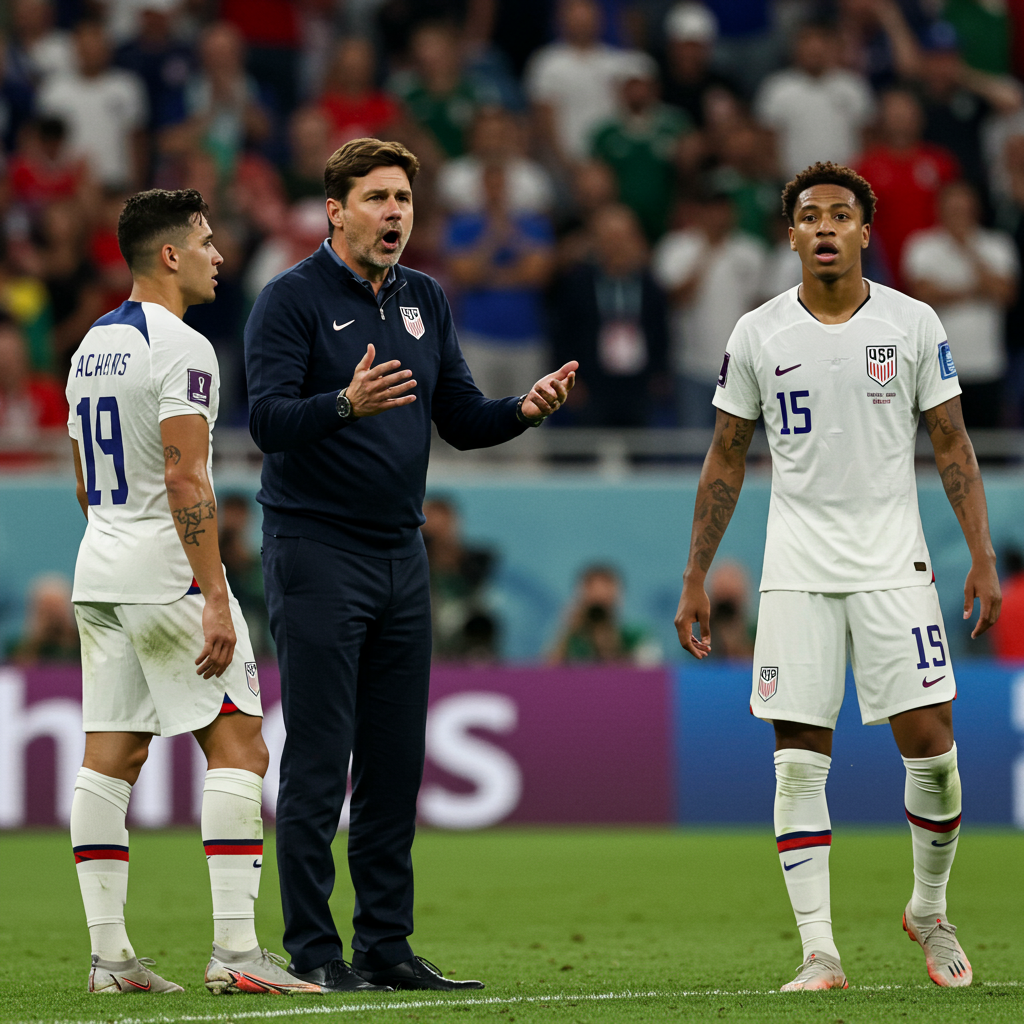
The CONCACAF Gold Cup final clash between the United States Men’s National Team (usmnt) and Mexico on July 7, 2025, ended in a dramatic 2-1 victory for El Tri. While Mexico lifted the trophy, the match’s conclusion was overshadowed by intense criticism from the USMNT camp, specifically head coach Mauricio pochettino and players Chris Richards and Tyler Adams, directed at the refereeing decisions. Their frustration was palpable, with Richards explicitly stating, “They hate us,” and Pochettino labelling the officiating “embarrassing” and a “shame.” These strong reactions highlight a lingering tension surrounding officiating standards in regional tournaments.
The Gold Cup Final Context
The highly anticipated final saw Mauricio Pochettino aiming to secure his first major trophy since departing Paris Saint-Germain. The USMNT started brightly at kickoff. In the 4th minute, a well-delivered free kick from Sebastian Berhalter found defender Chris Richards, who headed the ball into the net, giving the USA an early 1-0 lead and igniting hopes for a championship win.
However, Mexico, led by coach Javier Aguirre’s tactical approach, responded with urgency. Pushing forward, they found their equalizer in the 27th minute. Fulham forward Raúl Jiménez received the ball inside the penalty area, executed a quick turn, and fired a first-time shot that caught the USMNT goalkeeper by surprise, leveling the score at 1-1. Jiménez’s goal visibly shifted the momentum. Following the equalizer, Mexico appeared to gain greater control of the match, creating more scoring opportunities while the USMNT focused on counter-attacking possibilities.
Deep Dive into Disputed Decisions
Despite acknowledging that the team was potentially outplayed in certain phases, the USMNT contingent firmly believed that key officiating moments significantly impacted the final scoreline and outcome. The post-match comments centered around two particular incidents that fueled their USMNT refereeing controversy claims.
The Potential Handball Controversy
One major point of contention arose around the 67th minute involving a potential handball incident within Mexico’s penalty area. U.S. defender Chris Richards described the play vividly, recounting how Mexico’s Jorge Sanchez seemed to handle the ball while bracing a fall. Richards likened the action to someone “palm[ing] the ball like Shaq in the box,” suggesting a clear infraction.
Coach Pochettino echoed this sentiment strongly. He argued that had the identical situation occurred in the USMNT’s box, a penalty would have been awarded “for sure.” Pochettino felt it was a penalty because Sanchez appeared to push his hand over the ball rather than merely having his hand on the ground for support. He found the decision not to award a penalty “embarrassing” and “a shame,” positing that a successful spot-kick could have changed the score to 2-1 in favor of the USA, potentially leading to a different result. Tyler Adams also weighed in, stating it “looked like a handball” when a player lands and moves the ball.
However, not everyone agreed with the USMNT’s interpretation. Analysis from former referee and rules expert Christina Unkel suggested that because Sanchez was naturally using his hand to brace a fall and showed no deliberate intent to handle the ball, the action would be considered non-deliberate and therefore not a penalty according to the rules. Pochettino explicitly disagreed with this explanation, standing firm on his view of the incident.
The Winning Goal Offside Debate
The second highly controversial moment led directly to Mexico’s winning goal in the 77th minute. Mexico was awarded a free kick, and the subsequent play resulted in Edson Álvarez scoring to make it 2-1. However, the goal was initially disallowed by the on-field officials.
USMNT players immediately protested, arguing that Mexico’s César Montes was in an offside position and impeding Chris Richards’ movement before the ball reached Álvarez. Richards stated that in “any other league, it would’ve been called offsides,” following this observation with his pointed comment, “They hate us.”
Coach Pochettino supported this perspective, asserting that Montes was blocking Richards when the ball arrived in the penalty area and was indeed offside when the free kick was initially delivered. The goal was ultimately upheld after a VAR (Video Assistant Referee) review. The explanation provided noted that VAR confirmed the goalscorer, Edson Álvarez, was onside. Furthermore, Montes was likely not flagged offside because he did not play the initial ball himself. The ball was flicked on at the near post by another player, Johan Vásquez. By the time Vásquez touched the ball, Montes was deemed to have returned to an onside position, although Richards was still trailing him, potentially affected by Montes’s initial position and action.
Pochettino also raised questions about the foul called on Diego Luna that resulted in the free kick leading to Mexico’s second goal, suggesting Mexico’s Alexis Vega merely “slip[ped] and [fell] down alone,” implying the foul call was unwarranted.
Frustration with CONCACAF Officiating
The pervasive feeling from the USMNT camp was a deep dissatisfaction with the overall standard of refereeing in the CONCACAF region. Richards’ “They hate us” remark reflected a belief that officials in CONCACAF tournaments might operate with a bias or at least are “always one step behind” the level of play, contributing to poor or inconsistent calls.
Pochettino dedicated a significant portion of his post-match press conference, roughly four minutes, to discuss the refereeing. He insisted he was not “crying” or offering “excuses” for the loss but felt compelled to tell the “truth,” which he described as “tough not to tell.” The coach suggested that the heavily pro-Mexico crowd atmosphere might have influenced the officials’ decisions, implying a potential double-standard in the calls made throughout the match.
USMNT’s Balancing Act: Acknowledging Defeat vs. Criticizing Officiating
While expressing strong opinions on the officiating, both Pochettino and Richards made efforts to also acknowledge their own team’s performance. Pochettino stated the team needed to engage in self-criticism following the loss. However, he stressed that the “reality’s there” for everyone to see regarding the perceived refereeing errors. He felt that his players, despite the loss, did not deserve the situation created by the questionable calls, highlighting the difficulty of overcoming both a strong opponent and what they viewed as unfavorable officiating. This balancing act of accepting responsibility for the loss while highlighting external factors like the USMNT refereeing controversy defined their post-game message.
Looking Ahead
The controversial ending to the Gold Cup final leaves a bitter taste for the USMNT and adds another layer to the long-standing rivalry with Mexico. The criticisms of CONCACAF refereeing standards are not new, and this match provided fresh, high-profile examples that will likely fuel debate for some time. The team will need to move past the disappointment and focus on future challenges, but the memory of the “embarrassing” calls, as Pochettino described them, will undoubtedly linger. Understanding this USMNT refereeing controversy is key to grasping the full narrative of the final.
Frequently Asked Questions
What specific refereeing decisions did the USMNT complain about in the Gold Cup final?
The USMNT had two primary complaints. First, they felt a potential handball by Mexico’s Jorge Sanchez in the box around the 67th minute should have been called as a penalty. Second, they believed Mexico’s César Montes was in an offside position and impeding a defender on the play leading to Mexico’s winning goal in the 77th minute, even though VAR ultimately upheld the goal.
Why did USMNT players feel the refereeing might have been biased or poor?
Players like Chris Richards expressed frustration with the perceived standard of CONCACAF refereeing, feeling officials were “always one step behind” and that calls might have been influenced by the pro-Mexico crowd. Richards’ strong comment, “They hate us,” reflected a sentiment of perceived bias or unfair treatment in the regional competition, fueled by the controversial decisions during the match.
Was the winning goal for Mexico initially ruled offside?
Yes, Mexico’s winning goal, scored by Edson Álvarez in the 77th minute, was initially disallowed by the on-field officials, likely due to concerns about offside positioning involving another player, César Montes. However, after a review by the Video Assistant Referee (VAR), the decision was overturned, and the goal was confirmed as valid, despite USMNT protests regarding Montes’s involvement.
Conclusion
The 2025 Gold Cup final between the USMNT and Mexico was a thrilling encounter on the pitch, ultimately decided by a narrow 2-1 scoreline in Mexico’s favor. However, the narrative extending beyond the final whistle focuses heavily on the significant USMNT refereeing controversy. Mauricio Pochettino, Chris Richards, and Tyler Adams did not shy away from expressing their severe disappointment and outright criticism of specific calls, labeling the officiating “embarrassing” and hinting at deeper frustrations with CONCACAF standards. While acknowledging their defeat, the USMNT players and coach made it clear they felt the game’s outcome was unfairly impacted by decisions they viewed as incorrect or biased. This match serves as a stark reminder of the intense pressure and scrutiny faced by officials in high-stakes international football, and the lingering questions surrounding officiating quality in the region.