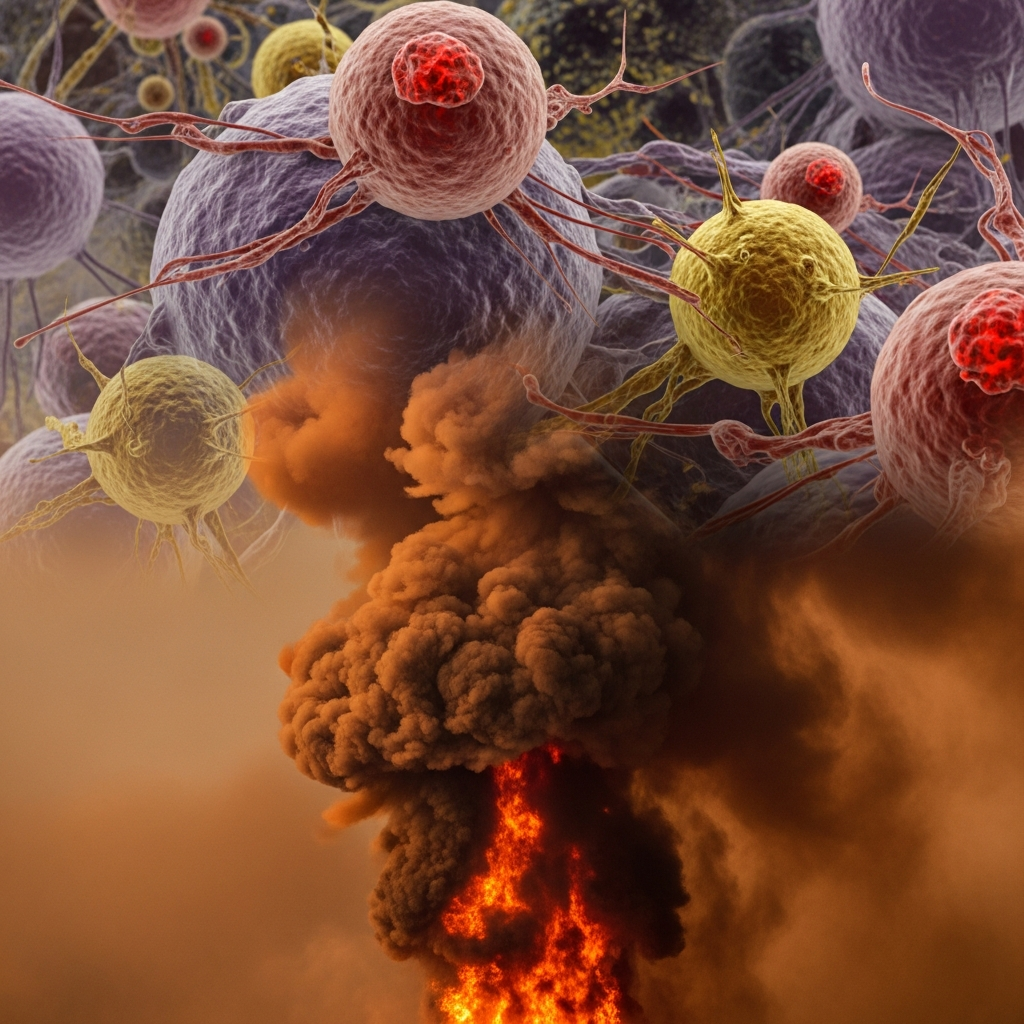
The air we breathe is increasingly threatened by wildfire smoke, a growing concern that new research connects to a startling range of health issues, including several types of cancer. As wildfires intensify and become more frequent across the globe, understanding the silent, long-term impact of this pervasive pollution is more critical than ever. Recent findings presented at an American Association for Cancer Research meeting suggest a significant link between extended wildfire smoke exposure and an elevated risk of lung, colorectal, breast, bladder, and blood cancers. While this particular study is still awaiting peer review, it adds a serious new dimension to the already well-established dangers of breathing wildfire smoke. This article delves into these concerning connections, exploring the broader health crisis fueled by climate change and offering actionable insights for protection.
The Startling Link: Wildfire Smoke and Cancer Risk
A compelling new study, based on a long-term database tracking over 91,000 individuals, reveals that consistent exposure to elevated levels of wildfire smoke over three years significantly increases the risk of specific cancers. Researchers found a concerning correlation with higher incidence rates of lung, colorectal, breast, bladder, and blood cancers. This groundbreaking, albeit not yet peer-reviewed, research highlights the insidious nature of wildfire smoke, suggesting that its impact extends far beyond immediate respiratory irritation to potentially alter cellular health over time, contributing to oncogenesis. The study’s scale and the specific cancer types identified underscore the urgent need for further investigation into the carcinogenic potential of wildfire smoke, prompting a reevaluation of our exposure risks.
Beyond Cancer: A Multi-faceted Public Health Crisis
While the potential link to cancer is a grave discovery, wildfire smoke has long been recognized as a pervasive public health threat, manifesting in a wide array of devastating conditions. The microscopic particles within wildfire smoke, primarily fine particulate matter (PM2.5), are uniquely harmful due to their ability to deeply penetrate human physiology.
Respiratory Systems Under Siege
The lungs are often the first line of defense, and consequently, the first to suffer. A study from the University of Vermont (UVM) published in Environmental Health revealed a significant worsening of pediatric asthma symptoms in Vermont and upstate New York children during the summer of 2023, directly attributable to smoke from Canadian wildfires. Even distant fires can profoundly affect local air quality, with PM2.5 exacerbating conditions like asthma and chronic obstructive pulmonary disease (COPD). Vermont, already experiencing higher-than-average asthma rates, saw children’s asthma “significantly less controlled” during heavy smoke periods, as confirmed by pediatric pulmonologist Dr. Keith Robinson. This shows that wildfire smoke poses a severe risk to respiratory health across wide geographic regions.
Cardiovascular and Neurological Threats
The dangers of PM2.5 extend far beyond the lungs. These tiny particles can enter the bloodstream, causing systemic inflammation and contributing to severe cardiovascular diseases, including heart attacks. Research published in Science Advances and Nature indicates that PM2.5 from wildfire smoke can even cross the blood-brain barrier. This infiltration can lead to neurological disorders and cognitive impacts. Marshall Burke, a climate expert at Stanford University, notes that while death certificates rarely list “smoke-related” causes directly, the inflammation caused by dirty air significantly worsens chronic conditions like heart and brain diseases, accelerating premature death. The health impacts, including elevated death rates, can linger for as long as three years after significant smoke exposure.
A Silent Toll: Premature Deaths Soaring
The cumulative effect of these health burdens is a staggering increase in premature deaths. A study published in Science Advances estimates an average of 24,100 Americans die annually from chronic wildfire smoke exposure between 2006 and 2020. Another study in Nature projects that 40,000 deaths occur annually, with this figure potentially surging to 70,000 deaths per year by mid-century due to intensifying wildfires. Min Zhang, a postdoctoral student at the Icahn School of Medicine at Mount Sinai, emphasizes that wildfire smoke PM2.5 has become a significant environmental hazard. These aren’t abstract statistics; Michael Jerrett of the University of California, Berkeley, describes them as “real lives that are being lost,” disproportionately affecting already vulnerable populations.
The Mental Health Fallout
The pervasive nature of wildfire smoke also takes a toll on mental well-being. A Harvard T.H. Chan School of Public Health study, published in JAMA Network Open, established a direct link between wildfire-specific PM2.5 exposure and a worsening of mental health conditions. Researchers observed increased emergency department (ED) visits for depression, anxiety, and other mood-affective disorders, with effects persisting for up to seven days following exposure. This suggests the smoke itself, independent of the trauma of a wildfire event, can exacerbate mental health issues. Lead author YounSoo Jung highlighted significant disparities, with women, children and young adults, Black and Hispanic individuals, and Medicaid enrollees showing a higher risk of mental health ED visits, underscoring how smoke exposure deepens existing health inequities.
Why Wildfire Smoke is Getting Worse: The Climate Connection
The escalating health crisis from wildfire smoke is inextricably linked to human-caused climate change. Heat-trapping pollution creates hotter, drier conditions, forming a perfect crucible for increased fire ignition and spread. Climate Central highlights a dramatic increase in per-person exposure to harmful wildfire smoke, which was, on average, four times higher annually during 2020-2024 compared to 2006-2019.
This isn’t just a localized problem for fire-prone regions. Wildfire smoke can travel hundreds or even thousands of miles, impacting air quality far from its origin. Notable examples include the Canadian wildfires of 2023, which blanketed large swaths of the U.S. Northeast and Midwest in thick smoke. Research indicates that the majority (87%) of local wildfire smoke PM2.5 originates from fires in other counties, and 60% from other states. This long-range transport means that while most large fires occur in the West, about three-quarters of smoke-related mortality occurs in other U.S. regions due to higher population density in the eastern U.S. The rise in wildfire smoke since 2016 has tragically stalled or reversed decades-long air quality improvements in 30 U.S. states, threatening to undo progress made under the Clean Air Act.
Who is Most Vulnerable? Disparities in Impact
While wildfire smoke affects everyone, certain populations face disproportionately higher risks. The elderly, pregnant individuals, children, and those with pre-existing chronic conditions like asthma or heart disease are particularly vulnerable to the severe health consequences. Wildland firefighters, first responders, and outdoor workers also face heightened occupational risks due to direct and prolonged exposure. The Harvard mental health study further elucidated disparities, showing that women, children and young adults, Black and Hispanic individuals, and Medicaid enrollees were more likely to experience mental health ED visits linked to smoke. These findings reveal that existing social and economic inequities are amplified by wildfire smoke exposure, making access to resources and healthcare even more critical for these groups.
Protecting Yourself and Your Community: Actionable Steps
Addressing the growing public health threat of wildfire smoke requires both individual protective measures and broader policy changes. Knowing how to protect yourself and your family is essential during fire seasons.
Individual Protection Strategies:
Monitor Air Quality: Stay informed about local air quality using resources like AirNow.gov.
Stay Indoors: When air quality is poor, keep windows and doors closed.
Filter Your Air: Use high-efficiency particulate air (HEPA) filters in your home’s HVAC system or standalone air purifiers.
Limit Outdoor Activity: Avoid strenuous outdoor exercise, especially for vulnerable individuals.
Wear Masks: If you must be outdoors, consider wearing an N95 respirator mask to filter out PM2.5.
Stay Hydrated: Drink plenty of water to help your body manage exposure.
Community and Policy Actions:
Public Health Education: Clinicians and public health agencies should educate families on preventative measures.
Support for Vulnerable Populations: Ensure all individuals, especially those lacking resources, have access to mitigation strategies and mental health care during wildfire seasons.
Improved Air Quality Regulation: Advocate for greater regulatory attention to wildfire-sourced PM2.5, which is currently often categorized as a “natural disaster” and not consistently regulated by agencies like the EPA.
Adaptation Strategies: Invest in community-level solutions like designated clean air centers during heavy smoke events.
Frequently Asked Questions
What types of cancers are linked to wildfire smoke exposure?
A recent study presented at an American Association for Cancer Research meeting found that extended exposure to wildfire smoke may increase the risk of several types of cancer. Specifically, the research highlighted an increased risk of lung, colorectal, breast, bladder, and blood cancers among individuals exposed to higher levels of wildfire smoke over a three-year period. While this study is still awaiting peer review, it suggests a concerning new dimension to the long-term health impacts of wildfire smoke.
How can I protect my family from wildfire smoke, especially if we have vulnerable members?
Protecting your family from wildfire smoke involves several key steps. During periods of poor air quality, keep windows and doors closed and use air purifiers with HEPA filters indoors. Limit outdoor activities, particularly for children, the elderly, pregnant individuals, or those with chronic conditions like asthma. Monitor local air quality alerts and consider wearing an N95 mask if outdoor exposure is unavoidable. Additionally, staying hydrated and having an emergency plan in place can significantly reduce risks.
Is wildfire smoke exposure a concern even if fires are far away?
Yes, absolutely. Wildfire smoke is not confined to the immediate vicinity of a blaze; it can travel hundreds or even thousands of miles from its source. Fine particulate matter (PM2.5) from wildfires can impact air quality across entire regions, as evidenced by Canadian wildfires affecting the U.S. Northeast. This long-range transport means that even if you don’t see active fires nearby, your community’s air quality and health can still be significantly compromised, making it a widespread public health concern.
The Road Ahead: Addressing a Growing Public Health Challenge
The link between wildfire smoke and an increased risk of cancer, coupled with its pervasive impact on respiratory, cardiovascular, neurological, and mental health, paints a stark picture of a worsening public health crisis. With climate change fueling more frequent and intense wildfires, future smoke concentrations could double or triple, according to Minghao Qiu of Stony Brook University. The economic impact of these health consequences is also substantial, projected to exceed other climate-related damages. As we move forward, a comprehensive approach is required—one that combines individual preparedness with robust public health interventions, stronger air quality regulations, and aggressive climate action to mitigate the root causes of this deadly threat. Understanding and acting upon these emerging health risks from wildfire smoke is crucial for safeguarding well-being for generations to come.