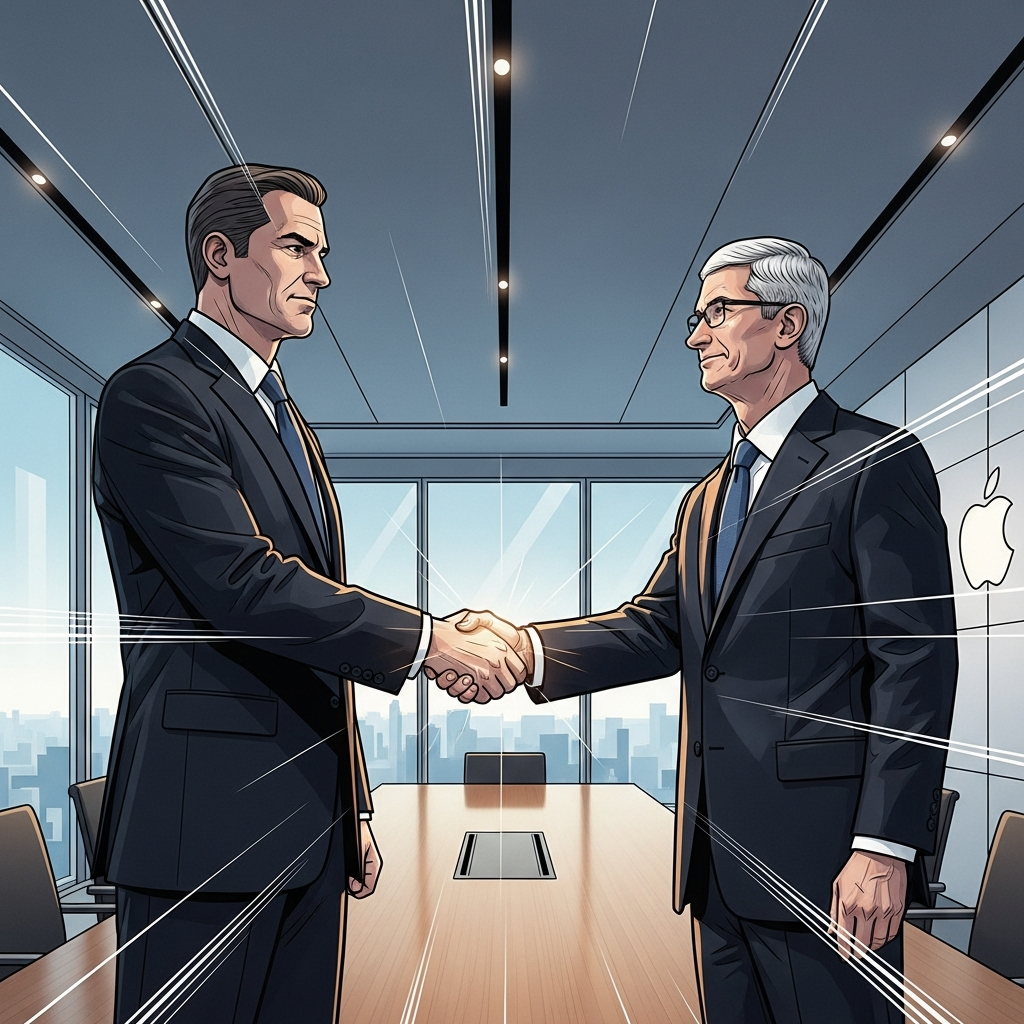
Apple is embarking on its most significant leadership transition in over a decade, with John Ternus stepping into the formidable role of Apple CEO. This strategic shift sees Ternus, formerly the senior vice president of hardware engineering, succeed Tim Cook as the head of one of the world’s most valuable technology companies. Cook, who led Apple to unprecedented growth, will transition to executive chairman of the board, overseeing a smooth handover before his new role becomes effective on September 1. This appointment signals a pivotal moment, positioning an engineering visionary at the helm to steer Apple’s next chapter of innovation.
A New Era Dawns at Apple: Tim Cook Hands Over Reins
The Succession Confirmed: John Ternus Takes the Helm
The official announcement confirms John Ternus will assume the CEO position from Tim Cook on September 1. Cook himself will serve as executive chairman, guiding the company through this crucial transition period. Expressing profound confidence in his successor, Cook stated, “It has been the greatest privilege of my life to be the CEO of Apple.” He further lauded Ternus, noting his “mind of an engineer, the soul of an innovator, and the heart to lead with integrity and honor.”
This leadership change marks a carefully orchestrated succession plan. Cook, who joined Apple in 1998 and became CEO in 2011, has been instrumental in Apple’s valuation soaring to an astounding $4 trillion. His tenure saw massive growth and the expansion of Apple’s services ecosystem. Now, the torch passes to a leader deeply embedded in Apple’s product DNA.
From Heir Apparent to CEO: The Road to Succession
For years, industry insiders and Apple observers, including Bloomberg’s Mark Gurman, identified John Ternus as the most probable successor to Cook. This speculation gained significant momentum after Jeff Williams, Apple’s chief operating officer and once considered the natural heir, reduced his operational responsibilities in July 2025. With Williams out of contention, Ternus emerged as the clear frontrunner.
Apple’s public relations efforts also began spotlighting Ternus, signaling preparations for a gradual transfer of power. Beyond product launches, Ternus started undertaking responsibilities typically reserved for more senior executives. This included influencing product roadmaps, features, and strategic decisions, extending his reach far beyond traditional hardware engineering duties. This deliberate cultivation set the stage for his eventual ascension.
Who is John Ternus? Engineer, Innovator, Leader
A Legacy Forged in Hardware
John Ternus brings a potent blend of technical expertise and deep institutional knowledge to the CEO role. A mechanical engineer by training, he first joined Apple’s product design team in 2001. His impact has been felt across nearly every major product in Apple’s current portfolio, overseeing hardware engineering for generations of iPads, the latest iPhone lineups, and AirPods. He also played a critical role in the Mac’s groundbreaking transition to Apple Silicon.
Ternus has become a recognizable face at Apple’s keynotes, frequently introducing major products to the world. His presentations have included the new iPhone Air, refreshes of the iMac and MacBook Pro, and the unveiling of Apple Silicon itself. Cook affectionately called him “a visionary whose contributions to Apple over 25 years are already too numerous to count.”
Early Life and “Pool to Power” Journey
Ternus’s journey to the top began at the University of Pennsylvania, where he pursued a Bachelor of Science in mechanical engineering, graduating in 1997. Academically distinguished, he also excelled athletically. Ternus was a competitive swimmer, making his mark as an “all-time letter winner” for the UPenn men’s swimming team. A 1994 report even noted his victories in the 50-meter freestyle and 200-meter individual medley at a university competition.
After graduation, Ternus gained foundational experience at Virtual Research Systems as a mechanical engineer. This company was a pioneer in early virtual reality headsets and immersive technologies during the 1980s and 90s. This four-year stint provided him invaluable exposure to cutting-edge display technology and human-computer interfaces. Such experience would later prove crucial in his work on advanced Apple products like the Apple Vision Pro.
Strategic Implications: Why Ternus is Apple’s Next Leader
Prioritizing Technical Innovation
The choice of John Ternus as CEO underscores Apple’s strategic pivot towards prioritizing deep technical innovation. This represents a shift from Tim Cook’s era, which focused more on operational excellence and supply chain mastery. With Ternus, Apple signals a return to an “engineering-first” leadership philosophy, reminiscent of the Steve Jobs era. This direction is critical as Apple navigates emerging technologies like artificial intelligence and mixed reality, facing challenges with products such as the Apple Vision Pro.
Ternus’s background directly addresses the need for robust technical direction. Apple aims to reinvigorate product categories beyond the iPhone, which currently generates the majority of its revenue. His expertise will be vital in driving the next wave of groundbreaking products.
Stability and Longevity for Apple’s Board
At 51, Ternus mirrors Tim Cook’s age when he became CEO in 2011. This age alignment positions Ternus for potentially a decade or more of stable leadership. Longevity in leadership is a significant factor for Apple’s board of directors, who consistently favor continuity during executive transitions. This choice reflects Apple’s preference for promoting from within its ranks, ensuring cultural alignment and deep company understanding.
The internal promotion of Ternus also contrasts with seeking external leadership. This decision reinforces Apple’s commitment to nurturing talent within its unique corporate ecosystem. His long tenure ensures a thorough understanding of Apple’s intricate workings.
Navigating Future Challenges
John Ternus inherits a company with immense strengths but also significant challenges. Apple is “barely even a contender in the AI race,” despite having Siri. A critical task for Ternus will be to capitalize effectively on the burgeoning artificial intelligence market. His engineering background, coupled with Apple Silicon’s powerful AI capabilities, positions him to lead this charge.
Furthermore, Ternus must expertly manage Apple’s extensive Chinese supply chain. This remains a sensitive geopolitical issue, one that Cook adeptly navigated through complex political relationships. Ternus will need to employ similar diplomatic and strategic acumen.
John Ternus’s Rise Through Apple’s Ranks
Key Milestones and Expanding Influence
Ternus joined Apple in 2001, a pivotal moment after Steve Jobs’ return and before the launch of industry-defining products. He began working on external Mac monitors. His career progression was swift and consistent. By 2013, he earned a promotion to vice president of hardware engineering, overseeing AirPods, Mac, and iPad development.
In 2020, Ternus’s portfolio expanded further when he took charge of iPhone hardware engineering. This responsibility was previously held directly by Dan Riccio. When Riccio stepped down in January 2021 to focus on the Apple Vision Pro project, Ternus was elevated to senior vice president of hardware engineering, securing his place on Apple’s executive team. Ternus’s influence now extends beyond traditional engineering into strategic product roadmaps. He has also embraced a more public role, including ushering customers into Apple’s Regent Street store in London for the iPhone 17 launch, a symbolic gesture often performed by Cook himself.
Frequently Asked Questions
What is John Ternus’s background and what key products has he overseen at Apple?
John Ternus is a mechanical engineer who joined Apple in 2001. He holds a degree from the University of Pennsylvania and previously worked on virtual reality technologies. Throughout his 25-year career at Apple, he has overseen hardware engineering for virtually every major product. This includes the iPad, iPhone, Mac, AirPods, and Apple Watch. He also played a critical role in the development of Apple Silicon and has presented numerous new products at Apple keynotes.
How does John Ternus’s leadership style or focus differ from Tim Cook’s, and what does it mean for Apple’s strategic direction?
John Ternus’s leadership marks a shift towards an “engineering-first” philosophy, contrasting with Tim Cook’s renowned operational and supply chain expertise. While Cook excelled at scaling Apple and optimizing its global footprint, Ternus is expected to emphasize deep technical innovation and product development. This could mean a renewed focus on pioneering new product categories and advancing emerging technologies like AI and mixed reality, steering Apple toward its next era of groundbreaking inventions.
What are the immediate challenges John Ternus faces as Apple’s new CEO, particularly concerning future product innovation?
As the new Apple CEO, John Ternus faces several immediate challenges. A primary one is accelerating Apple’s competitiveness in the rapidly evolving artificial intelligence landscape, especially given the company’s past struggles with Siri. He also needs to successfully navigate the complex rollout and future iterations of products like the Apple Vision Pro. Furthermore, managing the intricacies of Apple’s extensive global supply chain, particularly in China, will require careful strategic oversight.
Conclusion
The appointment of John Ternus as Apple’s next CEO heralds a significant new chapter for the tech giant. With his profound engineering expertise, deep institutional knowledge, and a track record of shaping Apple’s most iconic hardware, Ternus is uniquely positioned to lead. As Tim Cook transitions to executive chairman, this carefully managed succession plan ensures continuity while injecting a renewed focus on technical innovation. Ternus’s leadership will be crucial in navigating the challenges of AI, mixed reality, and global supply chains, promising an exciting and potentially transformative era for Apple and its future product ecosystem.