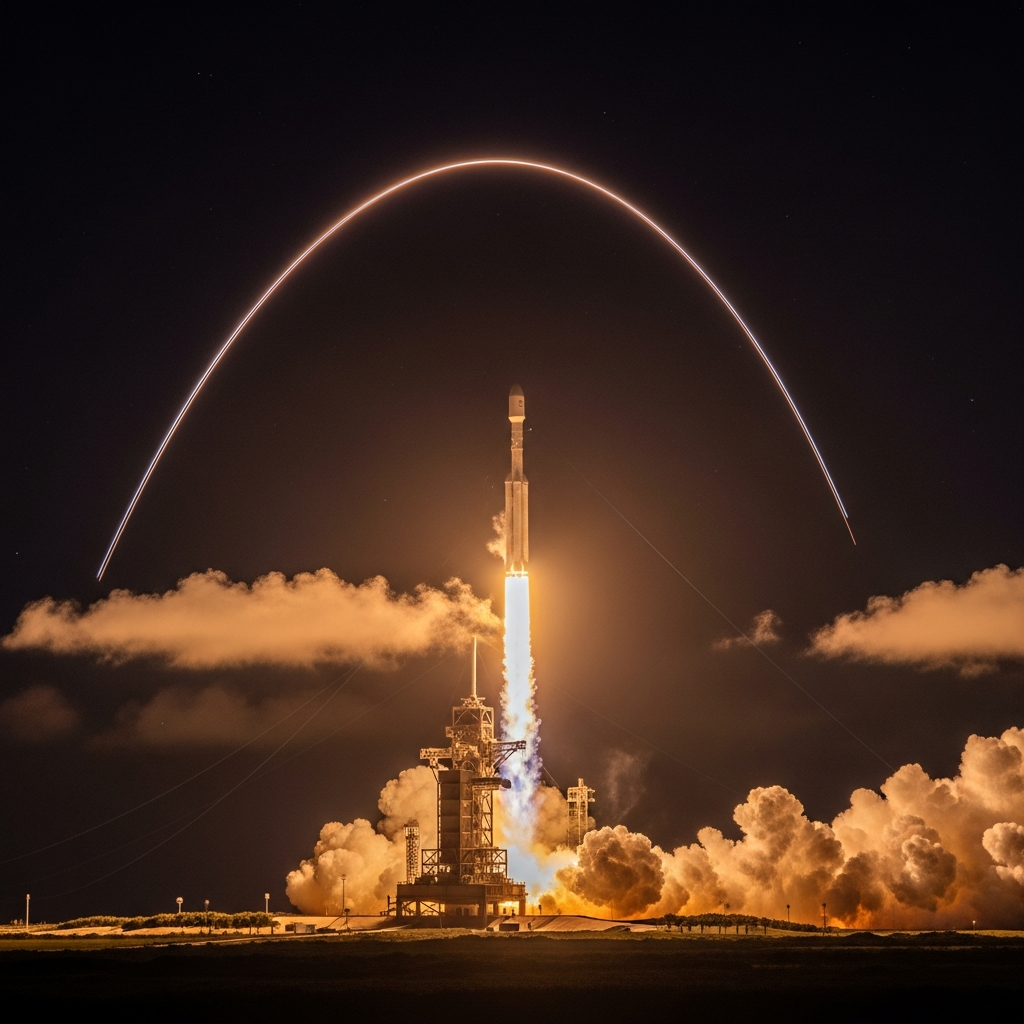
SpaceX has successfully deployed the final and tenth satellite in the U.S. Space Force’s advanced GPS III constellation, the GPS III SV10, from Florida’s Cape Canaveral Space Force Station. This pivotal mission, occurring early Tuesday, April 21, 2026, aboard a Falcon 9 rocket, marked a significant milestone for global positioning capabilities. Notably, the launch proceeded following an unexpected yet strategic switch from United Launch Alliance’s (ULA) Vulcan Centaur rocket due to booster issues. This event underscores the evolving landscape of national security space launches and the critical importance of reliable access to orbit for next-generation defense assets.
The Critical Liftoff of GPS III SV10
At 2:53 a.m. EDT (0653 GMT) on April 21, 2026, a SpaceX Falcon 9 rocket majestically ascended from Space Launch Complex 40. Perched atop the two-stage booster was the GPS III SV10 satellite, destined for medium-Earth orbit. This successful launch represented a crucial step in the ongoing modernization of America’s Global Positioning System. The mission, initially delayed by 24 hours due to unfavorable weather in the booster recovery zone, ultimately proceeded flawlessly, demonstrating SpaceX’s operational agility.
Unpacking GPS III SV10: A Leap in Precision and Resilience
The GPS III SV10, or “Space Vehicle 10,” is not just another satellite. It is the culmination of the advanced GPS III line, a program designed to revolutionize global positioning. These cutting-edge satellites, manufactured by Lockheed Martin, offer substantial improvements over previous versions. Space Force officials confirm a three-fold increase in positional accuracy. More critically, they boast an eight-fold enhancement in jam resistance. This robust protection is vital in contested environments.
These advanced features include M-Code technology. It significantly bolsters the system’s robustness against interference. The satellites provide an across-the-board boost in effectiveness for weapon systems. This enhances lethality across every operational theater. The SV10 satellite also carries an optical cross-link demonstration system. This will be integrated into the forthcoming GPS IIIF satellites. A new digital atomic clock is also onboard for even greater precision. The GPS III SV10 was honorably named after Austrian-American actress and inventor Hedy Lamar. This recognizes her pioneering work in frequency-hopping research, a precursor to modern secure communications. Upon deployment, SV10 joined 37 other satellites in medium Earth orbit. This includes 32 active and five in reserve.
Modernizing the GPS Constellation
The launch of GPS III SV10 completes a critical block of GPS satellites. It signals the transition to the next generation, GPS IIIF. U.S. Space Force Col. Stephen Hobbs, Mission Delta 31 commander, celebrated this as a significant milestone. He emphasized its importance for the entire GPS enterprise. This modernization initiative is key for sustaining U.S. military advantage. It ensures superior positioning, navigation, and timing capabilities globally.
The Unexpected Rocket Swap: Why SpaceX Stepped In
A notable aspect of the GPS III SV10 mission was the last-minute change in launch provider. The satellite was originally slated to launch aboard United Launch Alliance’s (ULA) new Vulcan Centaur rocket. However, last month, the Space Force made a strategic decision. They announced the switch to SpaceX’s Falcon 9. This move stemmed from persistent issues with Vulcan Centaur’s Northrop Grumman-built solid rocket boosters (SRBs). This marked the fourth instance a GPS satellite, initially contracted to ULA, was shifted due to Vulcan Centaur’s development delays.
This rocket swap wasn’t a one-sided affair. In a reciprocal agreement, the USSF-70 national security mission will now fly on Vulcan Centaur. This payload was initially assigned to a SpaceX Falcon Heavy rocket. The USSF-70 mission is anticipated to launch no earlier than summer 2028. This allows ULA time to resolve the Vulcan Centaur’s SRB issues. This programmatic flexibility is crucial for national security space. It allows the Space Force to adapt to changing circumstances. Such adaptability ensures the timely delivery of critical capabilities to warfighters.
The Broader Context of Launch Reliability
The decision to swap rockets highlights ongoing reliability challenges within the space launch industry. Just days before the GPS III SV10 launch, Blue Origin’s New Glenn rocket experienced an engine failure. During its third flight, the upper stage engine failed. This left an AST SpaceMobile satellite in an incorrect orbit. The vehicle was subsequently grounded for investigation. These incidents underscore the immense technical complexities of spaceflight. They also emphasize the strategic importance of having diverse and reliable launch options.
A Falcon 9’s Farewell: Booster Landing and Droneship Transition
Following the successful liftoff, the Falcon 9’s first stage executed a flawless return. About 8.5 minutes after launch, it touched down softly. The landing occurred on the SpaceX droneship “Just Read the Instructions” in the Atlantic Ocean. This particular booster, designated B1095, completed its seventh successful launch and landing. This demonstrated the significant reusability capabilities of SpaceX’s Falcon 9 fleet.
Significantly, this mission marked the final Falcon landing for “Just Read the Instructions.” SpaceX announced that the droneship will now pivot to supporting liftoffs of its larger Starship megarocket. This transition signifies SpaceX’s forward momentum. It points towards future ambitious projects. Meanwhile, the Falcon 9’s upper stage continued its precise trajectory. It deployed the GPS III SV10 satellite into medium-Earth orbit approximately 90 minutes after launch.
Looking Ahead: The Future of GPS and National Security Launches
The successful launch of GPS III SV10 concludes an important chapter. It paves the way for the next generation of GPS IIIF satellites. These follow-on satellites are expected to debut in Spring 2027. The U.S. Space Force remains committed to continuous innovation. They aim to deliver enhanced positioning, navigation, and timing services. These services are essential for both military and civilian applications worldwide.
The collaborative yet competitive relationship between SpaceX and ULA remains key. Both companies are vital for ensuring U.S. access to space. Their roles in national security missions are indispensable. As technology advances, so too will the demands on launch providers. The flexibility demonstrated in the GPS III SV10 mission showcases a proactive approach. It ensures that critical national assets reach orbit, regardless of unforeseen challenges.
Frequently Asked Questions
What makes the GPS III SV10 satellite so advanced compared to older versions?
The GPS III SV10 satellite represents a major upgrade in global positioning technology. It boasts a three-fold increase in positional accuracy, providing significantly more precise location data. Furthermore, it offers an eight-fold improvement in jam resistance, making it far more resilient against interference in hostile environments. Key enhancements include M-Code technology for enhanced security, an optical cross-link system for future integration, and a new digital atomic clock designed for superior precision. These features collectively boost the effectiveness of both military and civilian applications.
Why did the GPS III SV10 mission switch from ULA’s Vulcan Centaur to SpaceX’s Falcon 9?
The U.S. Space Force made the strategic decision to switch the GPS III SV10 mission to SpaceX’s Falcon 9 due to recurring issues with United Launch Alliance’s (ULA) new Vulcan Centaur rocket. Specifically, problems with Vulcan Centaur’s solid rocket boosters (SRBs) prompted the change. This marks the fourth instance a GPS satellite, initially assigned to ULA, was transferred to SpaceX. This move underscores the Space Force’s commitment to programmatic flexibility, ensuring critical national security assets can reach orbit reliably and on schedule by leveraging available launch capabilities.
How does the successful launch of GPS III SV10 impact U.S. national security capabilities?
The successful launch of GPS III SV10 significantly enhances U.S. national security capabilities by completing the advanced GPS III constellation. This final satellite in the series provides superior positional accuracy and unprecedented jam resistance, vital for military operations. These capabilities improve the effectiveness and lethality of weapon systems across all operational theaters. By modernizing the Global Positioning System, the U.S. maintains a strategic advantage, ensuring robust and reliable positioning, navigation, and timing services crucial for defense and intelligence, even in challenged environments.
Conclusion
The successful launch of the GPS III SV10 satellite by SpaceX marks a monumental achievement. It completes the deployment of a critical constellation of advanced positioning spacecraft. This mission, characterized by an adaptive rocket swap and flawless execution, reinforces the vital role of robust space capabilities for U.S. national security. As the space industry continues to evolve, exemplified by booster reusability and the upcoming Starship era, the commitment to technological advancement and mission reliability remains paramount. The GPS III SV10 will now join its predecessors, providing unparalleled accuracy and resilience, securing a critical advantage for years to come.