The future of artificial intelligence is rapidly unfolding, often at the intersection of groundbreaking innovation and high-stakes national policy. A recent White House meeting with Anthropic, a leading AI company, underscored this tension. Yet, President Donald Trump’s public reaction to questions about this very meeting—a simple, bewildered “Who?”—has ignited a firestorm of discussion, revealing a complex landscape of technological leadership, national security concerns, and presidential priorities.
Unpacking the White House AI Dialogue
On a significant Friday, Anthropic CEO Dario Amodei, a figure increasingly recognized at the forefront of AI development, held discussions at the White House. Politico reported that Amodei met with key administration officials including Chief of Staff Susie Wiles, National Cyber Director Sean Cairncross, and Treasury Secretary Scott Bessent. The White House statement following the meeting, as reported by Politico, highlighted “opportunities for collaboration,” shared approaches to scaling AI technology, and a crucial balance between fostering innovation and ensuring safety. This dialogue hinted at the potential for a significant working relationship between the U.S. government and Anthropic, particularly given the perceived power of Anthropic’s Claude Mythos Preview model, which many believe could fundamentally “reshape cybersecurity.”
Globally, Anthropic’s advanced AI capabilities have drawn intense attention. The United Kingdom, for instance, has reportedly been “scrambling to respond” to vulnerabilities exposed by the model. European cyber agencies have also faced hurdles in their attempts to access and study Mythos, eager to understand its potential to identify new weaknesses in digital defenses. Such global reactions underscore the immense strategic importance of Anthropic’s technology.
The President’s Puzzling Response
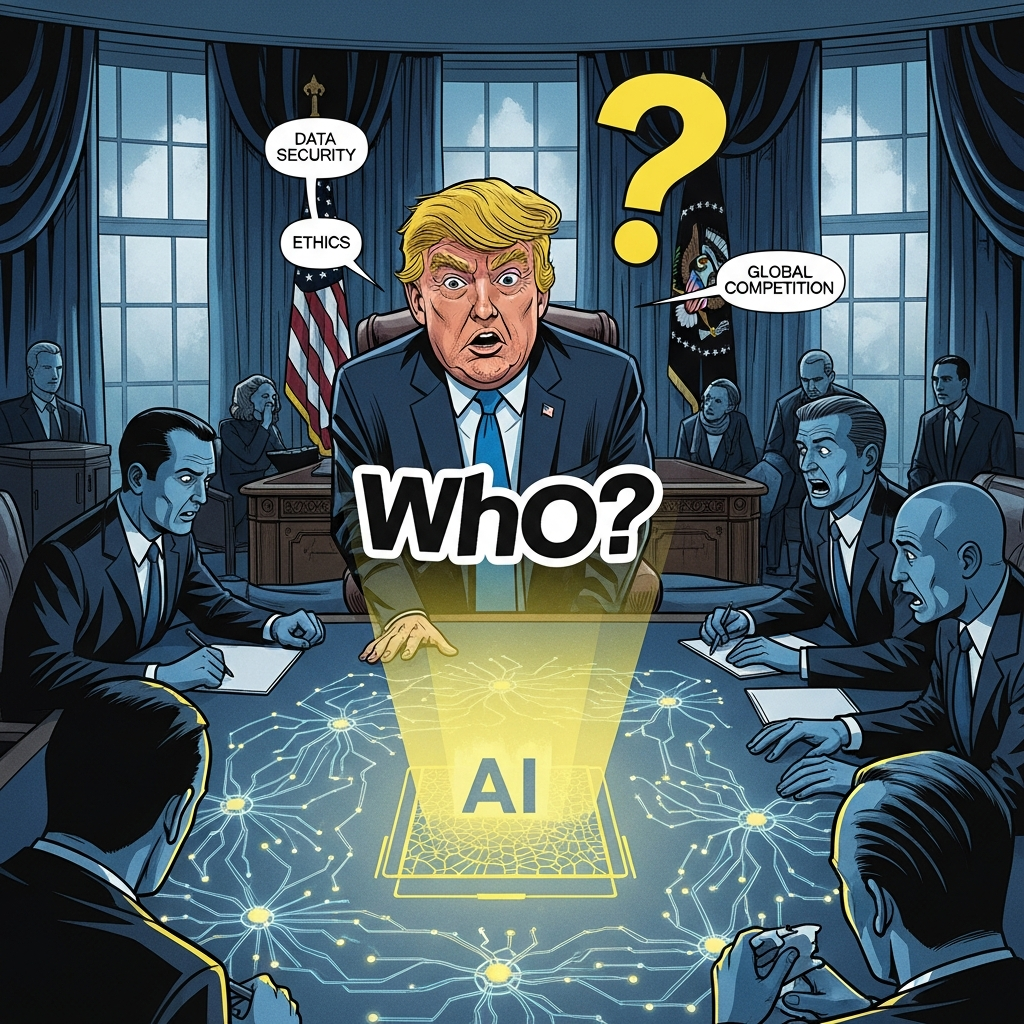
However, the perceived collaborative tone from the White House took an unexpected turn later that day. Upon landing at Phoenix Sky Harbor International Airport, President Trump faced reporters. Amidst questions primarily concerning the ongoing situation with Iran, a reporter asked about Anthropic’s White House meeting. Trump’s direct reply, “Who?”, followed by his clarification, “Anthropic?”, and a shrug, “I have no idea,” painted a picture of either genuine unawareness or strategic dismissal. This moment instantly became a flashpoint, highlighting the contradictory signals emanating from the administration regarding one of the world’s most pivotal tech companies.
A Deep-Seated Conflict: Trump Administration vs. Anthropic
Trump’s apparent lack of knowledge regarding the Anthropic meeting is particularly striking given the administration’s ongoing and “unprecedented power struggle” with the AI giant. This conflict traces back to February, stemming from disputes over the authorized uses of Anthropic’s powerful models. A Pentagon official reportedly escalated tensions by labeling Amodei as “a liar and has a God-complex,” indicative of the deep mistrust brewing within certain government sectors.
The most significant development in this feud came from Pete Hegseth, the Secretary of Defense/War, who controversially branded Anthropic with a “supply chain risk” designation. This drastic measure, unprecedented for an American company, effectively prohibits any business working with the Pentagon from engaging with Anthropic. Such a designation poses a severe threat, potentially “sabotaging Anthropic’s entire business model.” While Anthropic initially secured a temporary suspension of this designation through litigation, it was unfortunately reimplemented shortly thereafter, indicating the administration’s resolve in this high-stakes battle. This ongoing legal and political skirmish clearly positions Anthropic as a major entity on the administration’s radar, making the President’s “Who?” even more perplexing.
AI Leadership and Shifting Tech Tides
Despite these challenges, Dario Amodei and Anthropic are widely regarded as current leaders in the competitive AI landscape. The company’s ability to project that it possesses “the world’s scariest technology chained up in its figurative garage” has cemented its position at the top of many AI power rankings. This contrasts with other prominent figures in the tech world. For example, Jensen Huang of Nvidia, a known associate of President Trump, has recently faced scrutiny, particularly regarding his company’s stance on selling chips to China. Meanwhile, OpenAI’s Sam Altman has been battling rumors concerning his leadership position, illustrating the volatile and competitive nature of the top tier of the AI industry.
Navigating a President’s Complex Priorities
President Trump finds himself in a complicated position. On one hand, his administration, through actions like the “supply chain risk” designation, officially seeks to distance U.S. industry from Anthropic. Yet, his broader vision for the future of American industry often emphasizes the transformative potential of AI and automation. The global perception of Anthropic’s “unspeakable evil” capabilities could also be a tempting prospect for a leader who often projects power and influence.
However, the President’s public “I have no idea” response may also be a reflection of other pressing, high-priority issues consuming his attention. The original article mentions his efforts to “wind down his war in Iran,” a complex foreign policy challenge that, even by friendly reports, had not been going well. This aligns with external reports detailing a significant military strike on Iran in late February. During an Oval Office meeting with Japanese Prime Minister Sanae Takaichi, Trump controversially defended the lack of allied notification for this strike, stating, “Who knows better about surprise than Japan? Why didn’t you tell me about Pearl Harbor?” This dramatic exchange underscores his focus on strategic military actions and international relations.
Furthermore, reports of “missing scientists” with potential connections to national security, described by Trump himself as “pretty serious stuff,” also occupied his attention, prompting a White House commitment to a comprehensive inter-agency review. With a demanding international agenda and critical domestic security matters, the nuances of an AI company’s White House meeting, despite its long-term implications, might have simply been overshadowed in the immediate moment. Ultimately, Trump’s simple “Who?” could stem from a complex web of strategic priorities, political messaging, or genuine oversight amidst a demanding presidential schedule.
Frequently Asked Questions
What is Anthropic’s significance in AI, and why is it a point of contention with the Trump administration?
Anthropic is a leading artificial intelligence company renowned for its Claude Mythos Preview model, which is considered highly advanced and capable of “reshaping cybersecurity.” Its significance lies in its perceived technological leadership and potential national security implications. The Trump administration’s contention stems from an “unprecedented power struggle” over the authorized uses of Anthropic’s models, culminating in a “supply chain risk” designation by the Secretary of Defense/War. This designation, unique for an American company, restricts businesses working with the Pentagon from engaging with Anthropic, threatening its business model.
Who are the key figures involved in the conflict between Trump’s administration and Anthropic?
The primary figures include President Donald Trump, Anthropic CEO Dario Amodei, and Secretary of Defense/War Pete Hegseth, who issued the “supply chain risk” designation. Other notable figures involved in the White House meeting with Amodei were Chief of Staff Susie Wiles, National Cyber Director Sean Cairncross, and Treasury Secretary Scott Bessent. Additionally, a Pentagon official reportedly made strong negative comments about Amodei, highlighting the depth of the administrative conflict.
What are the broader implications of the “supply chain risk” designation for Anthropic and the future of AI in national security?
The “supply chain risk” designation has profound implications. For Anthropic, it poses an existential threat by restricting access to a significant segment of the U.S. defense market, potentially “sabotaging its entire business model.” For national security, it signifies an administration’s willingness to aggressively regulate or even isolate a domestic AI leader over perceived risks, setting a precedent for future government intervention in advanced technology. This highlights the delicate balance between fostering innovation and mitigating potential security vulnerabilities in the rapidly evolving field of artificial intelligence.
Conclusion
President Trump’s seemingly innocuous “Who?” when asked about the White House meeting with Anthropic’s CEO Dario Amodei is far more than a simple gaffe. It encapsulates a multifaceted political and technological landscape where the rapid ascent of AI collides with complex national security imperatives and the demanding realities of presidential leadership. This incident highlights the ongoing struggle between fostering technological innovation and managing its potential risks, a challenge compounded by internal administrative conflicts and a president preoccupied with a demanding global agenda. The future relationship between the U.S. government and companies like Anthropic will undoubtedly continue to shape not only the trajectory of AI but also the very definition of national security in the 21st century.