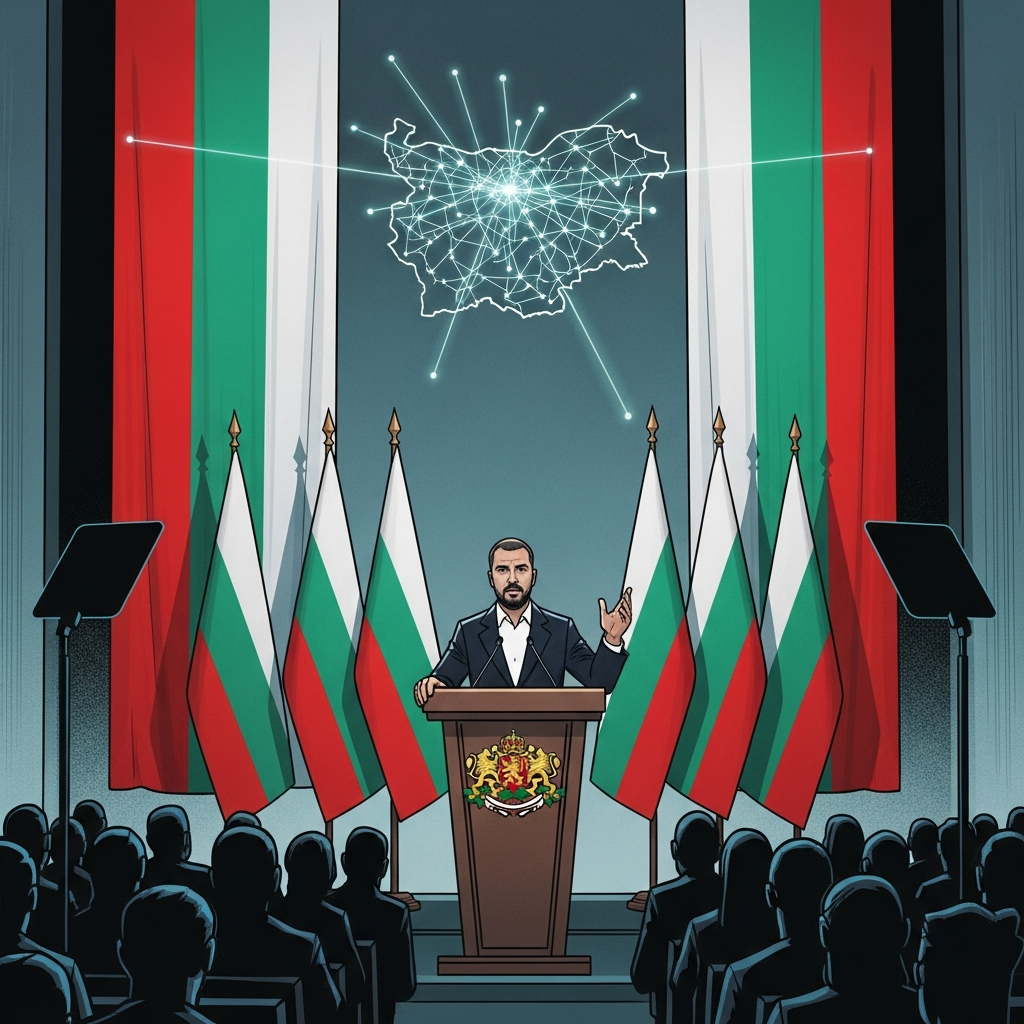
Bulgaria stands at a critical crossroads, preparing for its eighth parliamentary election in just five years on April 19, 2026. This pivotal vote, set against a backdrop of chronic political instability and deep societal divisions, could usher in a new era of governance or plunge the nation into further uncertainty. All eyes are on former President Rumen Radev, whose newly formed Progressive Bulgaria coalition leads the polls, drawing comparisons to Hungary’s long-serving Prime Minister Viktor Orbán and raising questions about Bulgaria’s future geopolitical alignment within the European Union.
Bulgaria’s Tumultuous Political Landscape
The upcoming Bulgaria election arrives after a period of unprecedented turmoil, characterized by frequent government collapses, fragile coalitions, and a deepening erosion of public trust. Since 2021, the EU and NATO member state has struggled to form a stable administration, enduring seven inconclusive elections. This chronic instability has unfolded amidst significant internal challenges and mounting external pressures, particularly the stark fault lines exposed by Russia’s ongoing war in Ukraine. Surprisingly, despite the political chaos, Bulgaria has achieved notable milestones, including joining the Eurozone and the border-free Schengen travel area in January 2026. Yet, delays in crucial reforms have simultaneously jeopardized billions in vital EU recovery funds.
Roots of Instability and Public Discontent
The immediate trigger for this snap election was the resignation of the conservative-led government in December 2025. This followed a wave of mass anti-corruption protests, the largest in decades, which initially erupted over a disputed draft budget but quickly evolved into a broader revolt against the entrenched political status quo. Public anger focused intensely on two prominent figures: Boyko Borissov, the veteran leader of the center-right GERB party and former Prime Minister, and Delyan Peevski, a controversial political heavyweight sanctioned under the US Magnitsky Act for corruption. Critics allege that Borissov and Peevski have operated in tandem, consolidating control over state institutions and concentrating power, despite Peevski not always holding an official government role.
Adding to the complexity, the opposition alliance “We Continue the Change-Democratic Bulgaria” (PP-DB) attempted to reinvent itself by fueling these protests with a “never again” vow, having previously partnered with the very figures it now opposes. This momentum, however, paved the way for a new contender.
Rumen Radev’s Meteoric Rise: A New Political Force?
Into this volatile political arena, former President Rumen Radev has emerged as a dominant force. A 62-year-old former fighter pilot and air force commander, Radev resigned from his largely ceremonial presidency in January 2026 to launch his bid for prime minister. Leading his center-left Progressive Bulgaria coalition, Radev has positioned himself as a champion against corruption, vowing to “break the oligarchy” and “remove the corrupt, oligarchic model of governance.” He promises a “fresh start” for the nation, a message that has resonated deeply with a disillusioned electorate.
Polling data suggests Radev’s coalition could secure over 30% of the vote, making him the strong front-runner and a key power broker in what is widely expected to be another fragmented parliament. This anticipated surge in support is notable, with voter turnout projected to increase significantly from an average of 35% in previous elections to over 50%. This renewed public engagement is partly attributed to Radev’s charismatic appeal and also to efforts by the interim government to combat vote-buying through nationwide police raids.
The Orbán Parallel: Inspiration or Warning?
Radev’s dramatic rise has inevitably drawn comparisons to Hungary’s Viktor Orbán, a parallel that observers note “cuts both ways.” On one hand, the recent record voter turnout in Hungarian elections, which ended Orbán’s 16-year rule, offers a glimmer of hope that similar civic mobilization could break Bulgaria’s cycle of apathy and instability. For many, this showed that political change is indeed possible, even against long-entrenched leaders.
However, critics warn of a different, more concerning parallel. One of Radev’s close associates and now a candidate, Slavi Vassilev, previously stated that if Radev were to lead a party, he would be “pro-European, but within a Europe that prioritises its own worldview,” suggesting a move “closer to the policies of … Orbán.” This hints at a potential shift towards a more nationalistic, sovereignty-first approach within the EU framework, reminiscent of Orbán’s governance style.
Geopolitical Alignment: East or West?
A central point of contention surrounding Radev is his track record on foreign policy, particularly concerning Russia’s war in Ukraine. Throughout his presidency (2017-2026), Radev consistently adopted positions that diverged sharply from those of all Bulgarian governments during his mandate, as well as from mainstream EU consensus. He has explicitly opposed military aid to Kyiv, arguing such support risks dragging Bulgaria into the conflict, and has repeatedly called for dialogue with Moscow. His past remarks, including describing Crimea as “legally Russian,” and a public clash with Ukrainian President Volodymyr Zelenskyy in 2023, have further fueled controversy and questions about his pro-Russian leanings.
Radev has also become increasingly critical of Brussels, accusing the EU of prioritizing “ideology over economic pragmatism” and becoming “a hostage to its ambition for moral leadership.” He argues that European leaders should prioritize economic interests, similar to the United States, China, and Russia. This sentiment was evident in his attempt to call a referendum on Bulgaria’s adoption of the euro, an initiative rejected by both parliament and the Constitutional Court. He maintains that citizens should have been consulted and even suggested that politicians who “introduced the euro over the heads of the people” should be punished.
Bulgaria as a Potential “Putin’s Proxy”?
The Atlantic Council suggests that if current polling holds, Radev could potentially replace Hungary’s Orbán as the EU’s strongest anti-Ukrainian voice and a staunch defender of Russian interests. This could have significant negative implications, including an end to Bulgarian ammunition supplies to Ukraine and a potential shift away from the US-backed northern corridor for energy supplies towards Russia’s Turk Stream pipeline. While Radev’s initial influence might not match Orbán’s, such a development would present Brussels with a similar set of challenges.
However, some analysts like Evelina Slavkova from the research center Trend offer a more nuanced perspective. She believes that Radev is unlikely to fundamentally reorient Bulgaria towards Russia. Bulgaria’s robust “set of tools,” including its membership in NATO and the EU, along with recent integration into the Eurozone and Schengen Area, provides a strong framework that ensures the country remains “on the right track” and enhances its stability. Slavkova observes that Radev maintained a careful balance during his campaign by avoiding definitive answers, a strategy that will be unsustainable once he assumes leadership.
The Cost of “Orbanomics” and “Trumpism”
Insights from Daniel Smilov of Fakti.bg offer critical lessons from Orbán’s recent electoral defeat for Bulgaria. Smilov argues that “Orbanomics” – a governance model often associated with Orbán – has proven to be an economic failure. Hungary, under Orbán, significantly lagged behind regional competitors like Poland and the Czech Republic in nominal GDP per capita by 2025. This suggests that countries acting as “Trojan horses” for Russia or flirting with China tend to fall behind economically, even with perceived benefits like “cheap” Russian oil and gas. Interestingly, Bulgaria has even surpassed Hungary in purchasing power.
Smilov further contends that political identification with “Trumpism” and its “America First” ideology is globally proving to be a losing strategy. Trump’s past actions, including supporting Russia against Ukraine and engaging in tariff wars, created economic stress and undermined the concept of a united West. For Bulgaria, the lesson is clear: a strong, united Europe is the only viable solution for medium-sized countries to avoid becoming prey to neo-imperial powers. Blocking EU actions for better relations with Russia yields no economic or political dividends, and supporting Ukraine is an investment in Europe’s collective security.
Fragmentation and Uncertain Alliances
Despite Radev’s strong lead, securing an outright majority seems improbable, setting the stage for complex and potentially unstable coalition negotiations. Other key players include GERB, projected to finish second, with Boyko Borissov maintaining his influential position. While Borissov has rejected direct comparisons to Orbán, a controversial decision by a GERB Prime Minister to join Donald Trump’s Board of Peace, aligning with Hungary, intensified tensions and raised eyebrows in Brussels.
Delyan Peevski’s party is projected to finish fourth, while the nationalist Vazrazhdane (Revival) party, advocating for Bulgaria to leave the Eurozone and pushing a strongly anti-EU message, continues to gain ground. Campaign rhetoric has drawn stark “red lines” for coalition-building: Radev’s camp has ruled out cooperation with Borissov and Peevski; GERB has distanced itself from Peevski; and PP-DB has rejected any partnership with Borissov. However, Bulgaria’s recent political history indicates that such “red lines” are often flexible, making the path to forming a stable government highly unpredictable.
The outcome of this crucial Bulgaria election will not only define the country’s domestic trajectory but will also be closely monitored by the EU. Brussels harbors significant fears of further instability within its member states, particularly on its sensitive eastern flank. For Bulgarian voters, the immediate question is whether this vote will inspire greater democratic engagement, leading to a path of stability and genuine European integration, or if it will signal a shift towards a governance model that echoes the more populist and divisive style of Viktor Orbán. The lessons from Hungary’s economic and political missteps provide a stark warning that a “cunning small state” policy, prioritizing narrow interests over European unity, is a “recipe for disaster.”
Frequently Asked Questions
What are the key factors contributing to Bulgaria’s chronic political instability?
Bulgaria has faced profound political instability since 2021, enduring seven inconclusive elections over five years. This turbulence stems from widespread anti-corruption protests that led to multiple government resignations, fostering deep public mistrust in institutions and significant voter apathy. The country’s political class is also sharply divided, especially over Russia’s war in Ukraine, further complicating coalition formation. Despite joining the Eurozone and Schengen Area, the inability to form stable governments has hindered crucial reforms and put billions in EU recovery funds at risk.
How might the upcoming Bulgarian election impact the country’s relationship with the EU and Russia?
The April 19, 2026 election could significantly influence Bulgaria’s geopolitical alignment. Front-runner Rumen Radev has expressed Eurosceptic views, criticized Brussels’ “ideology over economic pragmatism,” and adopted stances on Russia’s war in Ukraine that diverge from mainstream EU policy, opposing military aid to Kyiv and calling for dialogue with Moscow. If Radev forms a government, particularly with other pro-Russian parties, Bulgaria might be perceived as a less reliable EU ally, potentially even a “Putin’s proxy.” However, analysts suggest Bulgaria’s NATO, EU, Eurozone, and Schengen memberships provide a strong framework limiting any radical reorientation towards Russia.
Who is Rumen Radev and why is he drawing comparisons to Hungary’s Viktor Orbán?
Rumen Radev is Bulgaria’s former president, a 62-year-old ex-air force commander, now leading the Progressive Bulgaria coalition as a strong contender for prime minister. He gained popularity through an anti-corruption platform, vowing to dismantle the country’s “oligarchic model of governance.” Comparisons to Hungary’s Viktor Orbán arise from Radev’s increasingly sharp criticism of the EU, his nationalistic rhetoric prioritizing Bulgaria’s “own worldview” within Europe, and his controversial stances on military aid to Ukraine and relations with Russia. Observers question whether his leadership would usher in a more populist, sovereignty-focused, or even pro-Russian governance style akin to Orbán’s, potentially straining EU unity.