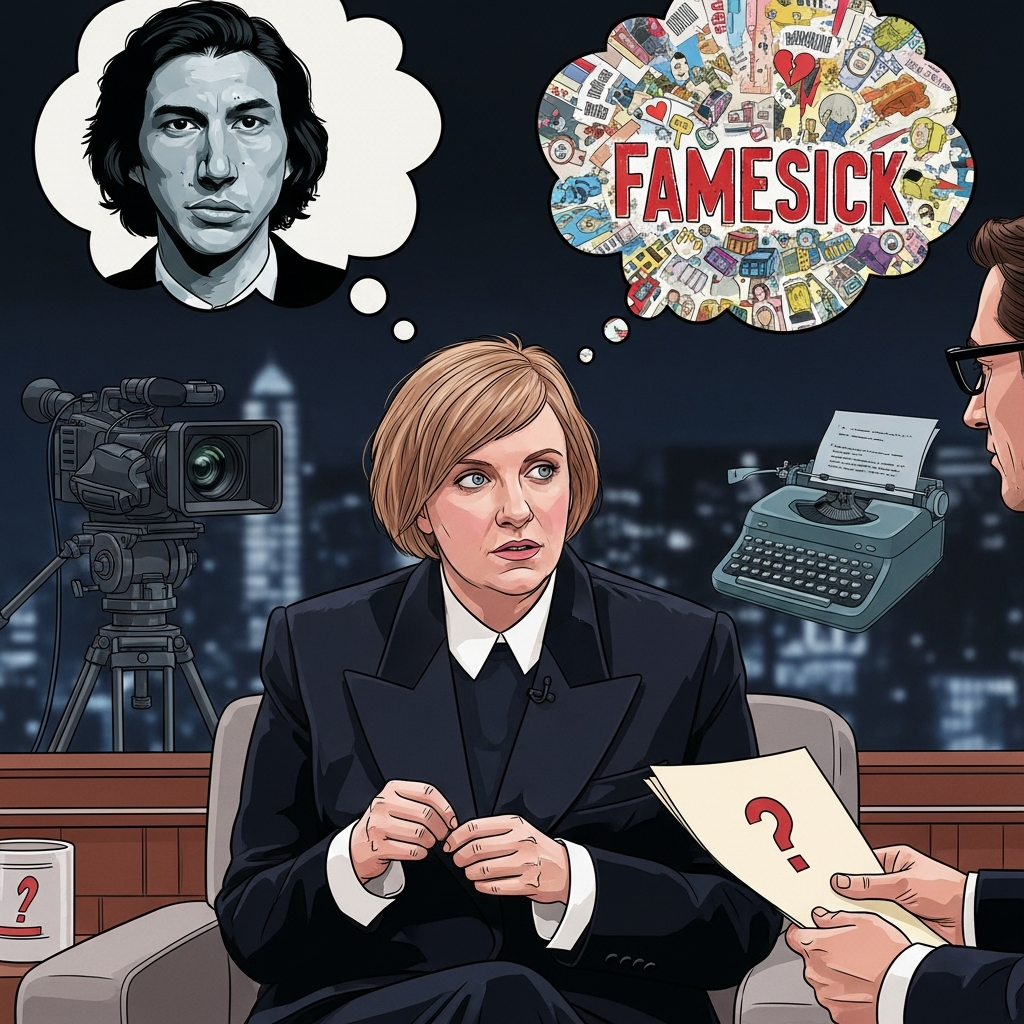
The release of Lena Dunham’s new memoir, “Famesick,” has reignited intense discussions surrounding her past working relationship with actor Adam Driver. Dunham, renowned as the creator and star of HBO’s hit series “Girls,” recently faced pointed questions about Driver’s alleged “violent onset outbursts” during a live television interview. Her strategic avoidance of direct answers, coupled with the candid revelations within her book, presents a fascinating study in celebrity accountability, workplace dynamics, and the curated narrative of a memoir.
Unpacking “Famesick”: Allegations of Onset Outbursts
Lena Dunham’s highly anticipated memoir, “Famesick,” quickly became a focal point after excerpts detailed alarming behavior attributed to Adam Driver on the set of “Girls.” Driver, who famously portrayed Dunham’s on-again, off-again boyfriend, Adam Sackler, is described as exhibiting “spectacularly rude” conduct. These specific accounts have sent ripples across the entertainment industry and among fans.
According to Dunham’s book, several troubling incidents occurred during their time filming the popular HBO series. One particularly vivid recollection describes Driver throwing a chair at a wall in close proximity to Dunham. The memoir also alleges he punched a hole in his trailer wall and, on other occasions, screamed directly in her face. These depictions paint a stark picture of a challenging and volatile working environment. Dunham’s decision to share these deeply personal experiences through “Famesick” clearly aims to shed light on her journey to understanding workplace power and boundaries.
Dunham’s Strategic Sidestep on “Today”
Following the book’s revelations, Lena Dunham appeared on the April 15 episode of “Today With Jenna & Sheinelle.” Co-hosts Jenna Bush Hager and Sheinelle Jones pressed Dunham on her past interactions with Adam Driver, leading to a masterclass in evasive yet articulate responses. The interview underscored the delicate balance celebrities often strike between promoting their work and managing public perception of sensitive topics.
Jenna Bush Hager initiated the questioning, referencing the memoir’s depiction of a “complicated relationship” with Driver. She explicitly mentioned instances of “violence or anger” and even hinted at “romantic feelings,” directly asking Dunham, “How does it sit with you now?” This was a clear invitation for Dunham to elaborate on the powerful incidents shared in “Famesick.”
Navigating the Workplace Dynamic Question
Rather than providing a direct response about Adam Driver, Dunham deftly shifted the focus to broader themes. She explained her motivation for writing “Famesick” was to offer insights “useful, potentially, to the reader.” Dunham then articulated that her memoir explores a “dynamic that a lot of young women can understand in the workplace.” This statement generalized her experience, allowing her to discuss universal themes without singling out her former co-star.
Dunham further emphasized the extensive effort behind her book. She spent eight and a half years writing it, meticulously choosing “every word that I put on the page.” She conveyed a desire for readers to engage with the narrative “in context and in the totality,” implying that a quick rehash on live television could oversimplify or misrepresent her carefully constructed account. Her responses highlighted the complexity of revisiting past traumas under public scrutiny and her commitment to the book’s intended message.
Dodging the “Stay in Touch” Query
Later in the interview, Sheinelle Jones presented another specific question: “When you were in that season [of life], did you ever think that you guys would still communicate again? Or that you would stay in touch?” This probing question aimed to gauge the lingering effects of the alleged friction between Lena Dunham and Adam Driver.
Once again, Dunham redirected the conversation. She offered a generalized sentiment about the entire “Girls” ensemble, stating, “Our entire cast has a sort of bond that I don’t think can ever be broken.” While this response acknowledges the enduring connections formed during the series, it conspicuously avoids any direct mention of Adam Driver or her current feelings about their personal relationship. This strategic answer effectively closed off further specific inquiries about Driver without appearing uncooperative.
The Broader Context: Power, Perception, and Memoir
Dunham’s reflections, both in her memoir and during subsequent interviews (related to the Guardian excerpt), add crucial layers to understanding the workplace dynamics on “Girls.” She admitted a past inability to assert her authority as a director and showrunner, stating, “it never entered my mind to say, ‘I am your boss, you can’t speak to me this way.’” This admission speaks to broader issues of power imbalances, particularly for young women in leadership roles within male-dominated industries.
She also candidly revealed a past misconception from her twenties: believing that “great male geniuses do: eviscerate you.” This internal narrative, which she now finds “weird” given her own father, painter Carroll Dunham, a “male genius” who would never behave that way, highlights a societal normalization of volatile behavior from creative men. The memoir thus serves as a powerful vehicle for Dunham to re-evaluate her past experiences, challenge ingrained perceptions, and come to terms with her own “power as a boss.” Her narrative encourages a critical examination of how talent and behavior are often decoupled in public and professional spheres.
“Famesick” Takes Center Stage
Lena Dunham’s memoir, “Famesick,” was officially released on April 14 and is currently available for purchase. The book offers readers the full context behind the headlines and interview snippets, inviting a deeper dive into Dunham’s perspective on her career, relationships, and personal growth. The discussion surrounding Adam Driver, while prominent, is presented as one facet of a much broader narrative. Dunham’s intention is for readers to understand her journey of self-discovery and empowerment within the entertainment landscape.
What the Revelations Mean for Celebrity Narratives
The ongoing dialogue surrounding Lena Dunham’s memoir and her public statements highlights the evolving nature of celebrity narratives. In an era where authenticity is highly valued, memoirs provide a platform for public figures to reclaim or reframe their stories. However, they also open doors to intense scrutiny and complex discussions about past events, particularly when they involve other prominent individuals like Adam Driver. Dunham’s careful navigation of these conversations on national television underscores the challenges of balancing candor with professional diplomacy.
Frequently Asked Questions
What specific allegations did Lena Dunham make against Adam Driver in her memoir?
In her memoir, “Famesick,” Lena Dunham alleges that Adam Driver exhibited “spectacularly rude” behavior on the set of “Girls.” Specific incidents she details include Driver hurling a chair at a wall near her, punching a hole in his trailer wall, and screaming in her face. These accounts describe a volatile and challenging working environment during their time together on the HBO series.
Where can readers find Lena Dunham’s memoir, “Famesick,” which details these experiences?
Lena Dunham’s memoir, “Famesick,” was released on April 14 and is readily available for purchase. Readers interested in exploring her full account of these experiences, along with other insights into her life and career, can typically find the book at major bookstores, online retailers, and e-book platforms.
Why did Lena Dunham choose to address these incidents involving Adam Driver in her memoir now?
Dunham stated that she spent eight and a half years writing “Famesick,” being “super intentional with every word.” She indicated that her memoir is “as much about my experience of coming to some kind of understanding of my own power as a boss than it is about anything else.” By including these incidents, she aims to offer a broader perspective on workplace dynamics and her personal growth, suggesting the book is a culmination of long-term reflection rather than a sudden revelation.
Conclusion
Lena Dunham’s memoir, “Famesick,” serves as a powerful testament to her journey of self-discovery and the re-evaluation of past experiences. Her decision to detail alleged “explosive outbursts” by Adam Driver on the set of “Girls” has undoubtedly sparked significant public interest. Yet, her subsequent evasions during a live “Today” show interview reveal the intricate dance of celebrity transparency. As readers delve into “Famesick,” they are invited to consider not just the specific allegations but also the broader themes of workplace power dynamics, evolving perceptions of “genius,” and the complex process of reconciling personal history in the public eye. Dunham’s narrative encourages us to reflect on how stories are told, received, and ultimately understood.