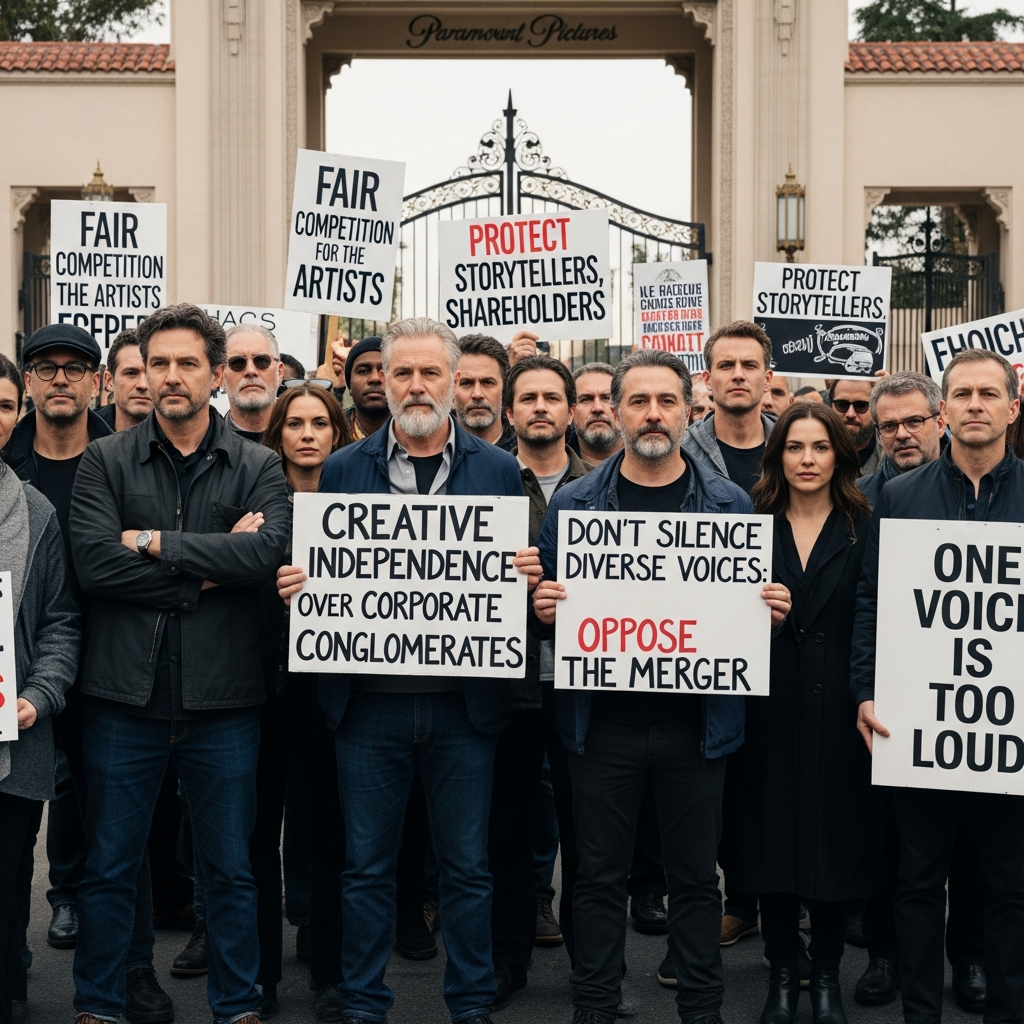
A seismic wave of opposition is sweeping through Hollywood as more than 1,400 actors, directors, and filmmakers vocally reject the proposed merger between film giants Paramount and Warner Bros Discovery. This significant alliance, including scores of A-list talent, argues that the colossal $111 billion deal would inflict severe, lasting damage on an already fragile entertainment industry, impacting everything from creative diversity to job opportunities and consumer choice.
The open letter, signed by renowned figures like Emma Thompson, Ben Stiller, Javier Bardem, Rose Byrne, Kristen Stewart, and Glenn Close, paints a grim picture of further media consolidation. They assert that uniting these two storied studios would reduce competition at a crucial time when the industry, grappling with the after-effects of the COVID-19 pandemic, dual labor union strikes in 2023, and disruptive technological shifts, can least afford it.
The Industry’s Alarming Call for Action
The collective voice against this major Hollywood merger is unprecedented in recent memory, drawing together a diverse coalition of creatives and advocacy groups. Over 75 Academy Award winners and nominees, including acclaimed directors like David Fincher, Yorgos Lanthimos, and Denis Villeneuve, alongside actors such as Lily Gladstone, Mark Ruffalo, Joaquin Phoenix, and Adam McKay, have affixed their names to the powerful declaration. This broad front highlights deep-seated concerns that span the entire creative ecosystem.
Signatories argue that the merger represents “massive economic, creative, and even societal damage.” They point to past media consolidations that have already led to detrimental trends: the near disappearance of mid-budget films, the erosion of independent distribution channels, the collapse of international sales markets, and a significant weakening of profit participation for creators. Further consolidation, they warn, would only exacerbate these issues, creating an environment with fewer opportunities and less financial reward for the very talent that drives the industry.
Why Hollywood’s Biggest Names Are Worried
The core of the opposition rests on fears about a concentrated media landscape. Currently, the merger would effectively reduce the number of major US film studios to just four. This shift would translate directly into fewer buyers for film and TV projects, diminishing negotiating power for creators and limiting the diversity of stories that get greenlit. As Damon Lindelof, co-creator of “Watchmen” and “Lost,” eloquently stated, “Hollywood mergers mean fewer movies and fewer TV shows and that means fewer jobs.” He envisioned a future where once vibrant “backlots” could become “Ghost Towns.”
Beyond job concerns, the opposition highlights several critical impacts:
Reduced Opportunities: Fewer studios mean fewer production slots and commissioning opportunities for writers, directors, and actors.
Job Losses: Consolidations typically lead to redundancies across various departments, from production staff to marketing and administration.
Higher Costs for Consumers: A less competitive market could empower merged entities to raise prices for streaming services and theatrical tickets, while offering less diverse content.
Diminished Choice: Fewer decision-makers could lead to a narrower range of content, favoring blockbuster franchises over independent or experimental films.
Jane Fonda, founder of the modern Committee for the First Amendment, issued a stern warning, calling the potential merger “one of the most destructive threats to free speech and creative expression in our history.” She stressed that such a deal would concentrate “unprecedented power” in a single corporation. Similarly, Michele Mulroney, President of the Writers Guild of America West, predicted that a combined Warner Bros. and Paramount would be “disastrous for this industry,” leading to reduced programming diversity, higher consumer prices, and suppressed writer compensation.
The Financial Stakes and Regulatory Hurdles
The proposed acquisition of Warner Bros Discovery by Paramount Skydance is not without its complexities and significant financial implications. The deal, estimated at approximately $111 billion, has already seen Paramount outbid Netflix in a months-long contest. However, it still requires approval from shareholders and, crucially, government regulators across the US, Europe, and potentially the UK. US Senator Elizabeth Warren has publicly decried Paramount’s offer as a “five-alarm antitrust fire,” underscoring the severity of the competitive concerns.
Paramount Skydance, led by David Ellison (son of tech billionaire Larry Ellison), maintains that the merger would actually strengthen the industry. They’ve pledged a commitment to talent, stating that the transaction will “bring together complementary strengths” to greenlight more projects, back bold ideas, and support talent globally. Ellison has publicly committed to operating Paramount and Warner Bros as separate movie studios and increasing output to at least 30 high-quality feature films in theaters each year. Paramount argues that, in a disruptive era, strong, creatively-focused, and well-capitalized companies are more necessary than ever to invest in storytelling.
Regulatory Spotlight: A Battle for Competition
The strong opposition from within Hollywood, coupled with calls from political figures and consumer advocacy groups, has placed the merger under intense regulatory scrutiny. The open letter specifically urges California Attorney General Rob Bonta and other regulatory bodies to block the deal. This robust coalition, including groups like the Democracy Defenders Fund, Free Press, and the American Economic Liberties Project, emphasizes that competition is vital for both a healthy economy and a thriving democracy.
The financial risks for Paramount are substantial. The company has agreed to a hefty $7 billion termination fee if regulators ultimately block the deal. Furthermore, a “ticking fee” of 25 cents per share will be incurred quarterly after September 30 if the transaction fails to close by then. Paramount also previously paid a $2.8 billion breakup fee to Netflix on behalf of Warner Bros following the earlier bidding contest. These financial commitments highlight the high stakes involved in securing regulatory approval amidst widespread skepticism.
Even the Warner Bros board initially advised its shareholders to reject Paramount’s bid, expressing concern that Paramount’s target of $9 billion in cost savings would ultimately “make Hollywood weaker, not stronger.” This internal skepticism further fuels the argument that the merger prioritizes financial consolidation over creative vitality and industry health. The public is also encouraged to engage, with petitions like #BlocktheMerger circulating to gather support against the deal. The outcome of these regulatory reviews will undoubtedly shape the future landscape of global entertainment.
Frequently Asked Questions
Why are Hollywood stars opposing the Paramount-Warner Bros Discovery merger?
Hollywood stars and industry professionals are opposing the merger primarily due to fears of increased media consolidation. They argue it would severely reduce competition, leading to fewer opportunities for creators, widespread job losses across the production ecosystem, higher costs for consumers, and diminished choice for audiences globally. They believe an already struggling entertainment industry, reeling from strikes and economic pressures, cannot afford further concentration of power.
Which notable figures have signed the open letter against the merger?
More than 1,400 industry professionals have signed the open letter. High-profile signatories include actors Emma Thompson, Ben Stiller, Javier Bardem, Rose Byrne, Kristen Stewart, Glenn Close, Joaquin Phoenix, Lily Gladstone, and Mark Ruffalo. Prominent directors like David Fincher, Yorgos Lanthimos, Denis Villeneuve, JJ Abrams, Boots Riley, and Daniel Kwan have also voiced their opposition, alongside screenwriters and other influential figures.
What are the potential consequences if the Paramount-Warner Bros Discovery merger proceeds?
If the merger proceeds, opponents warn of severe consequences. It would reduce the number of major US film studios to four, potentially leading to a narrower range of content produced, fewer diverse stories, and a decline in mid-budget films. Critics also predict significant job losses, reduced creative autonomy, and less opportunity for emerging talent. For consumers, it could mean higher prices for streaming services and less variety in entertainment options.
The strong stance by Hollywood’s elite underscores a critical moment for the entertainment industry. The outcome of the Paramount-Warner Bros Discovery merger will not only redefine the corporate landscape but could fundamentally alter the creative future of film and television for generations to come. The call for regulators to block the deal is a fight for diversity, competition, and the integrity of storytelling itself.