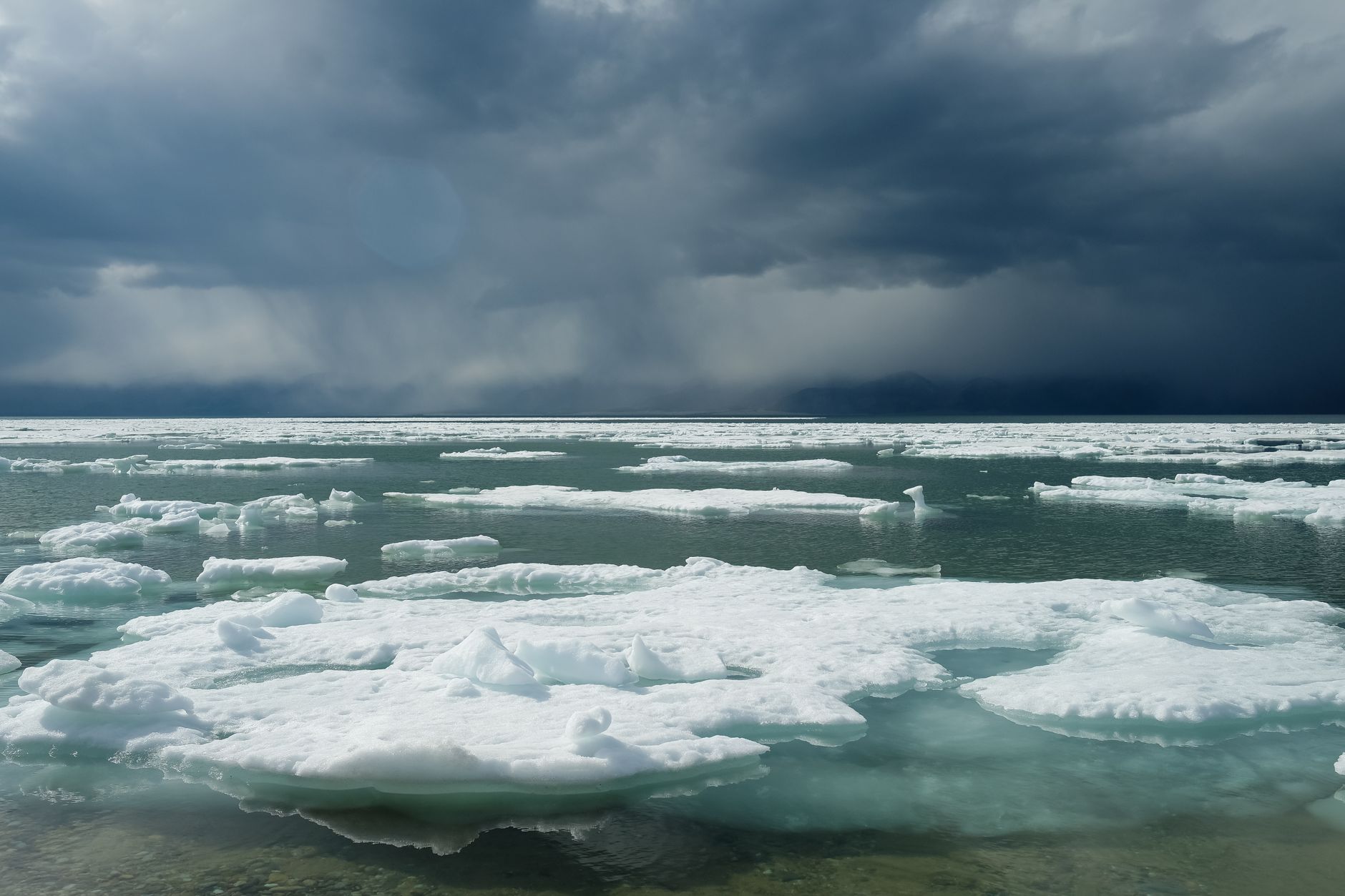
Humanity has fundamentally altered the trajectory of the next glacial period, effectively stalling a natural cooling cycle that was already underway due to rising greenhouse gas concentrations. A new study published in the journal Science suggests that while Earth was beginning to transition into a new phase of glacial growth approximately 2,000 years ago, the rapid warming caused by industrial-era emissions has derailed this eons-long process.
Key Takeaways
- Natural cycle interrupted: Earth was on a path toward a new glacial period starting roughly 2,000 years ago.
- The 1960s turning point: Rapid increases in greenhouse gas emissions in the mid-20th century reversed the cooling trend.
- The Barnes Ice Cap as a witness: Researchers used newly exposed vegetation from the retreating Barnes Ice Cap to reconstruct a timeline of climatic shifts.
- Long-term consequences: Future emissions could forestall the next ice age for hundreds of thousands of years, fundamentally changing Earth’s climate dynamics.
- Anthropogenic impact: The study serves as a powerful example of how human activity can “jolt” the planet’s fundamental natural systems.
- Eccentricity: The shape of Earth’s orbit around the Sun, which shifts from nearly circular to more elliptical over long periods.
- Obliquity: The tilt of the Earth’s axis. A greater tilt leads to more extreme seasons, while a smaller tilt can favor the growth of ice sheets by allowing cooler summers.
- Precession: The “wobble” of the Earth’s axis as it rotates, which changes the timing of the seasons relative to the Earth’s position in its orbit.
- For Coastal Residents: The forestalling of an ice age means that the massive sequestration of water into continental ice sheets—which naturally lowers sea levels—is being delayed. This contributes to the long-term trend of rising sea levels, increasing the risk of flooding and erosion in coastal communities.
- For Agricultural Planners: The disruption of predictable climatic cycles makes long-term weather modeling more difficult. As we move into an era shaped by human-induced warming rather than orbital cycles, the stability of growing seasons may become even more volatile.
- For Policy Makers and Investors: The study reinforces the urgency of decarbonization. If human activity can override the very mechanics of the planet’s orbit, the economic and social costs of failing to manage greenhouse gas emissions are unprecedented in scale.
- Summer vs. Winter Ice Balance: Continued net loss of ice in the Arctic will confirm the ongoing disruption of the glacial cycle.
- Global Temperature Thresholds: As the world approaches the 1.5 degrees Celsius (2.7 degrees Fahrenheit) warming mark above pre-industrial levels, the impact on orbital cycles may become even more pronounced.
- Emission Trajectories: The speed at which global greenhouse gas concentrations rise will determine whether the “forestalling” of the next ice age is a temporary delay or a permanent geological shift.
- gizmodo.com
The Interruption of the Next Glacial Period
For billions of years, the Earth has moved through rhythmic cycles of ice ages and warmer periods. These transitions are not random; they are driven by predictable celestial mechanics. However, according to a recent study led by Nicolás Young, a geochemist at Columbia University, human activity has intervened in this cycle. The research indicates that the onset of the next major cooling phase was effectively canceled by the warming trends that accelerated in the 1960s.
“It was just getting started, everything was normal, the next glaciation was about to happen—and yet it stopped,” Young said in a statement regarding the findings. He emphasized that the disruption represents a profound shift in how human activity interacts with planetary systems, noting, “It’s a very powerful example of how we have jolted the system.”
To understand how such a massive natural process could be halted, one must first understand the mechanics that govern the Earth’s climate rhythm. For the duration of the Late Cenozoic Ice Age, the planet has fluctuated between long-term cooling (glacial periods) and shorter, warmer intervals (interglacial periods). We are currently residing in one of these warmer interglacial periods, which began roughly 11,700 years ago.
The Mechanics of Earth’s Climate: Milankovitch Cycles
At the heart of these transitions are the Milankovitch cycles. These are periodic changes in the Earth’s movement and orientation in space that dictate how much solar radiation reaches different parts of the planet. These cycles are categorized into three primary movements:
When these three cycles align in a specific way, they create the conditions necessary for massive continental ice sheets to expand, marking the start of a glacial period. Historically, these cycles have operated with clockwork precision, untouched by biological or atmospheric shifts on a global scale. However, the Science study highlights that the chemical composition of our atmosphere has become a dominant force, capable of overriding these orbital signals.
The Barnes Ice Cap: A Geological Time Capsule
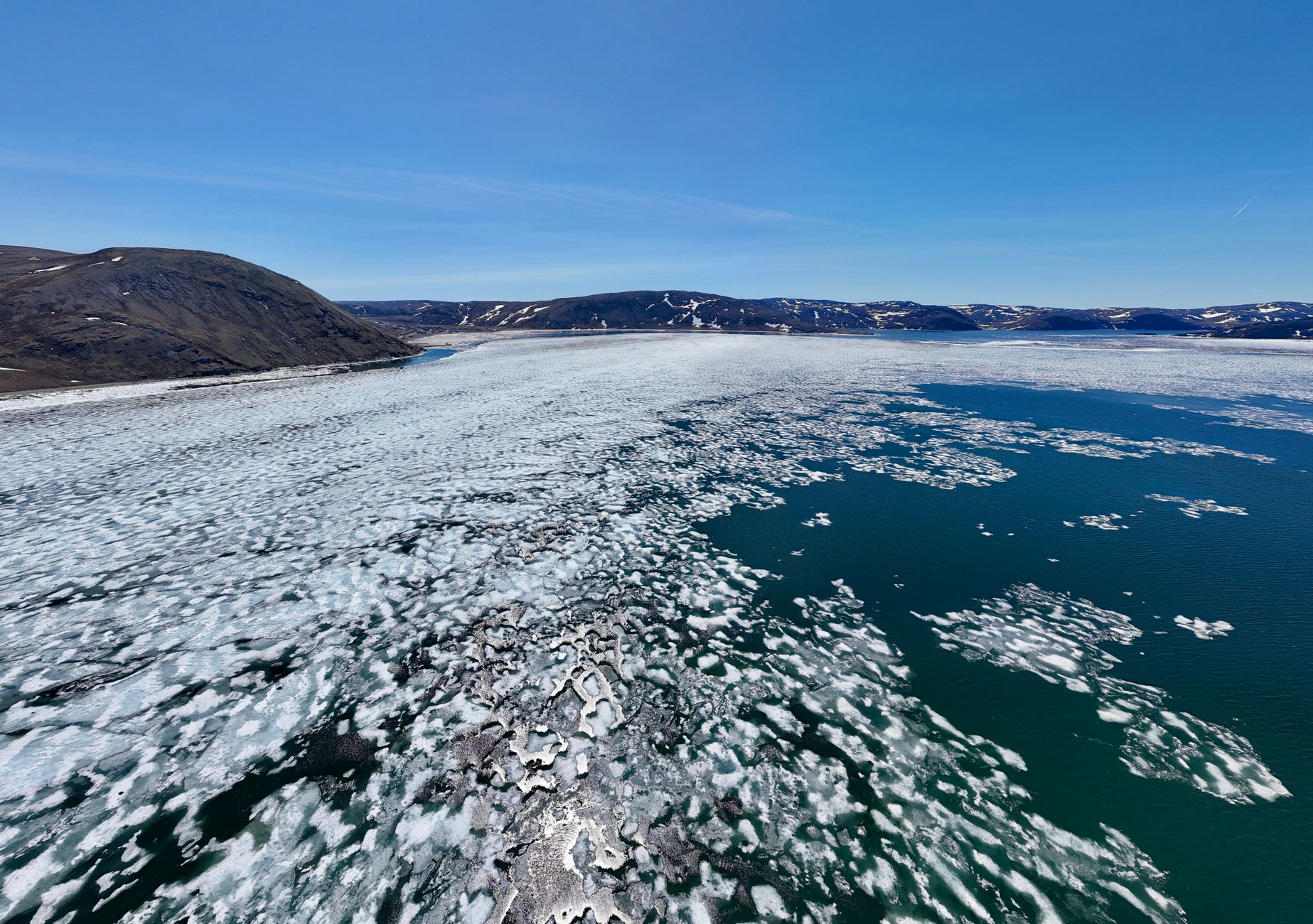
Because the massive Laurentide Ice Sheet—which once covered much of Canada and the northern United States—has largely vanished, researchers needed a way to track the most recent climatic shifts. They found their answer in the Barnes Ice Cap. Located on Baffin Island in Nunavut, Canada, this ice cap is a small but vital remnant of the ancient Laurentide system. The area it covers is roughly equivalent to the size of the state of Delaware.
As the Barnes Ice Cap has begun to thin and retreat due to modern warming, it has acted as a window into the past. The retreating ice has exposed layers of vegetation that had been preserved for millennia beneath the frozen surface. By analyzing and dating this newly revealed plant life, Young and his team were able to construct a high-resolution timeline of the region’s climatic history.
Their findings were startling: the ice cap had reached its minimum extent approximately 3,000 years ago, but then began a period of expansion. This expansion, according to the researchers, was a signal that the Earth was entering a new glacial period. The ice was growing, the climate was cooling, and the natural cycle was proceeding as expected.

The 1960s: The Decade the Cooling Stopped
The data suggests that the momentum of this new glacial period was broken in the mid-20th century. The study identifies the 1960s as a critical pivot point. During this decade, the rise in global temperatures—driven by the accumulation of greenhouse gas emissions—reached a threshold where the Barnes Ice Cap could no longer sustain its growth.
Instead of adding more ice during the winter than it lost during the summer, the glacier began a net loss. This trend has not only continued but has accelerated. The warming of the atmosphere and oceans has essentially “short-circuited” the cooling mechanism that the Milankovitch cycles were attempting to initiate.
| Climate Phase | Typical Characteristics | Current Status |
|---|---|---|
| Glacial Period | Large continental ice sheets, lower sea levels, colder global temperatures | Forestalled by human activity |
| Interglacial Period | Glacial retreat, higher sea levels, warmer global temperatures | Current state (Late Cenozoic Ice Age) |
| Transition Period | Gradual shift between cooling and warming | Disrupted by 20th-century emissions |
This disruption is not merely a local phenomenon in the Canadian Arctic. Because the Laurentide ice sheet once served as an anchor for continental-scale glaciation, the loss of its remnants like the Barnes Ice Cap could fundamentally alter how ice behaves on a global scale in the future.
Why This Matters: The Scale of Human Influence
The implications of this research are profound. For the first time in the geological record, a single species is capable of overriding the orbital mechanics that have governed the planet for millions of years. The study demonstrates that the “climate system” is not just a collection of natural cycles, but a complex web where atmospheric chemistry can act as a master lever.
As global temperatures continue to climb, the uncertainty regarding the Earth’s future climate increases. Shaun Marcott, a glaciologist and professor at the University of Wisconsin-Madison, provided context in a perspective piece accompanying the study. He noted that if current emission trends continue, we may not just be delaying the next ice age, but potentially forestalling it for hundreds of thousands of years.
This delay changes the long-term geological and biological landscape of the planet. It affects sea-level projections, ocean circulation patterns, and the evolutionary pressures placed on various species. The “jolt” described by Young is a permanent alteration to the Earth’s rhythmic breathing.
What It Means for You
While the scale of glacial cycles may seem distant from daily life, the disruption of these cycles has tangible implications for various sectors of society:
Counterpoints and Open Questions
While the study provides compelling evidence, it also opens several scientific debates and highlights areas of uncertainty.
First, the exact timeframe for how long the next glaciation is being delayed remains a subject of modeling debate. While Marcott suggests hundreds of thousands of years, different climate models may produce varying results based on how they calculate the feedback loops between melting ice and atmospheric warming.
Second, there is the question of “tipping points.” Some scientists wonder if there is a level of warming that doesn’t just delay the next ice age but fundamentally prevents the Earth from ever entering another glacial period during the current epoch.
Finally, while the Barnes Ice Cap is a critical indicator, some researchers argue that a single ice cap’s behavior may not perfectly represent the entire planet’s glacial potential. However, given its historical link to the Laurentide system, its significance remains high.
What Happens Next
The scientific community will be closely monitoring the Barnes Ice Cap as a primary indicator of Earth’s climatic health. As the cap continues to thin, researchers will likely use more advanced geochemical dating and satellite imagery to track the rate of retreat.
Key signals to watch include:
Frequently Asked Questions
What are Milankovitch cycles?
Milankovitch cycles refer to the collective effects of changes in the Earth’s movements—specifically its orbit’s shape (eccentricity), its axial tilt (obliquity), and its axial wobble (precession)—on its climate over thousands of years. These cycles change the amount and distribution of sunlight reaching the Earth, which can trigger the beginning or end of ice ages.
Is the Earth currently in an ice age?
Yes, technically. We are living in the Late Cenozoic Ice Age. However, we are currently in an interglacial period, which is a warmer interval between the larger glacial periods that characterize an ice age. During an interglacial period, large ice sheets are reduced, and global temperatures are higher.
How did humans affect the next glacial period?
By burning fossil fuels and increasing the concentration of greenhouse gases in the atmosphere, humans have caused global temperatures to rise. This warming has reversed the natural cooling trend that was beginning around 2,000 years ago, preventing the growth of ice sheets that would have marked the start of a new glacial period.
Can we restart the glacial cycle?
While the study shows that greenhouse gases have forestalled the cycle, it does not definitively say it is impossible to restart. However, given the scale of the warming and the potential for hundreds of thousands of years of delay, it would require a massive and sustained reduction in global temperatures to allow the Milankovitch cycles to regain dominance.
Conclusion
The discovery that the next glacial period has been derailed by human activity marks a turning point in our understanding of the Earth’s climate. What was once a predictable, eons-long cycle governed by the stars is now being reshaped by the chemistry of our atmosphere
References
Featured image: Photo by Nadezhda Moryak on Pexels