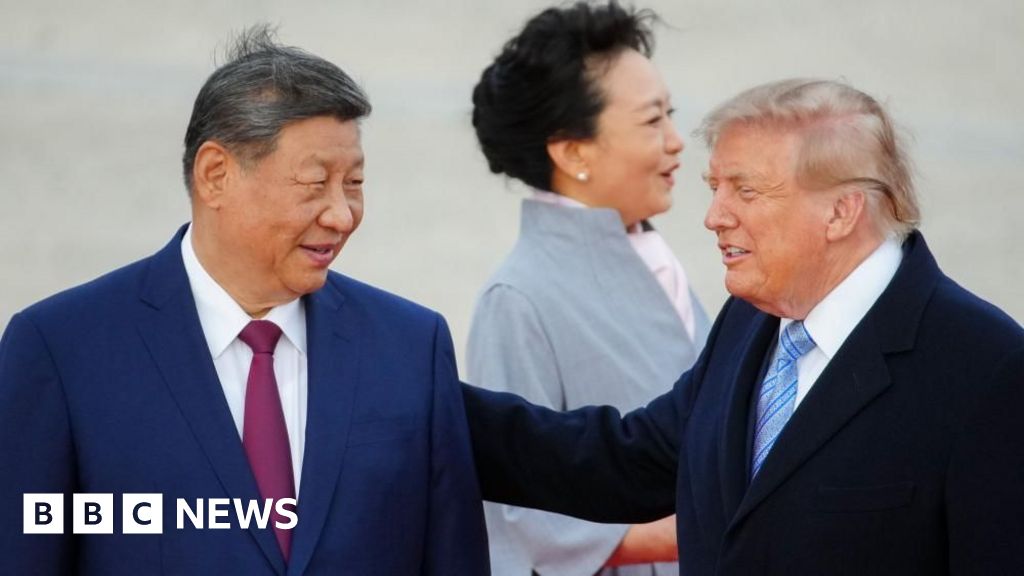
The Xi Jinping Washington visit has commenced with an unprecedented personal welcome from president Donald Trump at Joint Base Andrews, signaling a high-stakes attempt to establish strategic stability between the world’s two largest powers.
Key Takeaways
- Unprecedented Protocol: President Trump broke long-standing diplomatic norms by personally meeting President Xi at the aircraft, a gesture not seen in the U.S. since 1962.
- High-Stakes Agenda: Discussions will focus on the expiration of a critical trade truce, artificial intelligence dominance, and sensitive issues regarding Taiwan and Iran.
- Economic Intersection: The presence of tech leaders like Elon Musk and Jensen Huang at the state dinner underscores the link between diplomacy and global technology competition.
- Political Friction: While the administration emphasizes “strategic stability,” Congressional critics and the MAGA base express deep skepticism regarding the lavish reception.
- Trade Extension: Treasury Secretary Scott Bessent has announced that the current US-china trade truce, originally set to expire in November, has been extended to January.
- Investors and Traders: The extension of the trade truce to January provides a temporary buffer against volatility. However, any failure to reach a substantive agreement on agricultural exports or rare earth minerals could trigger sudden market shifts.
- Technology Professionals: The discussions surrounding AI dominance and semiconductor competition will likely influence future regulations, export controls, and research funding in the tech sector.
- Defense and Security Analysts: The discussions regarding the $14 billion arms sale to Taiwan and China’s military posture in the Indo-Pacific will dictate the trajectory of US military policy and regional stability.
- Voters: The political fallout from this summit will likely become a major campaign issue, as the administration’s approach to China remains a central point of contention between the MAGA base and moderate Republicans.
- Thursday’s Closed-Door Talks: The results of the private bilateral discussions between Trump and Xi will be the first real indicator of whether “strategic stability” is being achieved.
- The State Dinner Outcomes: Observe the interactions between US tech leaders and the Chinese delegation; these social exchanges often precede formal policy shifts in the technology sector.
- The January Deadline: While the trade truce has been extended, the window for a permanent resolution remains narrow. Watch for any announcements from Treasury Secretary Scott Bessent regarding progress on tariffs.
- Taiwan Policy Decisions: Monitor whether the administration moves forward with the $14 billion arms sale or if the discussions with President Xi lead to a pause or modification of the sale.
- timesofindia.indiatimes.com
- www.indiatoday.in
- www.bbc.com
- www.washingtonpost.com
What Happened: A Ceremonial Arrival
On Wednesday, September 24, 2026, the political landscape of the Indo-Pacific and the global economy shifted as President Xi Jinping and First Lady Peng Liyuan arrived in the United States for a three-day state visit. The arrival at Joint Base Andrews in Maryland was marked by a level of ceremonial grandeur that has become a hallmark of the Trump administration’s diplomatic style.
According to reports from India Today, the aircraft carrying the Chinese delegation touched down at 5:39 PM local time. By 6:01 PM, President Xi and First Lady Peng had disembarked to find President Donald Trump and First Lady Melania Trump waiting at the foot of the plane’s ladder. This personal greeting, as noted by The Times of India, represents a significant departure from standard protocol, where visiting heads of state are typically received at the White House rather than at military airfields.
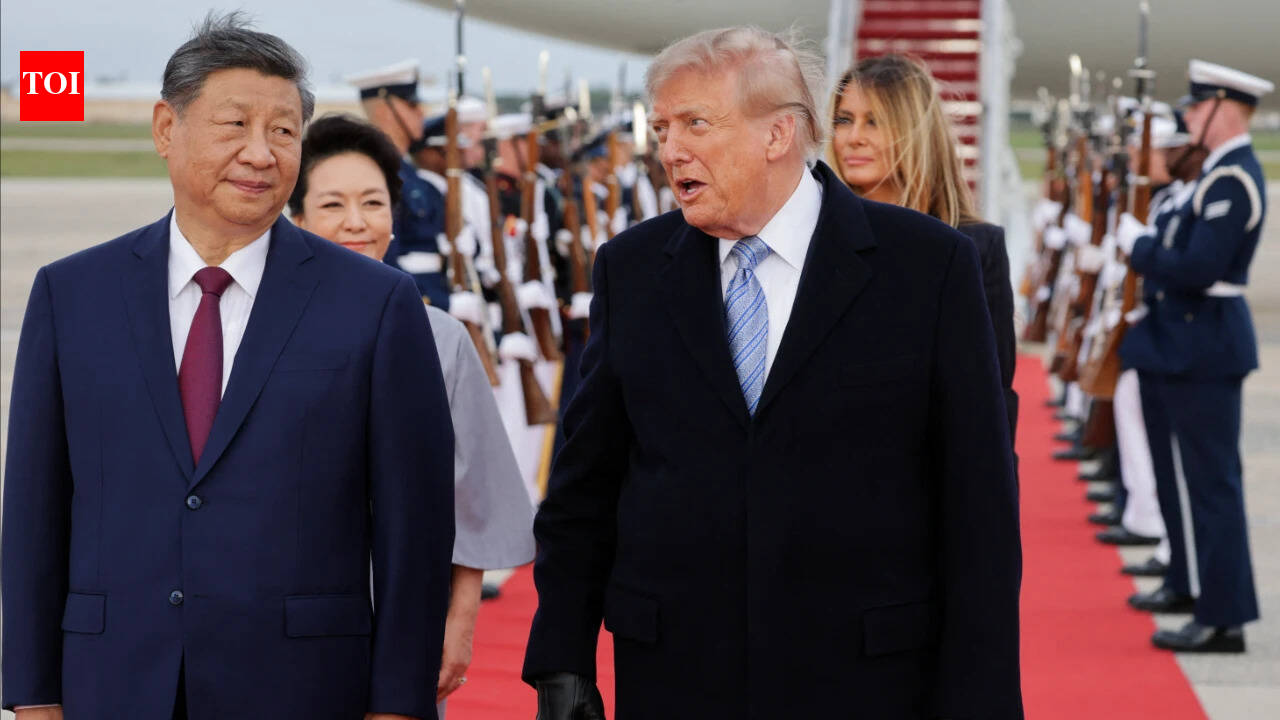
The arrival ceremony included a 100-foot red carpet and a 21-person honor cordon. The US Air Force Band performed the national anthems, and the event was punctuated by the ceremonial cannon fire and a flyover by two US Air Force B-1 supersonic bombers. Following the ceremony, the Chinese delegation, which includes high-ranking officials such as Foreign Minister Wang Yi and Cai Qi, departed via motorcade for Washington, D.C.
Why It Matters: The Stakes of the Summit
The Xi Jinping Washington visit is far more than a series of choreographed ceremonies; it is a critical juncture for several volatile global issues. The timing is particularly sensitive as the two nations navigate a period of intense competition and necessary cooperation.
The Economic and Trade Nexus
Central to the discussions is the status of the US-China trade relationship. While a trade agreement is set to expire in November 2026, Treasury Secretary Scott Bessent has confirmed that a truce has been extended until January. This extension provides a temporary breathing room for markets, but the underlying tensions remain. Analysts suggest that President Trump will use this summit to push for lower Chinese tariffs on American products and increased exports of US agricultural goods. However, there are concerns that China has “reneged” on previous promises to increase imports of American agricultural products and rare earth minerals, a point of contention that could undermine any progress made during the visit.
The Technological Arms Race
The intersection of diplomacy and high technology is perhaps most visible in the summit’s social itinerary. A black-tie state dinner scheduled for Thursday, September 25, will feature prominent leaders from the American technology sector, including Jensen Huang (CEO of Nvidia), Elon Musk (CEO of SpaceX/Tesla), and Tim Cook (CEO of Apple).
This inclusion is not accidental. As the competition for dominance in Artificial Intelligence (AI) and semiconductor manufacturing intensifies, the ability of the US and China to manage their technological rivalry is paramount. The presence of these executives signals that the bilateral relationship is no longer just about traditional statecraft, but about the future of global economic and military power.
Deep-Dive: A Comparative Analysis of Diplomatic Styles
The level of hospitality extended to President Xi has sparked intense debate regarding the reciprocity of international relations. To understand the current atmosphere, one must look back at the recent travels of both leaders.
| Feature | Trump’s China Visit (May 2026) | Xi’s US Visit (Sept 2026) |
|---|---|---|
| Arrival Protocol | Received red carpet and military honor guard; no personal meeting with Xi. | Personal welcome by President Trump and Melania Trump at the aircraft. |
| Key Participants | Chinese Vice President Han Zheng attended the arrival. | President Xi and First Lady Peng Liyuan arrived personally. |
| Ceremonial Tone | Grand hospitality, including 300 youths chanting “Welcome!”. | Unusually personal and high-level ceremonial reception. |
| Diplomatic Goal | Establishing presence and rapport in Beijing. | Maintaining “strategic stability” and managing friction. |
This asymmetry has drawn criticism from some members of the US Congress. Senator Roger Wicker, Republican Chairman of the Senate Armed Services Committee, has been vocal in his opposition to the lavishness of the welcome. During a Senate speech, Wicker characterized President Xi as a “brutal, unelected and oppressive dictator” and questioned the appropriateness of the reception given China’s massive military buildup and its support for Iran.
Stakeholders and Diverging Perspectives
The summit has revealed a deep divide in how US leadership and the American public view the necessity of high-level engagement with Beijing.
The Pragmatists: The Trump Administration and State Department
For the Trump administration, the goal is “strategic stability.” Melania Trump emphasized the importance of respect, telling Fox News Channel‘s Fox & Friends that the personal greeting was a matter of dignity: “He’s coming on our soil, and we need to welcome them with the most respect.” She further noted that the leaders have a “great relationship” that informs these decisions.
Secretary of State Marco Rubio has defended the high-level engagement as a diplomatic obligation. Speaking to reporters in New York, Rubio argued that ignoring China would be irresponsible given its global influence. “The idea that we would not interact with them at the highest levels is irresponsible. It’s outrageous. We have to,” Rubio said, adding that the relationship between the US and China will ultimately “define the 21st century.”
The Critics: Congressional Opposition
On the other side of the aisle, critics like Senator Wicker argue that the ceremonial warmth masks serious security threats. Wicker highlighted the need to address China’s military expansion and its role in Middle East conflicts. This perspective is echoed by many who believe that grand gestures provide China with unearned legitimacy without securing substantive concessions on issues like human rights or maritime security.
The Public: A Cooling of Hostility?
Interestingly, data from the Chicago Council on Global Affairs suggests a shift in American public sentiment. While political leaders remain divided, the general American public’s perception of China as a threat has decreased from 52% in 2022 to 41% in 2026. Furthermore, 57% of Americans believe the US should engage and cooperate with Beijing. However, a significant rift exists within the Republican party: while 57% of non-MAGA Republicans favor cooperation, 63% of the MAGA base favor limiting relations with China.
What It Means for You
The outcome of the Xi Jinping Washington visit will have practical implications for several key groups:
Counterpoints and Open Questions
Despite the ceremonial warmth, the summit faces significant hurdles that could prevent any meaningful breakthrough.
One major risk is the potential for China to use the summit to stall or kill the $14 billion US arms sale to Taiwan. David Firestein of the Bush China Foundation noted that Xi Jinping may attempt to leverage the diplomatic atmosphere to influence US policy on this critical security issue.
Furthermore, there are lingering questions about China’s commitment to trade. While the administration seeks better market access for US goods, allegations of China “reneging” on previous promises regarding agricultural imports suggest that trust remains at an all-time low. Can personal diplomacy between leaders overcome these deep-seated, systemic economic and military competitions? The low expectations held by many diplomats suggest that the answer may be no.
What Happens Next
As the three-day visit progresses, several key milestones and signals will determine the summit’s success:
Frequently Asked Questions
Why was the airport welcome at Joint Base Andrews so significant?
Traditionally, visiting heads of state are met at the White House after their arrival. President Trump’s decision to meet President Xi personally at the aircraft is a departure from modern diplomatic protocol. It is being compared to the welcome given to British Prime Minister Harold Macmillan by President John F. Kennedy in 1962, signaling an attempt to use personal rapport as a tool of high-level diplomacy.
What is the current status of the US-China trade agreement?
While a major trade agreement is not yet finalized, Treasury Secretary Scott Bessent has announced that the current trade truce, which was scheduled to expire on November 10, 2026, has been extended to January. This extension is intended to prevent immediate trade escalations while negotiations continue regarding tariffs and agricultural exports.
Which major tech companies are involved in the summit?
While not directly part of the diplomatic negotiations, the presence of major technology companies is central to the summit’s significance. Leaders from Nvidia, SpaceX, Tesla, and Apple are expected to be part of the high-level social and business engagements, reflecting the critical role that AI and semiconductor technology play in the US-China relationship.
What are the main points of contention between the US and China?
Key areas of friction include the $14 billion arms sale to Taiwan, China’s military buildup in the Indo-Pacific, trade imbalances, competition for dominance in Artificial Intelligence, and China’s relationship with Iran. Additionally, disputes over rare earth minerals and agricultural imports remain unresolved issues.
References
Featured image: Image via bbc.com