The Xi Jinping Washington visit has officially commenced with an unprecedented ceremonial reception at Joint Base Andrews, signaling a period of intense diplomatic maneuvering between the world’s two largest economies. On Wednesday, September 24, 2026, president Donald Trump personally welcomed Chinese President Xi Jinping and First Lady Peng Liyuan to the United States, a gesture that marks a significant departure from standard diplomatic protocol and underscores the administration’s desire to project a sense of “strategic stability” through high-level engagement.
Key Takeaways
- Unprecedented Welcome: President Trump provided a personal airport greeting for President Xi, a level of ceremony not seen in the U.S. since 1962.
- High-Stakes Agenda: The three-day summit will address critical friction points, including artificial intelligence (AI) dominance, the $14 billion Taiwan arms sale, and regional conflicts in Iran and Ukraine.
- Economic Truce: U.S. Treasury Secretary Scott Bessent announced that the existing US-China trade truce has been extended through January 2027.
- Tech-Centric Diplomacy: A formal state dinner on Thursday is expected to include major technology leaders such as Jensen Huang (Nvidia) and Elon Musk (SpaceX).
- Domestic Tension: The administration’s warm reception faces criticism from some Republican lawmakers and a significant portion of the President’s MAGA base.
- The Taiwan Question: Experts, including David Firestein of the Bush China Foundation, suggest that President Xi may attempt to leverage the summit to influence U.S. policy regarding a recently approved $14 billion arms sale to Taiwan.
- Artificial Intelligence: As both nations race to lead in AI, the summit will likely touch upon the boundaries of technological competition and the potential for international standards or restrictions.
- Rare Earth Minerals and Agriculture: A major point of contention remains whether China will fulfill its previous promises to increase purchases of American agricultural products and loosen restrictions on the sale of rare earth minerals, which are vital to U.S. defense and tech industries.
- Global Conflict Mediation: The administration is expected to address China’s role in the Russia-Ukraine war and its ongoing relationship with Iran, which remains a significant security concern for the U.S.
- If you are an investor: The extension of the trade truce through January provides a period of relative stability for markets, particularly in the tech and manufacturing sectors. However, the long-term volatility of US-China relations remains a primary risk factor for global portfolios.
- If you are in the technology sector: Expect continued scrutiny regarding AI development and export controls. The presence of industry leaders at the state dinner suggests that corporate interests are being integrated into the diplomatic dialogue, but the “zero-sum” nature of the AI race remains unchanged.
- If you are a voter: The visit highlights the internal political tension within the U.S. government. The divide between the administration’s engagement strategy and the skepticism of the MAGA base and Congressional hawks may influence future domestic political debates regarding foreign policy and national security.
- Post-Summit Communiqués: Any official statements released by the White House or the Chinese government regarding the closed-door talks.
- The January Deadline: The expiration of the extended trade truce in January 2027 will serve as the next major economic catalyst.
- Taiwan Policy Responses: Any shifts in U.S. rhetoric or action regarding the $14 billion arms sale following the discussions.
- Market Reactions: How global markets respond to the perceived success or failure of the diplomatic engagement.
- timesofindia.indiatimes.com
- www.indiatoday.in
- www.bbc.com
- www.washingtonpost.com
What Happened: A Grand Arrival in Maryland
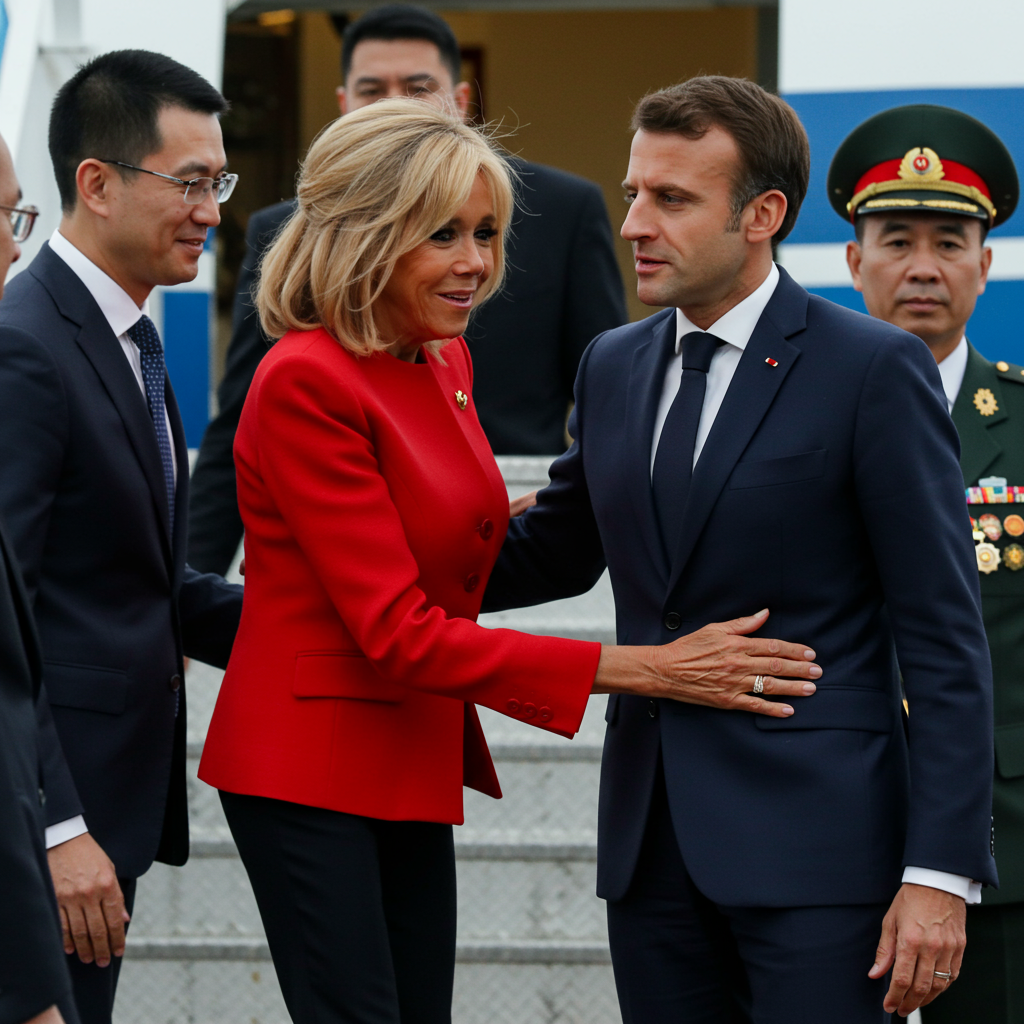
At 5:39 PM local time on Wednesday, September 24, 2026, the aircraft carrying President Xi Jinping and First Lady Peng Liyuan touched down at Joint Base Andrews, Maryland. The arrival was marked by significant military honors, including a 21-person honor cordon and the performance of the U.S. Air Force Band. In a moment of high spectacle, two B-1 supersonic bombers conducted a flyover of the airbase as the leaders disembarked.
President Donald Trump and First Lady Melania Trump met the Chinese delegation at the foot of the aircraft ladder. The four leaders then walked a 100-foot red carpet, a display of ceremonial grandeur intended to reciprocate the reception President Trump received during his own visit to China in May. Following the national anthems and cannon fire, the Chinese delegation departed for Washington, D.C., via motorcade, while the U.S. President and First Lady departed via Marine One.
According to reports from India Today, this level of personal greeting by a sitting U.S. president is a rarity, drawing comparisons to the 1962 arrival of British Prime Minister Harold Macmillan, who was welcomed by President John F. Kennedy. Melania Trump, speaking to Fox News Channel’s “Fox & Friends,” emphasized the intent behind the reception, stating, “He’s coming on our soil, and we need to welcome them with the most respect.” She further noted that the President and President Xi have a “great relationship” and that she was “involved” in every detail of the visit.
Why It Matters: Stability Amidst Friction
The timing of the Xi Jinping Washington visit is critical for both global markets and international security. While the outward appearance of the summit is one of ceremonial warmth, the underlying relationship remains defined by systemic competition.
One of the most immediate economic developments is the extension of the US-China trade truce. U.S. Treasury Secretary Scott Bessent announced that the existing arrangement—which involves the U.S. lowering tariffs on certain goods in exchange for China loosening restrictions on rare earth minerals—will now remain in effect through January. This extension provides a temporary window of predictability for global supply chains, though analysts note that expectations for a permanent, major breakthrough in trade negotiations remain low.
Furthermore, the summit serves as a battleground for the “technology war.” The presence of industry titans like Jensen Huang, CEO of Nvidia, and Elon Musk, CEO of SpaceX, at the upcoming state dinner highlights that the race for supremacy in Artificial Intelligence and aerospace technology is a central pillar of the bilateral relationship. The discussions are expected to weigh heavily on how both nations manage the export of high-end semiconductors and the regulation of AI applications.
Timeline of the Three-Day State Visit
To understand the scope of the engagement, it is helpful to view the scheduled itinerary of the summit:
| Date | Event | Primary Location | Key Participants |
|---|---|---|---|
| Wednesday, Sept 24 | Arrival Ceremony & Military Honors | Joint Base Andrews | Trump, Xi, Melania Trump, Peng Liyuan |
| Thursday, Sept 25 | Closed-door Diplomatic Talks | The White House | Trump, Xi, Han Zheng, Wang Yi |
| Thursday, Sept 25 | Black-tie State Dinner | The White House | Trump, Xi, Tech CEOs (Nvidia, Apple, SpaceX) |
| Friday, Sept 26 | Private Tea Session & Cultural Tour | White House / National Archives | The Trumps, The Xis |
| Friday, Sept 26 | Official Departure | Joint Base Andrews | Xi Jinping, Peng Liyuan |
Stakeholders and Divergent Perspectives
The Xi Jinping Washington visit has revealed deep divisions in how U.S. leadership and policy should be conducted regarding China.
The Administration and Diplomatic Pragmatists
The Trump administration is pursuing a strategy of “ceremonial grandeur” to maintain “strategic stability.” This approach suggests that high-level engagement, even if fraught with disagreement, is essential for managing a global superpower.
U.S. Secretary of State Marco Rubio defended the necessity of the summit to reporters in New York on Wednesday. “The idea that we would not interact with them at the highest levels is irresponsible. It’s outrageous. We have to,” Rubio said. He added that the visit reflects the President’s belief that despite significant differences, the relationship between the U.S. and China will “define the 21st century.”
Congressional Critics and Security Hawks
Conversely, many in Congress view the warm reception as a sign of weakness or a failure to address the growing threat posed by the Chinese Communist Party (CCP). Senator Roger Wicker, Chairman of the Senate Armed Services Committee, was a vocal critic leading up to the visit.
During a Senate speech on Tuesday, Wicker argued against the invitation, describing President Xi as a “brutal, unelected and oppressive dictator who seeks to dominate his neighbors.” Wicker suggested that instead of ceremonial hospitality, the administration should be focusing on “China’s massive military buildup” and its “clear support for Iran.”
The Tech and Business Sector
For the private sector, the visit is less about ideology and more about market access and technological boundaries. The inclusion of executives from Apple, Nvidia, and SpaceX at the White House state dinner signals that the U.S. government views the tech industry as a primary stakeholder in the outcome of these negotiations. For these leaders, the goal is to navigate a landscape of increasing export controls and trade barriers.

Deep-Dive: The Geopolitical Friction Points
While the headlines focus on the red carpet, the closed-door discussions are expected to be significantly more contentious. Several key issues are expected to dominate the agenda:
What It Means for You
The outcomes of the Xi Jinping Washington visit will have practical implications for various sectors of society:
Counterpoints and Open Questions
Despite the ceremonial warmth, several critical questions and risks remain unaddressed by the official itinerary:
Is the “warmth” superficial?
Diplomatic analysts maintain low expectations for a major breakthrough. The history of US-China relations suggests that ceremonial gestures often mask deep-seated, unresolved systemic competition.
The MAGA Skepticism:
Public opinion data from the Chicago Council on Global Affairs reveals a significant domestic divide. While 57% of Americans believe the U.S. should engage with Beijing, a staggering 63% of President Trump’s MAGA base favor limiting relations with China. This creates a political tightrope for the administration: how to engage a superpower without alienating its core political supporters.
China’s Compliance:
There are persistent allegations that China has previously reneged on its procurement promises regarding American agricultural products. Whether the current trade truce will lead to genuine concessions or merely a temporary pause in hostilities remains an open question.
What Happens Next
As the three-day summit concludes on Friday, September 26, the world will be looking for signals of progress or increased friction. Key milestones to watch include:
Frequently Asked Questions
Why did President Trump personally meet President Xi at the airport?
President Trump’s decision to meet President Xi at Joint Base Andrews is a rare diplomatic gesture. According to First Lady Melania Trump, the decision was made because the two leaders have a “great relationship” and to show the highest level of respect to a visiting leader on American soil. This is the first time a U.S. president has provided such a welcome since John F. Kennedy welcomed Harold Macmillan in 1962.
What is the US-China trade truce?
The trade truce is a reciprocal arrangement designed to reduce economic volatility. Under the current terms, the United States has lowered tariffs on certain goods, while China has agreed to loosen restrictions on the export of rare earth minerals—materials essential for high-tech and defense industries. U.S. Treasury Secretary Scott Bessent recently announced that this truce has been extended through January 2027.
Who is attending the state dinner at the White House?
The formal black-tie state dinner scheduled for Thursday will include high-level political figures and prominent leaders from the American technology sector. Specifically, attendees are expected to include CEOs such as Jensen Huang of Nvidia, Elon Musk of SpaceX, and Tim Cook of Apple, underscoring the importance of technology in the bilateral relationship.
What are the main topics of the summit?
The summit is expected to cover a wide range of sensitive geopolitical and economic issues. These include the global competition for Artificial Intelligence (AI) dominance, the $14 billion arms sale to Taiwan, trade tariffs, the security situation in the Middle East (specifically Iran), and the ongoing conflict in Ukraine.
As the Xi Jinping Washington visit enters its second day, the tension between ceremonial hospitality and intense policy negotiation remains the defining characteristic of this high-stakes summit. Whether this engagement leads to renewed stability or merely a temporary pause in competition will be determined by the outcomes of the closed-door discussions held this week.
References
Featured image: Photo by cottonbro CG studio on Pexels