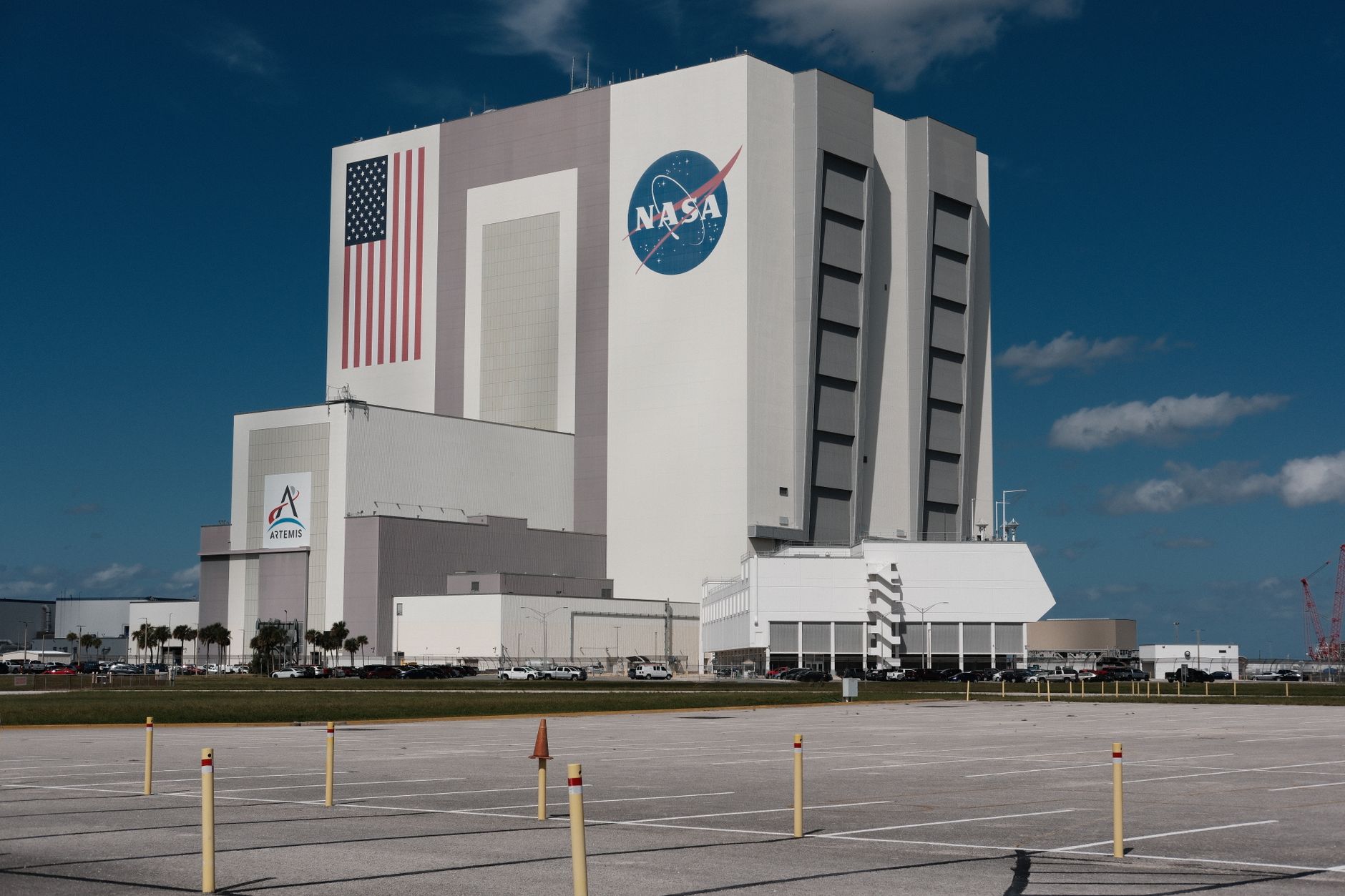
NASA moon base contracts have entered a new era of scale following the agency’s announcement of a $10 billion framework to support a permanent human presence on the Moon. On Saturday, November 7, 2026, the space agency revealed that several private aerospace giants, including SpaceX and Blue Origin, are eligible to compete for massive delivery contracts designed to build the foundation of a lunar outpost. The announcement, made at the MAX POWER aerospace expo and air show at the Kennedy Space Center in Florida, signals a shift from government-led exploration to a commercially driven lunar economy.
Key Takeaways
- $10 Billion Framework: NASA has established a new Commercial Lunar Payload Services (CLPS) framework with a maximum value of $10 billion over the next 10 years.
- Blue Origin’s Rover Deal: Blue Origin secured a $94 million contract to deliver the nuclear-powered PROMISE rover to the lunar south pole by late 2028.
- SpaceX Involvement: SpaceX will conduct a demonstration in 2028 to deploy communications satellites via its Starship rocket.
- Strategic Target: All missions focus on the lunar south pole, a region believed to contain water ice essential for sustained human life.
- Infrastructure Focus: New contracts also target the development of lunar power towers and robotic cargo transportation systems.
What happened
During the MAX POWER aerospace expo at the Kennedy Space Center, NASA officials detailed an expansive roadmap for lunar habitation. The agency is moving beyond short-term missions toward a sustained presence on the lunar surface. To facilitate this, NASA expanded its Commercial Lunar Payload Services (CLPS) program, setting a ceiling of $10 billion for future task orders over a decade. This figure represents the maximum potential value of the contracts rather than immediate funds already awarded.
NASA Administrator Jared Isaacman emphasized the incremental nature of the project, stating, “We are building the Moon Base mission by mission.” He noted that the goal is to ensure that when astronauts return to the Moon, the first elements of the base will already be waiting for them on the surface.
To support the initial phases of this expansion, NASA has already increased the maximum value of its existing CLPS contract from $2.6 billion to $4.2 billion. This funding surge is intended to bridge the gap between current capabilities and the requirements of a permanent lunar base.
Why it matters
The scale of these NASA moon base contracts represents a fundamental change in how space exploration is funded and executed. By leveraging private companies to deliver scientific equipment, technology, and infrastructure, NASA is attempting to reduce the cost of lunar access while accelerating the pace of development.
This “lunar gold rush” creates a massive economic incentive for the aerospace sector. The competition involves not just the heavy-lift giants like Lockheed Martin and Northrop Grumman, but also specialized firms like Firefly Aerospace and Intuitive Machines. The success of these contracts will determine whether the Moon becomes a viable site for long-term human habitation or remains a destination for transient scientific visits.
Furthermore, the focus on the lunar south pole is strategic. The presence of water ice in this region offers the potential for “in-situ resource utilization,” where lunar materials are converted into oxygen, water, and even rocket fuel. This capability is the linchpin for making lunar operations sustainable and serves as a critical stepping stone for future crewed missions to Mars.
Deep-dive: The PROMISE Rover and Nuclear Exploration
One of the most significant individual components of this new lunar roadmap is the PROMISE rover mission. Blue Origin has been awarded a base contract worth $94 million to deliver this specialized vehicle to the lunar south pole. NASA has also included a performance-based option that could increase the value of this specific contract by an additional $140 million.
Formally named the “Polar Rover for Observation, Mapping, and In-Situ Exploration,” the PROMISE rover is designed to be a six-wheeled, nuclear-powered explorer. The use of nuclear power is a critical design choice; the lunar south pole contains regions of permanent shadow where solar energy is unavailable. A nuclear power source will allow the rover to operate continuously, regardless of light conditions, enabling it to map the subsurface and search for water ice.
To minimize costs and development timelines, NASA’s Jet Propulsion Laboratory (JPL) will construct the rover using spare flight components and engineering test models from the Curiosity and Perseverance Mars rovers. This approach allows the agency to leverage proven technology while focusing new engineering efforts on the unique challenges of the lunar environment.
Blue Origin will utilize its Blue Moon Mark 1 (MK1) lunar surface lander to transport the rover. The mission is currently targeted for a late-2028 launch, with an expected operational duration of 18 months.
Key Players in the Lunar Delivery Ecosystem
The following companies have been selected to compete for future lunar delivery missions under the expanded CLPS framework:
| Company | Primary Role/Specialization |
|---|---|
| SpaceX | Heavy-lift launch and communications satellite deployment |
| Blue Origin | Lunar landers and specialized rover delivery |
| Firefly Aerospace | Lunar delivery and payload services |
| Intuitive Machines | Lunar surface logistics and landers |
| Lockheed Martin Space | Aerospace infrastructure and systems |
| Northrop Grumman | Space systems and lunar technology |
| Voyager Technologies | Aerospace technology and delivery |

NASA moon base contracts and the logistics of space
Establishing a base requires more than just landing rovers; it requires a robust logistics network capable of moving cargo between Earth and the Moon. To address this, NASA awarded six transportation task orders totaling approximately $1.3 billion to Arrow Science and Technology, Blue Origin, and Impulse Space.
These missions are tasked with testing critical technologies for lunar logistics, including advanced navigation systems and robotic drones. These drones are intended to scout potential landing areas, ensuring that future, more expensive human-rated landers can touch down safely in the rugged terrain of the south pole.
Simultaneously, SpaceX has been selected for a demonstration mission under an existing contract. In 2028, SpaceX aims to use its Starship rocket to deploy communications satellites into the region between Earth and the Moon. This demonstration is vital for developing the high-speed communications networks that will eventually connect astronauts on the lunar surface with mission control centers on Earth.
Economic Impact and Market Reactions
The announcement has already triggered significant movement in the aerospace and defense sectors. Investors are closely watching the companies positioned to benefit from the influx of NASA funding. The following table shows the market reaction for several key companies involved in the lunar programs:
| Ticker | Security | Last Price | Change (%) |
|---|---|---|---|
| FLY | Firefly Aerospace Inc | 20.76 | +36.80% |
| LMT | Lockheed Martin Corp. | 567.08 | -1.58% |
| LUNR | Intuitive Machines Inc | 10.47 | +21.46% |
| NOC | Northrop Grumman Corp. | 525.01 | -0.05% |
| RDW | Redwire Corp | 7.21 | +16.48% |
| SPCX | SpaceX (Estimated) | 134.27 | +8.62% |
| VOYG | Voyager Technologies Inc. | 23.98 | +17.95% |
Note: Market data reflects the immediate reaction to the NASA announcement.
For investors, the volatility in stocks like Firefly Aerospace and Intuitive Machines highlights the high-reward, high-risk nature of the commercial space industry. While the $10 billion ceiling provides a massive long-term runway, individual task orders and mission successes will dictate the long-term stability of these firms.
Infrastructure: Power and Communications
A permanent base cannot function without reliable energy and data. NASA has moved to secure the components for a planned lunar power and communications tower. Awards for this project were granted to Honeybee Robotics (a Blue Origin company), Redwire, and Yank Technologies.
The tower is expected to utilize a hybrid system, combining solar power with wireless power transfer. This dual-mode capability is designed to support various operations across the Moon’s surface, providing a steady stream of energy to scientific instruments and habitat modules even when they are not in direct sunlight.

What It Means for You
Depending on your perspective, these developments carry different implications:
- For Investors: The expansion of the CLPS framework suggests a long-term growth cycle for the aerospace sector. However, the reliance on performance-based options and competitive task orders means that individual company success is not guaranteed. Diversification across different segments—launch, robotics, and infrastructure—is key.
- For the Scientific Community: The deployment of the PROMISE rover and the focus on the south pole will provide unprecedented data on lunar geology and the presence of volatiles. This could fundamentally change our understanding of the solar system’s history.
- For Future Astronauts: The shift toward “mission by mission” base building means that the next generation of explorers will not just be visiting the Moon, but living there. The infrastructure being built now—communications, power, and logistics—is what will make that possible.
Counterpoints and Open Questions
Despite the optimism surrounding the $10 billion framework, several significant risks remain.
First, the technical complexity of the proposed technologies cannot be overstated. Deploying nuclear-powered rovers and wireless power transfer systems in the extreme environment of the lunar south pole is a massive engineering challenge. Any failure in these foundational systems could delay the entire lunar habitation timeline.
Second, there is the question of cost and budget stability. While the $10 billion figure is a ceiling, NASA’s ability to fund these contracts depends on continued political support and federal budgeting. Shifts in administration or national priorities could lead to funding gaps that jeopardize long-term projects.
Finally, the intense competition between private entities—most notably the rivalry between the visions of Elon Musk and Jeff Bezos—could lead to redundant technologies or inefficient resource allocation. While competition often drives innovation, the lack of a unified commercial standard for lunar infrastructure could create compatibility issues for future missions.
What Happens Next
As NASA moves forward with these NASA moon base contracts, several key milestones will serve as indicators of progress:
- Task Order Awards: Watch for the specific announcement of which companies win the individual task orders within the $10 billion framework.
- 2028 Launch Window: The successful launch of the PROMISE rover via Blue Origin’s MK1 lander will be a critical test of lunar delivery capabilities.
- SpaceX Starship Demonstration: The 2028 mission to deploy communications satellites will determine if heavy-lift rockets can reliably support lunar orbital infrastructure.
- Infrastructure Testing: The development of the power and communications tower by Redwire and Honeybee Robotics will be essential for the transition from robotic to human presence.
Frequently Asked Questions
What is the PROMISE rover mission?
The PROMISE (Polar Rover for Observation, Mapping, and In-Situ Exploration) mission is a NASA-led project to send a nuclear-powered, six-wheeled rover to the Moon’s south pole. The rover is being built by JPL using components from previous Mars missions to reduce costs. Its primary goal is to map the lunar surface and search for water ice in regions that are permanently shadowed.
How much is NASA investing in the moon base?
NASA has established a new Commercial Lunar Payload Services (CLPS) framework with a maximum value of $10 billion over the next 10 years. This is a ceiling for future task orders and does not represent money already awarded. Additionally, NASA has increased its existing CLPS contract value from $2.6 billion to $4.2 billion.
Why is the lunar south pole the target for these missions?
The south pole is a primary target because it contains regions of permanent shadow that are believed to harbor water ice. This ice is a critical resource for future human colonies, as it can be processed into oxygen for breathing and hydrogen for rocket fuel. The region also offers unique lighting conditions that are ideal for certain types of scientific observation.
Which companies are involved in the new lunar contracts?
Major companies involved include SpaceX, Blue Origin, Firefly Aerospace, Intuitive Machines, iSpace US, Lockheed Martin Space, Northrop Grumman Space Systems, and Voyager Technologies. Other specialized companies like Redwire, Honeybee Robotics, and Impulse Space are also providing critical infrastructure and logistics services.
NASA’s strategic push to establish a permanent lunar presence through massive commercial contracts marks a decisive step in human spaceflight
References
Featured image: Photo by Rodolfo Gaion on Pexels