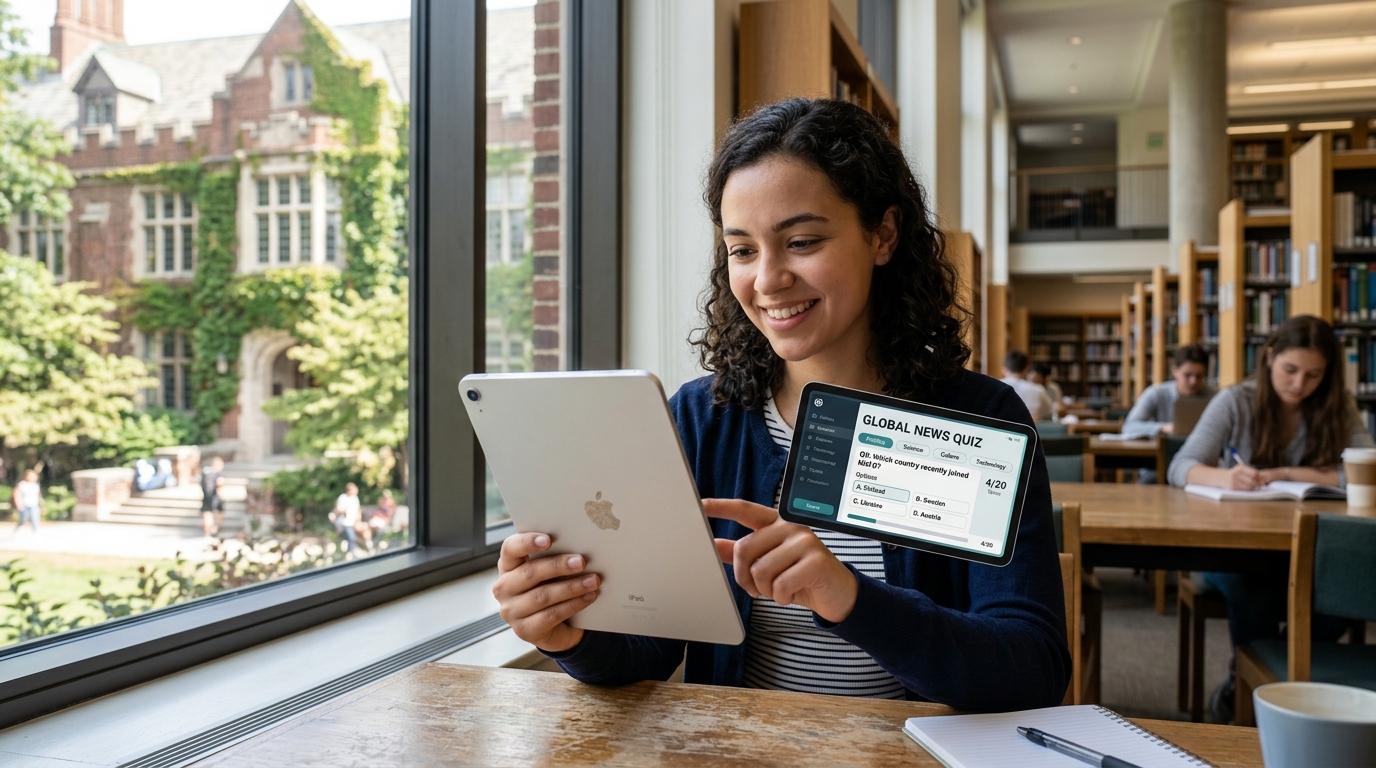
The Columbia news quiz acts as a sophisticated diagnostic tool for anyone looking to stay firmly rooted in the evolving landscape of university life. While some might dismiss these monthly assessments as mere trivia, I have discovered that they represent something far more critical: a structured opportunity to engage with the institutional heartbeat of an Ivy League leader. If you are a student, alumni, or simply someone fascinated by the trajectory of higher education, this quiz is your best path toward true institutional literacy. When I began tracking these updates years ago, I viewed them as a test of my memory, but I soon realized they were actually teaching me how to synthesize complex administrative, academic, and social narratives into a coherent understanding of the university’s future.
Quick Summary
The Columbia news quiz serves as a monthly barometer for tracking institutional achievements, research milestones, and campus-wide policy shifts.
Developing the habit of monitoring official university news helps you move beyond headlines and identify core institutional priorities.
Consistency in participation is key; reading the provided monthly digests is vastly more effective than attempting to cram facts right before the quiz.
Engaging with this content fosters a deeper connection to the university, bridging the gap between disconnected administrative memos and the lived experience on campus.
The quiz provides a no-cost, high-value framework for practicing critical information synthesis, a skill applicable well beyond the academic setting.
Your Direct Pathway to Institutional Literacy
If you want the direct answer to how you should engage with these updates, here it is: do not treat them as a test. Treat them as a narrative-tracking exercise. Instead of trying to memorize names or dates, focus your attention on the ‘why’ behind the news. When you read about a new research grant or a faculty appointment, stop and ask what this says about the university’s strategic direction. Is there a shift toward climate science? Is there a focus on specific international partnerships? By framing your engagement in this way, you turn a passive reading task into an active analytical one. I found that when I started tracking these underlying patterns, the quiz questions became almost self-evident, and my overall comprehension of the university’s direction increased ten-fold.
The Anatomy of an Academic News Cycle
Institutional information in a major research university follows a rhythmic, seasonal cycle. If you pay close attention, you will notice that the news in June often looks vastly different from the news in October. In June, as the academic year concludes and graduation ceremonies wrap up, the focus naturally shifts toward research achievements, summer fellowships, and the start of administrative planning for the upcoming fall semester. This transition is essential to understand because it dictates the type of questions you will encounter on the quiz.
When I first started these, I missed points simply because I expected research-heavy questions in the middle of summer, only to find the quiz focused on campus infrastructure improvements. Understanding this seasonality is a secret weapon. It allows you to tailor your reading. During the peak of the academic term, expect high-frequency updates on policy and public debates; during the quieter summer months, expect more focus on long-term institutional health and departmental milestones.

Beyond Memorization: Why This Matters
Many people view the Columbia news quiz as an extra-curricular activity, but I argue it is a primary exercise in information literacy. In an age of information overload, the ability to filter the signal from the noise is a superpower. Universities are dense, complex ecosystems. By forcing yourself to engage with the official university news cycle, you are essentially training your brain to parse through dense documentation and distill it into core takeaways.
This is a skill that translates perfectly into the professional world. In my own career, the ability to synthesize departmental updates and administrative announcements into a clear, concise summary has been invaluable. If you can do it for a university, you can do it for a corporation, a government agency, or any large-scale organization you might find yourself navigating. The quiz is simply the practice field for this broader, more important cognitive skill.
Who Should Take the Columbia News Quiz (And Who Should Not)
This tool is not for everyone, as it requires a genuine, ongoing interest in the specific happenings of this institution.
This is ideal for: Current students eager to find interdisciplinary research opportunities, alumni who want to maintain a thread of connection to their alma mater, and staff who need to understand the broader narrative of the departments they work with. If you find yourself wanting to feel more ‘plugged in’ to the campus rhythm, this is for you.
- You might want to skip this if: You are searching for a high-stakes, professionally recognized certification. These quizzes are designed for engagement, not for legal or investigative documentation. If you need an exhaustive, academic-level news summary for a specific research thesis, you will need to go much deeper into university archives and administrative databases than this quiz provides.
- The Last-Minute Cram: Many people attempt to answer these questions by skimming the source links for keywords right as they start the quiz. This is a fatal error. You lose the context, the narrative arc, and the ‘why’ behind the news. You end up with a high score but a zero-level understanding of the actual institutional movement. Always read the weekly digests as they come out.
- Ignoring the Narrative Context: I have seen many people fail to grasp the significance of a faculty award because they only look at the headline. They skip the subtext: the impact of the grant on the department, the collaboration with other research groups, or the historical precedence of the achievement. If you only look for the ‘what,’ you will miss the ‘why,’ which makes the actual learning process hollow. Always read the secondary details provided in the summaries.
- www.outdoorgearlab.com
- www.nytimes.com
- www.outdoorgearlab.com
- www.outdoorgearlab.com
The Cost of Engagement: Time vs. Value
There is no financial cost to participating in the quiz, which makes the barrier to entry non-existent. However, the cost in time is real. I recommend dedicating 15 to 20 minutes a month to the source material. That is all it takes to go from completely disconnected to well-informed. When you compare this to the cost of professional newsletter subscriptions, industry briefings, or attending live events, the value proposition is incredibly strong. You are receiving a curated digest of the most influential developments within a globally recognized institution for the low cost of a few minutes of your time. I find it’s best to treat this as a recurring monthly appointment on my calendar—usually on the last Friday of the month—rather than leaving it to chance.
Common Mistakes to Avoid
Strategic Tips for Success
To maximize your success, I suggest you create a small ‘knowledge file’ on your computer or in a notebook. Each month, jot down three major themes that emerged in the university news. Perhaps there was a big push for new student housing, or maybe the university made a significant investment in a new center for humanities. Whatever the themes are, capture them. Over time, you will start to see these threads continue month after month. This creates a mental map of the university’s priorities that goes far beyond a simple quiz score.

Navigating the Digital Landscape
Official university reporting can sometimes feel dry or overly formal. I found that my biggest challenge was staying engaged during those weeks when the news was primarily administrative. To combat this, I started looking for the human element in every story. Even in a dry announcement about new building policies, there is a reason it matters to the student body or the staff. By humanizing the institutional news, I made the content far more digestible. Don’t be afraid to read between the lines of a press release; the tone itself often tells you as much as the content. Are they excited? Cautious? Proud? These subtle tonal cues are part of the ‘institutional literacy’ I mentioned earlier.
Frequently Asked Questions
How often should I check for new quiz updates?
I highly recommend a monthly cadence. Aim for the final Friday of each month. This ensures you have captured the entire month’s narrative rather than just a fragmented week or two. Setting a recurring calendar alert has been the only way I personally managed to stay consistent over the last year.
Are the questions purely based on official news releases?
Yes, almost exclusively. While the quiz might pull in contextual information—like a broader cultural event that the university is hosting—the primary source material will always be the official university news channels. This makes it a great way to understand the ‘official’ perspective of the institution on current events, which is a vital part of understanding any major organization.
Can taking these quizzes help me in my career?
While it is not a direct professional certification, being able to speak fluently about your institution’s recent achievements is a powerful tool in networking and interviews. It signals that you are deeply engaged with your community and that you understand the macro-trends influencing your field. It builds credibility, and that is a currency that never loses its value.
Looking Ahead: Refining Your Routine
As I reflect on my own journey of keeping up with university news, the biggest shift for me was moving from a ‘task-based’ approach to a ‘habit-based’ one. If you treat the Columbia news quiz as a chore to be completed once a month, you will eventually tire of it. If you treat it as part of your identity—as an engaged member of the academic community—it becomes an intuitive part of your intellectual routine.
Next month, I challenge you to go beyond simply clicking the answers. Read the source links, follow the threads of research, and look for the hidden connections between seemingly disparate stories. You will find that the campus feels a little smaller, a little more understandable, and a lot more meaningful once you know how to read the stories that define it. This is not just about a quiz; it is about keeping a finger on the pulse of innovation and community progress in a way that very few others take the time to do. Commit to this process, and watch as your understanding of the institution deepens in ways you didn’t expect.
“,
“imagegenerationprompt”: “An atmospheric, high-quality photograph of a modern, organized study space. A laptop screen displays a university news page, with a notebook, a fountain pen, and a warm cup of coffee sitting on a wooden desk. Soft, natural sunlight filters through a window, casting gentle shadows across the workspace