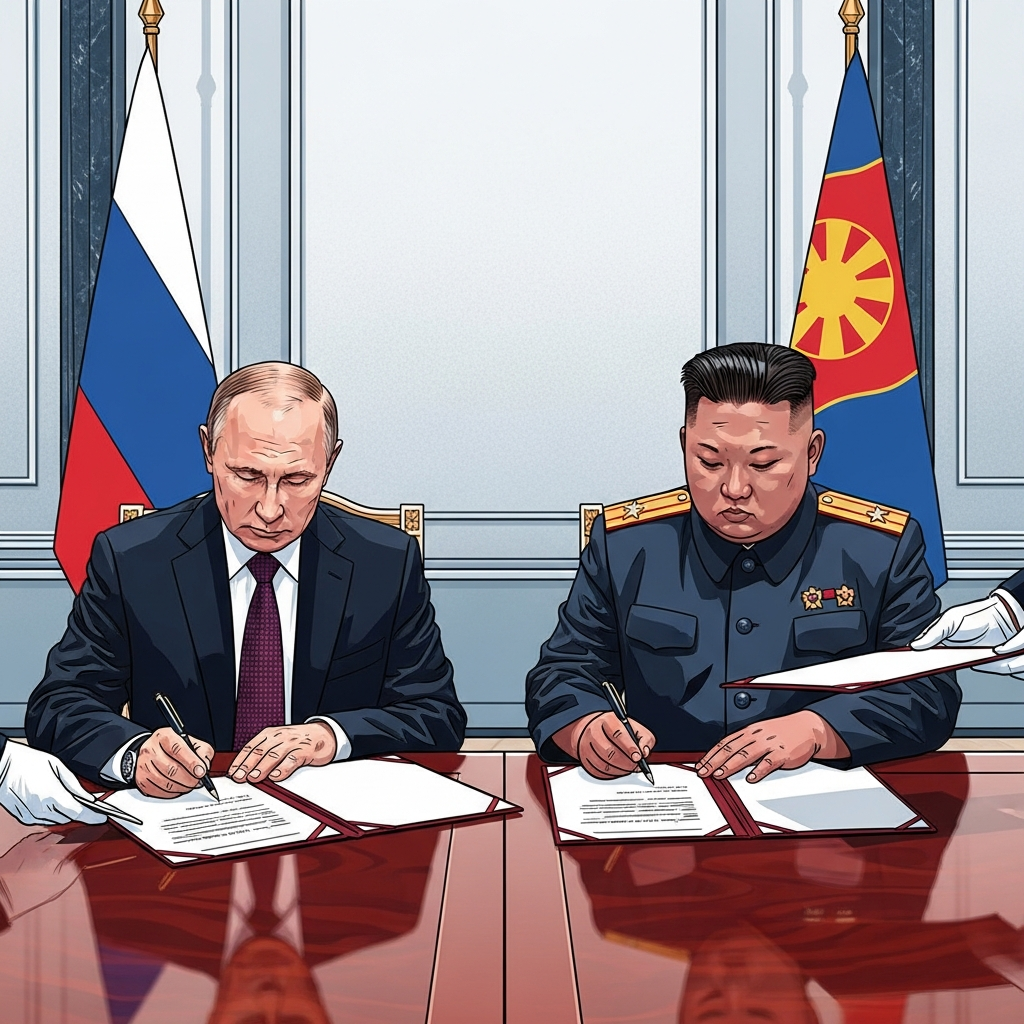
The geopolitical landscape shifts as Russia and North Korea cement a significant “long-term” military cooperation agreement. This landmark deal, set to span from 2027 to 2031, solidifies an increasingly defiant alliance between Pyongyang and Moscow. It signals a deepening strategic partnership, forged against the backdrop of Russia’s ongoing full-scale invasion of Ukraine.
High-level Russian officials recently visited Pyongyang to finalize the new defense blueprint. Their presence underscored the urgency and strategic importance of this burgeoning axis. The agreement promises substantial military, political, and economic implications for both nations and the international community.
A Deepening Alliance: The 2027-2031 Defense Blueprint
Russia’s Defense Minister, Andrei Belousov, led a delegation to North Korea, engaging in critical discussions with leader Kim Jong Un and other top officials. Belousov officially confirmed an understanding with North Korea’s Defense Ministry to place their military cooperation on a “stable, long-term footing.” He announced plans to sign a detailed cooperation strategy for the period of 2027-2031 later this year. This latest agreement builds upon a mutual defense pact already inked by Moscow and Pyongyang in June 2024. That earlier treaty reportedly obligates both nations to provide immediate military assistance should either be attacked.
The visit also saw Russia’s parliamentary speaker, Vyacheslav Volodin, in attendance, emphasizing the broad scope of this strategic partnership. Images released by Russia’s Defense Ministry depicted Belousov embracing Kim Jong Un, a powerful symbol of their rapidly intensifying ties. The exchange of high-level diplomatic and military figures highlights a shared commitment to bolster their respective defense capabilities and influence on the global stage.
Pyongyang’s Crucial Role in Russia’s Ukraine Offensive
North Korea’s support for Moscow’s war effort in Ukraine has become increasingly vital. Pyongyang has reportedly supplied Russia with thousands of troops, along with a continuous flow of missiles and munitions. This military aid has been instrumental in sustaining Russia’s offensive, particularly in key operational areas. A specific example of this collaboration was the deployment of North Korean troops to Russia’s western Kursk region. These forces played a critical role in fending off a months-long counter-offensive by Ukrainian forces.
During his visit, Defense Minister Belousov publicly recognized these contributions. He presented military awards to North Korean servicemen who had participated in the Kursk operation. Volodin further lauded the North Korean soldiers, stating they fought “shoulder to shoulder with our soldiers and officers, liberating Russian soil from the Ukrainian Nazis.” North Korea has also erected a memorial in Pyongyang dedicated to its soldiers killed fighting in Ukraine, a testament to their direct involvement. Russian President Vladimir Putin himself sent a telegram to Kim Jong Un to mark the memorial’s opening, expressing gratitude for the efforts in reclaiming the Kursk region for Russia.
The Cost of Loyalty: North Korean Casualties in Ukraine
While details on North Korean troop casualties are scarce, estimates suggest a significant human cost. South Korea, for instance, estimated in September of the preceding year that as many as 2,000 North Korean soldiers may have been killed while fighting for Russia. This grim figure underscores the direct and substantial commitment Pyongyang has made to Moscow’s war.
Adding to the severity, reports indicate that North Korean soldiers are instructed to commit suicide rather than be captured in battle. To date, only two North Korean troops have reportedly been captured alive by Ukrainian forces. This extreme directive highlights the profound loyalty expected from these soldiers and the tightly controlled nature of their involvement. Such a high casualty rate and strict military code underscore the depth of North Korea’s military engagement and the strategic importance Moscow places on its assistance.
Strategic Gains: What North Korea Receives in Return
This deepened Russia-North Korea military cooperation is far from a one-sided affair. Analysts widely suggest a significant “quid pro quo” arrangement underpins this strategic partnership. In exchange for its critical military support, North Korea is believed to be receiving substantial benefits from Russia. These include crucial financial assistance, advanced military technology, and vital supplies such as food and energy.
This support is paramount for Pyongyang, as it offers a lifeline against stringent international sanctions imposed over its banned nuclear programs. The influx of financial aid and resources helps North Korea circumvent these restrictions, bolstering its economy and military capabilities. Furthermore, access to advanced Russian military technology could significantly enhance North Korea’s own defense systems, particularly its missile and nuclear programs. This mutual dependency strengthens both regimes, allowing them to collectively defy international pressure and pursue their strategic objectives.
Geopolitical Fallout: Challenging Global Stability
The Russia-North Korea alliance carries profound geopolitical implications, directly challenging existing international norms and stability. This long-term defense pact raises concerns about the effectiveness of global sanction regimes, particularly those targeting North Korea’s nuclear ambitions. The partnership provides a clear pathway for Pyongyang to bypass restrictions, potentially accelerating its military development.
This strategic alignment also creates a more volatile security environment, particularly in East Asia and Eastern Europe. The explicit military cooperation and mutual defense clauses signal a solidification of an axis that stands in direct opposition to Western-led alliances. This move could encourage other revisionist states and destabilize regional balances of power. The ongoing hostilities in Ukraine, coupled with this renewed alliance, indicate a significant shift in global power dynamics.
Frequently Asked Questions
What is the new Russia-North Korea military cooperation agreement?
Russia and North Korea have solidified a “long-term” military cooperation agreement, set to span from 2027 to 2031. This builds on a mutual defense pact signed in June 2024. The new deal was confirmed during a high-level Russian delegation’s visit to Pyongyang, led by Defense Minister Andrei Belousov. It covers extensive military, political, and economic collaboration, signaling a deeper strategic alignment between the two nations amidst global tensions.
How has North Korea supported Russia in the Ukraine war?
North Korea has provided substantial military support to Russia’s war effort in Ukraine. This includes supplying thousands of troops, along with a significant quantity of missiles and munitions. North Korean forces reportedly played a critical role in repelling Ukrainian counter-offensives in the Kursk region. Russia’s Defense Minister, Andrei Belousov, awarded North Korean servicemen for their involvement, and a memorial has been erected in Pyongyang for those killed in the conflict, underscoring their direct participation.
What are the benefits for North Korea in strengthening its alliance with Russia?
The intensified alliance provides significant advantages for North Korea, particularly in circumventing stringent international sanctions. In exchange for its military assistance to Russia, North Korea reportedly receives crucial financial aid, advanced military technology, food, and energy. This support is vital for Pyongyang, bolstering its economy and military capabilities, especially its banned nuclear and missile programs. The partnership offers a lifeline that helps North Korea defy international pressure and pursue its strategic goals.
Russia-North Korea Pact: A New Chapter in East-West Tensions
The agreement for “long-term” military cooperation between Russia and North Korea marks a pivotal moment in contemporary geopolitics. It signifies a robust and increasingly defiant partnership that promises to reshape international relations and security architectures. This alliance, cemented by high-level visits and mutual defense commitments, highlights a strategic convergence driven by shared interests and a collective challenge to the existing world order. As the details of the 2027-2031 defense plan unfold, the global community will closely monitor the implications of this solidified axis on regional stability and broader East-West tensions.