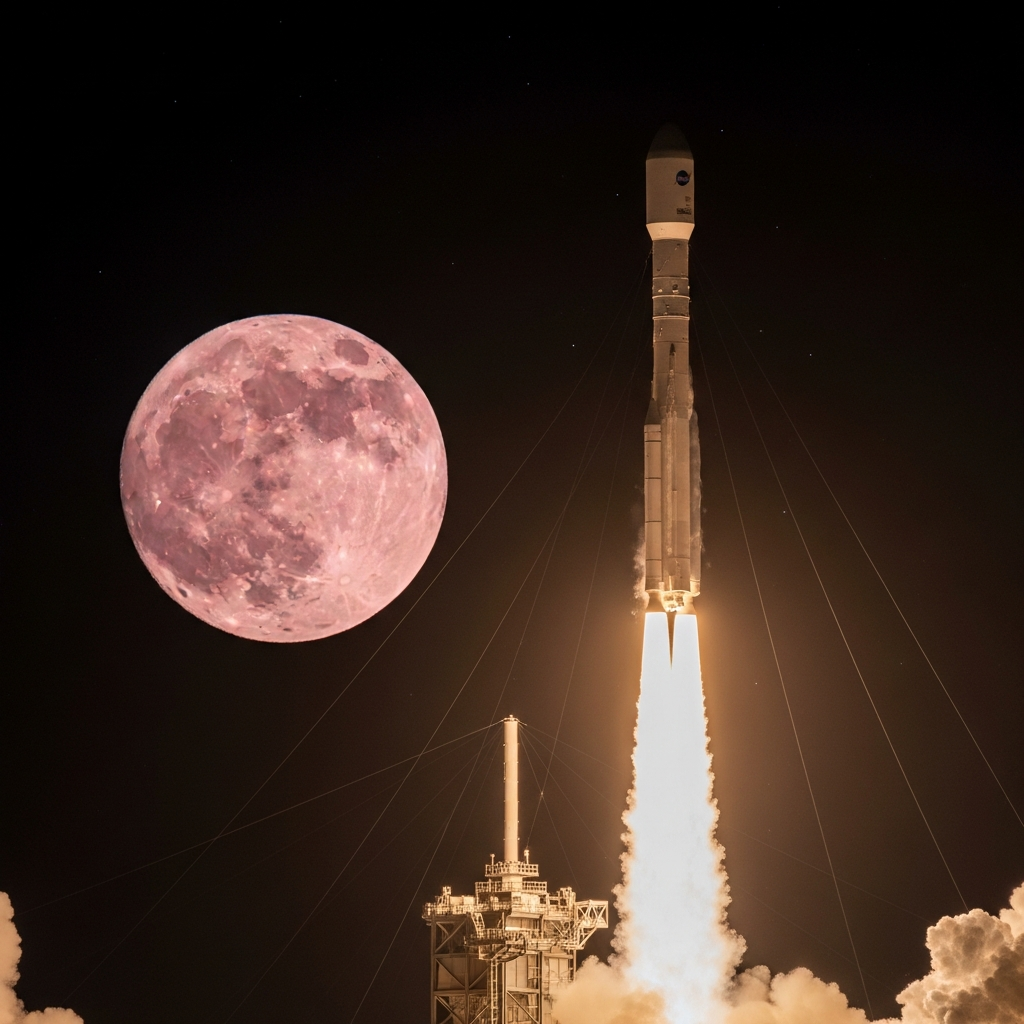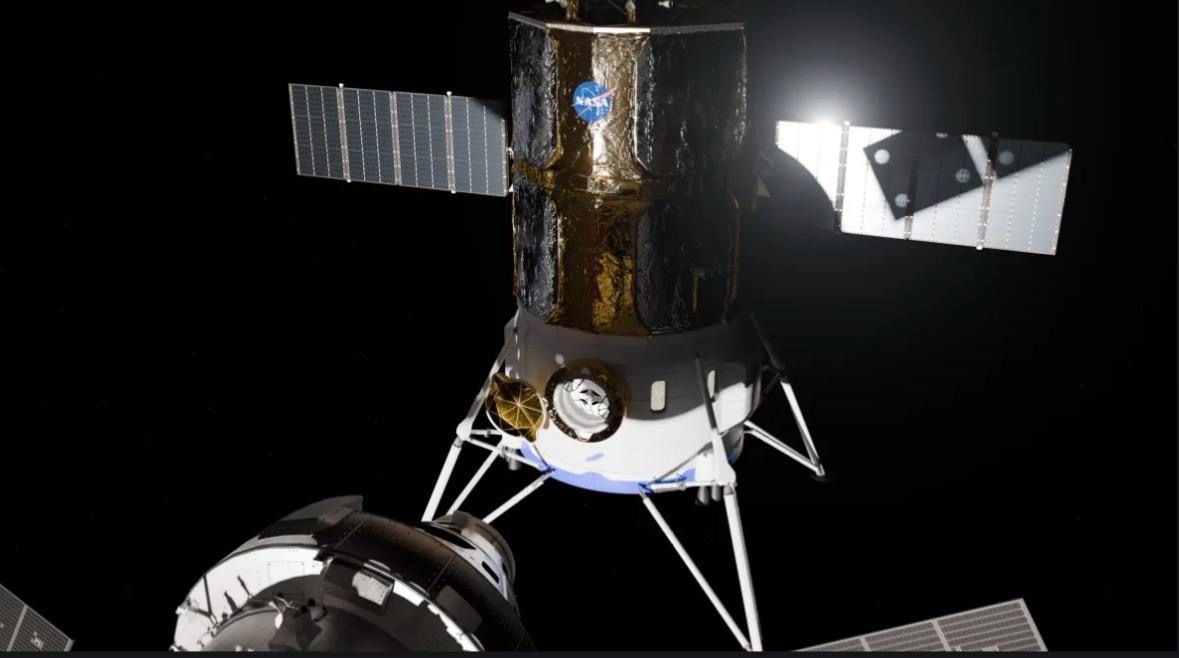
The artemis III mission plan has undergone a significant strategic reconfiguration, shifting from a direct lunar landing to a complex Low Earth Orbit (LEO) testing phase designed to validate commercial lunar landers. This pivot, detailed by NASA officials during a recent press conference at Kennedy Space Center, transforms the mission into a high-stakes orbital demonstration that will serve as the ultimate “tiebreaker” between two aerospace giants: SpaceX and Blue Origin.
Key Takeaways
- Strategic Pivot: Artemis III is no longer a direct lunar landing mission but a two-week LEO demonstration to test docking and life support.
- The Tiebreaker: The mission’s primary goal is to evaluate Blue Origin’s Blue Moon and SpaceX’s Starship to determine which will support the Artemis IV lunar landing in 2028.
- Launch Timeline: NASA is targeting a Summer 2027 launch window, though internal memos suggest the program is currently facing a 90-day delay.
- Complex Rocketry: The mission will require the coordinated use of three massive launch vehicles: NASA’s Space Launch System (SLS), Blue Origin’s New Glenn, and SpaceX’s Starship.
- Risk Mitigation: By conducting docking maneuvers in LEO rather than deep space, NASA can ensure crew safety and allow for a much faster return to Earth if technical failures occur.
- Blue Origin BE-7 Engine Qualification: The successful testing of the engines that will power the Blue Moon lander is critical for the New Glenn launch.
- SpaceX Starship/Orion Integration: By early 2027, SpaceX is expected to complete the integration of the Starship docking system and deliver a cabin simulator to NASA.
- Uncrewed Lunar Demonstrations: Before the crewed Artemis IV mission, both companies are expected to conduct uncrewed lunar landing demonstrations—SpaceX targeting late 2027 and Blue Origin targeting early 2028.
- The Artemis IV Decision: The ultimate catalyst will be the data harvested during the Artemis III LEO docking tests. This data will lead to the final selection of the lander that will carry the first humans to the lunar south pole in 2028.
- www.scientificamerican.com
- www.space.com
- payloadspace.com
- www.space.com
What Happened: A New Architecture for Artemis III
On October 23, 2026, NASA officials laid out a comprehensive concept of operations for the Artemis III mission, signaling a major shift in how the agency intends to reach the lunar surface. During a press conference at Kennedy Space Center that lasted over two hours, Jeremy Parsons, NASA’s Artemis program manager, explained that the agency is undertaking what is likely the most complicated launch campaign in history.
Instead of a single rocket carrying astronauts directly to the moon, the new Artemis III mission plan utilizes a multi-vehicle approach in Low Earth Orbit. According to Parsons, the sequence begins with Blue Origin’s New Glenn rocket lifting off from Florida’s Space Coast to deliver the Blue Moon lunar lander into LEO. Following this, NASA’s Space Launch System (SLS) will launch the Orion spacecraft, carrying a crew of four: NASA astronauts Randy Bresnik, Andre Douglas, and Frank Rubio, alongside European Space Agency (ESA) astronaut Luca Parmitano.

Once Orion is deployed into a highly elliptical orbit, it will maneuver into a stable altitude of approximately 345 miles (555 km). The crew will then spend two days conducting systems checks before attempting a critical docking maneuver with the Blue Moon lander on Flight Day 3. This encounter is designed to be intensive; the crew will enter the lander to evaluate environmental controls, life support systems, and atmospheric pressure stability.
Following the Blue Moon phase, the mission enters its second critical test. Around Flight Day 6, SpaceX will launch the Starship upper stage, which features a specialized docking adapter. On Flight Day 8, Orion will rendezvous with Starship at an altitude of roughly 237 miles (381 km). Unlike the Blue Moon encounter, the Starship demonstration will be shorter—lasting approximately two hours—and the crew will remain inside the Orion capsule, providing data on the physical forces of docking without entering the SpaceX vehicle.
Why It Matters: The High-Stakes “Tiebreaker”
This reconfiguration is not merely a technical adjustment; it is a fundamental shift in NASA’s procurement and risk management strategy. For years, the agency has worked toward a single lunar landing, but the complexity of modern commercial landers has necessitated a more modular, competitive approach.
By utilizing Artemis III as a testing ground in LEO, NASA is effectively running a live-fire competition. The data gathered during these docking maneuvers and life-support evaluations will dictate which provider—SpaceX or Blue Origin—will be awarded the primary contract for the Artemis IV lunar landing in 2028.
NASA Administrator Jared Isaacman emphasized this need for flexibility during the press conference, stating that the agency has “no intention of surrendering a viable path to the surface before the data and compels us to do so.” This approach allows NASA to preserve “optionality,” ensuring that if one provider faces insurmountable technical hurdles, the other remains a flight-ready alternative for the 2028 goal.
Furthermore, the shift to LEO significantly lowers the risk to human life. In a deep-space mission, a failure during docking or life-support testing could be catastrophic. In LEO, the Orion spacecraft can return to Earth much more quickly, providing a safety net that is unavailable during lunar-distance operations.
Deep-Dive: Technical Specifications and Mission Logistics
To facilitate this LEO-centric mission, NASA has had to modify existing hardware. Most notably, the SLS rocket for Artemis III will no longer carry its standard upper stage. Because the mission does not require the massive velocity needed to escape Earth’s gravity for a lunar transit, the core stage alone provides sufficient performance to reach the required LEO orbit. This modification is part of a broader effort to streamline the mission’s complexity.
Comparative Analysis of Lunar Lander Candidates
The two primary contenders for the Artemis IV mission offer vastly different technical profiles and operational philosophies. The following table summarizes the key differences as reported by NASA and technical analysts.
| Feature | SpaceX Starship (HLS) | Blue Origin Blue Moon (MK2) |
|---|---|---|
| Artemis III Configuration | Bare-bones V3 upper stage; no crew cabin | Complete test vehicle; includes cabin and partial life support |
| Primary Technical Hurdle | Complex orbital cryogenic refueling logistics | Infrastructure restoration at LC-36 and New Glenn flight readiness |
| Docking Philosophy | Short (2-hour) external docking test | Extended (2-day) internal systems and entry test |
| Lunar Landing Method | Starship “pushes” Orion to the moon from Earth orbit | Orion meets Blue Moon in lunar orbit |
| Target Uncrewed Landing | Late 2027 | Early 2028 |
The SpaceX Challenge: Refueling and Scale
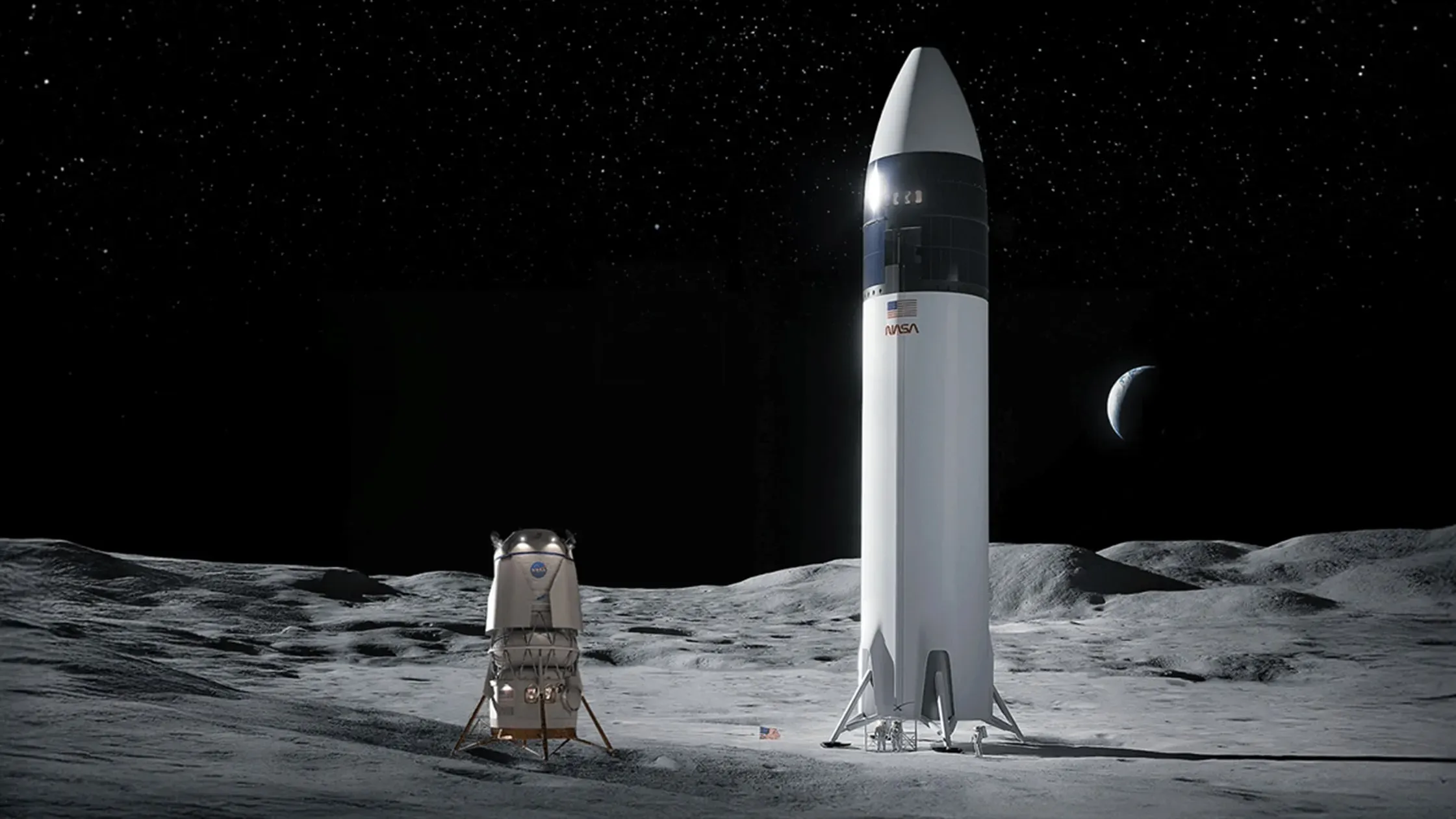
SpaceX’s approach relies on the massive scale and power of the Starship megarocket. However, the technical requirements for a lunar landing are immense. To reach the moon, the Starship Human Landing System (HLS) will eventually require complex orbital refueling. Industry estimates suggest that as many as a dozen “tanker” launches may be required to top off the tanks of a single lunar-bound Starship. While the Artemis III version of Starship is a “bare-bones” V3 upper stage without a crew cabin, it is a vital step in proving the vehicle’s ability to perform precise orbital maneuvers and docking.
The Blue Origin Path: Integrated Systems Testing
Blue Origin is taking a more integrated approach for the Artemis III test. Their Blue Moon MK2 lander, standing 52 feet (16 meters) tall and powered by three BE-7 engines, is intended to be a more complete representation of a lunar vehicle. By allowing astronauts to actually enter the lander during the LEO phase, NASA can test the “human element” of the mission—checking how astronauts interact with the life support, guidance, and communication systems in a zero-gravity environment. This provides a much more realistic simulation of the eventual 2028 landing.
What It Means for the Space Industry
For stakeholders in the aerospace and defense sectors, the Artemis III mission plan represents a watershed moment in the transition from government-led to commercially-integrated space exploration.
For Investors: The competition between SpaceX and Blue Origin is intensifying. The success or failure of these LEO tests will have massive implications for the long-term valuation and contract stability of both companies. A successful Starship docking could cement SpaceX’s dominance in heavy-lift lunar logistics, while a successful Blue Moon test could validate Blue Origin’s highly integrated, systems-first approach.
For Engineers and Developers: The mission highlights the critical importance of interoperability. NASA is no longer just building rockets; it is building an ecosystem where Orion, SLS, New Glenn, and Starship must all function as a single, cohesive unit. The focus on “interrelated operations” means that standardizing docking adapters, communication protocols, and life-support interfaces is now a top priority.
Counterpoints and Open Questions
Despite the detailed roadmap provided by NASA, several significant risks and unknowns remain.
First, the timeline is under immense pressure. While NASA is targeting a Summer 2027 launch, an internal memo from Administrator Jared Isaacman recently revealed that Artemis III is approximately 90 days behind its original schedule. Supply chain issues regarding the lunar landers have been cited as a primary cause for these delays.
Second, the reliability of the launch vehicles is not guaranteed. Blue Origin faces the logistical hurdle of restoring its launch facility at Cape Canaveral (LC-36) following a rocket explosion in May. While the company aims to return the New Glenn to flight by late 2026, any further delays would jeopardize the Artemis III window. Similarly, while SpaceX has achieved orbital entry with Starship, the vehicle has a history of “hiccups,” including several explosions during previous test flights.
Finally, there is the issue of communication. Operating a complex, multi-vehicle mission in Low Earth Orbit creates a potential bottleneck. Unlike deep-space missions that rely on the Deep Space Network (DSN), LEO missions must manage high-frequency data transfers and command links without the same level of dedicated infrastructure, raising questions about how NASA will maintain continuous control during the critical docking windows.
What Happens Next: The Road to 2028
As NASA moves toward the 2027 launch window, several key milestones will serve as indicators of mission readiness:
Frequently Asked Questions
What is the main difference between Artemis II and Artemis III?
Artemis II was a deep-space flyby mission designed to test the Orion spacecraft’s ability to travel around the Moon and return to Earth. In contrast, the reconfigured Artemis III mission is a Low Earth Orbit (LEO) mission. Its primary purpose is not to visit the Moon, but to test the interoperability and docking capabilities of NASA’s Orion capsule with commercial landers from SpaceX and Blue Origin.
Who are the astronauts assigned to Artemis III?
According to NASA, the crew slated for the mission includes Randy Bresnik, Andre Douglas, and Frank Rubio from NASA, and Luca Parmitano from the European Space Agency (ESA). These astronauts will be responsible for conducting the critical systems tests and docking maneuvers in orbit.
Why is NASA testing landers in Earth orbit instead of on the Moon?
Testing in Low Earth Orbit (LEO) is a risk-reduction strategy. If a technical failure occurs during docking or life-support testing in LEO, the crew can return to Earth much more quickly and safely than if they were in deep space near the Moon. This allows NASA to gather vital data on the landers and the crew’s ability to work with them in a controlled, safer environment.
When will humans actually land on the Moon again?
While Artemis III is a critical testing phase, it is not the landing mission. NASA is targeting the Artemis IV mission, currently slated for 2028, to be the first crewed mission to perform a lunar touchdown since the Apollo era.
Closing
The Artemis III mission plan represents a fundamental evolution in human spaceflight. By pivoting to a Low Earth Orbit testbed, NASA is attempting to bridge the gap between government-led exploration and a commercial lunar economy
References
Featured image: (Image credit: Blue Moon) — via Space