The recent two-week ceasefire between the United States and Iran, agreed on April 7, 2026, marked a critical pause in a conflict that had ravaged the Middle East for weeks. This fragile truce, while celebrated by both sides as a strategic victory, truly represented a mutual acknowledgment of unsustainable costs. Despite the underlying logic pushing for de-escalation, high-stakes peace talks in Islamabad, Pakistan, ultimately failed to secure a lasting agreement. This article delves into the complex dynamics that compelled a ceasefire, the formidable obstacles that plagued negotiations, and the lingering geopolitical implications.
The Imperative for a Pause: Escaping the “Dollar Auction”
Both the United States and Iran found themselves trapped in a conflict spiraling beyond initial expectations. Escalation carried punishing economic and human costs, compelling a strategic retreat from outright warfare.
The Costly Reality of Conflict
The war quickly devolved into what some strategists liken to a “dollar auction.” This game theory concept describes a scenario where players are drawn into unprofitable escalation, paying far more than the objective is initially worth. For the Trump administration, initial assumptions of a swift, inexpensive conflict with minimal Iranian retaliation proved false. As fighting continued, both sides sunk deeper, accruing immense costs for diminishing returns.
The human toll was devastating, with thousands of deaths reported across the region: over 3,000 in Iran, 2,020 in Lebanon, 23 in Israel, and dozens in Gulf Arab states. Economically, the war triggered a global energy shock. U.S. inflation climbed to 3.3% annually by March, and Brent crude prices soared, significantly impacting sectors like agriculture, where fuel costs more than doubled for some farmers. These mounting pressures created a powerful incentive to seek a cessation of hostilities.
Intra-War Deterrence and the Brink of Total War
A crucial, unspoken factor in this costly game was “intra-war deterrence.” Both the U.S. and Iran possessed the capacity to inflict extraordinary damage on each other. The United States wielded formidable airpower, while Iran demonstrated its ability to disrupt critical economic infrastructure around the Persian Gulf. This mutual destructive capability instilled a profound reluctance to deploy ultimate weapons.
President Trump’s public threat that “a whole civilization will die” if Iran did not capitulate was likely a bluff. Executing such a threat would have incurred catastrophic costs for the U.S. and endangered its Gulf allies, vulnerable to Iranian counterattacks. However, Trump’s unpredictable “madman” persona meant Iran could not entirely dismiss the threat. This delicate balance of mutual deterrence forced both sides to step back from the precipice, paving the way for the ceasefire and subsequent negotiations.
Islamabad Negotiations: A Fraught Path to Peace
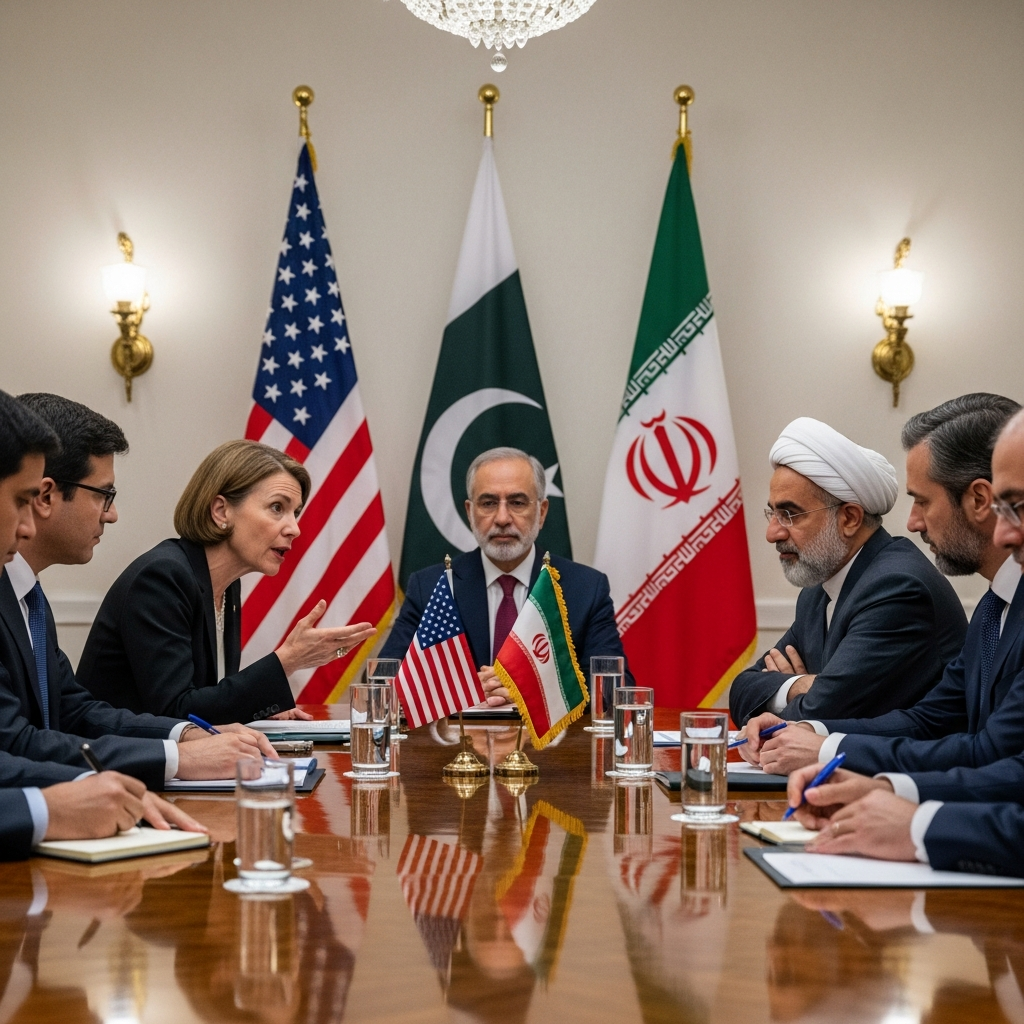
The ceasefire paved the way for historic, direct negotiations in Islamabad, Pakistan, marking the most significant U.S. contact with Iran since the 1979 Islamic Revolution. Yet, deep-seated mistrust and irreconcilable “red lines” ultimately doomed these efforts.
Historic Talks Amidst Deep Distrust
The talks were led by U.S. Vice President JD Vance and Iranian Parliament Speaker Mohammad Bagher Qalibaf, with Pakistani Prime Minister Shehbaz Sharif facilitating. Indirect support came from a broad international coalition, including officials from China, Egypt, Saudi Arabia, and Qatar. Despite the unprecedented nature of these face-to-face discussions, a palpable sense of distrust permeated the proceedings. Iranian officials, citing past experiences, expressed deep skepticism toward U.S. negotiators and warned of retaliation if attacked again. Iranian preconditions included compensation for war damages and the unfreezing of assets.
Sticking Points and Unreasonable Demands
For approximately 21 hours, negotiators grappled with fundamental disagreements. The United States demanded an “affirmative commitment” from Iran not to pursue nuclear weapons, citing Iran’s estimated 972 pounds of 60%-enriched uranium—a quantity experts deemed a short step from weapons-grade. Vice President Vance also repeated President Trump’s claim of having destroyed Iran’s Fordo and Natanz enrichment facilities, though this was disputed by the International Atomic Energy Agency (IAEA).
Iran, conversely, alleged that U.S. demands were “unreasonable.” Its delegation sought a guaranteed end to the war, control over the Strait of Hormuz, and a halt to fighting against its regional allies, particularly Israeli strikes on Hezbollah in Lebanon. These core points of contention proved insurmountable, leading Vance to announce that Iran “chosen not to accept our terms.”
The Strait of Hormuz: A Strategic Bottleneck
The strategic Strait of Hormuz emerged as Iran’s most significant leverage point, its closure profoundly impacting global energy markets and supply chains. Negotiations over its status were central to any potential peace deal.
Global Impact of Closure
Historically, about a fifth of the world’s traded oil passed through the Strait of Hormuz. Its closure since the war began largely cut off Persian Gulf oil and gas exports, triggering a massive global energy shock. Oil prices remained volatile, and global supply chains experienced significant disruption. Iran’s ability to close the strait, even with relatively simple means like drones and small speedboats, demonstrated formidable strategic power.
Contested Reopening Efforts
Despite the ceasefire, the strait saw significantly lower traffic, operating at only about 10% of its normal pace, with just 12 ships transiting since the agreement. The U.S. initiated mine-clearing operations, deploying destroyers like the USS Frank E. Peterson and USS Michael Murphy. President Trump asserted the U.S. was clearing the strait as a favor and claimed it would soon reopen. However, Iran’s Revolutionary Guards threatened to “deal severely” with military vessels and stated passage would only be granted to civilian vessels under specific conditions, leading to accusations of Iran charging unauthorized fees to tankers. This highlighted the deep-seated disagreements over the waterway’s future.
The Lebanon Front: A Parallel War
Even as a broader ceasefire was negotiated, the conflict between Israel and Iran-backed Hezbollah in Lebanon continued unabated, complicating peace efforts and escalating a humanitarian crisis.
Unacknowledged Conflict and Humanitarian Crisis
The ceasefire deal with Iran did not extend to Lebanon, a point vehemently denied by U.S. and Israeli officials. Consequently, Israel pressed ahead with massive air and ground operations against Hezbollah targets. Reports indicated over 2,000 deaths in Lebanon, with one day seeing more than 300 fatalities in Beirut alone due to Israeli strikes. The World Health Organization (WHO) highlighted the critical humanitarian situation, warning against the operational impossibility of evacuating hospitals in heavily bombed areas. Over 1.2 million Lebanese, primarily from Shia Muslim communities, were displaced.
Diplomatic Maneuvers and Divergent Interests
Israeli Prime Minister Benjamin Netanyahu initially declared, “There is no ceasefire in Lebanon,” maintaining that any peace agreement must dismantle Hezbollah’s weapons. The Lebanese government, despite banning Hezbollah’s military activities, struggled to exert control over the Iranian-backed group, illustrating the complex internal dynamics. Eventually, Israel and Lebanon agreed to separate, direct negotiations in Washington D.C., focusing on disarming Hezbollah and establishing peaceful relations. This put the United States in the challenging position of negotiating with both its adversary (Iran) and its key ally (Israel), whose interests in the region were not always aligned.
The Broader Geopolitical Chessboard
The conflict and subsequent ceasefire efforts drew significant international attention, revealing complex alliances and underlying geopolitical tensions.
International Reactions and Warnings
The global community reacted with alarm. Pope Leo XIV denounced the “delusion of omnipotence” driving the conflict, urging leaders towards peace. UN agency chiefs decried “sustained violations of the rules of war,” demanding accountability for civilian casualties. The U.S. warned China against providing weapons to Iran, citing intelligence of cooperation between China, Russia, Iran, and North Korea. Ukraine also played a role, helping partners counter Iranian-designed Shahed drones in the Middle East in exchange for weapons and energy. South Korea, heavily reliant on the Strait of Hormuz, dispatched a special envoy to Iran.
Washington’s Strategy and Domestic Echoes
Throughout the crisis, President Trump consistently threatened further military force, stating U.S. warships were being reloaded with “the best ammunition.” His administration also implemented targeted sanctions, terminating the permanent residency status of family members of prominent Iranian figures. Domestically, the conflict sparked debate, with former Vice President Kamala Harris describing it as a “war of choice.” The international landscape reflected deep divisions and urgent calls for de-escalation, even as diplomatic efforts faltered.
The Elusive “Draw”: What Lies Ahead?
The failure of the Islamabad talks to yield a comprehensive peace deal underscores the immense challenges. While an explicit war may have paused, fundamental issues remain unresolved.
Compromise and Can-Kicking
As anticipated by some analysts, the outcome of such protracted negotiations often involves a mix of compromise and “can-kicking.” While a stable agreement ending hostilities wasn’t achieved, the desire to avoid returning to the “hellish position” of escalating war persists. Future scenarios likely involve Iran retaining some nuclear program potential, albeit with potential new U.S. restrictions. Some U.S. sanctions may be lifted, while others continue. Passage through the Strait of Hormuz is expected to be restored, possibly on terms more advantageous to Iran.
The Iranian regime is likely to survive, albeit with its capabilities battered and leadership thinned. Washington may have achieved minimal military goals, but its larger strategic objectives of fundamentally altering Iran’s regional behavior remain elusive.
Scenarios for the Future
Looking beyond the immediate ceasefire, three scenarios emerge: a resumption of war, an extended ceasefire, or a comprehensive peace deal. A full resumption of hostilities would bring devastating consequences, re-igniting global economic shocks and widespread casualties. An extended ceasefire, characterized by minimal attacks from either side, appears a more plausible near-term outcome. However, a comprehensive peace deal, though desirable, faces a significant hurdle: a profound lack of trust on both sides. Historical precedents show that even intractable conflicts can be resolved when parties fear a return to war more than the compromises needed for peace. Without such a commitment, the region faces continued tensions, with covert operations and proxy conflicts likely to fill the void left by open warfare.
Frequently Asked Questions
What were the primary reasons the US and Iran entered ceasefire talks, despite their eventual failure?
Both the United States and Iran entered ceasefire talks due to the immense and unsustainable costs of the ongoing conflict. The war had devolved into a “dollar auction,” trapping both sides in escalating expenses for diminishing returns. There was also a strong element of “intra-war deterrence,” where both nations possessed the capacity to inflict extraordinary damage, compelling them to step back from total war. While the specific peace talks in Islamabad failed to produce a comprehensive deal, the underlying economic and strategic pressures that led to the initial ceasefire persisted.
Where were the direct US-Iran peace talks held, and who were the key international facilitators?
The direct, high-stakes negotiations between the United States and Iran were held in Islamabad, Pakistan. The U.S. delegation was led by Vice President JD Vance, and Iran’s delegation was headed by Parliament Speaker Mohammad Bagher Qalibaf. Pakistani Prime Minister Shehbaz Sharif played a crucial role in facilitating these discussions. Additionally, officials from China, Egypt, Saudi Arabia, and Qatar indirectly supported these important negotiations, highlighting the broad international interest in resolving the conflict.
What economic impacts did the conflict and the closure of the Strait of Hormuz have globally, and what are the implications for its future?
The conflict, particularly the closure of the Strait of Hormuz, triggered a significant global energy shock. Historically, the strait handles about 20% of the world’s traded oil, and its closure led to volatile oil prices and a substantial increase in fuel costs globally, contributing to a 3.3% annual U.S. inflation rate. For farmers, fuel costs more than doubled. While the U.S. initiated mine-clearing operations and expressed intentions to reopen the strait, Iran’s threats against military vessels and its demands for specific conditions for civilian passage suggest that control over this vital waterway remains a contentious issue, with future implications for global energy security and shipping.