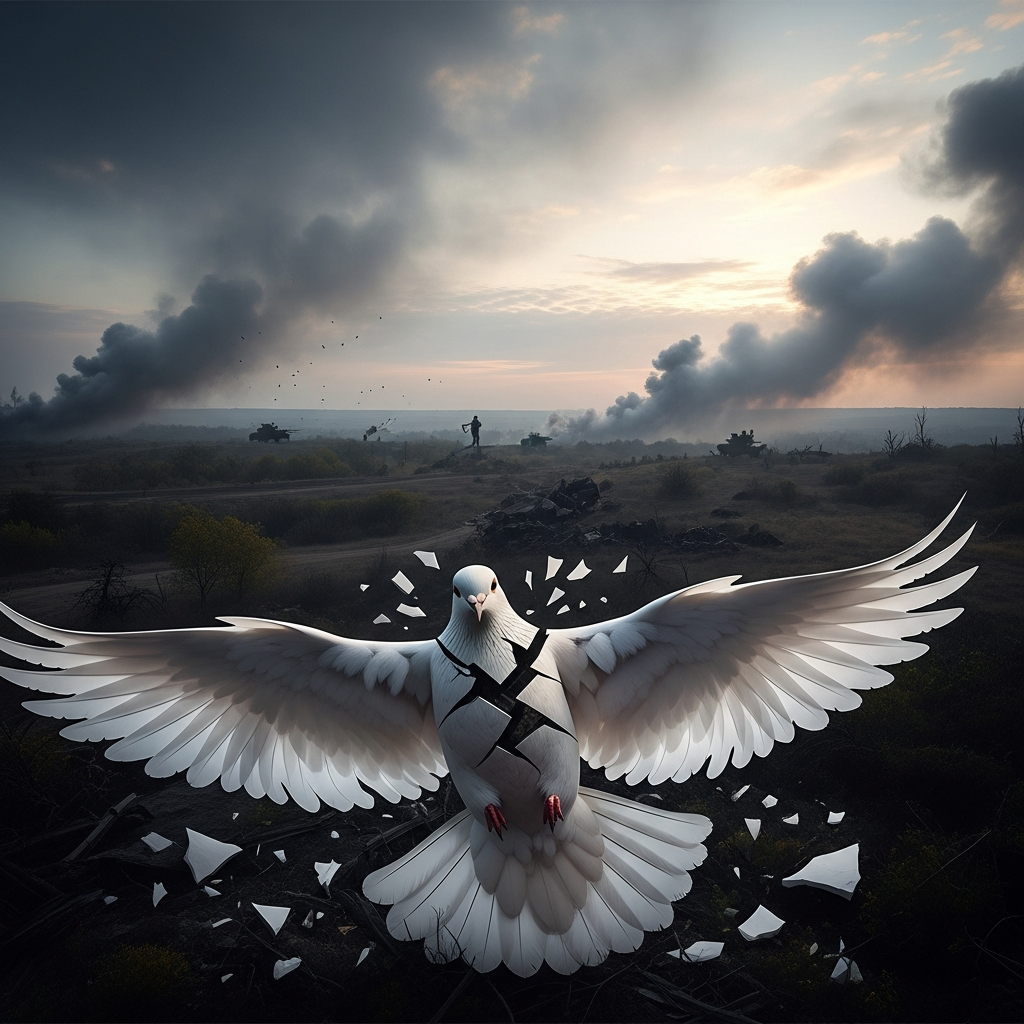
Amidst global calls for peace, an Orthodox Easter ceasefire in Ukraine was reportedly shattered within hours of its implementation on April 11, 2026. Ukraine’s military leadership has accused Russia of violating the humanitarian pause over 400 times, casting a stark shadow over the already fragile diplomatic landscape. This alleged breach underscores the deep mistrust and persistent hostilities that continue to define Europe’s deadliest conflict since World War II, despite intermittent efforts for de-escalation.
A Fragile Pause Shattered: The Easter Truce Violations
The 32-hour Orthodox Easter ceasefire, initiated by Russian President Vladimir Putin on April 9 and intended to run from 4:00 p.m. on April 11 through the end of April 12, quickly unraveled. Ukraine’s General Staff reported a staggering 469 ceasefire violations since the truce began on April 11. These alleged breaches included 22 enemy assault actions, 153 instances of shelling, 19 kamikaze drone strikes, and 275 FPV drone strikes. Beyond these, 101 combat clashes were also recorded along the front lines throughout the day.
Geographic hotspots for these alleged violations spanned critical areas. In the North Slobozhansk and Kursk directions, four clashes erupted, accompanied by 45 Russian attacks on Ukrainian troop positions and settlements, four of which involved potent multiple launch rocket systems. Further south, in the Slobozhansk direction, Russian forces reportedly attacked Ukrainian positions five times near Starytsia, Veterinarne, Prylipka, and Vovchanski Khutory. Intense fighting also persisted in the strategic areas of Kupyansk, Lyman, Slavyansk, and Kostyantynivka, highlighting a widespread disregard for the agreed-upon pause.
Russia, however, presented a conflicting narrative, accusing Ukraine of breaching the ceasefire. Russian authorities claimed Ukrainian drone strikes targeted locations in the Kursk and Belgorod regions, resulting in injuries to five people. The inability of independent media to verify either side’s claims leaves the true extent of the violations contested, yet the sheer volume of accusations from both parties indicates a complete failure of the truce.
A Pattern of Distrust: Past Ceasefires and Skepticism
The swift collapse of the Easter truce aligns with a troubling pattern of broken agreements and deep-seated skepticism. Ukrainian President Volodymyr Zelenskyy had previously urged for a similar holiday ceasefire, yet responded cautiously to Putin’s latest announcement. He reiterated Ukraine’s readiness for “mirror steps” and commitment to extending the truce, but issued a stern warning: any Russian violations would be met with a proportional response. Zelenskyy emphasized that an absence of Russian strikes by air, land, or sea would ensure no retaliatory action from Ukraine.
This caution is rooted in past experiences. Last year, a similar Orthodox Easter ceasefire was reportedly violated more than 2,000 times by Russia, fostering a profound distrust. Ukraine has consistently viewed Russia’s “theatrical” truces as mere public relations stunts or tactical maneuvers designed to precede provocations rather than genuine peace initiatives. Zelenskyy himself had previously rejected what he termed Putin’s “playing at peace,” advocating instead for more substantial, longer-term ceasefires of at least 30 days.
Humanitarian Cost & Drone Warfare
The human toll of this conflict continues to escalate, profoundly impacted by the pervasive use of drone warfare. A United Nations report highlighted a grim reality: civilian casualties in Ukraine doubled in March 2026, primarily due to escalating short-range drone attacks. At least 211 people were killed and 1,206 injured in March alone, demonstrating the devastating effectiveness and widespread impact of these weapons, even as humanitarian truces are discussed. This underscores the urgent need for a cessation of hostilities, as even temporary pauses fail to alleviate the immense suffering.
Hours leading up to the Easter truce were marked by intense hostilities, further diminishing hopes for its success. Russia reportedly launched approximately 160 drones at Ukraine, causing four fatalities in the east and south, and injuring dozens. Concurrently, Ukraine conducted its own drone strikes, igniting a fire at an oil depot and damaging residential buildings in Russia’s Krasnodar region. These pre-truce escalations underscore the deep-seated animosity and the challenge of establishing even temporary peace.
Diplomatic Deadlock and Lingering Tensions
Beyond the battlefield, diplomatic efforts to resolve the four-year-long conflict remain largely stalled. US-led peace talks have struggled to make progress, partly attributed to fundamental disagreements over territorial demands and, more recently, the “war in the Middle East.” Ukraine has proposed freezing the conflict along current front lines, a proposition vehemently rejected by Russia. Moscow insists Ukraine must relinquish all territory it presently controls in the Donetsk region – a demand Kyiv deems unacceptable and a non-starter for meaningful negotiations. Kremlin spokesman Dmitry Peskov explicitly stated that Russia had no prior discussions with Ukraine or the United States regarding this specific Easter ceasefire, emphasizing its detachment from broader peace negotiations.
Glimmers of Cooperation: Prisoner Exchanges
Despite the widespread hostilities and diplomatic deadlock, a rare instance of cooperation offered a fleeting moment of hope. Just hours before the Easter truce was set to begin, both warring parties conducted a significant prisoner exchange. Mediated by the United Arab Emirates (UAE), 175 prisoners of war were exchanged by each side. This event highlights prisoner swaps as one of the few remaining areas where Russia and Ukraine can still find common ground and work together, offering a stark contrast to the continuous military confrontation.
The Broader Conflict Landscape
The Russia-Ukraine conflict, considered Europe’s deadliest since World War II, has claimed hundreds of thousands of lives and displaced millions. On the front lines, fighting has largely devolved into a near standstill. While Russia has achieved minor territorial gains, these have come at an exceptionally high cost. Conversely, Kyiv has managed to push back in the southeast. Analysis from the US-based Institute for the Study of War (ISW) indicates that Russian advances have been decelerating since late 2025. This slowdown is attributed not only to Ukrainian counter-attacks but also to Russia’s ban from using SpaceX’s Starlink satellites and Moscow’s efforts to block the Telegram messaging app. However, the ISW notes that the situation remains challenging for Ukraine in the Donetsk region, particularly around the cities of Kramatorsk and Sloviansk. Currently, Moscow occupies just over 19 percent of Ukraine’s territory, with the majority of these seizures occurring in the initial weeks of the conflict.
International Pressure and Future Truce Prospects
International pressure continues to mount for both Kyiv and Moscow to find a path to peace. The Trump administration, in particular, has exerted “intense pressure” on both sides. President Trump, after a meeting with President Zelenskyy, reportedly “changed his tune” on the war, criticizing Russia’s attacks and even threatening banking sanctions on Moscow. Vice President JD Vance explicitly warned that if a deal isn’t reached, the U.S. might “walk away from this process.”
In response, Russian Foreign Minister Sergey Lavrov indicated the Kremlin was “ready to reach a deal” with the U.S., though “some elements still needed to be fine tuned.” Russia consistently maintains its openness to a negotiated end to the war but publicly refuses concessions, routinely insisting that any ceasefire must address the “root causes” of the war, which Putin attributes to Ukraine and the West. This divergence in fundamental positions, coupled with deep mistrust, continues to make a lasting resolution elusive, overshadowing even the prospect of upcoming ceasefires, such as the one unilaterally declared by Putin for Russia’s Victory Day (May 8-10).
Frequently Asked Questions
What specific violations did Ukraine report during the Easter ceasefire?
Ukraine’s General Staff reported a total of 469 ceasefire violations since the truce began at 4:00 p.m. on April 11, 2026. These included 22 enemy assault actions, 153 instances of shelling, 19 kamikaze drone strikes, and 275 FPV drone strikes. Additionally, 101 combat clashes were recorded along the front lines. The violations were noted across multiple directions, including North Slobozhansk, Kursk, and South Slobozhansk, with fighting in areas like Kupyansk, Lyman, Slavyansk, and Kostyantynivka.
Who announced the Orthodox Easter ceasefire and what were its intended parameters?
The Orthodox Easter ceasefire was announced by Russian President Vladimir Putin on April 9, 2026. It was scheduled to commence at 4:00 p.m. local time on April 11 and last for 32 hours, through the end of April 12. Ukraine had previously called for a similar truce, with President Volodymyr Zelenskyy expressing a readiness for “mirror steps” and commitment to observing the ceasefire, albeit with a clear warning of proportional response to any Russian violations.
Why is there widespread skepticism regarding Russia’s ceasefire declarations?
Skepticism surrounding Russia’s ceasefire declarations stems from a consistent pattern of alleged violations and perceived tactical deception. Ukraine cites over 2,000 violations during the previous year’s Easter truce alone. Ukrainian leaders, including President Zelenskyy, have repeatedly characterized such truces as “theatrical” or “public relations stunts” rather than genuine moves toward de-escalation. This historical context of unfulfilled promises and continued hostilities fosters deep distrust, leading many to view these pauses as opportunities for Russia to regroup or prepare for further assaults, rather than commit to lasting peace.
Conclusion
The reported shattering of the Easter ceasefire on April 11, 2026, with Ukraine citing over 400 violations, sadly reinforces a grim reality in the ongoing conflict. It highlights the profound distrust between Kyiv and Moscow, where even humanitarian pauses intended for sacred holidays become battlegrounds of accusation and counter-accusation. As diplomatic efforts remain stalled and the human cost continues to mount—exacerbated by devastating drone warfare—the path to a genuine and lasting peace appears increasingly fraught with challenges. The world watches, hoping for a future where such truces are honored, and the fundamental steps toward de-escalation can finally take hold.