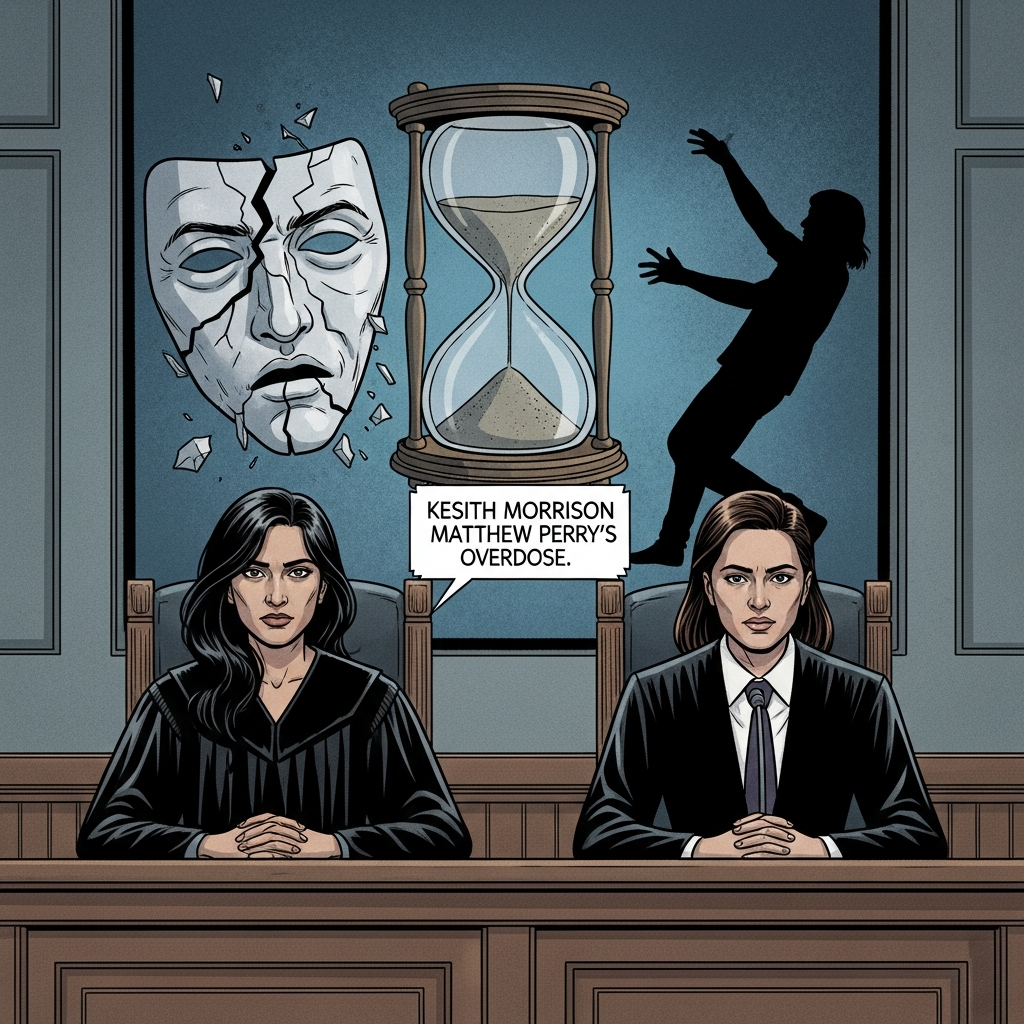
In a moment of profound emotional complexity, Matthew Perry’s stepfather, Keith Morrison, delivered a powerful statement to Jasveen Sangha, known as the “Ketamine Queen,” at her recent sentencing. Sangha received a 15-year prison term on April 8, 2026, in connection with the tragic ketamine overdose that claimed the life of the beloved “Friends” actor in October 2023. Morrison’s words, “I don’t hate you, I’m not angry at you. I feel bad for you,” echoed a unique blend of grief, empathy, and stern accountability for the drug dealer who supplied his stepson. This significant legal development brings a measure of closure to a heartbreaking saga, revealing the intricate web of addiction, supply, and loss.
A Stepfather’s Complex Grief and Message
Veteran “Dateline” correspondent Keith Morrison, who married Matthew Perry’s mother Suzanne in 1981, faced Jasveen Sangha in the courtroom with a perspective that transcended simple anger. His statement to Sangha, as reported by Today, was direct yet nuanced. “You’re a drug dealer,” Morrison asserted. “The fact is you supplied an addict.” This acknowledgement of Sangha’s role came alongside his unexpected declaration of not harboring hatred or anger. His words highlighted the devastating consequences of drug distribution while also conveying a sense of sorrow for Sangha’s own circumstances.
Morrison’s public comments underscored the “daily, grinding sadness and sorrow” that Perry’s family continues to experience. He spoke movingly of Matthew Perry’s unique “spark” and brilliant humor. “He was one of a kind,” Morrison shared, lamenting that Perry “should have had another act. Two more acts.” This poignant reflection emphasized the unfulfilled potential of a life cut short by addiction. Outside the courthouse, Morrison extended his empathy further, stating, “We miss Matthew dreadfully, of course, and I feel bad for the family of the perpetrator here as well. Nobody won today.” He also commended the judge for a “very fair” and “highly reasoned sentence.”
The Sentencing of the “Ketamine Queen”
Jasveen Sangha, 42, was handed a substantial 15-year federal prison sentence by U.S. District Judge Sherilyn Peace Garnett. This term exceeded the 14 years recommended by federal probation officials. The judge’s decision underscored Sangha’s significant role, stating she was “probably one of the most culpable in the series of defendants” involved in the case. Sangha’s sentencing included three years of supervised release, a ban on encrypted messaging applications, mandatory drug testing, mental health treatment, and electronic device searches. Her request for release before self-surrendering for a medical procedure was denied.
Sangha had pleaded guilty in September 2025 to five federal charges. These included one count of maintaining a drug-involved premises, three counts of ketamine distribution, and one count of ketamine distribution resulting in death or serious bodily injury. Prosecutors argued that Sangha operated a “high-volume drug trafficking business” from her North Hollywood residence since 2019, storing, packing, and distributing various illicit substances. They emphasized that she continued her operations even after learning of Perry’s death. “She chose profits over people, and her actions have caused immense pain,” prosecutors stated, criticizing her decision to “simply chose not to” stop.
Matthew Perry’s Tragic Passing and the Investigation
Matthew Perry was found unresponsive in a hot tub at his Los Angeles home in October 2023, at the age of 54. Authorities pronounced him dead at the scene. Weeks later, an autopsy report in December 2023 confirmed that his death resulted from the acute effects of ketamine. Contributing factors included drowning, coronary artery disease, and buprenorphine, a medication used to treat opioid use disorder. The investigation into Perry’s death quickly intensified, aiming to determine the source of the fatal dose.
In August 2024, law enforcement arrested Sangha and four other individuals in connection with the actor’s death. This marked a critical turning point in the pursuit of justice. The Morrison family released a statement obtained by Entertainment Weekly at the time, expressing their heartbreak but also their gratitude. “It has helped to know law enforcement has taken his case very seriously,” the statement read. “We look forward to justice taking its course and we’re grateful for the exceptional work… We’re hoping unscrupulous suppliers of dangerous drugs will get the message.”
The Broader Legal Landscape and Co-Defendants
The investigation into Matthew Perry’s death unveiled a wider network of individuals involved in supplying him with ketamine. Jasveen Sangha was not the only person to face legal consequences. Several other co-defendants have pleaded guilty, shedding light on the various avenues through which Perry obtained the drug.
Dr. Salvador Plasencia, for instance, pleaded guilty to distributing ketamine to Perry. Victim impact statements from Perry’s mother, Suzanne Morrison, and stepfather, Keith Morrison, described their pain as a “deep well.” They characterized Plasencia as “among the most culpable,” accusing him of being one of the “greedy jackals” who fed on their son’s vulnerability for “a few thousand dollars.” Perry’s father, John Perry, and stepmother, Debby Perry, also shared their profound loss, directly addressing Plasencia: “Matthew’s recovery counted on you saying NO.” Plasencia received a 30-month prison sentence.
Kenneth Iwamasa, Perry’s live-in personal assistant, also pleaded guilty. He admitted to repeatedly injecting Perry without medical training. According to Sangha’s plea agreement, 51 vials of ketamine were sold to Perry in October 2023 through a middleman, Erik Fleming, and delivered to Iwamasa, who then administered at least three intramuscular injections to Perry on the day he died. Iwamasa is scheduled for sentencing on April 22, 2026. Erik Fleming, the alleged middleman, pleaded guilty to conspiracy and distribution of ketamine resulting in death, with his sentencing set for April 29, 2026. Another medical doctor, Dr. Mark Chavez, also pleaded guilty to selling large quantities of liquid ketamine to Perry and received eight months of home detention and three years of supervised release. Federal prosecutors collectively accused all five defendants of “tak[ing] advantage” of Perry for “profit.”
Victim Impact Statements: A Chorus of Pain
The court hearings have been a forum for immense grief and a call for accountability. Beyond Matthew Perry’s family, another victim came forward to confront Jasveen Sangha. Kimberly McLaury delivered a victim impact statement, revealing that her brother, Cody McLaury, died in August 2019 from a mixed drug overdose with acute ketamine toxicity. She found communications with Sangha on his phone and directly texted Sangha: “The ketamine you sold my brother killed him.” In court, McLaury stated, “Had you stopped selling ketamine when I texted you, none of us would be here today.” This powerful testimony highlighted Sangha’s alleged pattern of continuing her drug dealing despite knowing its fatal consequences.
Sangha herself addressed the court during her sentencing, expressing remorse. She stated, “I shattered people’s lives” and “I wear my shame like a jacket,” acknowledging her “poor decisions.” However, prosecutors countered this, citing a recorded jail call from Christmas Day 2024 where Sangha allegedly discussed selling book rights and a “f*ing trademark.” They argued that this demonstrated a “striking lack of remorse,” concluding that Sangha “chose herself and profit” and was “without a doubt, the most culpable.”
Frequently Asked Questions
What was the outcome of Jasveen Sangha’s sentencing in the Matthew Perry case?
Jasveen Sangha, known as the “Ketamine Queen,” was sentenced to 15 years in federal prison on April 8, 2026. This sentence, handed down by U.S. District Judge Sherilyn Peace Garnett, exceeded the probation recommendation, reflecting Sangha’s significant role in supplying the ketamine that led to Matthew Perry’s death. She also received three years of supervised release and several conditions, including bans on encrypted messaging and mandatory drug testing.
Who are the other individuals charged in connection with Matthew Perry’s death?
Several other individuals pleaded guilty in connection with Matthew Perry’s passing. These include Dr. Salvador Plasencia (sentenced to 30 months), who supplied ketamine, and Kenneth Iwamasa, Perry’s personal assistant, who administered injections. Erik Fleming, a middleman in the drug distribution chain, and Dr. Mark Chavez, another medical doctor who supplied ketamine, also pleaded guilty. These individuals faced varying charges related to drug distribution and conspiracy.
What was Keith Morrison’s reaction to Jasveen Sangha’s sentencing?
Matthew Perry’s stepfather, Keith Morrison, expressed a complex mix of emotions during and after Sangha’s sentencing. He told Sangha directly, “I don’t hate you, I’m not angry at you. I feel bad for you,” while also asserting, “You’re a drug dealer… you supplied an addict.” Morrison spoke of his “daily, grinding sadness” over Perry’s death and also conveyed empathy for Sangha’s family, stating, “Nobody won today.” He praised the judge for a “highly reasoned” sentence.
The Continuing Quest for Justice
The sentencing of Jasveen Sangha marks a significant step in the ongoing legal fallout from Matthew Perry’s death. While it cannot bring back the beloved actor, it underscores the serious legal repercussions for those who profit from the addiction of vulnerable individuals. Keith Morrison’s dignified and multifaceted statement at the sentencing captured the profound tragedy. It highlighted the devastating impact of drug distribution, the complexities of grief, and the enduring hope for justice to deter “unscrupulous suppliers of dangerous drugs.” The legal proceedings continue to unfold, reminding us of the critical need for vigilance against the pervasive dangers of addiction and illicit drug trade.