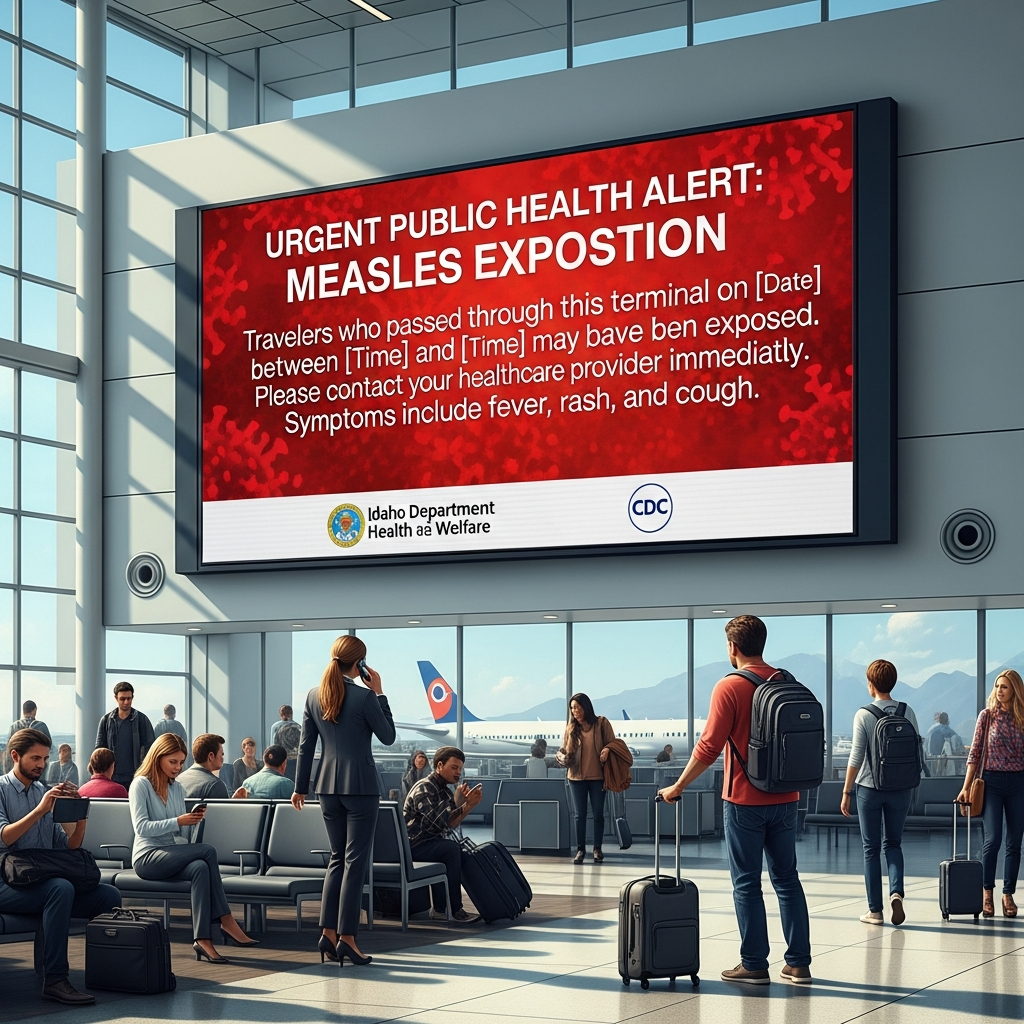
An urgent public health warning has been issued for travelers passing through Boise Airport following a confirmed measles exposure. Idaho health officials are alerting anyone who visited the airport on Sunday, March 29, between 1:30 a.m. and 7:40 a.m. to be vigilant for symptoms of this highly contagious virus. This critical advisory comes amidst a concerning rise in measles cases both nationally and globally, underscoring the serious health risks associated with insufficient vaccination rates, particularly within Idaho.
Understanding the Measles Threat: Highly Contagious & Serious
Measles is far more than just a simple childhood illness; it’s a severe viral infection that can lead to life-threatening complications. The virus is incredibly adept at spreading, primarily transmitting through the air. This occurs when an infected individual coughs, sneezes, or even simply talks. What makes measles particularly insidious is its ability to linger: the virus can remain viable and infectious in an unventilated room or area for up to two hours after an infected person has left. This characteristic highlights why public spaces like airports present significant exposure risks.
Initial symptoms of measles often mimic a common cold, making early detection challenging. These include a fever, a persistent runny nose, and a hacking cough. Patients frequently develop red, watery eyes (conjunctivitis). These preliminary signs are then followed by the distinctive measles rash, which typically starts on the face and behind the ears, then spreads downward across the body.
Serious Health Complications of Measles
While some experience a relatively mild course, measles can progress into a very serious infection for many. It is known to cause severe complications, including:
Pneumonia: A potentially deadly lung infection.
Brain infection (encephalitis): Can lead to permanent neurological damage.
Ear infections: Can result in permanent hearing loss.
Diarrhea and severe dehydration.
In the most tragic instances, measles can directly lead to death.
For these reasons, public health warnings like the one for Boise Airport should always be taken with utmost seriousness.
Who Is Most at Risk from Measles Exposure?
Anyone who has not been vaccinated against measles or has not previously had the disease is vulnerable to infection. However, certain groups face an elevated risk of both contracting measles and experiencing severe complications:
Unvaccinated individuals: This is the largest risk group.
Infants under 12 months old: These young children are generally not old enough to receive the routine MMR vaccine and are therefore unprotected.
Immunocompromised individuals: People with weakened immune systems, regardless of vaccination status, are at higher risk.
Idaho, unfortunately, finds itself in a particularly vulnerable position. The state has one of the lowest measles vaccination rates in the U.S. This local context amplifies the risk associated with any potential exposure events like the one at Boise Airport. State health authorities have recorded 23 measles cases since August 2025, impacting six distinct counties: Bonner, Bonneville, Boundary, Canyon, Kootenai, and Madison. Critically, data indicates that all reported Idaho cases involved patients who were either unvaccinated or whose vaccination status was unknown. This trend underscores the direct link between vaccination status and disease incidence.
The Broader Context: Global & National Outbreaks
The Boise Airport measles exposure isn’t an isolated incident; it reflects a broader global and national resurgence of the virus. Many countries, including popular tourist destinations, are currently experiencing significant measles outbreaks. Even within the United States, several regions are battling increased case numbers.
Our neighboring state, Utah, has reported a staggering 559 measles cases as of April 3, marking the second-highest count in the nation this year. This alarming trend nearby serves as a stark reminder of how quickly infectious diseases can spread, especially with modern travel. International and domestic air travel acts as a major vector for viral transmission, making airports critical hubs for potential exposure during outbreaks. The Idaho Department of Health and Welfare (IDHW) continuously monitors these trends to provide timely warnings and recommendations.
Protecting Yourself: The Power of the MMR Vaccine
The single most effective defense against measles is the Measles, Mumps, and Rubella (MMR) vaccine. This highly effective vaccine provides robust immunity against the virus, significantly reducing the risk of infection and severe illness. Public health experts strongly endorse the following vaccination schedule:
First dose: Recommended for children between 12 and 15 months of age.
Second dose: A booster is advised for children between 4 and 6 years old.
While infants under 12 months typically do not receive the routine MMR vaccine, there is a crucial exception for travel. Infants aged 6 to 11 months should receive a dose of the MMR vaccine if they are traveling internationally or to any area within the United States experiencing a large measles outbreak. Families planning such trips are strongly encouraged to consult their infant’s doctor at least two weeks prior to departure to ensure adequate protection. Discussions with a healthcare provider beforehand are vital for all travelers, especially those planning air travel, to confirm vaccination status and discuss any necessary precautions.
Immediate Actions if Potentially Exposed
If you were present at Boise Airport on Sunday, March 29, between 1:30 a.m. and 7:40 a.m., health officials urge you to take proactive steps:
- Monitor for Symptoms: Watch carefully for any signs of measles, including fever, runny nose, cough, red watery eyes, and especially a rash.
- Contact Your Doctor Immediately: If you believe you may have been exposed, or if symptoms develop, contact your healthcare provider right away. It is crucial to call ahead before visiting any clinic or emergency room. This allows medical staff to prepare and prevent further spread of the virus to other patients and staff.
- Inform Others: If you were traveling with others, ensure they are also aware of the potential exposure.
The IDHW and Boise Airport officials are collaborating to notify Idahoans who shared flights with the infected individual. However, general awareness is key, as the virus can remain airborne in public areas.
Traveling Safely in a World of Outbreaks
Given the current landscape of measles outbreaks, conscientious travel planning is more important than ever. Before any travel, particularly by air, consult with your doctor or healthcare provider. Discuss your itinerary, confirm your vaccination status, and inquire about any specific health advisories for your destination.
Vaccination Status: Ensure you and your family are up-to-date on all recommended vaccinations, especially the MMR.
Infant Travel: For infants 6-11 months traveling, confirm they receive an early MMR dose if appropriate.
Hygiene: Practice good hand hygiene, although measles is primarily airborne, general cleanliness helps.
Be Informed: Stay updated on health advisories for your travel destinations.
By taking these preventative measures, individuals can significantly reduce their risk of measles exposure and contribute to broader public health efforts to contain this dangerous virus.
Frequently Asked Questions
What are the immediate steps to take if you were at Boise Airport during the measles exposure?
If you were at Boise Airport on Sunday, March 29, between 1:30 a.m. and 7:40 a.m., it’s critical to monitor yourself for measles symptoms, which include fever, runny nose, cough, red watery eyes, and a rash. If symptoms develop, or if you believe you were exposed and are unvaccinated or immunocompromised, immediately call your doctor or healthcare provider. Do not visit a clinic or emergency room without calling first, as this allows staff to take precautions to prevent further transmission. The Idaho Department of Health and Welfare is actively notifying travelers who shared flights.
Who is most at risk from measles, and what are the vaccination recommendations?
The highest risk groups for measles are unvaccinated individuals, infants under 12 months who are too young for routine vaccination, and those with weakened immune systems. The MMR (Measles, Mumps, and Rubella) vaccine is highly effective. The first dose is recommended for children between 12 and 15 months, with a second booster dose between 4 and 6 years. For infants aged 6 to 11 months, an early MMR dose is recommended if they are traveling internationally or to an area with a large measles outbreak.
Given rising outbreaks, what travel precautions should I consider to avoid measles?
With measles outbreaks occurring globally and within the U.S., travelers, especially those flying, should consult their doctor or healthcare provider at least two weeks before their trip. Discuss your travel plans and confirm your MMR vaccination status is current. For infants 6-11 months, ask about an early MMR dose if traveling to high-risk areas. Staying informed about health advisories for your destination and practicing good hygiene are also important steps to minimize risk. Idaho’s low vaccination rates make local vigilance even more critical.
Remain Vigilant and Prioritize Public Health
The measles exposure at Boise Airport serves as a potent reminder of the ongoing threat posed by this highly contagious disease. With rising measles cases globally and in neighboring states, coupled with Idaho’s concerningly low vaccination rates, vigilance and proactive health measures are paramount. Prioritizing vaccination, understanding the symptoms, and knowing how to respond to potential exposure are essential steps each individual can take to protect themselves, their families, and the wider community. Always consult with a healthcare professional for personalized medical advice regarding measles or any health concerns.