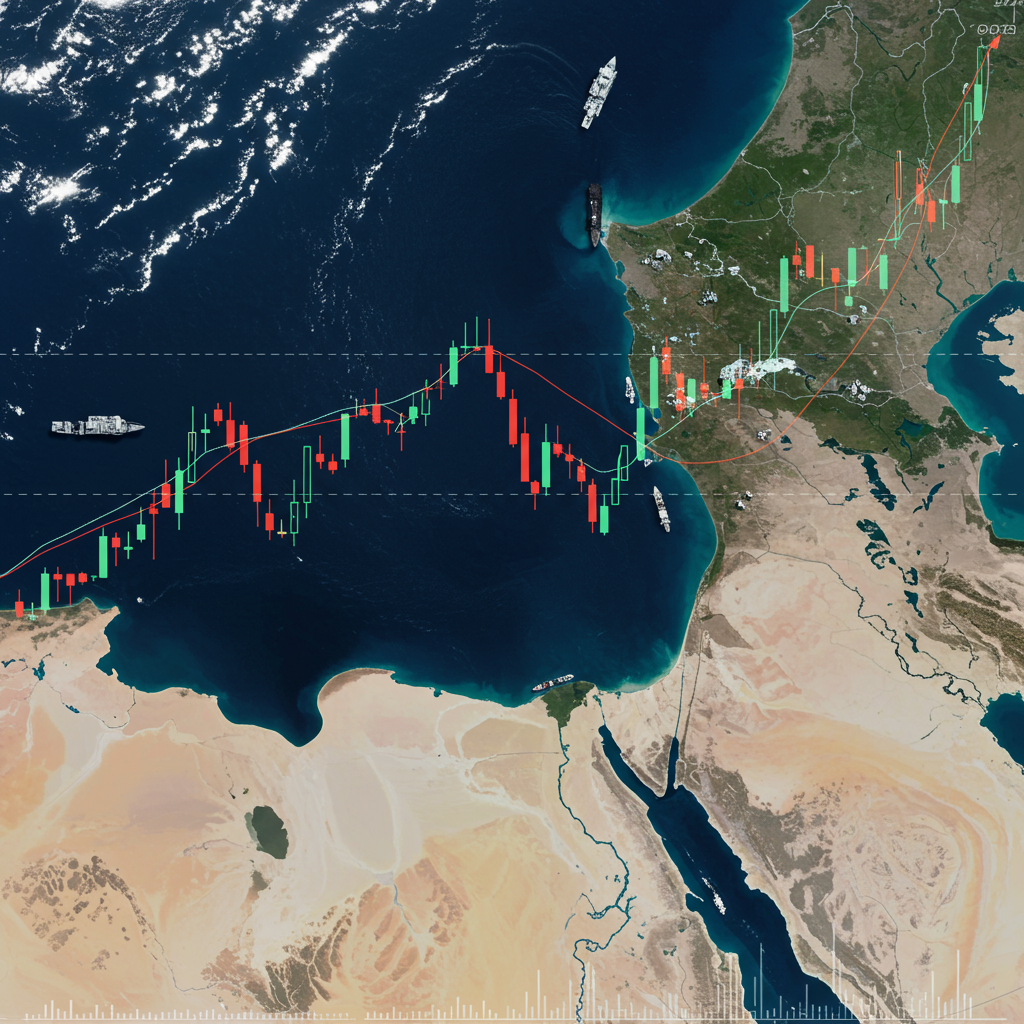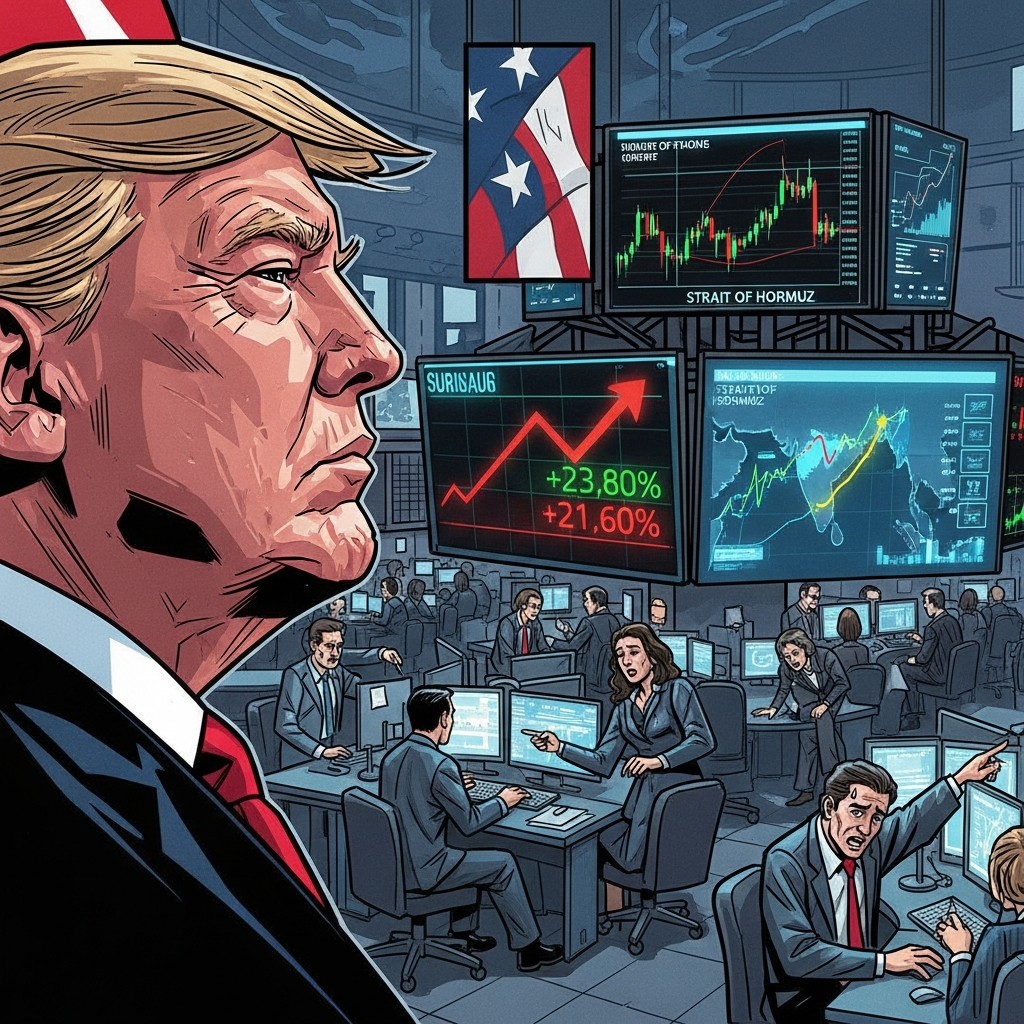
Global financial markets are navigating a tense geopolitical landscape as U.S. President Donald Trump’s critical deadline for Iran to reopen the Strait of Hormuz looms large on Tuesday, April 7, 2026. This ultimatum, coupled with Iran’s rejection of a ceasefire and a significant surge in oil prices, has created a climate of cautious trading across Asian markets and beyond. Investors are closely monitoring the unfolding situation, weighing potential military action against ongoing diplomatic efforts to stabilize the vital oil shipping route.
Global Markets Under Pressure: The Iran Ultimatum
The world watches as President Trump’s firm deadline for Iran to permit all shipping traffic through the Strait of Hormuz approaches. This pivotal waterway, essential for global energy flows, remains a flashpoint in the escalating conflict. Trump’s administration has threatened military action against Iranian power plants and bridges if the strait is not fully reopened. He stated the current deadline, set for Tuesday at 8 p.m. Eastern time, would be final, warning that “The entire country can be taken out in one night.” This stark warning follows several previous extensions since his initial ultimatum in late March.
Adding to the tension, Iran on Monday rejected the latest ceasefire proposal. Instead, Iranian officials demanded a permanent end to the war, seeking guaranteed security against future attacks. Concurrently, regional hostilities persist, highlighted by reports of an Israeli attack on an Iranian petrochemical plant. These developments underscore a volatile situation with profound implications for international stability and the global economy.
Asian Equities: A Mixed Picture
Asian markets largely saw cautious gains on Tuesday, reflecting the uneasy balance between geopolitical risk and underlying economic signals. Japan’s benchmark Nikkei 225, a key indicator for regional performance, showed a marginal gain of less than 0.1%, closing at 53,429.56 after a volatile session that saw early gains tempered. Australia’s S&P/ASX 200, however, demonstrated stronger momentum, rising 1.7% to 8,728.80.
South Korea’s Kospi also advanced, climbing 0.8% to 5,494.78, indicating resilient investor confidence in that market. The Shanghai Composite edged up 0.3% to 3,890.16. Trading in Hong Kong was closed for a holiday, limiting the overall regional picture. These varied performances highlight the nuanced responses of different Asian markets to the overarching geopolitical challenges.
Wall Street’s Tentative Gains
Across the Pacific, Wall Street also experienced an upward drift in stock prices. The S&P 500 rose 0.4% to 6,611.83, extending its momentum after its first winning week in six. The Dow Jones Industrial Average added 165.21 points, or 0.4%, closing at 46,669.88. The technology-heavy Nasdaq composite climbed 0.5%, reaching 21,996.34.
Individual stock performances were mixed but generally positive. Apple shares rose 1.1%, and Amazon gained 1.4%. However, Tesla slid 2.2%, and Microsoft fell 0.2%. Bank stocks demonstrated strength, with JPMorgan Chase rising 1.3%. Jamie Dimon, CEO of JPMorgan Chase, in his annual letter, cautioned that elevated asset prices could face a “dramatic impact on global markets” without sustained positive outcomes, reflecting broader market anxieties.
Oil Market Volatility: A Global Economic Ripple
The most immediate and dramatic impact of the escalating geopolitical tensions is evident in the energy markets. Oil prices continued their surge, exacerbating inflationary pressures worldwide. Benchmark U.S. crude jumped $2.41 to $114.82 a barrel, a significant increase from its pre-war price of below $70. Brent crude, the international standard, added $1.46 to $111.23 a barrel, also well above its roughly $70 price before the conflict began in late February.
The volatility in oil prices directly reflects uncertainty surrounding the duration of the war with Iran. More critically, it underscores concerns about how long Iran’s control over the Strait of Hormuz will slow the global flow of oil and natural gas. This waterway typically facilitates the shipment of a fifth of the world’s oil. Its disruption translates directly into higher costs for gasoline, which was nearly $4.12 per gallon in the U.S., diesel, and jet fuel. Consequently, transportation expenses for nearly all goods, including food, are rising. Countries heavily reliant on imported oil, particularly from the Middle East, face even greater economic strain due to these blockages in crude flow.
Broader Financial Indicators
Beyond equities and oil, other key financial indicators also showed the strain of the current environment. Treasury yields remained relatively steady, with the 10-year Treasury yield holding at 4.33%. This rate is notably higher than its 3.97% level from before the war, directly contributing to increased rates for mortgages and other loans for U.S. households and businesses. Such increases can act as a drag on overall economic growth.
In currency trading, the U.S. dollar edged up against the Japanese yen, strengthening to 159.86 yen from 159.62 yen. Conversely, the euro marginally weakened against the dollar, costing $1.1541, down from $1.1543. These currency fluctuations further illustrate the ripple effects of the Iran ultimatum across global finance.
Expert Analysis: Navigating Geopolitical Uncertainty
The research team in Singapore at Mizuho Bank, in their Mizuho Daily report, characterized Trump’s latest actions as an “escalation cycle that has now been extended several times since his first ultimatum in late March.” Their analysis emphasizes the differing perspectives involved, concluding that “hopes of a complete resolution to the conflict remains elusive while countries continue to work on bilateral solutions.” This insight highlights the complex nature of the crisis, suggesting that a quick, multilateral resolution is unlikely.
Despite the ongoing conflict, there are reports of diplomatic backchannels at play. Iranian and Omani officials are reportedly working on a mechanism for administering the Strait of Hormuz. This effort underscores the critical importance of keeping the strait operational for global trade, even amid high-stakes geopolitical tensions. The global economy’s dependence on this narrow passage for oil shipments necessitates continued, albeit challenging, dialogue and contingency planning.
Frequently Asked Questions
What is the significance of the Strait of Hormuz to the global economy?
The Strait of Hormuz is a narrow, strategically vital waterway situated between the Persian Gulf and the Gulf of Oman. It is arguably the world’s most important oil transit choke point, through which approximately one-fifth of the world’s total oil consumption typically passes. Any disruption or threat to shipping in the strait, like the current geopolitical tensions involving Iran, can severely impact global oil prices, energy supply chains, and the broader global economy, affecting everything from transportation costs to consumer goods prices.
How did specific Asian markets perform amidst the geopolitical tensions in early April 2026?
On Tuesday, April 7, 2026, Asian markets exhibited a mixed but generally cautious performance. Japan’s Nikkei 225 saw a marginal gain of less than 0.1%. In contrast, Australia’s S&P/ASX 200 rose more significantly by 1.7%, and South Korea’s Kospi advanced 0.8%. The Shanghai Composite also edged up 0.3%. These varied reactions indicate that while the underlying sentiment was one of caution due to the Iran ultimatum and soaring oil prices, some regional economies demonstrated resilience or specific market dynamics.
What are the broader economic impacts of escalating oil prices due to regional conflicts?
Escalating oil prices, driven by regional conflicts and disruptions to crucial shipping routes like the Strait of Hormuz, have widespread economic impacts. Directly, they lead to higher costs for gasoline, diesel, and jet fuel, increasing transportation expenses for nearly all goods. This inflationary pressure impacts consumer spending and reduces corporate profits. Countries heavily dependent on imported oil, particularly from the Middle East, experience severe economic strain, potentially leading to trade imbalances and reduced economic growth. Higher energy costs also contribute to rising input costs for industries, further fueling inflation.
Conclusion: Cautious Optimism Amidst Escalation
The global financial landscape in early April 2026 is undeniably shaped by the high-stakes Iran ultimatum and its profound impact on oil prices and Asian markets. While Wall Street and some Asian indices showed tentative gains, the underlying sentiment remains cautious. The ongoing diplomatic efforts regarding the Strait of Hormuz offer a glimmer of hope amidst rising military threats and outright rejection of ceasefire proposals. As the world navigates this critical period, investors and consumers alike must remain informed of developments. Continued volatility in energy markets and equities is highly probable until a definitive resolution to the geopolitical tensions surrounding Iran and the vital Strait of Hormuz is achieved.