Miami’s vibrant skyline and sparkling waterways are now home to an unprecedented luxury: mobile, floating helipads. This innovative service offers the city’s ultra-wealthy residents a swift, exclusive escape from notorious traffic, enabling a commute that can cost upwards of $1,000 per minute. As South Florida continues to attract a burgeoning class of billionaires, these aquatic landing pads are becoming the ultimate status symbol for those who value time above all else.
Miami’s Billionaire Boom and the Quest for Time
South Florida has solidified its reputation as a magnet for the world’s richest individuals, with titans of industry like Mark Zuckerberg, Alex Karp, Larry Page, Sergey Brin, and Jeff Bezos investing heavily in prime waterfront properties. For this elite clientele, every minute is precious. Luxury real estate agent Angel Nicolas, who serves clients spending eight figures on homes, emphasizes that time is “the most valuable thing to them.” Traditional commutes, even from private airports, can consume an hour, a significant burden for those accustomed to peak efficiency.
The sheer volume of wealth concentrating in areas like Indian Creek and Fisher Island has created a unique demand for bespoke services. These affluent residents seek not just opulent homes, but also seamless, discreet access to them. Nancy Batchelor, another luxury real estate expert, notes that these “superstars” and “financial icons” prioritize privacy and security, desiring to “come and go without everybody knowing they’re here.” This drive for unparalleled convenience has fueled the rise of solutions specifically tailored for their lifestyle.
The Unbearable Lightness of Miami Traffic
Miami’s congestion challenges are well-documented and growing. A 2025 report from Texas A&M’s Transportation Institute revealed that the average Miami commuter spent a staggering 93 hours stuck in traffic during 2024. For the ultra-rich residing in exclusive enclaves, this means lost productivity and unwelcome delays. The city’s planners, luxury agents suggest, may have underestimated Miami’s soaring popularity, leaving its ground infrastructure struggling to keep pace.
While the ultra-wealthy bypass gridlock with private solutions, Miami-Dade officials are actively exploring public infrastructure projects to alleviate congestion for the general populace. One significant initiative involves a direct, non-stop train link between Miami International Airport (MIA) and PortMiami’s cruise terminals. This project aims to address severe congestion on busy embarkation days, especially as PortMiami’s passenger numbers are projected to nearly triple by 2050. Options include a Metromover extension or a Metrorail expansion, with costs estimated between $600 million and $800 million. This public endeavor highlights the stark contrast with the private, instant solutions sought by billionaires, who face a different kind of “traffic variable” and choose to simply fly over it.
ILandMiami: Pioneering the Aquatic Helipad
Enter ILandMiami, a pioneering company offering a revolutionary solution to Miami’s unique blend of wealth and gridlock. Founded in 2016 by CEO Adam Terris, the company officially launched its service in January 2025. Terris recognized the immense concentration of wealth and waterfront properties in Miami, foreseeing a strong demand for a service that could bypass traffic by leveraging the city’s waterways. “We had some billionaires calling us,” Terris recounted, “and then the wheel started to turn.”
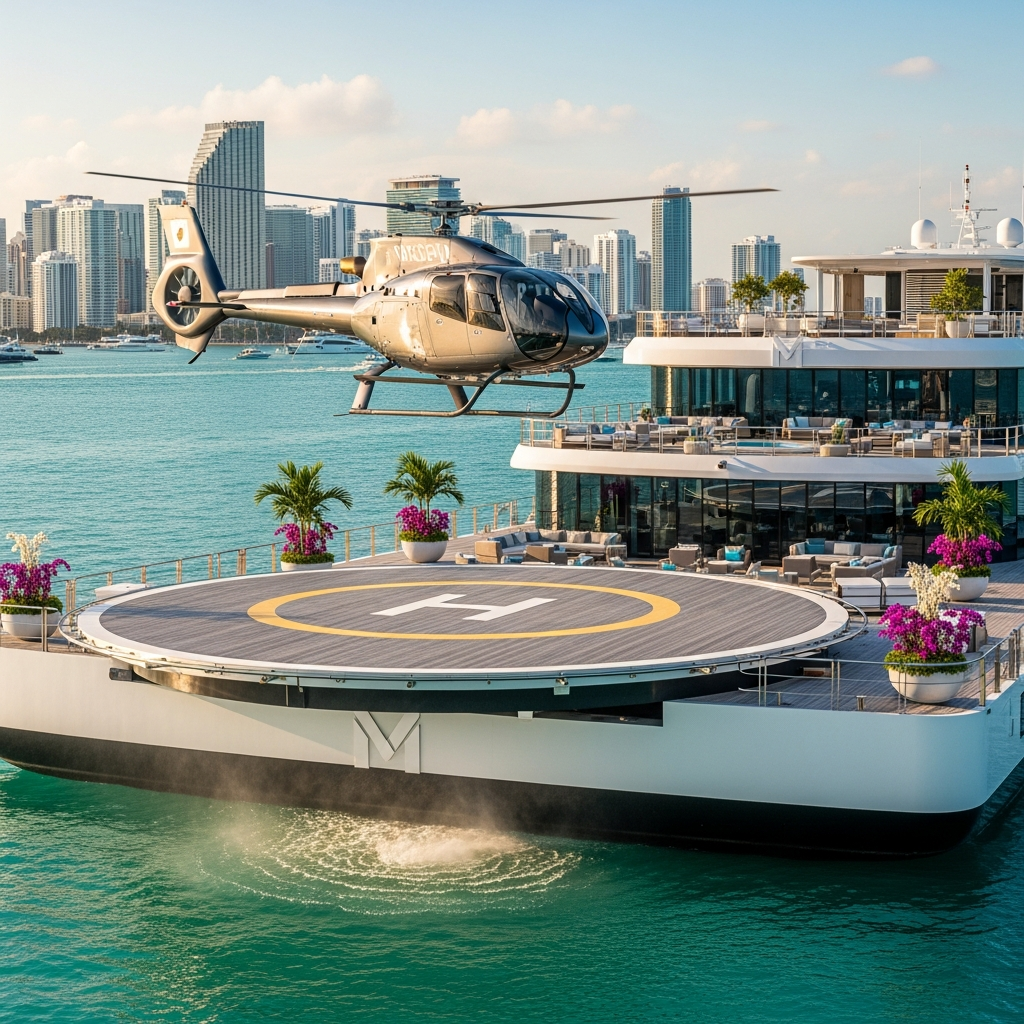
ILandMiami specializes in “Marine Utility Vehicles,” or MUVs, which are aquatic, mobile helipads. Developing these platforms was a complex, multi-year undertaking, requiring rigorous construction standards and crucial Coast Guard certification to safely accommodate large commercial helicopters. This innovative service now allows billionaires to take a quick five or six-minute helicopter ride, landing on a floating pad just offshore their private backyards, rather than enduring an hour-long car journey from a private airport.
The Price of Unrivaled Convenience
The cost of this bespoke luxury is substantial, reflecting its exclusive nature and profound time-saving benefits. While the helicopter ride itself can cost around $1,000 per minute, the use of ILandMiami’s platform for a single landing incurs a separate fee of $4,000 to $4,500. This fee does not include the helicopter charter. For the ultra-wealthy, however, this investment is considered minimal compared to the value of their time and the security and privacy offered.
These mobile helipads cater to a clientele who might otherwise land their helicopters on massive superyachts. However, Miami’s waterways are often too narrow or congested for such large vessels, making ILandMiami’s flexible platforms an ideal and discreet alternative. The helipads have been frequently spotted off prestigious locations such as Indian Creek, where billionaires like Zuckerberg and Bezos own homes, and near luxury hotels like the Fontainebleau. The quick landing process, taking only three to four minutes before passengers transfer to a boat for the final leg to shore, epitomizes efficiency.
Marketing Exclusivity: Reaching the Elite
Marketing a service exclusively for billionaires is a unique challenge. Adam Terris admits, “You can’t reach out to billionaires.” Instead, ILandMiami’s business model relies heavily on referrals and strategic partnerships within the luxury market. High-end real estate agents, who deal directly with this demographic, are crucial in spreading awareness. Nancy Batchelor, for instance, featured an ILandMiami helipad in a promotional video for a $15 million home on Miami’s exclusive La Gorce Island, showcasing the aspirational lifestyle it represents.
Alvaro Núñez, founder of Miami real estate marketing firm Super Luxury Group, has also partnered with ILandMiami to promote this unique offering. The strategy is not just about selling a service, but about selling an entire lifestyle—one where convenience, privacy, and speed are paramount. While primarily serving individual billionaire clients for personal or chartered flights (approximately 95% of their 20 flights per month), Terris envisions expanding ILandMiami to offer experiential flights, such as scenic tours for anniversaries or proposals, aiming to attract a broader, albeit still affluent, customer base.
The Broader South Florida Luxury Landscape
The demand for ILandMiami’s services is intrinsically linked to the booming luxury real estate market across South Florida. This influx of wealth is driving new developments designed to cater to a discerning clientele. For example, reality TV personality Tyler Cameron, now a licensed real estate agent, is entering the luxury market with Ancora, a new waterfront townhouse development on South Hutchinson Island. Slated to begin development in April 2026, Ancora will feature 24 duplex-style townhomes starting at $1.75 million.
These residences, situated along the Indian River Lagoon, emphasize high-quality construction and direct water access, complete with private boat slips and deeded beach access. Cameron describes South Hutchinson Island as “the last frontier of affordable waterfront living on the east coast of Florida,” highlighting the region’s untapped potential for luxury development. Projects like Ancora underscore the widespread investment in high-end properties that continues to attract and anchor the ultra-wealthy in South Florida, creating a fertile ground for services like ILandMiami.
The Future of Miami’s Skies: eVTOLs and Beyond
Miami’s air traffic is poised for further expansion, potentially creating even more opportunities for ILandMiami. In recent months, several companies received approval to test electric vertical take-off and landing (eVTOL) aircraft—often dubbed “flying taxis”—in the Miami area. These Jetson-like vehicles could transform urban mobility, and Adam Terris sees any increase in air traffic as a positive business opportunity for his company. More airborne commuters, whether billionaires in private helicopters or future passengers in eVTOLs, will likely mean increased demand for his adaptable landing pads.
As ground traffic issues persist and Miami’s popularity continues to surge, innovative and high-cost solutions like ILandMiami’s floating helipads will remain a critical element of the ultra-wealthy lifestyle. City officials grapple with public infrastructure, while the elite continue to find private pathways to unparalleled convenience. For those who can afford it, the skies and waterways of Miami offer a swift, exclusive, and increasingly common alternative to the city’s gridlocked streets.
Frequently Asked Questions
What is ILandMiami, and how does it address traffic for Miami’s ultra-wealthy?
ILandMiami provides mobile, aquatic helipads—known as Marine Utility Vehicles (MUVs)—that float through Miami’s waterways. Launched in January 2025, this service allows the city’s ultra-wealthy residents to bypass severe ground traffic. Instead of an hour-long drive from private airports to their waterfront homes, they can take a five or six-minute helicopter ride and land directly on an ILandMiami helipad near their property, significantly saving precious time and offering discreet access.
Where are ILandMiami’s floating helipads typically seen in Miami?
ILandMiami’s helipads are frequently spotted off the coasts of Miami’s most exclusive and high-value waterfront locations. This includes areas like Indian Creek, home to tech billionaires such as Mark Zuckerberg and Jeff Bezos, and near luxury hotels like the Fontainebleau. Their mobility allows them to be positioned conveniently close to clients’ private residences or other key destinations along Miami’s extensive waterways.
What is the typical cost for using ILandMiami’s floating helipad service?
The cost for using ILandMiami’s floating helipad platform for a single landing typically ranges between $4,000 and $4,500. This fee covers the use of the platform itself; the helicopter charter is a separate expense, which can cost approximately $1,000 per minute. While a significant investment, this pricing reflects the premium value placed on unparalleled convenience, privacy, and time-saving for Miami’s affluent residents.