The vast expanse of space beckons humanity once more. NASA’s Artemis II mission stands as a pivotal step in our return to the Moon, marking the first crewed voyage into lunar orbit in over 50 years. This ambitious ten-day Moon flyby is not just a symbolic gesture; it’s a critical testbed for the advanced systems and procedures that will eventually land astronauts back on the lunar surface. From its trailblazing crew to its complex trajectory, Artemis II is igniting a new era of deep-space exploration, laying the groundwork for a sustained human presence beyond Earth.
The Genesis of a New Lunar Era: What is Artemis II?
A Monumental Return to Lunar Space
Artemis II represents the foundational crewed mission of NASA’s ambitious Artemis program. Its primary objective is to send a four-member crew around the Moon and safely back to Earth, thoroughly testing the capabilities of both the Orion spacecraft and the Space Launch System (SLS) rocket in a deep-space environment. This journey is crucial, serving as a vital precursor for future human landings on the lunar surface, specifically targeting the Moon’s intriguing south polar region. It’s a critical stepping stone, validating the technology and readiness required for humanity’s next giant leap.
The mission is designed as a rapid flyby, meaning the Orion capsule will orbit the Moon without attempting a landing. This test flight focuses intently on spacecraft performance, life support systems, and crew operations far beyond Earth’s protective magnetosphere. The data gathered from this unparalleled journey will be instrumental in refining plans for subsequent Artemis missions, ensuring the safety and success of astronauts as they venture further into the cosmos.
Meet the Trailblazing Crew of Artemis II
Pioneers on a Historic Voyage
The four individuals selected for the Artemis II crew are set to make history, embodying the spirit of international collaboration and diverse representation in space exploration. These seasoned astronauts will command the Orion spacecraft on its pioneering journey:
Commander Reid Wiseman: A veteran astronaut with previous spaceflight experience on the International Space Station (ISS).
Pilot Victor Glover, Jr.: Set to become the first Black person to travel to the Moon. Glover also brings prior ISS experience to the mission.
Mission Specialist Christina Koch: Will be the first woman to journey to the Moon. Koch holds the record for the longest single spaceflight by a woman, with 328 days spent on the ISS.
Mission Specialist Jeremy Hansen: The first Canadian astronaut ever to venture to the Moon, marking his inaugural spaceflight.
This diverse crew not only represents humanity’s collective aspirations but also brings a wealth of experience, expertise, and a fresh perspective to lunar exploration. Their journey is anticipated to inspire younger generations globally, fostering a vision where space travel transitions from extraordinary “firsts” to routine human endeavors.
The Mission Profile: A Journey Around the Moon
From Earth Orbit to Lunar Slingshot
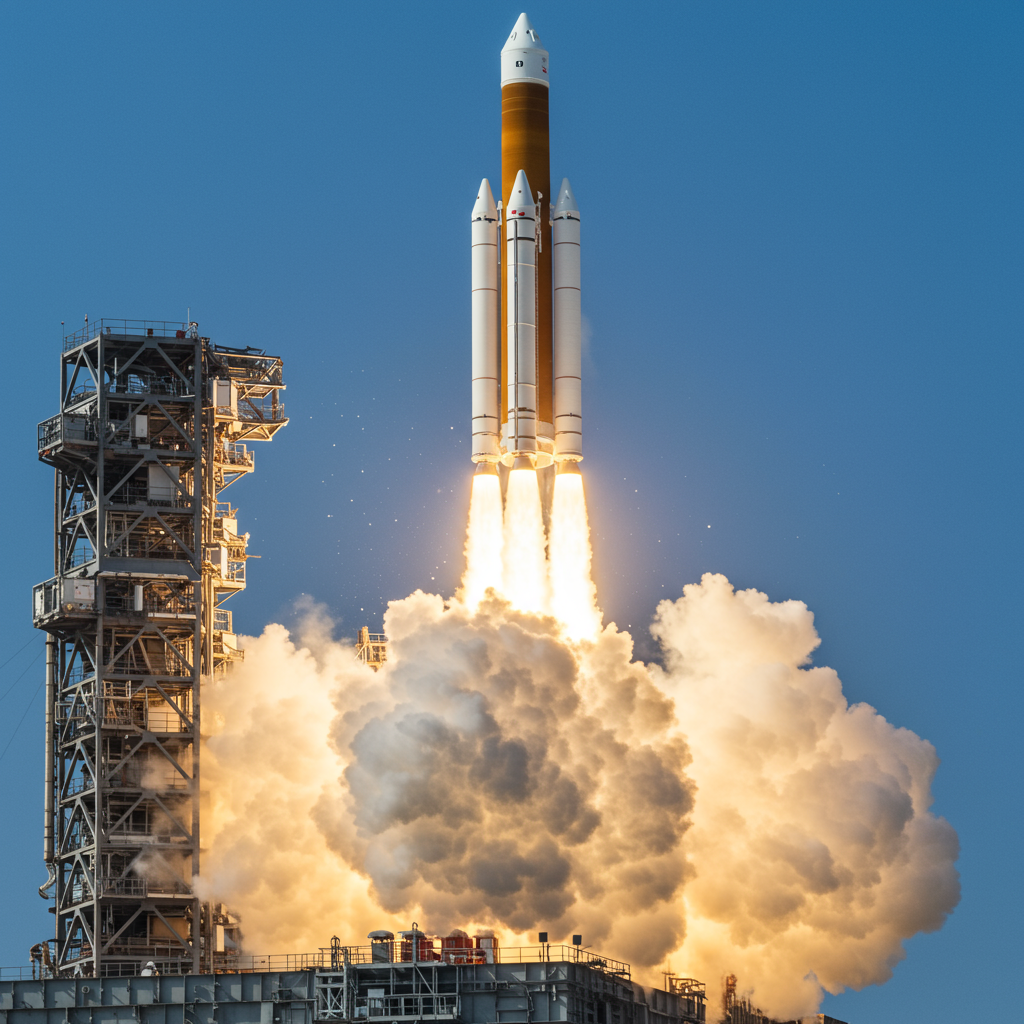
The Artemis II mission will utilize some of the most powerful spaceflight hardware ever constructed. At its core are the towering Space Launch System (SLS) rocket and the advanced Orion spacecraft. The SLS, standing at an impressive 32 stories tall, is one of the largest and most powerful rockets ever built, capable of generating a staggering 39 million newtons (8.8 million pounds) of thrust. The Orion spacecraft, comprising a cone-shaped crew module and a cylindrical service module (a contribution from the European Space Agency), provides propulsion, life support, and power.
The journey begins with launch from the Kennedy Space Center. After liftoff, the SLS central stage will propel Orion into Earth orbit. Approximately two hours later, Orion will execute a burn to reach a high Earth orbit, peaking at about 71,656 kilometers (44,525 miles). During this phase, the crew will conduct manual maneuvers, simulating procedures critical for future docking operations.
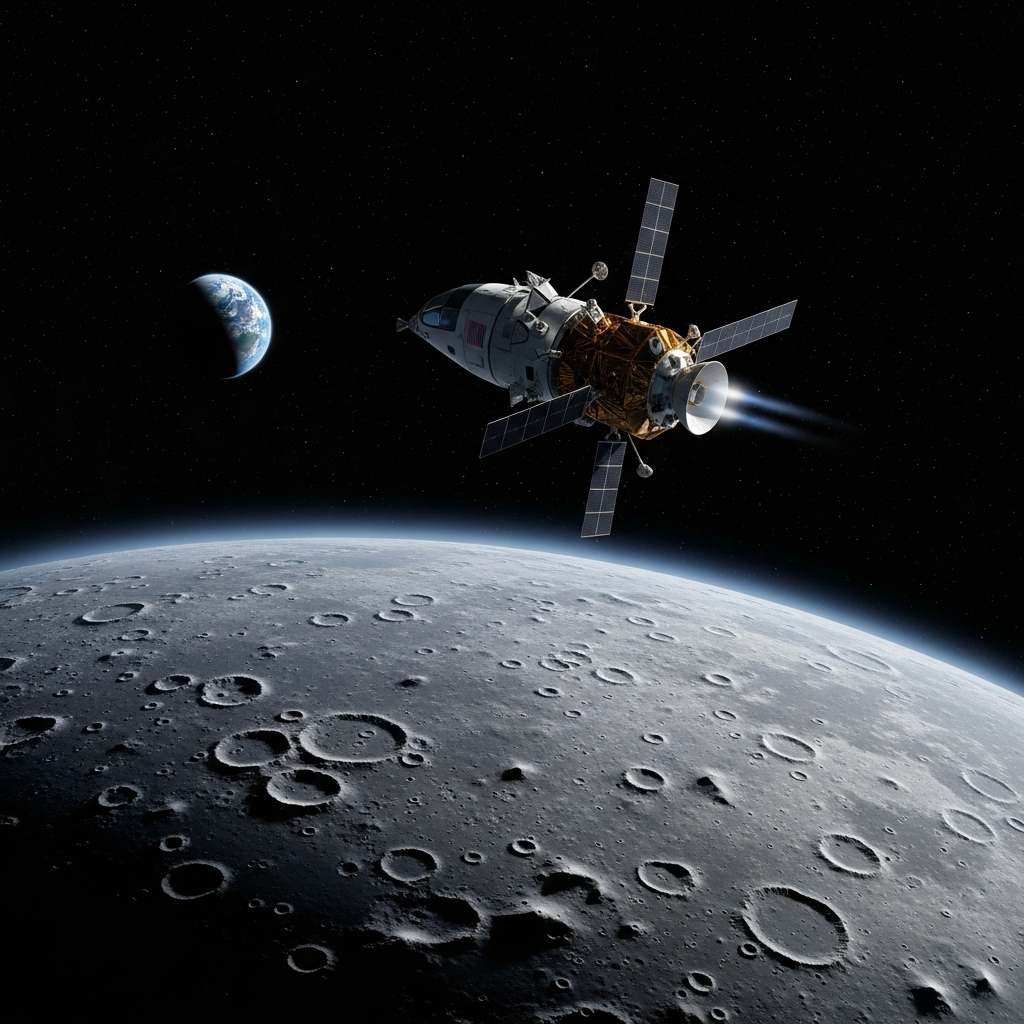
Following roughly a day in high Earth orbit, Orion will perform a crucial translunar injection burn, firing its engines to set course for the Moon. Around three days later, the spacecraft will enter the Moon’s gravitational sphere. The trajectory is specifically designed to perform a rapid flyby of the Moon’s far side, flying at a distance of approximately 6,400 to 9,700 kilometers (4,000 to 6,000 miles) from the lunar surface. During this phase, the crew is expected to be out of direct contact with Earth, a significant test of deep-space communication and autonomous operations. This unique trajectory will also break the Apollo 13 record for distance from Earth, venturing over 400,171 kilometers (248,655 miles) away. Utilizing the Moon’s gravity, Orion will then be slingshotted back towards Earth on a “free return” trajectory, culminating in a precise splashdown in the Pacific Ocean near San Diego.
Navigating Challenges: Delays and Resilience
Overcoming Technical Hurdles
The path to launch for Artemis II has been characterized by careful planning and the meticulous resolution of technical challenges. Initially targeting a launch in February 2026, the mission experienced several postponements, pushing the target to March, and then officially to April 1, 2026, with backup windows available.
These delays stemmed from various technical issues encountered during crucial pre-flight tests. A significant factor was the detection of a persistent liquid hydrogen leak during a “wet dress rehearsal” fuelling test. This leak, located at the tail service mast umbilical interface, proved difficult to resolve, even halting the countdown automatically at five minutes before a simulated launch. Additionally, a clogged helium pressurization line and issues with an Orion crew module hatch pressurization valve also required attention and extended repair times.
NASA officials, including Administrator Jared Isaacman, have consistently emphasized that safety remains the paramount priority for the astronauts, workforce, and systems. The agency is committed to launching only when it is confident in the mission’s readiness, underscoring a cautious and methodical approach to deep-space endeavors. Despite these setbacks, the continuous efforts of engineers and technicians underscore the complexity of human spaceflight and the rigorous testing required to ensure mission success.
Beyond Artemis II: Paving the Way for Future Lunar Exploration
Artemis III & IV: Landing and Lunar Science
The Artemis II mission is a vital stepping stone, but it’s part of a much larger vision for lunar exploration. Following Artemis II, NASA has outlined ambitious plans for subsequent missions:
Artemis III (2027): This mission will shift focus to testing crucial lunar landing equipment. Instead of a direct landing, it will involve testing lunar landers (from partners like SpaceX or Blue Origin) and the specialized space suits astronauts will use on the Moon, all within Earth orbit. This mission will also carry scientific instruments designated for deployment at the Moon’s south polar region.
Artemis IV (2028): This is the moment humanity truly returns to the lunar surface. Two astronauts are slated to land in the Moon’s south polar region, a significant departure from the equatorial landing sites of the Apollo missions. This region is of immense scientific interest due to the potential presence of frozen water in permanently shadowed craters, a resource vital for future sustained human presence.
University of Arizona researchers are playing a significant role in Artemis III, contributing to two of the three scientific instruments for deployment by astronauts on the lunar surface. The Lunar Environment Monitoring Station (LEMS), co-designed by Dani DellaGiustina, includes seismometers to detect moonquakes, characterize the Moon’s crust and mantle, and assess potential risks to future habitats. The Lunar Dielectric Analyzer (LDA), with Erik Asphaug as a collaborator, will probe the moon’s regolith up to a meter deep, measuring its porosity and searching for volatiles like ice, crucial for both scientific understanding and establishing a permanent lunar base.
While the original plans included the Gateway space station, an international lunar-orbiting platform, its development has been postponed. NASA is currently prioritizing efforts on lunar landings for the Artemis program, aiming for long-term scientific discovery and preparing for future human missions to Mars. The ultimate goal is to establish a base camp at the lunar south pole, enabling extended astronaut stays of one to two months, evolving human presence in space from symbolic milestones to a continuous, collaborative endeavor.
Frequently Asked Questions
What is the primary goal of the Artemis II mission?
The primary goal of the Artemis II mission is to serve as a critical test flight for NASA’s advanced deep-space systems, specifically the Orion spacecraft and the Space Launch System (SLS) rocket. This ten-day crewed Moon flyby will validate spacecraft performance, life support, and crew operations beyond Earth’s orbit, paving the way for future human landings on the lunar surface. It’s a precursor mission designed to ensure the safety and readiness for astronauts to venture further into the cosmos.
Who are the four astronauts on the Artemis II crew?
The four trailblazing astronauts assigned to the Artemis II mission are Commander Reid Wiseman, Pilot Victor Glover, Mission Specialist Christina Koch, and Mission Specialist Jeremy Hansen. This crew represents significant milestones: Victor Glover will be the first Black person to travel to the Moon, Christina Koch will be the first woman, and Jeremy Hansen will be the first Canadian astronaut to undertake a lunar voyage. All bring extensive spaceflight experience, with Hansen making his inaugural journey.
What impact do the Artemis II mission delays have on future lunar exploration plans?
The delays experienced by the Artemis II mission, primarily due to technical challenges like hydrogen fuel leaks and issues during wet dress rehearsals, have pushed its launch target from February 2026 to April 1, 2026. These postponements have a cascading effect on subsequent missions within the Artemis program. Artemis III, originally planned for a lunar landing, is now slated for 2027 and will focus on testing lunar landers and space suits in Earth orbit. The actual crewed lunar landing, Artemis IV, is now targeted for 2028. While causing shifts in the timeline, these delays underscore NASA’s commitment to safety and meticulous preparation, ultimately aiming to ensure the long-term success and sustainability of human lunar exploration.