NASA’s ambitious journey back to the Moon faces an unexpected and powerful adversary: the Sun. As the Artemis program prepares its next monumental launch, solar activity poses significant risks. It could potentially ground rockets and endanger astronauts. Understanding these cosmic challenges is crucial for successful deep space exploration. Discover how solar flares and geomagnetic storms impact NASA’s highly anticipated Moon missions. Learn what goes into safeguarding these complex endeavors.
The Sun’s Unseen Influence on Space Exploration
Our Sun, a life-giving star, is also a dynamic and unpredictable entity. It constantly emits streams of charged particles and radiation. These phenomena, collectively known as space weather, can have profound effects throughout our solar system. For missions like NASA’s Artemis program, targeting the Moon, monitoring space weather becomes paramount. The Sun’s activity follows an approximately 11-year cycle, oscillating between periods of calm and intense storminess. We are currently heading towards a peak in Solar Cycle 25. This means an increased likelihood of powerful solar events. These events can directly threaten highly sensitive space hardware and human life.
Unpacking Solar Events: Flares, CMEs, and SEPs
Not all solar activity is created equal. Different types of solar events present unique challenges to space missions.
Solar Flares: These are intense bursts of radiation. They originate from magnetic activity on the Sun’s surface. Flares travel at the speed of light. They can reach Earth in just eight minutes. While not a direct physical threat, they can cause sudden radio blackouts. They also disrupt satellite communications. This poses a problem for mission control.
Coronal Mass Ejections (CMEs): CMEs are massive expulsions of plasma and magnetic field. They erupt from the Sun’s corona. These colossal clouds travel slower than flares but carry immense energy. When a CME hits Earth’s magnetic field, it can trigger geomagnetic storms. Such storms disrupt power grids and satellite operations.
Solar Energetic Particles (SEPs): Often associated with powerful flares and CMEs, SEPs are highly accelerated particles. These particles are extremely dangerous. They pose significant radiation hazards to astronauts. They can also damage unshielded electronics. An unprotected astronaut exposed to a major SEP event could suffer acute radiation sickness. This highlights a critical risk for deep space missions.
Why Solar Activity Matters for Moon Missions
NASA’s Moon rocket, the Space Launch System (SLS), and its Orion capsule represent pinnacle engineering. However, even this advanced technology is vulnerable to the Sun’s fury. The core reason for delays often revolves around safety. Launch windows are incredibly precise. They factor in orbital mechanics, weather, and now, space weather.
Radiation exposure is a primary concern. The Orion capsule is designed with shielding. However, no spacecraft can completely block all radiation from a major SEP event. During such an event, astronauts would need safe havens within the capsule. This might not be sufficient for prolonged exposure or exceptionally powerful storms. Ensuring astronaut safety is non-negotiable for NASA. This commitment directly influences launch schedules. Grounding a rocket during heightened solar activity protects the invaluable crew. It also safeguards the hundreds of millions of dollars invested in hardware.
Technical Impacts Beyond Human Safety
Beyond the direct threat to astronauts, solar events can wreak havoc on mission technology.
Electronics Damage: High-energy particles from SEPs can cause “single event upsets” (SEUs) in computer systems. An SEU is essentially a bit flip. It can lead to corrupted data or even system crashes. In critical flight control systems, this could be catastrophic.
Communication Disruptions: Solar flares and geomagnetic storms interfere with radio signals. These signals are vital for communication between the spacecraft and mission control on Earth. Lost communication can lead to critical delays in decision-making. It also risks mission success.
Navigation Issues: Space weather can affect GPS signals and other navigation systems. Precise navigation is absolutely essential for lunar missions. Deviations could lead to missed targets or dangerous trajectories.
- Thermal Control: Extreme space weather can even affect a spacecraft’s thermal environment. This might lead to overheating or cooling issues for sensitive instruments.
Artemis and the Solar Gauntlet
The Artemis program aims to establish a long-term human presence on and around the Moon. This ambitious goal involves multiple missions. Artemis I (uncrewed) successfully paved the way. Artemis II will carry astronauts around the Moon. Artemis III plans to land humans on the lunar surface. Each of these missions, especially those with crew, must navigate the solar gauntlet.
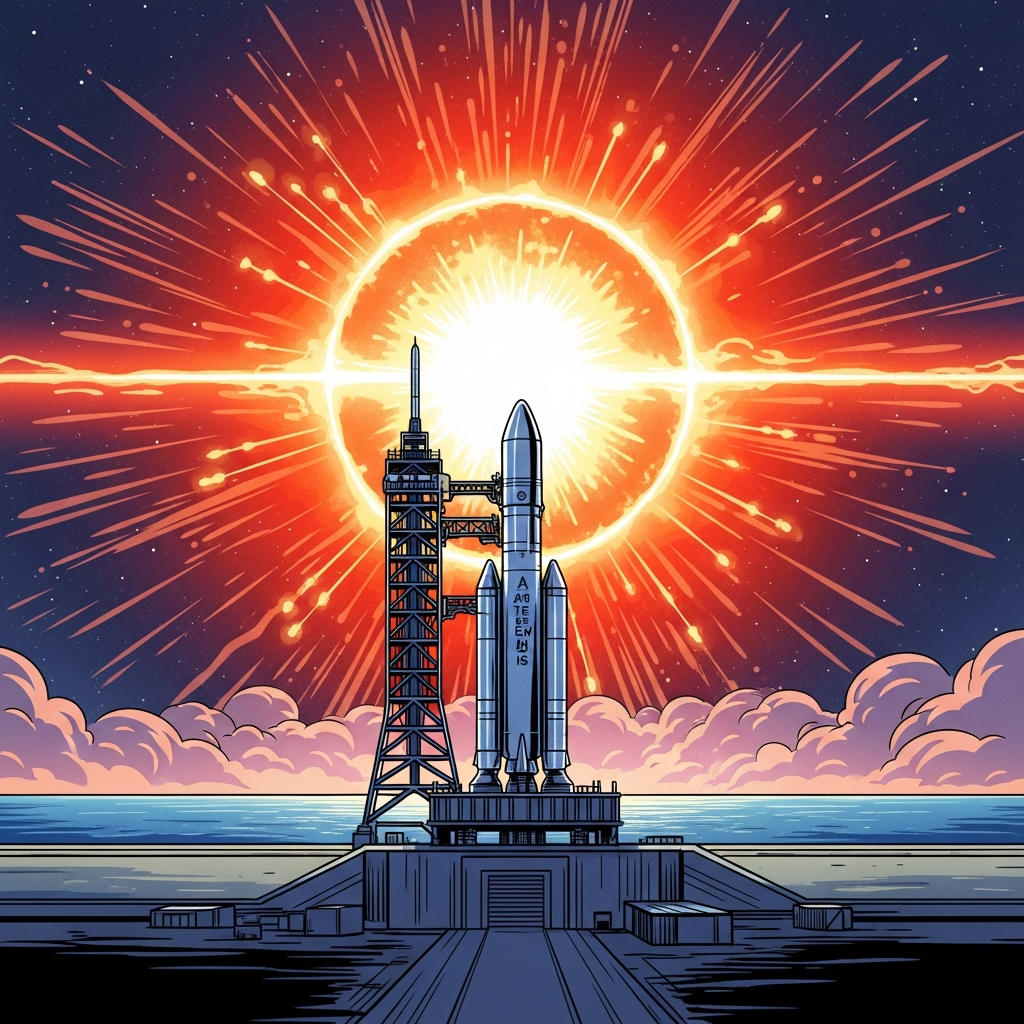
Launch attempts for these complex missions originate from Kennedy Space Center in Florida. These events are meticulously planned. Any significant solar flare or CME headed towards Earth or the Moon’s trajectory can trigger a “scrub” or delay. Such decisions are made by an expert team. They analyze data from multiple space weather observatories. The integrity of the mission and the safety of the crew are always the highest priorities. NASA’s rigorous safety protocols mean that even a statistically low risk of a major solar event can justify delaying a launch. This is particularly true if the event overlaps with a critical phase like trans-lunar injection.
NASA’s Vigilance: Forecasting and Mitigation Strategies
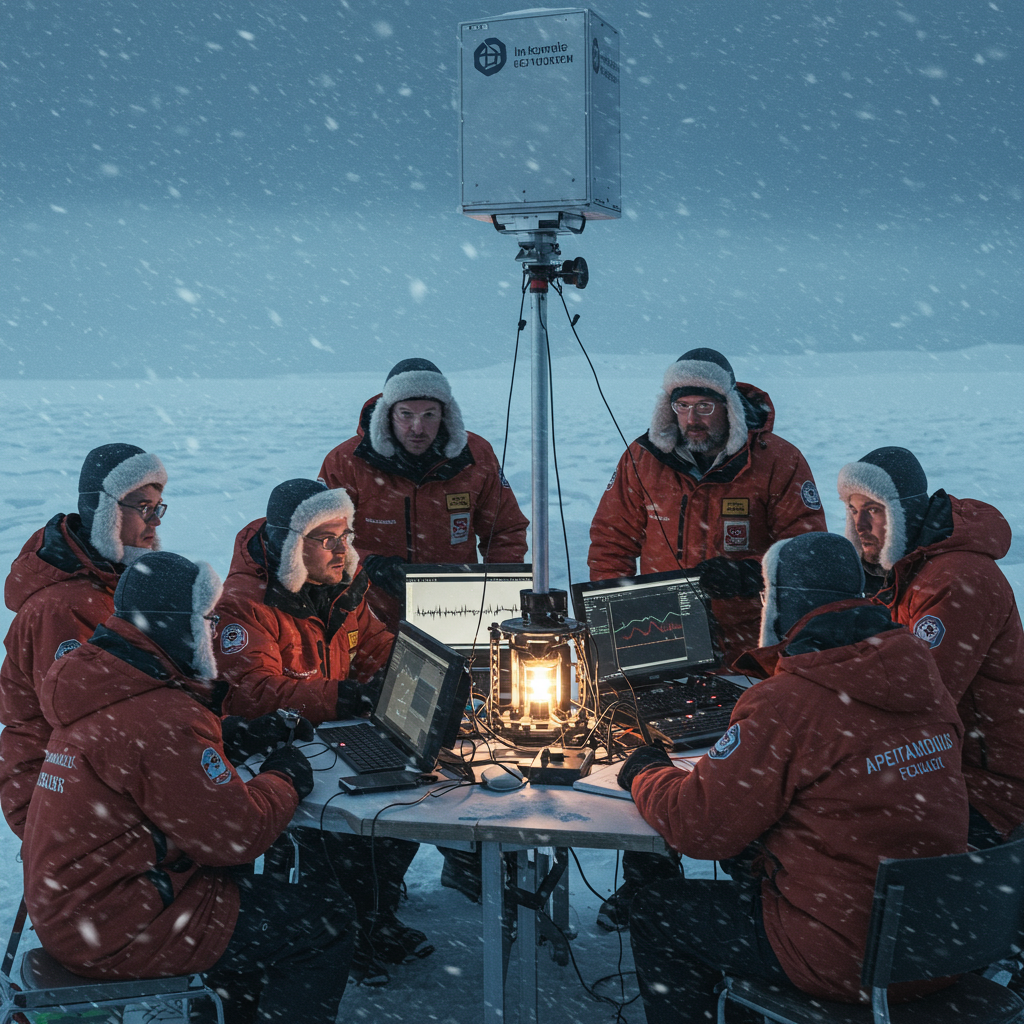
NASA and its partners, like the National Oceanic and Atmospheric Administration (NOAA), employ sophisticated systems. These systems constantly monitor the Sun. A network of satellites like SOHO, STEREO, and SDO provides real-time data. This data tracks solar flares, CMEs, and high-speed solar wind streams. Ground-based observatories also contribute to this global effort. This continuous vigilance allows space weather forecasters to predict potential impacts.
When a significant solar event is detected, mission control teams initiate a thorough risk assessment. They evaluate the event’s intensity, trajectory, and potential impact time. If the threat level exceeds predetermined thresholds, a launch delay is the most common mitigation. For missions already in space, astronauts can take shelter in more shielded areas of the spacecraft. Engineers can also reconfigure electronic systems to minimize vulnerability. The ability to predict and respond to space weather is a cornerstone of modern spaceflight safety.
The Cost of Caution: Delays and Decisions
Launch delays due to space weather are frustrating for the public and costly for NASA. Each scrub can cost millions of dollars. It involves rescheduling ground crews, resetting launch infrastructure, and managing propellant. However, these costs are negligible compared to the potential loss of a crew or a multi-billion dollar rocket. The decision to delay a launch is never taken lightly. It involves a complex interplay of science, engineering, and human safety considerations.
Ultimately, NASA’s cautious approach demonstrates its unwavering commitment to exploration. Space is inherently risky. Mitigating known threats, even those from our own star, is paramount. These delays, though inconvenient, are a testament to the advanced scientific understanding and responsible planning that define modern space exploration. They underscore the challenges involved in pushing humanity’s boundaries beyond Earth’s protective atmosphere.
Frequently Asked Questions
How does solar activity directly impact NASA’s Moon rocket launch timelines?
Solar activity directly impacts launch timelines primarily through radiation hazards and technical interference. Intense solar flares or coronal mass ejections (CMEs) can create dangerous levels of solar energetic particles (SEPs), which pose severe radiation risks to astronauts. NASA cannot launch its Moon rocket, the Space Launch System (SLS), if there’s a significant risk of astronauts being exposed to such events. Additionally, solar storms can disrupt critical communications, navigation systems, and even damage sensitive onboard electronics, making a safe and successful launch impossible. These threats necessitate careful monitoring and often lead to launch delays or “scrubs” to prioritize crew safety and mission integrity.
Which NASA missions are most vulnerable to solar flares and geomagnetic storms?
Crewed missions, particularly those in deep space like the Artemis program aimed at the Moon, are most vulnerable to solar flares and geomagnetic storms. While robotic missions also face risks of electronic damage, the primary concern for crewed missions is astronaut safety from harmful radiation. Missions operating outside Earth’s protective magnetosphere, venturing towards the Moon or Mars, are exposed to the full brunt of solar events. Earth-orbiting satellites and missions benefit from some protection by Earth’s magnetic field, though they can still be affected by geomagnetic storms.
What long-term implications does solar activity have for future deep space travel beyond the Moon?
Solar activity presents significant long-term implications for future deep space travel, especially for missions to Mars and beyond. As missions extend further and for longer durations, astronauts will face increased cumulative radiation exposure. This necessitates the development of more effective radiation shielding, advanced real-time space weather forecasting, and possibly rapid transit technologies to minimize exposure time. Researchers are also exploring pharmacological interventions and habitat designs that offer better protection. Understanding and mitigating solar radiation will remain a critical challenge that dictates mission architecture, technology development, and ultimately, the feasibility of human exploration of the outer solar system.
Charting a Course Through Cosmic Challenges
The Sun’s constant dance of flares and eruptions provides a vivid reminder of the harsh realities of space. For NASA’s ambitious Artemis program, and indeed all future deep space endeavors, understanding and respecting the Sun’s power is not just scientific curiosity—it is a fundamental operational necessity. Delays, while inconvenient, are a small price to pay for ensuring the safety of our astronauts and the success of missions that push the boundaries of human exploration. As humanity looks towards a sustained presence on the Moon and eventually Mars, our ability to predict, adapt to, and mitigate the Sun’s fury will be key to unlocking the cosmos.