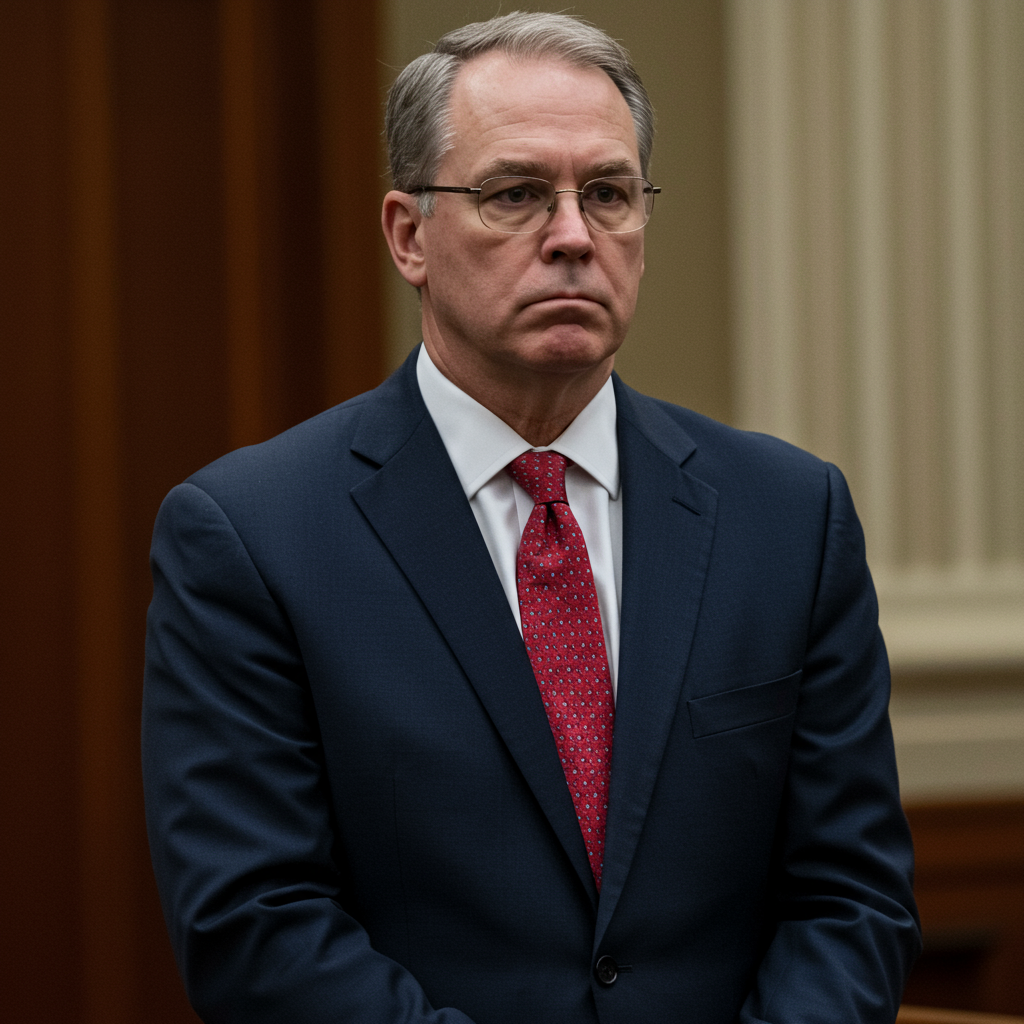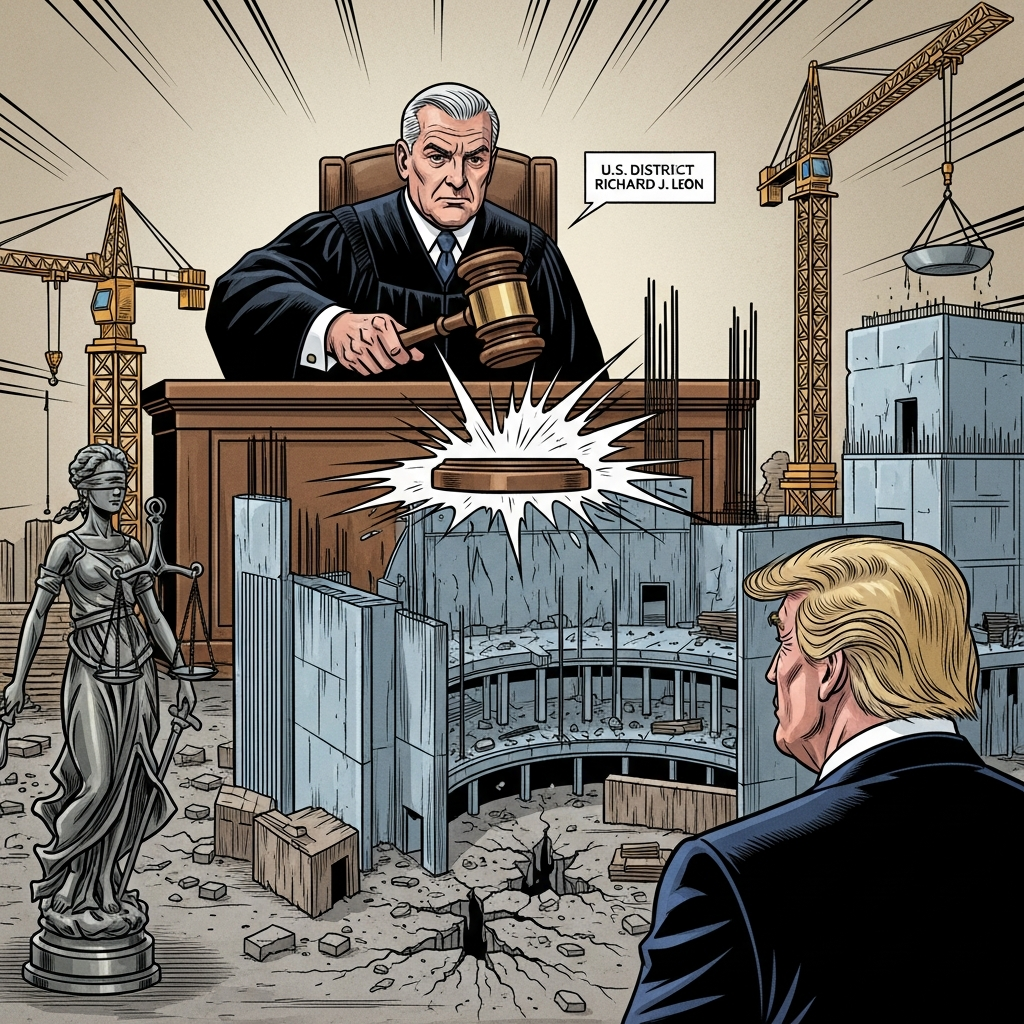
A federal judge in Washington, D.C., has dramatically halted construction on former President Donald Trump’s ambitious White House ballroom project, delivering a significant blow to the expansive plan. This temporary injunction, issued by U.S. District Judge Richard J. Leon, affirms a crucial principle: the President is a steward, not an owner, of the nation’s most iconic residence. The ruling emphasizes Congress’s constitutional authority over federal property, effectively pausing demolition and building work until legislative approval is secured. This pivotal decision emerged from a lawsuit filed by the National Trust for Historic Preservation, challenging the executive’s claimed power to undertake such a massive alteration without explicit statutory authorization.
A Grand Vision Confronts Constitutional Limits
The proposed White House ballroom, a personal passion project for President Trump during his second term, envisioned a sprawling 90,000-square-foot addition. This massive undertaking, almost double the size of the existing executive residence, was intended to replace parts of the East Wing. Trump maintained the new facility was essential for hosting foreign dignitaries and large-scale indoor events, eliminating the need for temporary tents on the South Lawn.
The Ambitious Ballroom Project
Details surrounding the project revealed a plan of considerable scale and cost. The former President had reportedly raised an estimated $400 million in private funds to finance the construction. Companies like Comcast Corp. were named as contributors, alongside reports of other major corporations. Demolition work on the East Wing had already commenced, moving at a rapid pace after Trump announced the project, despite earlier assurances that the existing structure would remain intact. Visual renderings, shared by Trump, depicted a grand structure adorned with Greco-Roman columns, touted as “the finest Building of its kind anywhere in the World.”
The National Trust Steps In
Concerned by the project’s scope and the perceived lack of adherence to federal guidelines, the National Trust for Historic Preservation initiated legal action. Their initial lawsuit, filed in December, claimed the administration failed to follow proper procedures before demolishing parts of the East Wing and breaking ground. An earlier version of the suit had been dismissed by Judge Leon, who at the time found the “ragtag group of theories” lacked the necessary legal grounds to challenge the use of private funding without congressional approval. However, the preservation group filed an amended suit, sharply focusing on the claim that President Trump had simply exceeded his constitutional authority. This revised legal strategy proved successful, leading to the temporary injunction.
Judge Leon’s Resounding Ruling: Congress Holds the Key
In a strongly worded order, U.S. District Judge Richard J. Leon, a George W. Bush appointee, concluded that the National Trust was highly likely to succeed on the merits of their case. His ruling was unambiguous, declaring that “no statute comes close to giving the President the authority he claims to have.” The judge’s decision blocks all physical development related to the proposed ballroom, including demolition, site preparation, excavation, and foundation work, beyond actions strictly necessary for safety.
“Not the Owner!” – Upholding Federal Property Law
Central to Judge Leon’s decision was a powerful affirmation of the President’s role as a temporary custodian rather than the ultimate proprietor of the White House. He famously wrote, “The President of the United States is the steward of the White House for future generations of First Families. He is not, however, the owner!” Leon emphasized that the U.S. Constitution explicitly vests authority over federal property, including the White House, in Congress, which serves as “the collective voice of the American people.” This constitutional principle underscored the requirement for legislative authorization before such a monumental project could proceed.
Dispelling “National Security” Claims
The administration had argued vigorously against halting the project, contending that any delay would “imperil national security and expose the White House to damage.” Judge Leon dismissed this argument with a pointed retort: “Please! While I take seriously the Government’s concerns regarding the safety and security of the White House grounds and the President himself, the existence of a ‘large hole’ beside the White House is, of course, a problem of the President’s own making!” This rebuke highlighted the judiciary’s role in scrutinizing executive claims and ensuring accountability.
A Path Forward: Seeking Congressional Blessing
While temporarily blocking construction, Judge Leon also provided a clear pathway for the project’s potential revival. He paused his order from taking effect for 14 days to allow time for an appeal, which the Department of Justice is expected to pursue. Importantly, Leon noted that “it is not too late for Congress to authorize the continued construction of the ballroom project.” He suggested that the President could, at any time, seek express statutory authority from Congress to build the ballroom, even with private funds. This approach, he reasoned, would ensure Congress retains its authority over national property and governmental spending, vindicating the constitutional process.
Controversy and Criticisms Swirl
Beyond the legal battle, the White House ballroom project had already generated significant public and professional scrutiny. The National Planning Commission, despite being led by Trump appointees, had delayed a vote on the project following widespread negative public feedback.
Public Outcry and Architectural Concerns
Many public comments described the project as “appalling” and “hideous.” Architects also voiced strong criticism regarding the sheer size of the 90,000-square-foot addition. David Scott Parker, a member of the preservation group behind the lawsuit, noted that “everything here feels inflated,” reflecting a common sentiment that the scale was out of proportion with the historic landmark.
Trump’s Vehement Response
Following Judge Leon’s ruling, former President Trump took to social media, launching a sharp attack on the National Trust for Historic Preservation. In a post on Truth Social, he labeled the organization “a Radical Left Group of Lunatics.” He vehemently defended the project, asserting it was “under budget, ahead of schedule, being built at no cost to the Taxpayer, and will be the finest Building of its kind anywhere in the World.” This strong defense reflected his personal investment in the project and his consistent efforts to put an architectural stamp on Washington, D.C., during his time in office.
The Tangled Web of Private Funding
The financing mechanism for the $400 million ballroom project also drew considerable scrutiny. The administration claimed the funds were entirely from private donations, channeled to avoid congressional oversight. Court records revealed a complex arrangement: funds were collected by a nonprofit organization, then passed to the National Park Service, and finally deposited into a presidential account typically reserved for minor White House repairs.
A “Rube Goldberg” Mechanism?
Judge Leon expressed significant skepticism about this elaborate financial pathway. He famously likened the intricate funding mechanism to a “Rube Goldberg” machine, a complex contraption designed to perform a simple task. While the legality of this specific funding mechanism wasn’t the direct subject of the injunction, Leon noted in his ruling that “this funding mechanism is, to say the least, a far cry from affirmative congressional authorization.” This highlighted concerns about transparency and the potential circumvention of established federal financial protocols. The judge had previously characterized the administration’s argument that the ballroom was merely a legally permissible “alteration” as a “brazen interpretation of the laws of vocabulary,” underscoring the extraordinary nature of the proposed build.
Broader Implications for Executive Power and Preservation
The federal judge’s decision to block the White House ballroom construction carries significant weight, extending far beyond the fate of a single architectural project. It serves as a powerful reminder of the fundamental principles underpinning American governance.
Reinforcing Checks and Balances
This ruling powerfully reinforces the system of checks and balances embedded in the U.S. Constitution. It underscores that even the President, while holding immense power, is subject to judicial oversight and the legislative authority of Congress, particularly concerning federal property and significant national landmarks. The decision reaffirms the judiciary’s critical role in interpreting and enforcing these constitutional boundaries, preventing potential overreach of executive power in the context of federal construction projects.
Protecting National Heritage
For organizations like the National Trust for Historic Preservation, the ruling is a resounding victory. It validates their mission to safeguard the nation’s heritage and ensures that monumental alterations to iconic sites like the White House are not undertaken unilaterally. The case sets an important precedent, highlighting that modifications to such culturally and historically significant properties require rigorous adherence to legal processes, public input, and, crucially, congressional approval. The White House, as “an iconic symbol of this nation,” demands careful stewardship for future generations.
Frequently Asked Questions
What exactly did Judge Leon rule regarding the White House ballroom construction?
U.S. District Judge Richard J. Leon issued a temporary injunction blocking all construction activities for President Trump’s White House ballroom. He ruled that the National Trust for Historic Preservation was likely to succeed on the merits, stating that no existing statute gave the President the authority he claimed. The judge emphasized that the President is merely a “steward” of the White House, not its owner, and that Congress holds constitutional authority over federal property.
How can Congress authorize the White House ballroom project to proceed?
Judge Leon specified a path forward: Congress can authorize the project through statutory approval. This could involve an act of Congress specifically granting authority for the ballroom’s construction, appropriating funds for it, or formally accepting an alternative funding scheme, such as private donations. This legislative action would allow the project to continue while upholding Congress’s oversight over national property and governmental spending.
Why was the White House ballroom project considered controversial?
The White House ballroom project faced controversy due to several factors. Its immense scale—90,000 square feet, nearly double the executive residence—drew criticism from architects and the public, who called it “appalling” and “hideous.” The administration’s use of a complex $400 million private funding mechanism, channeled through a nonprofit to circumvent direct congressional appropriation, also raised significant legal and ethical concerns. Additionally, critics argued the project bypassed proper federal guidelines and public input procedures for altering a historic national landmark.
Conclusion
The temporary halt to the White House ballroom project marks a significant moment in the ongoing discourse surrounding presidential authority and the preservation of national heritage. Judge Richard J. Leon’s decisive ruling reaffirms the foundational principle that the President serves as a temporary steward of federal property, not its ultimate owner. By underscoring the constitutional mandate for congressional oversight of such projects, the decision reinforces the vital system of checks and balances designed to protect the nation’s most cherished landmarks. While the administration may appeal, the ruling sends a clear message about the limits of executive power and the enduring importance of constitutional process in shaping the future of America’s iconic institutions.