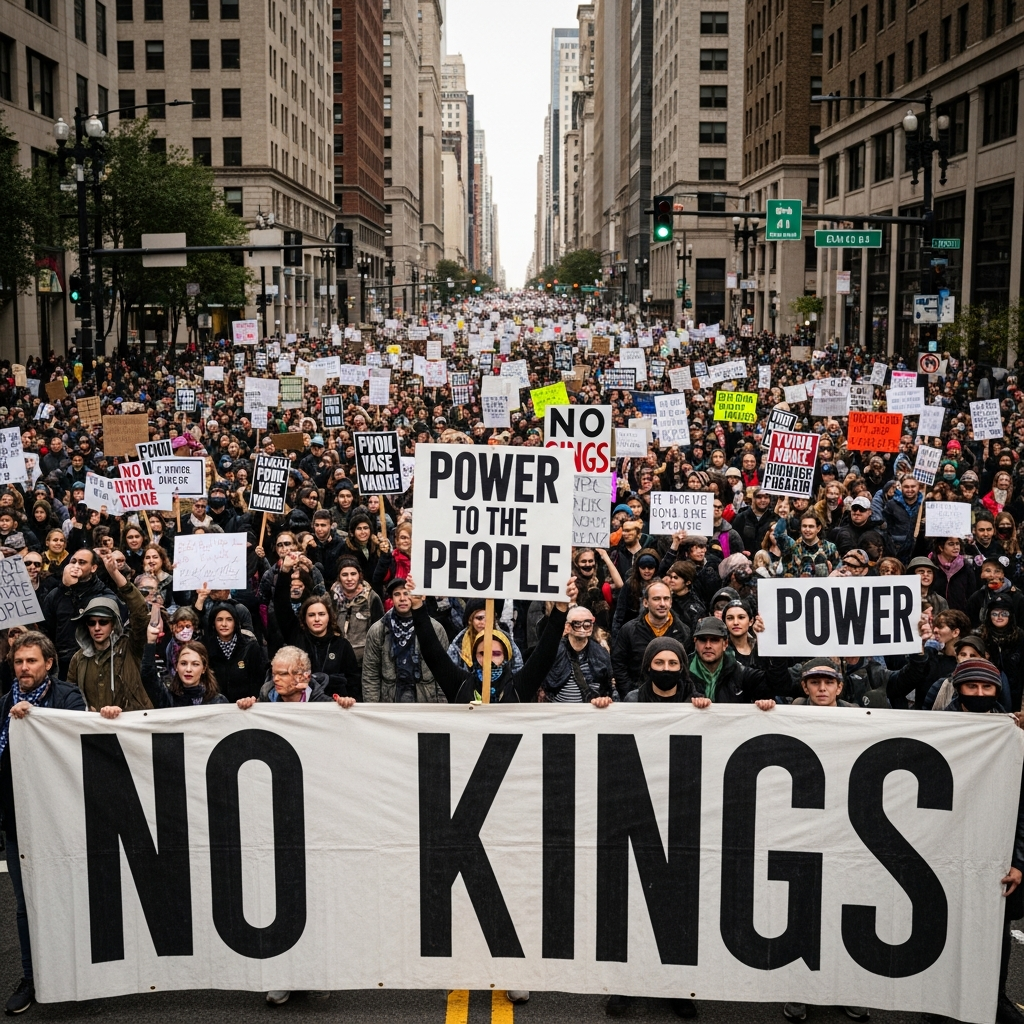
On March 28, 2026, millions of Americans and international participants joined a sweeping wave of “No Kings” protests. These demonstrations marked the third major outcry against the Donald Trump administration’s policies, perceived by many as authoritarian. From bustling city centers to smaller towns and even international capitals, citizens rallied to express profound concerns over expanded presidential powers, the ongoing Iran war, and a surging cost of living. Organizers hailed it as potentially the largest non-violent day of action in American history.
Unprecedented Scale: A Nation and World in Protest
The March 28, 2026, “No Kings” protests were unprecedented in their reach. Organizers estimated participation at over 8 to 9 million individuals across more than 3,100 events nationwide. Every US state witnessed demonstrations, with protests also extending to over a dozen countries, including significant gatherings in Paris, London, Lisbon, and Berlin. This third wave of protests built upon previous actions on Flag Day, June 14, 2025, and October 18, 2025, which themselves drew millions worldwide.
The movement’s core message was a resounding rejection of perceived authoritarianism. Protesters asserted that “power belongs to the people – not to wannabe kings or their billionaire cronies.” This sentiment underscored deep-seated fears about the Trump administration’s approach to governance.
Catalysts for Widespread Dissent
A confluence of critical issues fueled the widespread “No Kings” demonstrations. Among the most prominent grievances were:
Immigration Enforcement Crackdown: A major catalyst was the January 2026 federal immigration crackdown in Minnesota’s Twin Cities, resulting in the deaths of two American citizens, Renee Nicole Good and Alex Pretti. This tragic incident sparked immense outrage, transforming St. Paul into a flagship rally site. Protesters fiercely condemned the tactics used by federal agents and the administration’s mass deportation agenda.
The Iran War: Widespread public opposition to the Trump administration’s decision to engage in a war with Iran was a central theme. Many viewed the conflict as costly and unnecessary, diverting resources and attention from domestic issues.
Rising Cost of Living: Soaring inflation, particularly in gas and grocery prices, significantly impacted American households. Protesters voiced their frustration over the economic strain, believing the administration was failing to address these everyday burdens.
Expansion of Presidential Power: Critics warned of the Trump administration’s alleged unconstitutional actions, including expanding presidential power through executive orders to dismantle parts of the federal government. The deployment of National Guard troops to US cities despite objections from state governors and calls for prosecuting political enemies further intensified fears of a shift towards tyrannical rule.
- Other Concerns: Some demonstrations also highlighted concerns over a “lack of prosecution” following the release of the Epstein files and challenged cuts to medical research funding, as seen at a protest outside the National Institutes of Health (NIH) headquarters.
- www.bbc.com
- www.nbcnews.com
- www.fox2detroit.com
- www.theguardian.com
- abc7.com
Major Rallies and Prominent Voices Across the Nation
The “No Kings” protests saw massive turnouts and notable figures speaking out across the country.
Minnesota: A Flagship of Resistance
St. Paul, Minnesota, became the symbolic heart of the movement following the deaths of Renee Good and Alex Pretti. Minnesota Governor Tim Walz spoke passionately at the rally, condemning the immigration crackdown. He criticized the “wannabe dictator in the White House” for sending “untrained, aggressive thugs” to his state, lauding Minnesotans for defending decency and democracy. The event also featured a powerful performance by musician Bruce Springsteen, an outspoken critic, who sang his anti-immigration enforcement song, “Streets of Minneapolis,” honoring Pretti and Good.
New York City: Times Square and Celebrity Voices
In New York City, thousands packed Times Square and marched through Midtown Manhattan, necessitating street closures. Actor Robert De Niro, attending the New York protest, expressed his deep concern to the BBC, stating his belief that Trump was getting “worse and worse and worse every day,” labeling him “crazy” and “seriously CRIMINAL.” De Niro urged firm but peaceful resistance against “the regime.”
Washington D.C. and Metro Detroit
Large crowds gathered in Washington D.C., marching through the capital and lining the steps of the Lincoln Memorial and packing the National Mall. In metro Detroit, over 25,000 participants rallied across more than 100 communities. A significant gathering of approximately 4,500 protesters assembled at Grand Circus Park in downtown Detroit before marching along Woodward Avenue, temporarily closing the road. Protesters like Stacie Chiaken emphasized the constitutional focus: “It’s all about the Constitution. It’s about our fundamental rights. It’s about a man who is trying to upend all of that.”
Incidents and Federal Responses During the Protests
While many events were largely peaceful, particularly in major cities with tens of thousands of participants, some demonstrations unfortunately escalated into clashes.
In Los Angeles, thousands initially gathered at Gloria Molina Grand Park for a peaceful rally. However, a smaller group later moved towards the Federal Detention Center. Chaos erupted outside the Federal Building and Metropolitan Detention Center as protesters allegedly attempted to tear down a chain-link fence and hurled rocks, bottles, and concrete at federal officers. Authorities responded by confiscating items, deploying tear gas, and ultimately declaring an unlawful assembly. Eyewitness News crews observed officers in tactical gear forming skirmish lines. By evening, approximately 75 arrests were made, with videos capturing confrontations and individuals being handcuffed.
The Department of Homeland Security (DHS) reported two arrests in Los Angeles after “1,000 rioters” allegedly hit two officers with cement blocks. In Dallas, Reuters reported arrests following “minor scuffles” initiated by counter-protesters. Video verified by NBC News also showed arrests in Portland, Oregon, after clashes outside an Immigration and Customs Enforcement (ICE) facility. Despite these incidents, organizers maintained a commitment to nonviolence, vowing that federal agents would not intimidate protesters. Several US states mobilized the National Guard in anticipation or response to the events.
The White House Rebuttal and Broader Political Context
The Trump administration largely dismissed the widespread “No Kings” protests. White House spokesperson Abigail Jackson characterized the events as “Trump Derangement Therapy Sessions,” asserting that “The only people who care about these… are the reporters who are paid to cover them.” This narrative aimed to minimize the legitimacy and public support for the movement.
However, public sentiment reflected some alignment with the protest’s core issues. An NBC News poll conducted earlier in March 2026 indicated that majorities of registered voters disapproved of the president’s handling of immigration, the Iran war, and the rising cost of living.
The protests were a highly organized effort, orchestrated by a coalition of over 35 local groups and national organizations. These included left-leaning groups such as Indivisible, Public Citizen, MoveOn, the American Civil Liberties Union (ACLU), and the National Action Network, alongside labor unions, faith communities, civil rights advocates, and immigrant rights organizations. Organizers highlighted that over 50% of the registered events were in Republican-leaning or battleground states, underscoring what Lisa Gilbert of Public Citizen described as the “universal appeal” of a non-partisan, patriotic call against kings in America.
Frequently Asked Questions
What were the primary reasons behind the “No Kings” protests on March 28, 2026?
The “No Kings” protests on March 28, 2026, were driven by a range of grievances against the Trump administration. Key motivations included widespread opposition to the ongoing war with Iran, concerns over the rising cost of living (particularly gas and groceries), and a strong backlash against federal immigration enforcement tactics. A major catalyst was the tragic deaths of two American citizens during an immigration crackdown in Minnesota. Protesters also expressed deep worries about perceived presidential overreach and threats to constitutional rights, asserting that “democracy has no kings.”
Which cities saw significant “No Kings” protest activity and what notable incidents occurred?
Significant “No Kings” protest activity was reported across numerous major cities. Washington D.C. saw large crowds at the Lincoln Memorial and National Mall. St. Paul, Minnesota, became a focal point due to the immigration crackdown, featuring speeches by Governor Tim Walz and a performance by Bruce Springsteen. New York City witnessed thousands in Times Square and Midtown. In Los Angeles, protests escalated to clashes outside federal buildings, involving thrown objects, tear gas deployment, and approximately 75 arrests. Metro Detroit also reported over 25,000 participants across dozens of communities. Minor scuffles and arrests were also noted in Dallas and Portland, Oregon.
How did the Trump administration respond to the “No Kings” demonstrations, and what was the impact on public sentiment?
The Trump administration largely dismissed the “No Kings” demonstrations. White House spokesperson Abigail Jackson characterized them as “Trump Derangement Therapy Sessions,” suggesting they lacked genuine public support and were only covered by “paid reporters.” However, this dismissal contrasted with public sentiment. An NBC News poll conducted shortly before the protests indicated that majorities of registered voters disapproved of the president’s handling of key issues like immigration, the Iran war, and the cost of living—precisely the grievances fueling the widespread demonstrations. This suggests a significant disconnect between the administration’s portrayal and the broader public’s concerns.
The Enduring Message of Dissent
The “No Kings” protests of March 28, 2026, represent a powerful moment of collective civic action. Millions took to the streets, both domestically and internationally, to voice their profound concerns about the direction of the country under the Trump administration. Despite official dismissals, the widespread participation, diverse coalition of organizers, and resonance with public sentiment highlighted a persistent demand for constitutional adherence and democratic principles. These demonstrations served as a stark reminder that in a republic, power is meant to reside with the people, not with any single leader perceived as overstepping their bounds. The legacy of these protests underscores the enduring American commitment to dissent and the fundamental belief that “democracy has no kings.”