The Middle East is grappling with escalating tensions as Houthi rebels, backed by Iran, continue to launch Houthi attacks Israel and disrupt vital maritime trade routes. These actions, exemplified by a recent missile launch towards southern Israel on March 28th, mark a significant intensification of regional conflict. While that particular strike was intercepted, harming no one, it underscores a perilous new front with profound global implications, particularly for Red Sea shipping and the broader global economy.
The Escalating Houthi Front Against Israel
Yemen’s Houthi militia, a Shia movement aligned with Iran, has re-entered the current Middle East hostilities with direct missile and drone attacks aimed at Israeli targets. This re-entry follows previous threats of “direct military intervention” if US and Israeli attacks on Iran continued or if other powers joined the conflict. These Houthi missile attacks have been a consistent feature since October 2023, claiming solidarity with Palestinians in the Israel-Hamas war.
On March 27th, the Houthis issued a communiqué explicitly warning of their readiness to act. Hours later, their first missiles were launched towards Israel. Brigadier General Yahya Saree, a Houthi military spokesman, later claimed responsibility for these actions, which Israel’s military confirmed intercepting. While many Houthi projectiles are intercepted, Israel has responded with its own retaliatory strikes. These have included targeting Houthi-controlled ports and a power station in Yemen, including Sanaa, causing casualties and significant damage to infrastructure like the Hodeida pier. Israeli Prime Minister Benjamin Netanyahu has affirmed that the “terrorist Houthi regime” will pay a “very high price” for its aggression.
A Choking Threat to Global Shipping Lanes
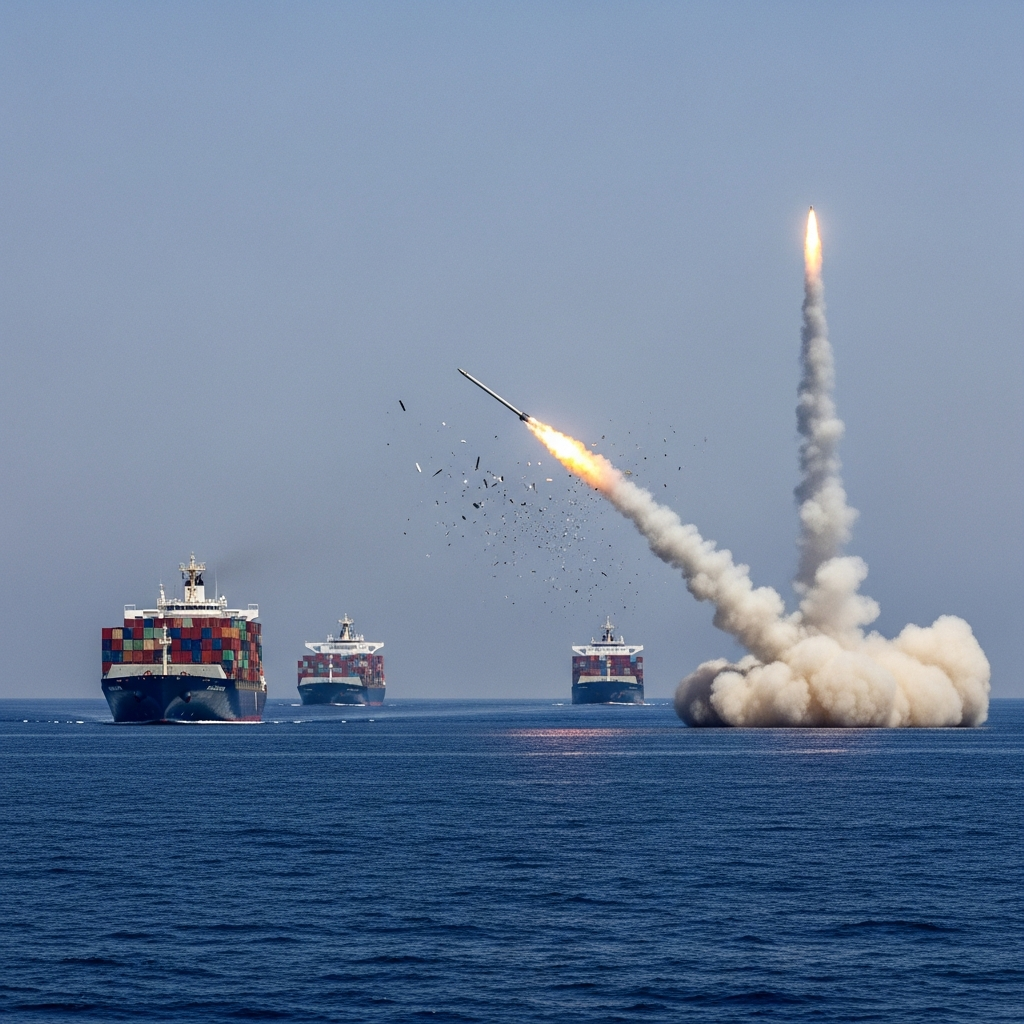
Beyond direct strikes on Israel, the Iran-backed Houthi rebels pose a critical threat to global maritime commerce. Their proven capability to strike targets far beyond Yemen is now severely disrupting Red Sea shipping lanes and the crucial Bab al-Mandab Strait, which is a chokepoint for traffic heading toward the Suez Canal. These actions have forced major maritime companies into costly detours, significantly impacting global supply chains.
The Red Sea has become even more critical due to the effective closure of the Strait of Hormuz, which Iran claims is closed to hostile shipping. Saudi Arabia, for instance, has rerouted much of its oil exports through the Red Sea port of Yanbu. Houthi attacks, including the tragic sinking of cargo ships like the Eternity C and the bulk carrier Magic Seas, demonstrate the grave danger. The Eternity C attack, involving rockets, drones, and bomb-carrying drone boats, resulted in at least three crew deaths and significant loss of cargo. Following such incidents, Danish shipping giant Maersk suspended operations at Oman’s Salalah port after a drone attack, further highlighting the widespread impact of these maritime threats.
The Broader Middle East Conflict: A Web of Aggression
The Houthi intervention is part of a much larger and rapidly widening Middle East conflict. The current hostilities originated from US and Israeli airstrikes across Iran, which led to the death of Supreme Leader Ayatollah Ali Khamenei and widespread turmoil. This has plunged the region into a complex web of aggression involving multiple actors.
Beyond Yemen, escalations have been reported across the region. At least 12 US soldiers were wounded, two seriously, in an Iranian strike on Prince Sultan Air Base in Saudi Arabia, which also damaged US refuelling aircraft. Air defense systems and drones have been intercepted in the United Arab Emirates, Kuwait, and Bahrain. In Iraq, pro-Iran factions have reported fatalities blamed on US and Israeli forces. Lebanon has seen renewed Israeli offensives against Iran-backed Hezbollah, leading to journalist casualties and the displacement of a fifth of its population. Iran has also sustained significant damage, with US-Israeli strikes halting production at major facilities like the Khuzestan Steel Company and targeting power plants and residential units, leading to thousands of casualties. Iran’s Revolutionary Guards have warned of retaliation against industrial sites for economic damage.
Diplomatic Maneuvers and International Responses
The international community is grappling with the severe repercussions of this Middle East escalation. Diplomatic efforts are underway to de-escalate, though breakthroughs remain elusive. US Secretary of State Marco Rubio has indicated that Washington expects its military operations against Iran to conclude within weeks, aiming to achieve objectives without ground troops, though significant US forces, including Marines and airborne soldiers, have been deployed for “maximum optionality.” US Special Envoy Steve Witkoff is promoting a 15-point peace plan, with expectations of direct US-Iran meetings.
Pakistan is actively mediating, set to host foreign ministers from Saudi Arabia, Turkey, and Egypt for talks. Iran’s President Masoud Pezeshkian has acknowledged Islamabad’s role. Ukraine’s President Volodymyr Zelenskyy has also visited the Gulf, discussing leveraging Ukraine’s anti-drone expertise for regional defenses against Iranian strikes, signing cooperation agreements with Saudi Arabia and Qatar. However, despite these efforts, rhetoric remains heated, with President Trump issuing ultimatums to Iran regarding the Strait of Hormuz and threatening strikes on its energy grid if compliance is not met.
Economic Fallout and Geopolitical Stakes
The global economic impact of this protracted conflict is immense. The effective closure of the Strait of Hormuz, a conduit for about a fifth of global oil and liquefied natural gas supplies, combined with the Red Sea disruptions, has caused the biggest-ever disruption to global energy supplies. The Brent crude oil benchmark has surged by over 50 percent since the conflict began, driving up energy prices worldwide.
The ongoing instability extends beyond energy markets, affecting global trade routes and exacerbating inflation. Domestically, in the United States, the “unpopular war” is a significant concern for the ruling party, especially with upcoming elections. The conflict fuels widespread public opposition, evidenced by anti-war rallies. The situation poses substantial geopolitical stakes, threatening long-term regional stability, impacting international alliances, and casting a shadow over future diplomatic efforts like US-Iran nuclear talks. The sheer complexity and interconnectedness of these events mean that the economic and human costs will continue to mount without a resolution.
Frequently Asked Questions
Why are the Houthi rebels targeting Israel and Red Sea shipping?
The Houthi rebels, an Iran-backed Shia movement in Yemen, claim their attacks on Israel and Red Sea shipping are acts of solidarity with Palestinians caught in the Israel-Hamas war, which began in October 2023. They also state these actions are a response to US and Israeli military aggression against Iran and its allies. By targeting ships they deem linked to Israel or engaging in general maritime disruption, the Houthis aim to exert pressure and demonstrate their capability as a key player in the wider “Axis of Resistance” aligned with Iran.
What are the key maritime chokepoints threatened by the escalating conflict?
The escalating Middle East conflict critically threatens two vital maritime chokepoints: the Red Sea and its southern entry point, the Bab al-Mandab Strait, and the Strait of Hormuz in the Persian Gulf. The Bab al-Mandab Strait is crucial for sea traffic heading towards the Suez Canal, impacting global trade between Asia and Europe. The Strait of Hormuz, linking the Persian Gulf to the open ocean, accounts for about a fifth of global oil and liquefied natural gas supplies. Both are susceptible to missile and drone attacks, rerouting vessels, and causing significant delays and cost increases for international shipping.
How has the international community responded to the Houthi attacks, and what are the economic ramifications?
The international community has condemned the Houthi attacks, with the US State Department highlighting the threat to freedom of navigation and maritime security. Militarily, the US has deployed additional forces and conducted airstrikes against Houthi targets. Diplomatically, efforts include Pakistan’s mediation between Washington and Tehran, G7 talks, and a US-proposed 15-point peace plan. Economically, the attacks and broader conflict have caused severe disruption, notably driving Brent crude oil prices up by over 50 percent. This has led to costly shipping detours, significant impacts on global energy supplies, and a surge in the cost of trade, creating substantial economic fallout globally.
The ongoing volatility in the Middle East, fueled by Houthi attacks Israel, Iranian responses, and international interventions, represents a period of unprecedented risk. The direct military clashes, the perilous threats to Red Sea shipping and global energy routes, and the widening network of conflict across the region all point to a deeply unstable future. Without sustained diplomatic efforts and a concerted push for de-escalation, the human and economic costs are poised to escalate further, impacting global stability for years to come.