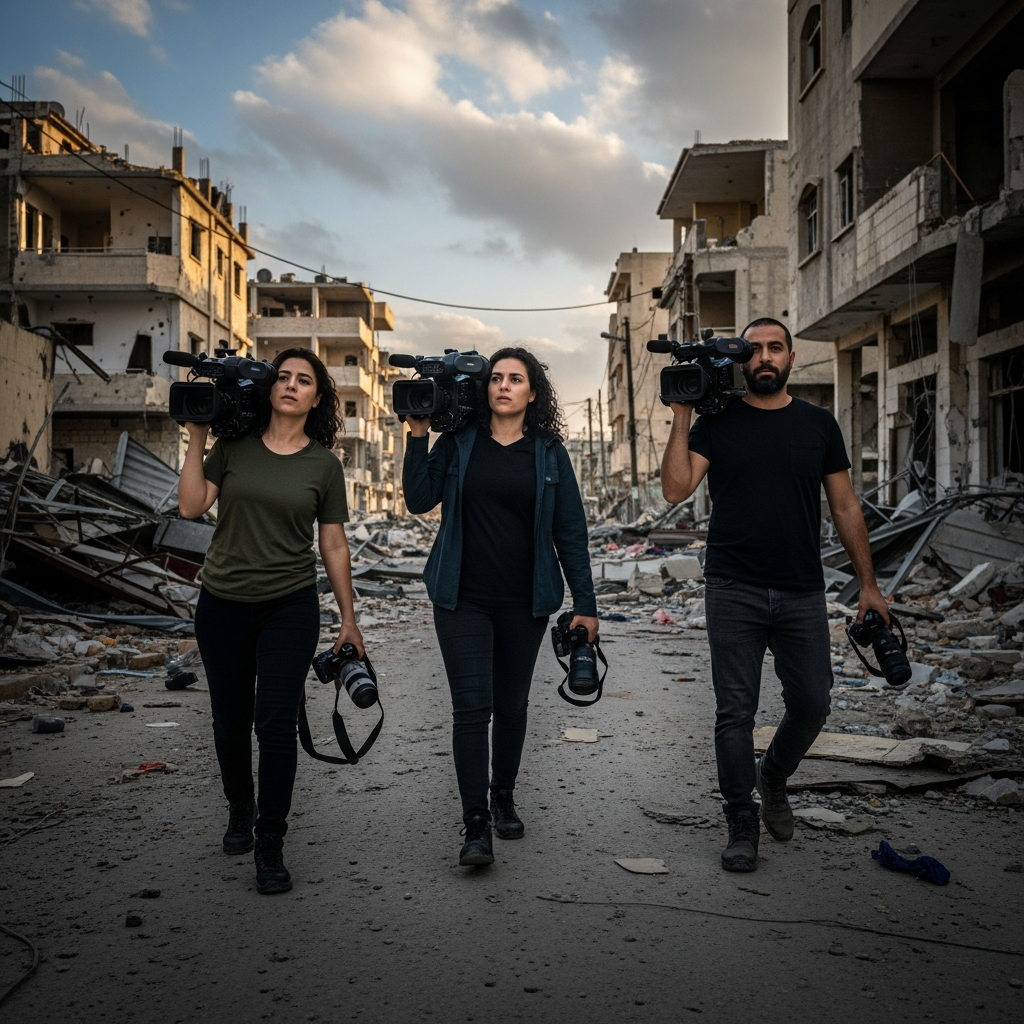
A devastating Israeli airstrike in southern Lebanon has tragically claimed the lives of three Lebanese journalists – Fatima Ftouni, Mohammed Ftouni, and Ali Shoeib – sparking widespread international condemnation. This incident, which occurred on Saturday, March 28, 2026, intensified concerns about the safety of media professionals operating in conflict zones, particularly amid conflicting reports and accusations between Israeli forces and Lebanese factions. The attack highlights the severe risks faced by those dedicated to reporting from the frontlines.
The Tragic Incident Unfolds
On a somber Saturday in March 2026, a routine reporting assignment turned fatal for three dedicated Lebanese journalists in the Jezzine district of southern Lebanon. An Israeli missile strike directly targeted their vehicle, resulting in the immediate deaths of Fatima Ftouni, a reporter for Al Mayadeen, her brother Mohammed Ftouni, a cameraman, and Ali Shoeib, a seasoned correspondent for Al Manar. Eyewitness accounts and local television footage suggested at least four precision missiles struck the clearly marked press car, reducing it to a mangled wreck and scattering essential press equipment like singed jackets and tripods. This abhorrent event quickly ignited a firestorm of criticism from Lebanese officials and international bodies, who decried it as a blatant violation of international law. The Jezzine region, notably described as “far from the frontlines” of active combat, made the targeting even more perplexing and alarming for observers.
Identities and Backgrounds of the Victims
The three media professionals were well-known figures within Lebanon’s journalistic community. Ali Shoeib, working for the Hezbollah-affiliated Al Manar television station, had dedicated nearly three decades to covering conflicts in southern Lebanon, earning a reputation as a prominent war correspondent and an “icon of resistance reporting.” Many fellow journalists regarded him as a mentor and an invaluable resource. Fatima Ftouni, an Al Mayadeen reporter, was celebrated for her “brave and objective reporting” and had recently delivered a live report from southern Lebanon just prior to the fatal strike. Tragically, she had previously survived an Israeli bomb attack eighteen months earlier that killed two colleagues, and her own family members had been killed in Israeli strikes just weeks before this incident. Her brother, Mohammed Ftouni, worked alongside her as a cameraman, sharing the inherent dangers of their profession. The deaths of the Ftouni siblings marked a significant loss for Al Mayadeen, which has now lost several journalists since the current hostilities began.
Controversy and Conflicting Narratives
In the immediate aftermath, the Israel Defence Forces (IDF) swiftly claimed responsibility for the strike, asserting that their primary target was Ali Shoeib. The IDF described him as a “terrorist in the intelligence unit of Hezbollah’s Radwan Force,” alleging he had “operated for years under the guise of a journalist” to expose Israeli troop locations and disseminate Hezbollah propaganda. However, the Israeli military provided no concrete evidence to substantiate these grave accusations and conspicuously omitted any mention of Fatima and Mohammed Ftouni’s deaths in their initial statement. Both Al Manar and Al Mayadeen vehemently denied the Israeli claims, characterizing Shoeib as a professional journalist and dismissing the IDF’s statements as “false claims” designed to “evade responsibility” for a war crime. This pattern of Israel accusing journalists of militant affiliations without providing credible evidence has been observed in other conflicts, including those in Gaza, raising serious concerns among press freedom advocates.
International Law and Journalistic Protection
International humanitarian law unequivocally protects journalists as civilians during armed conflicts, regardless of their affiliations, as long as they are not directly participating in hostilities. Targeting journalists under these circumstances constitutes a war crime. Organizations like the Committee to Protect Journalists (CPJ) have consistently reiterated this fundamental principle, emphasizing that journalists are “not legitimate targets, regardless of the outlet they work for.” The CPJ is actively investigating this incident, noting a disturbing historical pattern of Israel accusing journalists of being combatants. This latest tragedy adds to an already alarming global tally, with CPJ reporting that Israel was responsible for the majority of journalist fatalities worldwide in 2025. This underscores a critical erosion of press freedom and safety in conflict zones.
Wider Regional Implications
The targeted Israeli airstrike against the Lebanese journalists occurred within a rapidly escalating regional conflict. The broader “US-Israel war on Iran,” which ignited in late February, has seen a significant intensification of hostilities across the Middle East. In Lebanon alone, Israeli attacks have resulted in a devastating humanitarian toll, with the Ministry of Health reporting over 1,100 deaths and more than 3,300 injuries since March 2, 2026. This includes numerous healthcare workers and children. The ongoing conflict has forced over a million people from their homes, exacerbating an already dire humanitarian crisis in Lebanon. The incident also highlights the continued fragility of a ceasefire agreed upon in November 2024 between Israel and Hezbollah, which saw only partial withdrawals and continued accusations of rearmament.
Humanitarian Toll and Broader Context
Beyond the journalists, the same day witnessed further assaults on civilians and essential service providers. Israeli airstrikes reportedly killed seven medical workers in separate attacks across southern Lebanon, alongside a number of children. The World Health Organization (WHO) corroborated the severe impact, reporting eight additional paramedics killed and seven wounded in five separate attacks on healthcare facilities. These repeated assaults have forced the closure of multiple hospitals and primary healthcare centers, severely disrupting vital health services for the remaining population. Furthermore, Iran-backed Houthi rebels from Yemen claimed responsibility for a missile attack on Israel, marking a new dimension to the conflict. This broader context underscores the extreme dangers faced by civilians and non-combatants in an increasingly volatile region, making it a critical area for reporting and international observation.
Condemnation from Lebanese Officials
The Lebanese government reacted with swift and unequivocal condemnation. President Joseph Aoun denounced the attack as a “brazen crime” and a “flagrant violation of international law,” stressing that targeting reporters performing their professional duties is unacceptable. Prime Minister Nawaf Salam echoed these sentiments, highlighting the breach of rules protecting journalists in wartime. Lebanon’s Information Minister, Paul Morcos, emphasized that his nation would not “treat such attacks as normal” and confirmed that his ministry, in conjunction with the foreign ministry, was preparing to file a formal complaint with the UN Security Council over Israel’s deliberate targeting of journalists. He called for the international community to reaffirm and enforce protections for media personnel in conflict zones.
Calls for International Action
The international response, though not uniform, largely aligned with Lebanese outrage. Sky News’s special correspondent noted strong condemnation of the attacks. Sara Qudah, CPJ’s regional director, emphasized the “disturbing pattern” of Israel accusing journalists without credible evidence and stressed that journalistic impartiality or affiliation should not negate their protected status. The incident serves as a stark reminder of the urgent need for international bodies to enforce existing protections for journalists and humanitarian workers. Lebanon’s government has compiled extensive documentation of Israeli attacks against healthcare workers and media personnel, intending to present this evidence to the UN and the European Union, advocating for accountability and a cessation of what they term “blatant war crimes.” The silence of the international community, as tragically noted by Fatima Ftouni herself after a prior attack, empowers such actions.
Frequently Asked Questions
What happened to the Lebanese journalists in Jezzine?
On Saturday, March 28, 2026, three Lebanese journalists – Fatima Ftouni, her brother Mohammed Ftouni (both from Al Mayadeen), and Ali Shoeib (from Al Manar) – were tragically killed in an Israeli airstrike targeting their clearly marked press vehicle in the Jezzine district of southern Lebanon. Local reports indicate multiple missiles struck the car. The incident occurred shortly after Fatima Ftouni had completed a live report from the area, which was considered away from the immediate frontlines, intensifying concerns for press freedom in the region.
Which organizations condemned the Israeli strike on journalists?
The Israeli strike drew widespread condemnation from numerous Lebanese officials and international bodies. Lebanon’s President Joseph Aoun and Prime Minister Nawaf Salam both denounced it as a “brazen crime” and a “flagrant violation of international law.” Information Minister Paul Morcos announced plans to file a complaint with the UN Security Council. The Committee to Protect Journalists (CPJ) also condemned the attack, reiterating that journalists are not legitimate targets, regardless of their affiliations, and called for an investigation into the disturbing pattern of such incidents.
What are the international laws protecting journalists in conflict zones?
International humanitarian law, specifically the Geneva Conventions and their Additional Protocols, grants journalists civilian status in armed conflicts, provided they are not directly participating in hostilities. This means they are protected from direct attack and must be treated humanely. Targeting journalists who are clearly identified as such and performing their professional duties is considered a war crime. These protections aim to ensure the free flow of information, even during times of conflict, recognizing the vital role media plays in accountability and public awareness, and are essential for safeguarding Lebanese journalists and others globally.
A Call for Accountability and Protection
The tragic deaths of Fatima Ftouni, Mohammed Ftouni, and Ali Shoeib serve as a grim reminder of the profound dangers faced by journalists operating in war zones. Their sacrifice underscores the critical importance of upholding international laws designed to protect media professionals and all civilians. As the regional conflict continues to escalate, the international community faces an urgent imperative to ensure accountability for such incidents and to reinforce the fundamental principle that the truth-tellers of the world are never legitimate targets. The path forward demands not just condemnation, but concrete action to safeguard press freedom and human lives in southern Lebanon and beyond.