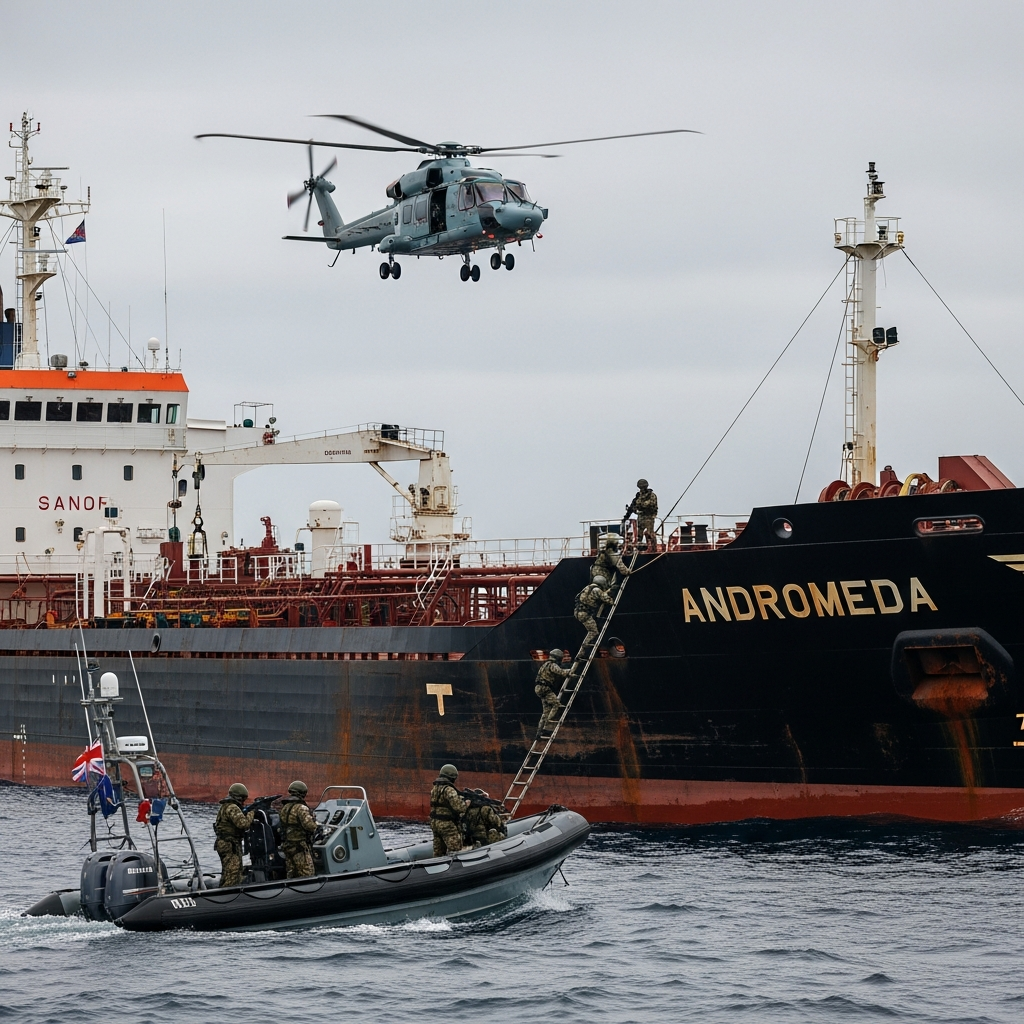
Britain is set to launch a decisive and unprecedented crackdown on Russia’s “shadow fleet” within its territorial waters. This bold move authorizes British armed forces and law enforcement to intercept, board, and potentially seize vessels suspected of illicitly transporting Russian oil, directly challenging Moscow’s efforts to evade Western sanctions. This strategic escalation aims to disrupt a crucial financial lifeline for Russia’s ongoing war in Ukraine, underscoring the UK’s commitment to defending its interests and supporting international stability.
Unveiling the “Shadow Fleet”: A Looming Threat
The “shadow fleet” refers to a vast, clandestine network of often ageing oil tankers operating outside conventional maritime regulations. These vessels typically employ deceptive practices, such as using false national flags, operating under opaque ownership structures, and switching off transponders, to conceal their origins and evade international sanctions. Experts estimate this fleet numbers over 1,000 ships, making it a significant mechanism for Russia to export its crude oil, primarily to Asian markets like China, India, and Turkey.
Beyond sanctions evasion, these vessels pose substantial environmental and safety risks. Operating with minimal maintenance and often without proper insurance, they represent a potential catastrophe in busy shipping lanes like the English Channel. A collision or spill from one of these poorly regulated tankers could have devastating consequences for marine ecosystems and coastal communities. This dual threat—funding aggression and risking environmental disaster—has propelled the UK to take more assertive action.
Britain’s Strategic Shift: From Tracking to Interception
The new authorization, greenlit by Prime Minister Keir Starmer, represents a significant policy shift. Previously, the Royal Navy and UK allies focused on tracking and intelligence gathering. Now, British forces have the power for direct intervention. This means that any vessel sanctioned by the UK and found in British waters can be legally boarded and inspected. The primary objective is clear: to “starve Putin’s war machine of the dirty profits” that fuel his military campaign in Ukraine.
This tough stance follows meticulous planning. British military and law enforcement personnel have undergone specialized training to handle complex scenarios, including boarding potentially uncooperative or even armed vessels. Each proposed interception will undergo rigorous review by legal, military, and energy market specialists before ministers grant final approval. Successful seizures could lead to criminal charges against owners, operators, and crew members for breaches of UK sanctions law.
International Collaboration and Precedent-Setting Actions
Britain’s heightened measures are part of a broader, concerted international effort. The UK has actively collaborated with allies within the Joint Expeditionary Force (JEF), a 10-member, UK-led alliance focused on maritime security. JEF partners like Finland, Sweden, and Estonia have already undertaken operations against suspected shadow fleet vessels in the Baltic Sea. Similarly, the French navy recently intercepted and boarded the Mozambique-flagged tanker Deyna, believed to be part of the shadow fleet, further highlighting the growing international resolve.
This policy also builds on past successes. Earlier, the UK supported US forces in the successful seizure of the tanker Bella 1 (later renamed Marinera and flagged to Russia) in the Atlantic. Such operations underscore the effectiveness of coordinated international action in disrupting Russia’s illicit shipping networks. Prime Minister Starmer emphasizes the global economic impact, noting that “Putin is rubbing his hands at the war in the Middle East because he thinks higher oil prices will let him line his pockets.” By targeting the shadow fleet, the UK aims to counteract this perceived advantage.
Russia’s Response and Escalation Risks
Predictably, Russia has issued strong warnings against direct action on its linked vessels. Senior Russian officials, including Nikolai Patrushev, former FSB director and head of Russia’s maritime board, have previously vowed to counter “western piracy” and warned of deploying the Russian navy to protect Russian-linked vessels from potential seizures. Any direct intervention by UK forces carries inherent geopolitical risks, potentially leading to tense standoffs at sea.
However, the UK’s move also serves as a potent deterrent. By making British waters a high-risk zone, the policy aims to compel shadow fleet tankers to reroute. This could force them onto longer, more expensive voyages, potentially around the north of Scotland and west of Ireland, significantly increasing their operational costs and making the illicit trade less profitable. This economic pressure is a cornerstone of the strategy to diminish Russia’s financial capacity to fund the war.
The Mechanics of Maritime Interdiction
Royal Navy (RN) and law enforcement teams are prepared for sophisticated maritime interdiction operations. These often involve rapid insertion techniques, typically utilizing helicopters from the Commando Helicopter Force. Merlin Mk4 helicopters can deploy boarding parties of up to 24 troops, while smaller Wildcat helicopters provide critical armed overwatch and precision support, often carrying Royal Marine snipers or Special Boat Service (SBS) teams.
Boarding teams can be fast-roped or winched directly onto a vessel’s deck, allowing for immediate action without requiring the target ship to stop. While highly specialized units like the SBS are crucial, Offshore Patrol Vessels (OPVs) like HMS Trent may also play a leading role in UK waters, supported by larger frigates or destroyers when available. Historically, crews on intercepted shadow fleet vessels, often non-Russian, have been cooperative, leading to seizures without armed resistance. This operational readiness underscores the seriousness of the UK’s commitment.
Broader Implications for Global Stability
The UK’s assertive posture extends beyond mere sanctions enforcement. It sends a clear message about defending national sovereignty and upholding international law. By actively combating the shadow fleet, Britain is directly confronting Russia’s hybrid warfare tactics, which include not only military aggression but also economic subversion and attempts to undermine global norms. This proactive stance contributes to regional stability in Northern Europe and reinforces the collective resolve of Western allies. The ultimate goal is to cut off a vital funding source for Russia’s aggression, thereby contributing to a more secure future for Ukraine and the wider international community.
Frequently Asked Questions
What is the “shadow fleet” and why is it a concern for the UK?
The “shadow fleet” comprises hundreds of ageing oil tankers that operate covertly to export sanctioned Russian crude oil, primarily to Asian markets. These vessels use deceptive practices like false flags, opaque ownership, and disabled transponders to evade international sanctions imposed after Russia’s invasion of Ukraine. For the UK, this fleet is a dual concern: it provides a critical financial lifeline for Russia’s war effort, and its poorly maintained, unregulated operation poses significant environmental and safety risks in busy waterways like the English Channel.
Where are UK forces focusing their interception efforts against the shadow fleet?
UK forces are authorized to intercept and board suspected shadow fleet vessels specifically within British territorial waters. This includes strategic maritime routes such as the English Channel. By making these waters a high-risk area, the UK aims to compel these tankers to divert to longer, more expensive routes around the north of Scotland and west of Ireland. This strategy increases Russia’s shipping costs, thereby diminishing the profitability of their illicit oil trade.
What are the potential geopolitical and economic impacts of the UK’s increased action against Russia’s shadow fleet?
The UK’s assertive action carries significant geopolitical and economic impacts. Geopolitically, it marks a direct escalation against Russia, potentially leading to increased tensions at sea, though Russia’s navy typically prioritizes military vessels. Economically, the policy aims to severely disrupt Russia’s oil revenues by forcing vessels to incur higher operational costs through rerouting. This helps “starve Putin’s war machine” of funds, reducing Russia’s capacity to finance the war in Ukraine. It also reinforces international sanctions and demonstrates a stronger collective resolve among Western allies to enforce maritime security and international law.
References
- www.theguardian.com
- <a href="https://mezha.net/eng/bukvy/ukwillintercept_and/”>mezha.net
- unn.ua
- www.navylookout.com
- newsukraine.rbc.ua