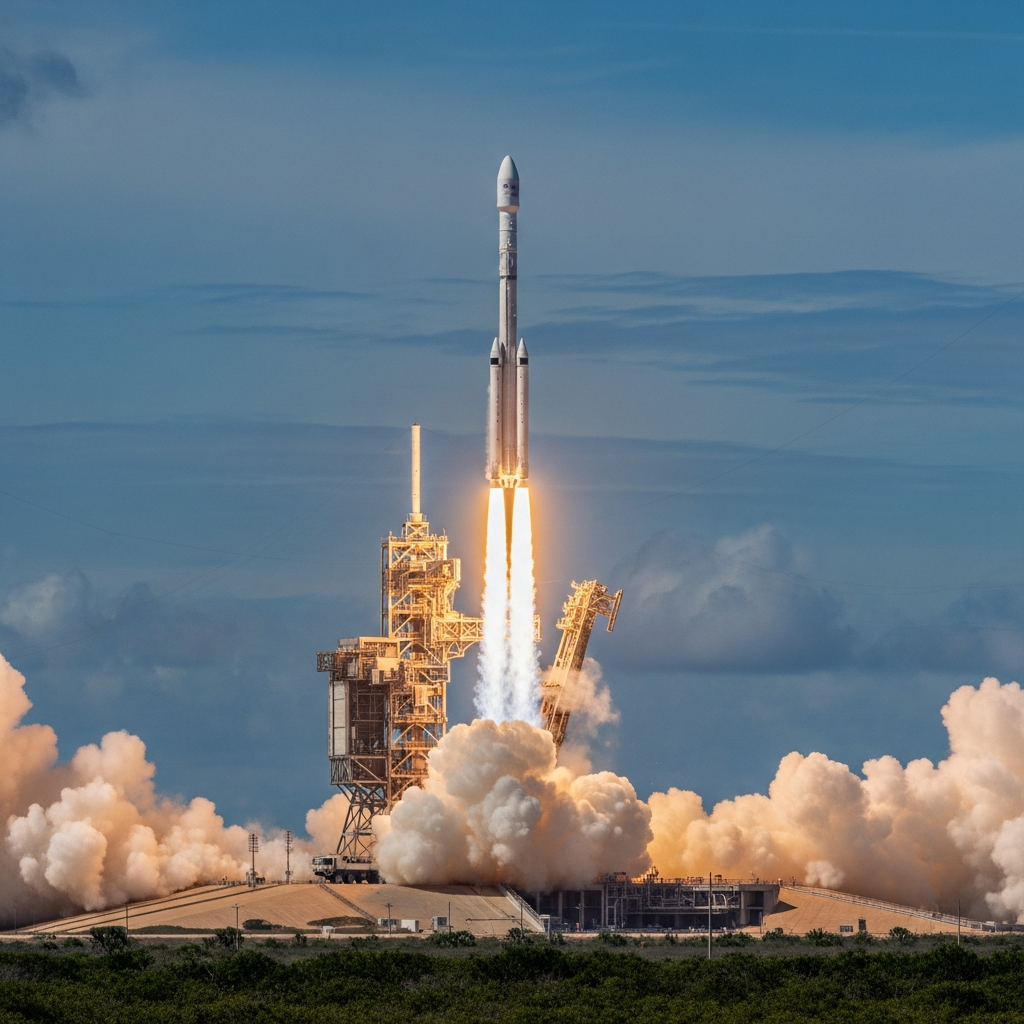
The highly anticipated Artemis II launch is officially targeting an April 1st liftoff, setting the stage for humanity’s dramatic return to deep space. This crucial mission will send four astronauts on an ambitious journey around the Moon, marking the first time humans have ventured beyond Earth orbit in over 50 years. As of March 24th, NASA leadership confirmed that all systems are trending positively for this historic endeavor from Florida’s iconic Kennedy Space Center.
This monumental step is not just a single mission; it’s a critical prelude to NASA’s ambitious long-term vision of establishing a permanent human presence on the lunar surface. The Artemis II moon mission promises to be a thrilling spectacle and a pivotal moment in our exploration of the cosmos.
The Mission: A New Era of Lunar Exploration
Artemis II represents the first crewed test flight of NASA’s Artemis program, designed to push the boundaries of human spaceflight. The mission will see the colossal Space Launch System (SLS) rocket, the most powerful in the world, propel the Orion spacecraft and its four-person crew around the Moon. This 10-day test flight will confirm the capabilities of both the SLS and Orion, paving the way for future lunar landings.
The four astronauts – Commander Reid Wiseman, Pilot Victor Glover, Mission Specialist Christina Koch, and Canadian Space Agency astronaut Jeremy Hansen – are currently undergoing pre-flight quarantine. Their journey will take them looping around the far side of the Moon before returning safely to Earth. This mission is a direct successor to the Apollo program, reigniting the flame of lunar exploration that dimmed after Apollo 17 in 1972. It represents a generational leap, pushing American leadership in space and inspiring a new generation.
Road to the Launchpad: Overcoming Hurdles
The path to the launchpad for Artemis II has not been without its challenges, demonstrating NASA’s meticulous approach to safety. The SLS rocket, standing an impressive 98 meters tall with its Orion spacecraft, recently underwent a crucial second rollout to Launch Pad 39B at Kennedy Space Center. This followed an earlier setback in March when a detected helium flow issue in the Interim Cryogenic Propulsion Stage (ICPS) necessitated its return to the Vehicle Assembly Building (VAB).
Inside the VAB, engineers worked diligently on elevated platforms. They meticulously replaced suspect components within the helium circuit’s valves and plumbing. Additionally, batteries in several critical systems were swapped, and thorough re-testing confirmed the fault had been cleared. The colossal Crawler-Transporter-2, a marvel of engineering built in 1965, then executed the slow, deliberate four-mile journey back to the pad on March 20th. Moving at a maximum speed of just 1 mph, this careful transport minimizes stress on the precious rocket, allowing flight teams to monitor every inch of its journey.
Final Preparations and Launch Windows
With the SLS and Orion now securely positioned at Pad 39B, engineers are conducting a series of final checks. These vital tests include verifying the integrity of the recent repairs, reconnecting the launch tower to the vehicle, and running pressure tests on the helium system that caused the earlier delay. Significantly, NASA has decided against a wet dress rehearsal or further pre-launch fueling tests. As stated in a March 12th press briefing, the next time the SLS rocket is fueled, it will be for a launch attempt.
Lori Glaze, acting associate administrator for Exploration Systems Development Mission Directorate, confirmed on March 24th that no major issues are currently being worked. The only remaining factors NASA is closely monitoring are the weather conditions at the launch site and along the ascent corridor. The agency has identified a robust launch window with several opportunities for the Artemis II launch:
April 1: 6:24 p.m. EDT
April 2: 7:22 p.m. EDT
April 3: 8:00 p.m. EDT
April 4: 8:53 p.m. EDT
April 5: 9:40 p.m. EDT
April 6: 10:36 p.m. EDT
NASA has the flexibility to launch on four out of these six specified days if needed, providing ample opportunity for mission success.
Beyond Artemis II: Charting a Course for a Lunar Future
The Artemis II mission is more than just a trip around the Moon; it’s the foundational step in NASA’s ambitious new 10-year plan for sustained lunar exploration. The agency aims to establish a “semi-permanent crew presence” on the Moon by 2032. This long-term vision, supported by an estimated $20 billion investment over seven years, involves dozens of missions and extensive collaboration with commercial and international partners.
NASA’s updated architectural approach emphasizes standardizing vehicle configurations and increasing the cadence of missions. Notably, the Lunar Gateway, an orbital space station initially conceived as a stepping stone, has been abandoned in favor of direct surface operations. This revised strategy includes a phased development plan:
Artemis II (Early April 2026): The upcoming crewed flyby mission.
Artemis III (2027): Revised from a lunar landing, this mission will now be a critical test flight in low Earth orbit. It will focus on testing human landing systems, rendezvous and docking procedures, and new Extravehicular Activity (xEVA) suits.
Artemis IV (Early 2028): Targeted to send astronauts to the lunar surface.
Artemis V (Late 2028): Scheduled to further accelerate the establishment of the lunar base.
Carlos Garcia-Galan, NASA’s Moon Base Program Executive, elaborated on the planned lunar infrastructure. This includes an array of drones, rovers, and habitation modules. Significant power generation systems, utilizing both potentially shielded nuclear power and extensive solar array towers, are planned to support habitation and mobile assets like pressurized rovers and advanced Lunar Terrain Vehicles (LTVs). Distinct landing sites for both human and cargo missions will also be developed.
This ambitious program is expected to provide a major economic boost for regions like Florida’s Space Coast. Republican Congressman Mike Haridopolos highlighted the significant job creation and investment in educational institutions, fostering the skilled workforce vital for maintaining the United States’ leadership in space exploration. NASA also aims to transition to commercially procured and reusable hardware after Artemis V, potentially leveraging vehicles like SpaceX’s Starship for future human lunar landings.
The Promise of Enduring Presence
NASA Administrator Jared Isaacman stressed the necessity of standardizing approaches and safely increasing flight rates to achieve national space policy objectives amid growing geopolitical competition. This “Apollo mindset” prioritizes system reliability and crew safety, building capability step-by-step. The Artemis program aims for a “nearly monthly cadence of equipment and rovers with scientific payloads landing on the Moon” starting soon, laying the groundwork for enduring human presence.
While the plan acknowledges significant challenges and the development of technologies that don’t yet exist, the commitment is clear. The Artemis program signals a new era of proactive and persistent lunar exploration, driven by an unwavering resolve to understand and eventually inhabit our nearest celestial neighbor.
Frequently Asked Questions
What is the main objective of the Artemis II mission?
The primary objective of the Artemis II mission is to serve as the first crewed test flight of NASA’s Orion spacecraft and Space Launch System (SLS) rocket. This 10-day mission will send four astronauts on a flyby around the Moon, venturing further into space than humans have gone in over 50 years. It aims to thoroughly test the spacecraft’s systems, demonstrate deep space capabilities, and prove human endurance for future lunar missions, paving the way for a sustainable human presence on the Moon.
Where will the Artemis II mission launch from and what are the specific launch windows?
The Artemis II mission will launch from Launch Pad 39B at Kennedy Space Center, Florida. NASA has identified several potential launch windows, with the primary target being April 1st at 6:24 p.m. EDT. Subsequent opportunities include April 2nd at 7:22 p.m., April 3rd at 8:00 p.m., April 4th at 8:53 p.m., April 5th at 9:40 p.m., and April 6th at 10:36 p.m. NASA has the flexibility to launch on four of these six days, with weather being the primary factor for final selection.
How does Artemis II fit into NASA’s broader plan for a permanent Moon base?
Artemis II is the crucial first step in NASA’s long-term strategy to establish a permanent human presence on the Moon by 2032. Following Artemis II’s crewed flyby, the program plans for an updated Artemis III in 2027 (a low Earth orbit test flight) and Artemis IV in 2028 (the first crewed lunar landing). Subsequent missions like Artemis V will further accelerate base establishment, including deploying advanced infrastructure like habitats, rovers, and power systems. This phased approach aims for “routine logistics deliveries from Earth” and sustained lunar operations.
The Future is Lunar
As the Artemis II launch approaches, anticipation builds for a mission that transcends a mere journey. It’s a statement of humanity’s enduring drive to explore, to innovate, and to expand our presence beyond Earth. The meticulous preparations, the resilience in overcoming technical hurdles, and the grand vision for a lunar future all converge on this critical launch. The eyes of the world will soon turn to Kennedy Space Center, awaiting the roar of the SLS rocket, carrying our dreams back to the Moon and beyond.