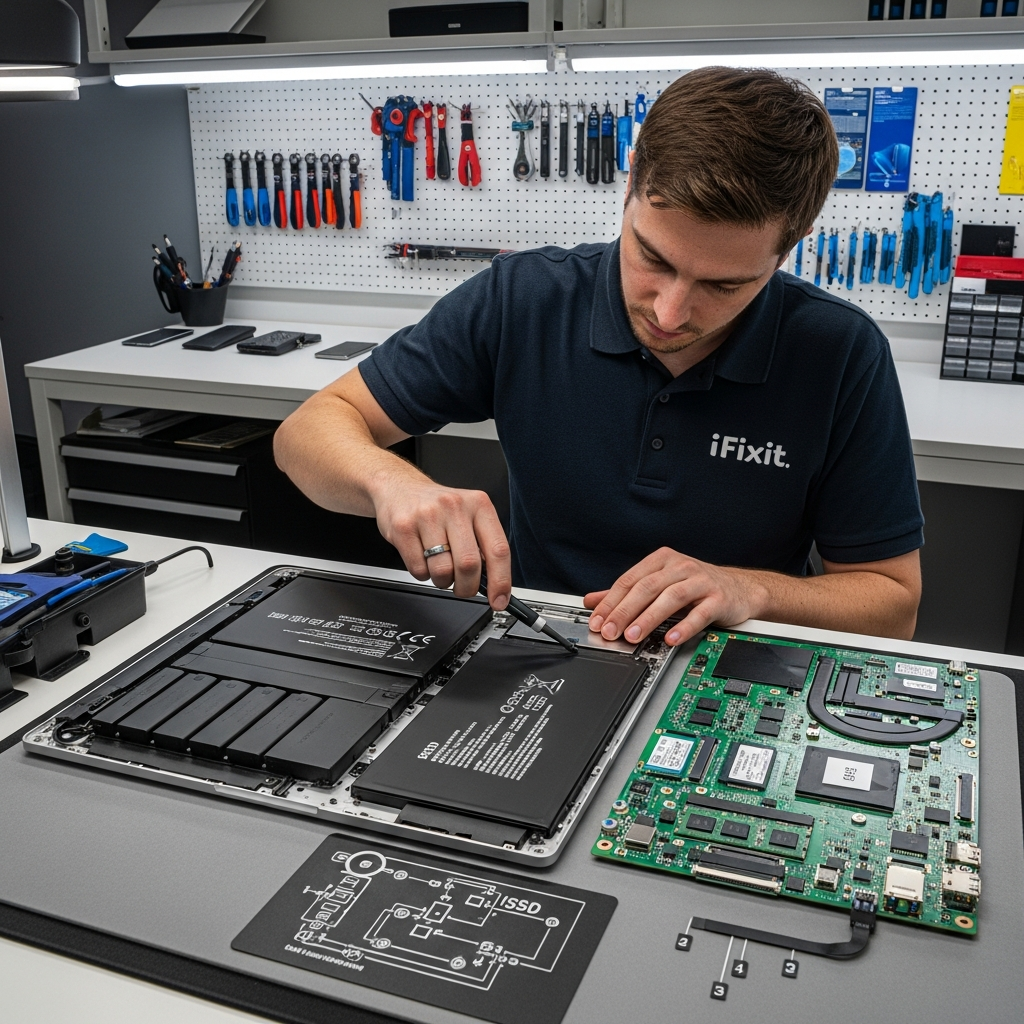
Apple’s new MacBook Neo is making waves, not just for its surprisingly affordable price point, but for a far more significant reason: it’s hailed as the most repairable MacBook in nearly 14 years. This groundbreaking shift in Apple’s design philosophy, extensively detailed in iFixit’s comprehensive teardown, signals a potential turning point for consumers, independent repair shops, and educational institutions. For years, Apple laptops have been notoriously difficult to service, but the MacBook Neo ushers in a new era of accessibility, challenging long-held assumptions about device longevity and user empowerment.
The “Unscrewed” Revolution: A Deeper Look at Neo’s Design
The “big story” from iFixit’s perspective centers on a dramatic departure from Apple’s past practices: the strategic embrace of screws over adhesive. For generations, MacBook batteries were famously glued into place, requiring specialized tools and often heat guns to remove. This frustrating design choice often led to costly repairs or complete device replacements. However, the MacBook Neo bucks this trend entirely. Its battery is now secured within a tray fastened by a remarkable 18 screws. While this might seem like a high number of fasteners, iFixit unequivocally declared that “screws still beat adhesive every time,” a sentiment that reportedly “sent cheers across the iFixit office.” This fundamental change drastically simplifies the critical and often-needed battery replacement process.
This shift extends beyond the battery. The Australian repair channel Tech Re-Nu’s teardown video confirmed the complete absence of adhesive for internal components. Instead, the MacBook Neo relies on a “sensible mix of components with routed cables all held in place by screws.” Crucially, these aren’t Apple’s proprietary pentalobe screws. Many internal components are now secured with standard T3, T5, and T8 Torx screws, making disassembly significantly more straightforward for professional technicians and DIY enthusiasts alike. The lower case itself can be opened manually after removing eight pentalobe screws, eliminating the need for prying tools.
Beyond the Battery: Key Improvements for DIY and Professional Repairs
The MacBook Neo’s enhanced repairability doesn’t stop with its battery and fastening methods. iFixit and other experts highlighted several other design modifications that streamline maintenance:
Flat Disassembly Tree: This refers to a more logical and accessible internal layout where crucial components like the battery, speakers, USB-C ports, and trackpad are immediately visible and easier to reach once the back case is opened.
Repair Assistant Acceptance: Apple’s “Repair Assistant” system reportedly accepts replacement parts without complaints, indicating a more open stance toward third-party repairs or part sourcing, which is a major win for the right-to-repair movement.
Easier-to-Replace Display and Keyboard: Historically, a faulty MacBook keyboard often necessitated replacing the entire “Top Case” assembly, which included the battery and was an expensive, extensive repair. The Neo now separates the keyboard from the Top Case, allowing for independent keyboard replacement after detaching 41 screws. The display also features a simplified antenna assembly, allowing for clean removal.
Modular Components: The USB-C ports and headphone jack are designed as modular units. This means a damaged port can be replaced without requiring extensive work on the logic board, significantly reducing repair complexity and cost. Even the speakers are easily removable.
Mechanical Trackpad: The return to a mechanical-style trackpad, moving away from the Force Touch design, also aids repairability.
The “Why” Behind the Change: Apple’s Strategic Shift
Why has Apple, a company long associated with “sealed vault” designs, suddenly pivoted towards enhanced repairability with the MacBook Neo? Experts suggest several compelling reasons:
Influenced by the Right-to-Repair Movement
The global right-to-repair movement has gained considerable traction, pushing manufacturers to make devices more accessible for independent repair. Apple has incrementally responded, and the MacBook Neo represents a substantial leap in this direction. This move could be a proactive step to appease consumer advocates and potentially preempt future regulatory pressures.
Targeting the Education Market
Perhaps the most significant driver for this change is the MacBook Neo’s explicit targeting of the education sector. Priced at $599 (or $499 for educational institutions), it’s positioned to compete directly with durable yet often disposable Chromebooks. In school environments, devices face considerable wear and tear. Cracked screens, damaged ports, and worn-out batteries are not “edge cases” but common occurrences. An easily repairable MacBook allows school IT departments to conduct in-house repairs, significantly reducing the total cost of ownership for institutions and making bulk orders more attractive. This practicality aligns with the needs of younger students who are more prone to drops and spills.
Potential Influence of EU Battery Regulations
Upcoming EU battery regulations, which aim to make batteries more easily replaceable, could also be a contributing factor. Designing the Neo with a screw-secured battery might be a forward-looking strategy to comply with such regulations, especially if Apple plans to release similar models globally.
Persistent Hurdles: Where the MacBook Neo Still Falls Short
Despite these considerable strides, the MacBook Neo isn’t a perfect repairability score. iFixit ultimately awarded it a 6 out of 10, indicating room for improvement. The primary drawbacks include:
Soldered RAM and Storage: Like many modern laptops, the MacBook Neo still features soldered RAM and storage components. This eliminates any user-upgradability, meaning consumers are stuck with their initial configuration. This limits the device’s longevity and customizability, a flexibility available in older PowerBook and early MacBook models.
Pentalobe Screws on the Bottom Case: While many internal fasteners are now standard Torx screws, Apple still uses its proprietary pentalobe screws on the bottom case, requiring a specific screwdriver for initial access.
Speaker Quality: Some reports indicate that while the speakers are easy to remove, their audio quality is reported to be poor, suggesting a potential cost-cutting measure.
iFixit, however, clarified that for a MacBook, a “6 out of 10 is a strong score,” highlighting just how far the design has come from Apple’s historically low repairability marks. This significant improvement is currently exclusive to the budget-oriented Neo, and it remains to be seen if Apple will extend this level of serviceability to its higher-end MacBook Air or Pro models without a clear sales benefit.
What This Means for You: User Benefits and Considerations
The MacBook Neo’s enhanced repairability offers tangible benefits for consumers:
Lower Cost of Ownership: The ability to easily replace components like batteries, keyboards, and ports means repairs can be cheaper and less complex, extending the device’s useful life and reducing overall expenses.
Extended Device Lifespan: A repairable device is a more sustainable device. Users can keep their MacBook Neo running longer, delaying the need for a costly full replacement.
Empowerment for Repair: Whether you’re a DIY enthusiast or rely on an independent repair shop, the Neo makes it easier to get your device fixed without relying solely on Apple’s official, often more expensive, service channels.
Informed Purchasing Decision: For potential buyers, especially those concerned about the environmental impact of electronics or the long-term cost of maintenance, the MacBook Neo presents a compelling value proposition that balances affordability with serviceability.
This unexpected combination of a budget price, premium aluminum build, and enhanced repairability makes the MacBook Neo a unique offering in Apple’s current lineup, appealing to a wider audience than just the education market.
Frequently Asked Questions
What makes the MacBook Neo Apple’s most repairable laptop in years?
The MacBook Neo achieves its improved repairability primarily by replacing adhesive with screws for key internal components, most notably the battery, which is secured by 18 screws. Additionally, it features a flat disassembly tree for easy access to components, modular USB-C ports and headphone jacks, and an individually replaceable keyboard (instead of the entire top case). The use of standard Torx screws for many internal fasteners also simplifies the repair process significantly.
Should I buy the MacBook Neo if repairability is my top concern?
If repairability is a primary concern, the MacBook Neo is an excellent choice, especially given its budget-friendly price point. Its design allows for easier and more affordable repairs for common issues like battery, keyboard, and port damage, extending the device’s lifespan. However, it’s crucial to note that RAM and storage are still soldered, preventing user upgrades. While it’s the most repairable MacBook, its suitability also depends on your performance needs and budget compared to other options.
What tools are typically needed for common repairs on the MacBook Neo?
For common repairs on the MacBook Neo, you would primarily need a set of small screwdrivers. Specifically, Torx drivers (T3, T5, T8) are essential for many internal components, while a pentalobe screwdriver is still required to remove the eight screws on the bottom case for initial access. Beyond screwdrivers, basic tools like spudgers for disconnecting cables and potentially a magnetic mat to keep track of screws would be beneficial. The absence of adhesives largely eliminates the need for specialized heat guns or pry tools.
Conclusion
The MacBook Neo stands as a significant and refreshing departure from Apple’s long-standing design philosophy. By embracing screws over glue and implementing modular components, Apple has delivered its most repairable laptop in nearly a decade and a half. While it still retains some limitations like soldered RAM and storage, the 6 out of 10 repairability score from iFixit is a powerful endorsement within the context of a MacBook. This strategic shift, driven by the right-to-repair movement and a clear focus on the education market, not only benefits schools and students but also offers a compelling value proposition for any consumer prioritizing device longevity and the potential for more affordable maintenance. The MacBook Neo demonstrates that even Apple can evolve, setting a new benchmark for repairability within its lineup and perhaps hinting at a more repair-friendly future for consumer electronics.