NASA is gearing up for a monumental return to lunar space, targeting April 1, 2026, for the launch of its Artemis II mission. This eagerly awaited voyage will send four astronauts on a historic journey around the Moon, marking humanity’s first return to the lunar vicinity in over five decades since the Apollo era. The 10-day mission is a critical precursor to establishing a long-term human presence on and around the Moon, pushing the boundaries of deep space exploration.
This article delves into the latest updates, technical challenges, and the profound significance of Artemis II, offering a comprehensive look at what promises to be an epic chapter in space history.
The Countdown Begins: Artemis II’s Historic Launch Window
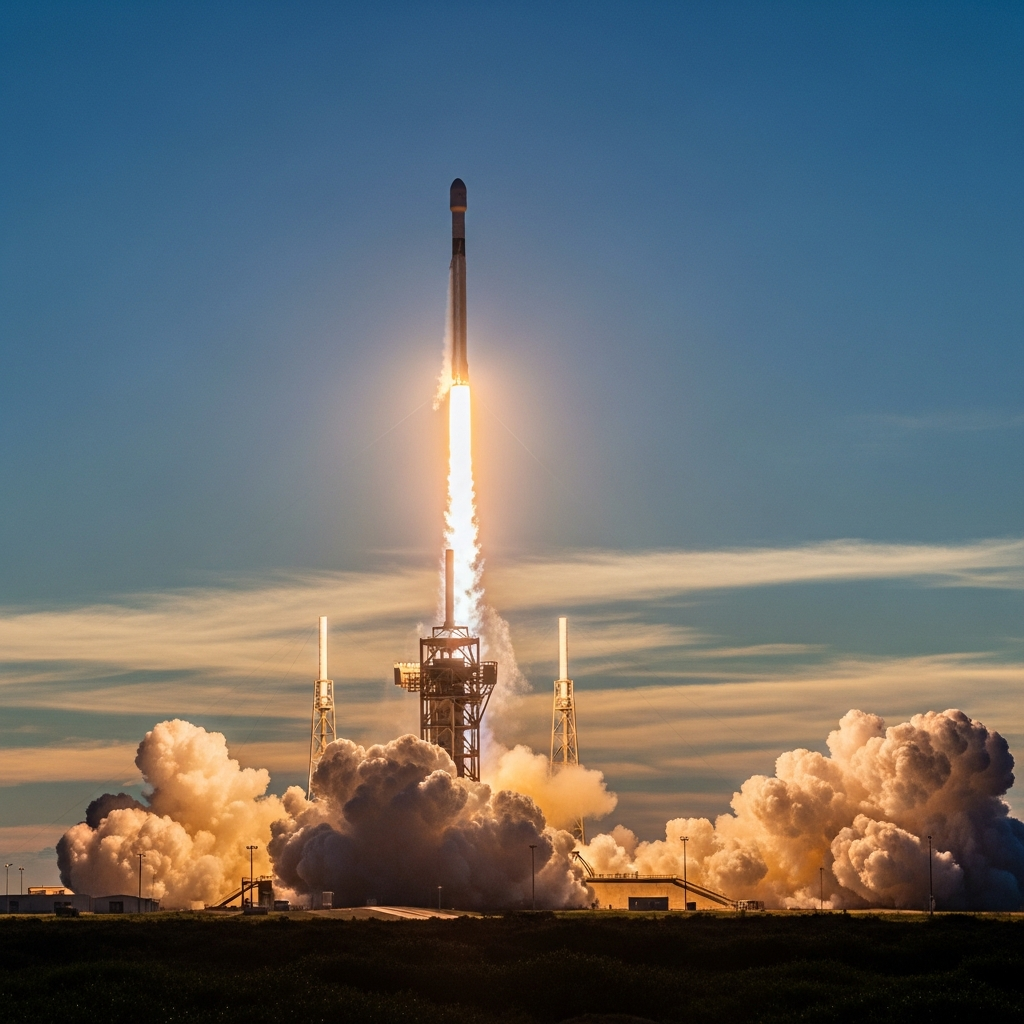
The launch window for the Artemis II Moon Mission opens on April 1, 2026, with liftoff tentatively scheduled for 6:24 p.m. ET from NASA’s iconic Kennedy Space Center in Florida. This window extends through April 6, providing multiple opportunities for the mission to embark. After extensive reviews and critical repairs, mission managers have given a unanimous “go” for this groundbreaking flight. The decision underscores NASA’s meticulous approach, prioritizing safety and readiness above all.
This mission will be the maiden flight of NASA’s powerful Space Launch System (SLS) mega-rocket and the Orion spacecraft with human occupants aboard. It represents a monumental stride in the agency’s overarching Artemis program.
A New Era of Lunar Exploration Takes Shape
Artemis II isn’t just a trip around the Moon; it’s a test of humanity’s resolve and ingenuity. This mission will propel its crew farther from Earth than any humans have ever traveled before, circling the Moon’s far side—a portion perpetually unseen from our planet. The data and experience gathered will be invaluable, paving the way for future lunar landings and the eventual establishment of a sustained human presence on the lunar surface. It embodies a blend of pioneering spirit and cutting-edge technology, designed to push the limits of what’s possible in space.
The Crew: Pushing the Boundaries of Human Spaceflight
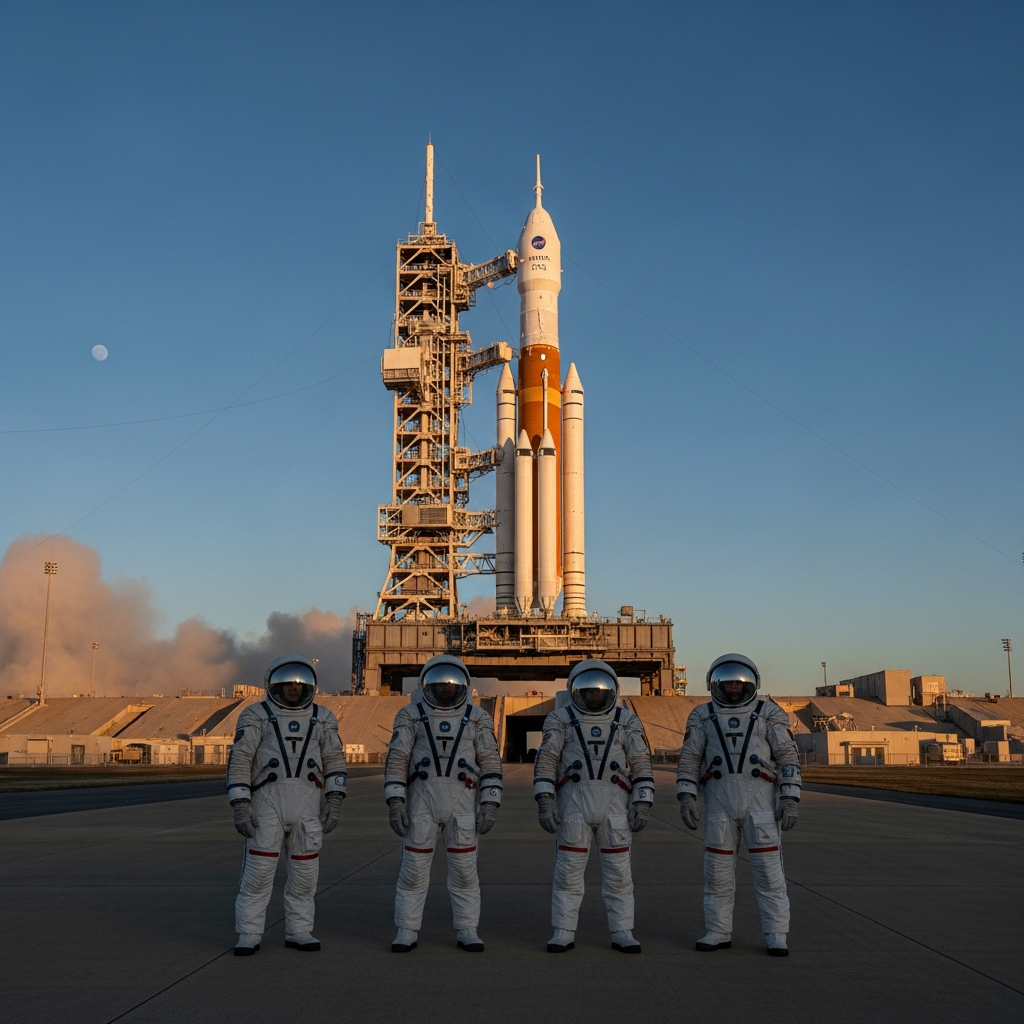
At the heart of this historic journey are four remarkable individuals, poised to make history. The Artemis II crew comprises NASA astronauts Reid Wiseman, Victor Glover, and Christina Koch, alongside Canadian Space Agency astronaut Jeremy Hansen. These trailblazers will be the first humans to fly the SLS rocket and Orion spacecraft, enduring the rigorous conditions of deep space. Their expertise and courage are central to the mission’s success, embodying the collaborative international spirit of space exploration. They are currently undergoing intensive training at NASA’s Johnson Space Center in Houston, preparing for their pre-launch quarantine set for March 18, before heading to Kennedy Space Center on March 27.
Overcoming Hurdles: Technical Triumphs and Strategic Delays
The path to the April 2026 launch has been anything but smooth, marked by technical challenges and strategic delays. The mission, initially slated for earlier in March, faced a setback in February when a critical helium leak was discovered in the rocket’s upper stage during a fueling test. This issue necessitated rolling the massive SLS rocket and Orion spacecraft back into the Vehicle Assembly Building (VAB) at Kennedy Space Center for repairs.
This wasn’t the first hurdle. An earlier wet dress rehearsal in February was cut short due to a separate hydrogen fuel leak. These incidents highlight the immense complexity and inherent risks involved in launching such advanced aerospace systems.
The Road to Launch: Rigorous Testing and Repairs
Engineers at the VAB worked diligently to resolve the helium leak, successfully replacing a faulty seal. They also performed crucial maintenance, including installing fresh batteries on both the rocket and the Orion spacecraft, and conducting thorough tests of various booster systems. This meticulous approach underscores NASA’s commitment to launching only when all systems are unequivocally ready. The SLS rocket and Orion spacecraft are now on schedule to roll back to the launch pad around March 19, ready for final configurations.
Flight Readiness: A Confident “Go” Despite Risks
Following a comprehensive two-day flight readiness review, mission managers and top NASA officials formally certified the rocket and spacecraft for flight. The astronauts themselves participated virtually, emphasizing transparent discussions about the mission’s risks. While acknowledging the inherent dangers of such a pioneering mission—with historical data suggesting new rocket launches traditionally have a 50% success rate—NASA officials express strong confidence. John Honeycutt, chair of the Artemis II Mission Management Team, emphasized the agency’s “much better position” due to rigorous processes of understanding, mitigating, and managing risks. Lori Glaze, acting associate administrator for the Exploration Systems Development Mission Directorate, affirmed NASA’s commitment to being “guided by what the hardware is telling us” and launching only “when we’re ready.” In a strategic move to conserve the precious April launch window, NASA has opted against conducting another full “wet dress rehearsal,” deciding that the next time the vehicle is fueled will be for the actual launch attempt.
The Artemis Program: A Bold Vision for Lunar Presence
Artemis II is a vital stepping stone in NASA’s ambitious Artemis program, which aims to return humans to the Moon and establish a sustained presence there. The program, originally established in December 2017, has recently undergone a significant overhaul to enhance safety and efficiency, addressing previous delays and ambitious timelines.
Redefining the Lunar Landing Timeline
Under the updated strategy, the highly anticipated astronaut Moon landing, initially planned for Artemis III, has been shifted. Artemis III, now slated for mid-2027, will focus on crucial technology demonstrations in low-Earth orbit, including rendezvous and docking procedures with commercially built lunar landers from SpaceX and Blue Origin. The actual landing of astronauts on the Moon is now projected for the Artemis IV mission in 2028, with NASA aiming for one, and potentially two, lunar landings that year. These strategic changes are designed to streamline the program, allowing for better testing and integration of new technologies before committing human lives to a lunar surface mission.
The Challenges Ahead: Ensuring Safety and Success
Despite the ambitious vision, the Artemis program faces considerable challenges. The NASA Office of Inspector General has issued warnings regarding the necessity for robust rescue plans for lunar crews, especially with future landings targeting the Moon’s south pole. This region, characterized by its rough and uncharted terrain, presents greater risks compared to the Apollo missions’ equatorial landing sites. Furthermore, commercial partners like SpaceX and Blue Origin are accelerating their work on lunar landers, but still face significant technical hurdles, including the critical task of refueling their landers in Earth orbit before their journey to the Moon. These complexities underscore the monumental engineering and operational feats required to realize NASA’s lunar ambitions.
Beyond April 1: What the Future Holds for Artemis
The launch of Artemis II in April 2026 will be a defining moment, not just for NASA but for humanity’s ongoing quest to explore the cosmos. Its success will validate years of painstaking work, technical innovation, and international collaboration. Beyond this critical mission, the broader Artemis program envisions a future where humans live and work on the Moon, utilizing its resources and serving as a springboard for even deeper space exploration, including missions to Mars. Regular updates and rigorous evaluations will continue to shape the program’s trajectory, always prioritizing crew safety and mission success.
Frequently Asked Questions
What is the Artemis II mission and its significance for space exploration?
The Artemis II mission is a crewed spaceflight around the Moon, targeted for launch on April 1, 2026. It will be the first time humans have flown to the lunar vicinity since Apollo 17 in 1972, and the first crewed flight of NASA’s powerful Space Launch System (SLS) rocket and Orion spacecraft. Its significance lies in being a critical test flight for future lunar landings, gathering vital data and experience to establish a long-term human presence on and around the Moon as part of NASA’s broader Artemis program. The mission will send four astronauts on a 10-day journey, taking them farther from Earth than any human has ever gone.
Where is the Artemis II mission launching from, and when are the key pre-launch events?
The Artemis II mission is launching from NASA’s Kennedy Space Center in Florida. Key pre-launch events include the SLS rocket and Orion spacecraft rolling back to the launch pad around March 19, 2026, after undergoing repairs in the Vehicle Assembly Building (VAB). The four-person crew is scheduled to enter quarantine at NASA’s Johnson Space Center in Houston on March 18, 2026, before traveling to Kennedy Space Center on March 27, 2026, to prepare for the April 1 launch window.
Why did the Artemis II launch face delays, and what steps has NASA taken to resolve them?
The Artemis II launch, initially planned for earlier in March 2026, faced delays primarily due to technical issues discovered during pre-flight tests. A significant helium leak was identified in the rocket’s upper stage during a fueling test in February. This necessitated rolling the SLS rocket back into the Vehicle Assembly Building (VAB) for repairs. Engineers successfully replaced a faulty seal in the helium system, installed fresh batteries, and performed other system tests. NASA also made a strategic decision to forego another “wet dress rehearsal” (full fueling test) at the launch pad to conserve time within the limited April launch window, opting for the next fueling to be the actual launch attempt.
Conclusion: A Giant Leap Towards a Permanent Lunar Future
The Artemis II Moon Mission stands on the precipice of a new era of lunar exploration. Despite the inherent complexities and challenges that have led to strategic delays, NASA’s unwavering commitment to safety, meticulous preparation, and continuous innovation shines through. The April 1, 2026, target launch date represents not just a new milestone for the agency and its international partners, but a renewed global aspiration to reach for the stars. As the crew prepares for their historic flight and the SLS rocket readies for its journey, humanity collectively holds its breath, anticipating the next giant leap towards a sustained human presence in the cosmos.