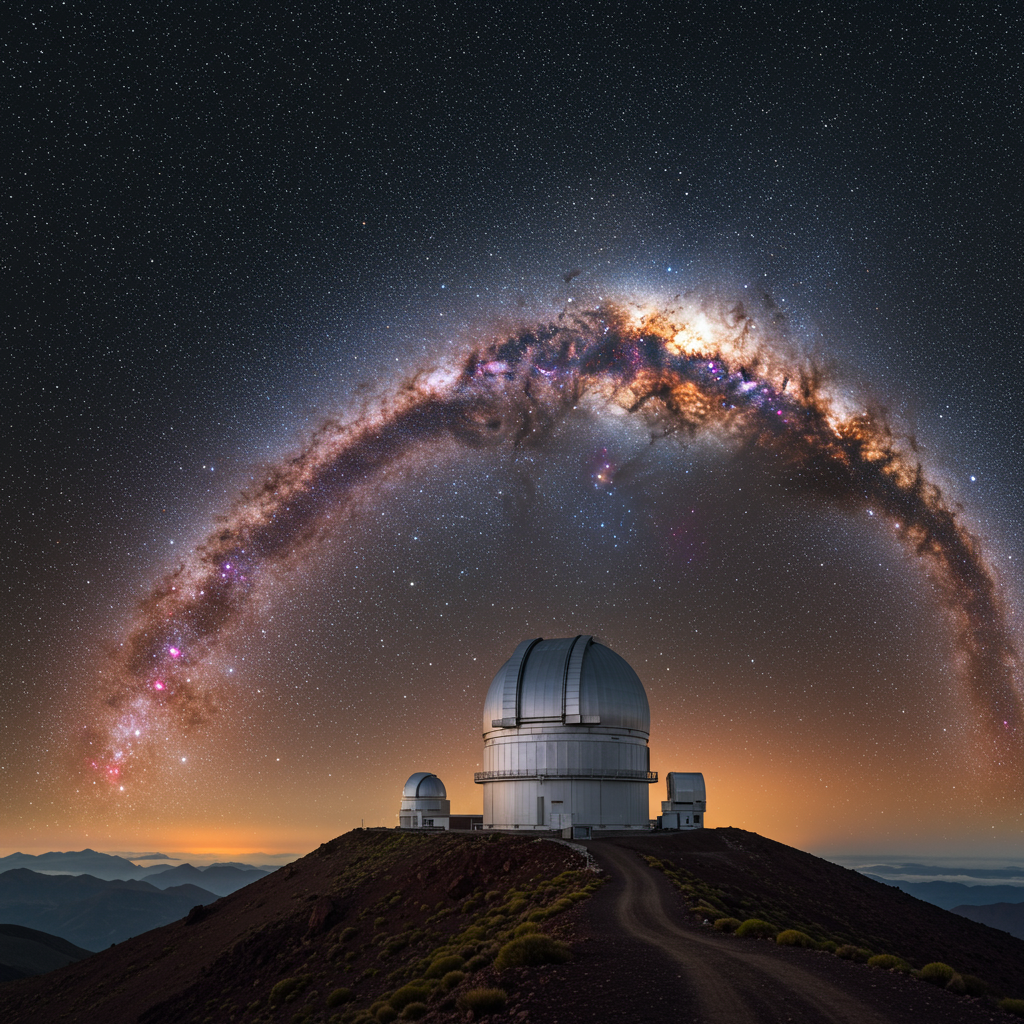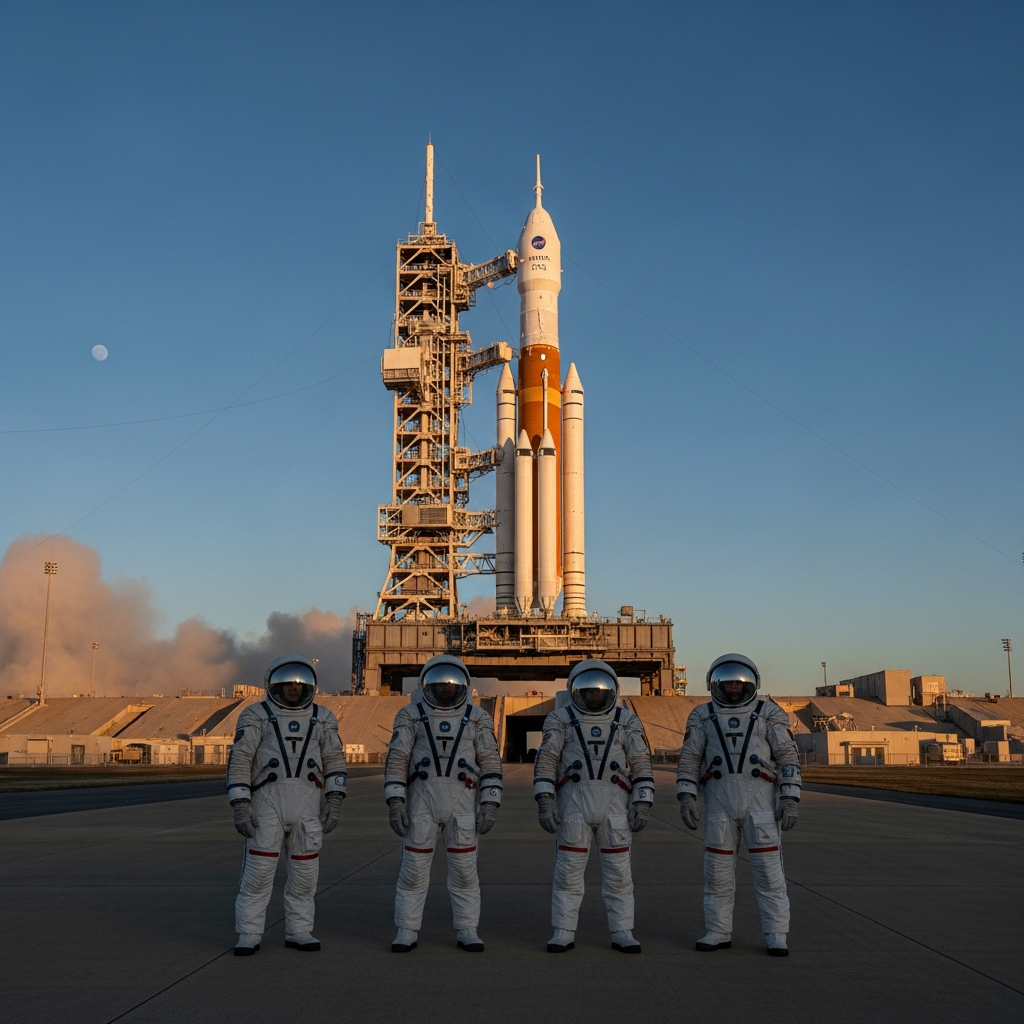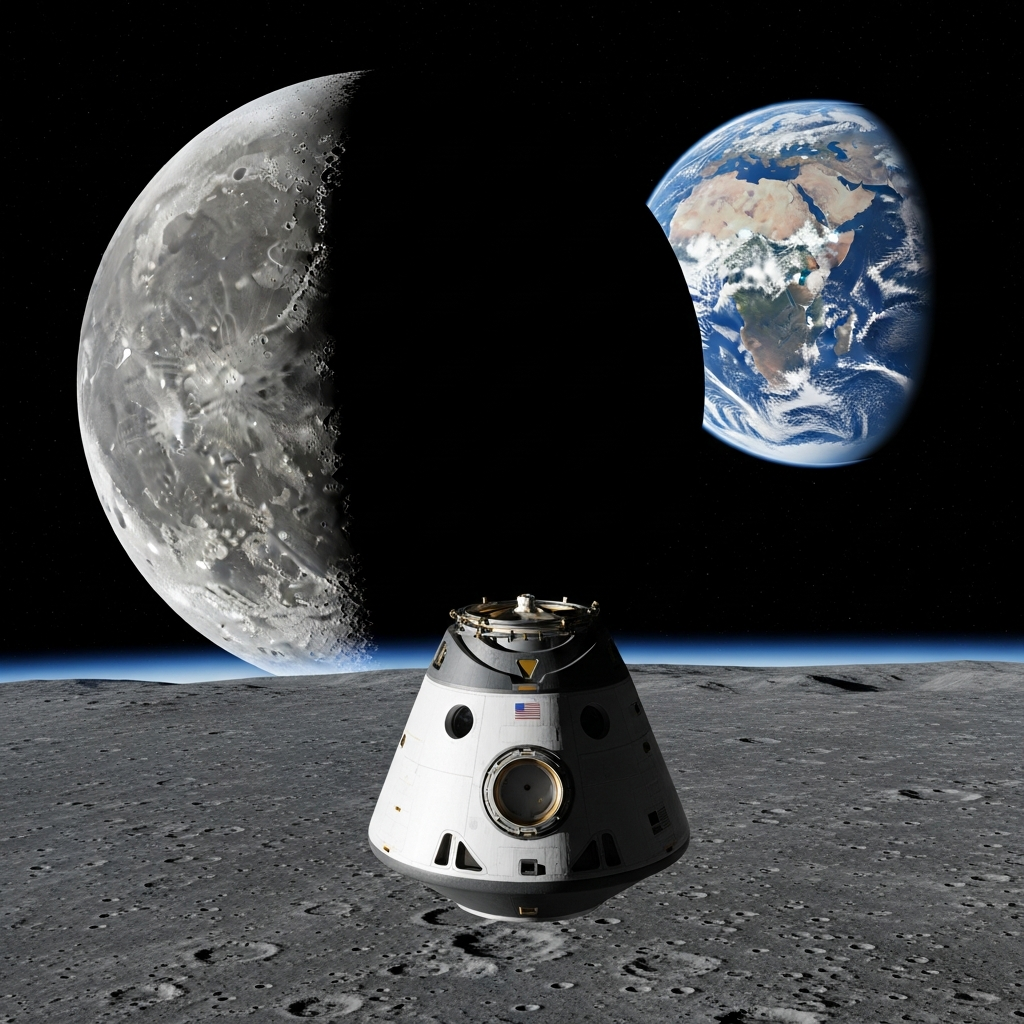
Humanity stands at the precipice of a new era of lunar exploration. NASA’s Artemis II mission, a pivotal step in the ambitious Artemis program, is poised to send astronauts around the Moon for the first time in over five decades. This historic crewed flyby, currently targeting an April 2026 launch, will not only test vital systems but also pave the way for future lunar landings and the establishment of a sustained human presence on our nearest celestial neighbor. It marks a monumental return to deep space, captivating audiences worldwide and reinforcing the enduring spirit of exploration.
A New Chapter in Lunar Exploration
Artemis II is more than just a mission; it’s a critical proving ground for NASA’s next-generation space exploration capabilities. Following the successful uncrewed Artemis I flight, this mission will carry four astronauts aboard the Orion spacecraft on a journey around the Moon and back to Earth. This flyby serves as an essential precursor to Artemis III, which aims to land humans on the lunar surface as early as 2027. The stakes are incredibly high, as the mission will push the boundaries of human endurance and technological innovation.
This upcoming voyage highlights a global effort. NASA Administrator Jared Isaacman has emphasized the strategic importance of the Artemis program. He views it as a national security issue and a direct race for lunar preeminence. The United States aims to get to the Moon first, preserving peace and fostering international collaboration. This vision extends to building a sustained presence at the Moon’s south pole, a region rich with scientific potential due to the probable presence of frozen water.
Meet the Trailblazing Crew of Artemis II
The four astronauts selected for the Artemis II mission represent a diverse and highly experienced team. Their journey around the Moon will break several historical barriers, showcasing humanity’s ongoing progress in space exploration.
Commander Reid Wiseman (NASA): An accomplished astronaut with prior experience on the International Space Station (ISS). Wiseman will lead this groundbreaking mission.
Pilot Victor Glover, Jr. (NASA): Glover will become the first Black person to travel to the Moon. He also brings valuable ISS flight experience to the crew.
Mission Specialist Christina Koch (NASA): As the first woman to journey to the Moon, Koch adds another historic first. She holds the record for the longest single spaceflight by a woman, spending 328 days on the ISS.
Mission Specialist Jeremy Hansen (Canadian Space Agency – CSA): Hansen will make history as the first Canadian astronaut to travel to the Moon. This will be his inaugural spaceflight.
Their collective expertise, combined with the groundbreaking nature of their roles, underscores the significance of Artemis II. These individuals are not just astronauts; they are pioneers forging a new path for human spaceflight.
The Powerful Orion Spacecraft and SLS Rocket
At the heart of the Artemis II mission lies the sophisticated Orion spacecraft and the colossal Space Launch System (SLS) rocket. This integrated system represents the pinnacle of modern space engineering. The Orion capsule, a marvel of technology, comprises a cone-shaped crew module for the astronauts. It also includes a cylindrical service module, built by the European Space Agency (ESA). This service module provides critical propulsion, water, air, and power through its four large solar arrays. Orion successfully completed its first uncrewed test flight in December 2014, demonstrating its capabilities.
Powering Orion into deep space is the SLS rocket. It stands as one of the most powerful rockets ever constructed. When fully fueled, this behemoth weighs approximately 2.6 million kilograms (5.74 million pounds). It generates an astounding 39 million newtons (8.8 million pounds) of thrust at liftoff. The immense power of the SLS is crucial for propelling the crew and spacecraft beyond Earth’s orbit and towards the Moon. This advanced hardware is nearing completion, with the rocket already housed at NASA’s Kennedy Space Center Vehicle Assembly Building. The Orion capsule is expected to be finalized within weeks, preparing the entire stack for its historic launch.
Anatomy of a Nine-Day Lunar Flyby
The Artemis II mission is meticulously planned for a duration of just over nine days, though some projections extend it to ten. Every phase of this journey is critical for testing the Orion spacecraft’s systems in a crewed deep-space environment.
- Launch and Earth Orbit: Approximately two hours after liftoff, the SLS will propel Orion into a high Earth orbit. This orbit will reach an apogee of about 71,656 kilometers (44,525 miles).
- Manual Control Simulation: While in high Earth orbit, the crew will take manual control of Orion. They will perform maneuvers designed to simulate docking with future spacecraft, honing essential skills for lunar Gateway operations.
- Translunar Injection Burn: After roughly a day in high orbit, a powerful translunar injection burn will ignite. This burn will send Orion hurtling towards the Moon.
- Record-Breaking Distance: If successful, the Artemis II astronauts will break the distance record from Earth. Apollo 13 set the current record in 1970, traveling 400,171 kilometers (248,655 miles). Artemis II will push further into space.
- Lunar Flyby: About three days later, Orion will enter the Moon’s gravitational sphere. It will perform a flyby around the Moon’s far side. The spacecraft will pass at a distance of 6,400 to 9,700 kilometers (4,000 to 6,000 miles) from the lunar surface. During this phase, the crew will be out of contact with Earth, a crucial test for autonomous operations.
- Free Return Trajectory: The same burn that propels Orion towards the Moon will also place it on a “free return” trajectory. This trajectory cleverly uses the Moon’s gravity to slingshot the spacecraft back towards Earth.
- Earth Return and Splashdown: Four days later, Orion will splash down in the Pacific Ocean near San Diego. The mission will conclude, bringing the historic crew safely home.
It is important to note that Artemis II will not enter lunar orbit or land on the Moon. The Moon will appear smaller from the spacecraft’s extended distance, over 9,200 kilometers beyond the lunar surface.
Overcoming Delays and Paving the Way Forward
The journey to the launchpad for Artemis II has not been without its challenges. The mission’s launch target has shifted several times. Initial plans aimed for early 2026, with windows in February, March, and April. However, various technical issues have necessitated adjustments. The current official target for the launch is April 2026.
Several factors contributed to these delays. During a crucial “wet dress rehearsal” on February 19, 2026, engineers detected an issue with the helium flow in the upper stage. This required the SLS rocket to be rolled back to the Vehicle Assembly Building for repairs. Earlier, a significant liquid hydrogen leak was identified during a fueling test on January 31. This leak occurred at the tail service mast umbilical interface, an area that had also shown high concentrations of hydrogen previously. Lori Glaze, a senior NASA official, emphasized the need to complete several critical steps before confirming a launch date.
These challenges are part of the complex process of preparing a crewed deep-space mission. NASA Administrator Jared Isaacman reiterated that “safety remains our top priority.” He stressed that the agency will only launch when it is fully ready. Beyond these immediate fixes, lessons learned from Artemis I also played a role. The uncrewed mission experienced more intense heat shield burning during re-entry than anticipated. Engineers have since conducted detailed analyses and adjusted the trajectory for Artemis II to mitigate similar stresses. Modifications at the launchpad and in the fueling process are also aimed at preventing hydrogen leaks.
Despite the hurdles, the Artemis program continues to receive strong support. Even amidst U.S. government shutdowns, over 3,000 staff members are exempt and continue to work on Artemis missions. This prioritization underscores the strategic national importance of returning to the Moon.
The Future: From Lunar Flyby to Lunar Base Camp
The success of Artemis II is paramount for the ambitious goals of the entire Artemis program. It is a stepping stone to Artemis III, planned for 2027. This mission aims to land two astronauts on the lunar surface. These pioneering astronauts, including the first woman and the first person of color on the Moon, will transfer to a SpaceX Starship in lunar orbit for their descent. They will explore the Moon’s south polar region for almost a week. This area is particularly exciting for scientists due to its potential for frozen water in permanently shadowed craters. This marks a significant departure from the equatorial regions explored by the Apollo missions.
Looking even further ahead, future Artemis missions will dock at Gateway. Gateway is an international space station to be positioned in lunar orbit. It will serve as a crucial staging point. Astronauts will use it to descend to the Moon’s surface from lunar orbit. Its first two modules, the Power and Propulsion Element (PPE) and the Habitation and Logistics Outpost (HALO), are scheduled for an uncrewed launch in 2027. International partners are contributing significantly, with ESA building an International Habitation module (I-HAB) and a refueling module. The Japan Aerospace Exploration Agency (JAXA) is providing life-support systems. The Canadian Space Agency is supplying an external robotic arm. Ultimately, the Artemis program envisions building a base camp at the lunar south pole. This will allow astronauts to stay for extended periods, ranging from one to two months, truly establishing humanity’s long-term presence on the Moon.
Frequently Asked Questions
What is the primary goal of the Artemis II mission?
The primary goal of the Artemis II mission is to be the first crewed flight of NASA’s Artemis program. It will send four astronauts on a journey around the Moon and back to Earth, marking humanity’s return to deep space after more than 50 years. This mission is a crucial test flight for the Orion spacecraft and Space Launch System (SLS) rocket in a crewed environment. Its success will serve as a vital precursor to Artemis III, which aims to land astronauts on the lunar surface.
Who are the astronauts flying on Artemis II, and what milestones will they achieve?
The four astronauts on the Artemis II mission are Commander Reid Wiseman, Pilot Victor Glover, Jr., and Mission Specialist Christina Koch from NASA, along with Mission Specialist Jeremy Hansen from the Canadian Space Agency. This crew will achieve significant milestones: Victor Glover, Jr., will be the first Black person to travel to the Moon, Christina Koch will be the first woman, and Jeremy Hansen will be the first Canadian.
When is Artemis II expected to launch, and why have there been delays?
The Artemis II mission is currently targeting a launch in April 2026. This target date has shifted from earlier windows in February and March 2026 due to several technical challenges. These include the detection of a liquid hydrogen leak during a crucial fueling test, an issue with the helium flow in the upper stage of the SLS rocket, and the need to address lessons learned from the heat shield’s performance during the uncrewed Artemis I mission’s re-entry. NASA prioritizes crew safety, ensuring all systems are thoroughly tested and ready.
Conclusion
The Artemis II mission represents a bold leap forward in human space exploration. It embodies NASA’s unwavering commitment to returning humans to the Moon, not just for a brief visit, but to lay the groundwork for a sustained lunar presence and future missions to Mars. With its diverse crew, powerful spacecraft, and ambitious objectives, Artemis II promises to be a captivating spectacle. It will push the boundaries of technology and human endeavor. As the countdown continues, the world watches eagerly, anticipating the moment when humanity once again ventures beyond Earth orbit, embarking on a historic journey around the Moon. This mission is a testament to our collective drive to explore, discover, and expand our understanding of the universe.